Supreme Court strikes down Texas abortion regulation

By a 5-3 vote, the U.S. Supreme Court struck down a Texas law that required abortion clinics to meet surgical center standards and any doctor performing an abortion at a clinic to have admitting privileges at a hospital not more than 30 miles away.

“We conclude that neither of these provisions offers medical benefits sufficient to justify the burdens upon access that each imposes,” Justice Stephen Breyer wrote in the court’s majority opinion.

In ruling on Whole Woman’s Health v. Hellerstedt, the court said Texas HB2, passed in 2013, placed an undue burden on a woman’s right to terminate her pregnancy.

Gov. Greg Abbott criticized the court’s ruling, saying it “erodes states’ lawmaking authority to safeguard the health and safety of women and subjects more innocent life to being lost.”

Texas Attorney General Ken Paxton struck a similar note, insisting state lawmakers passed the regulations governing abortion clinics to improve patient safety and raise the standard of care for women.

“It’s exceedingly unfortunate that the court has taken the ability to protect women’s health out of the hands of Texas citizens and their duly elected representatives,” Paxton said.

CLC chief voices disappointment

Gus Reyes, director of Texas Baptists’ Christian Life Commission, expressed disappointment with the court’s decision.

“The overturned legislation sought to ensure vulnerable women would receive the proper standard of care in these facilities,” Reyes said.

Two parts of HB2—the state’s ban on abortions after the first 20 weeks of pregnancy and the requirement that drug-induced abortions be performed according to FDA regulations—remain in effect, he noted.

“These were important parts of the legislation, and their constitutionality was not challenged,” he added.

“As we now move forward, we need to recognize that abortion is not primarily a legal problem; it is a moral one,” Reyes continued. “No matter what the law says, Scripture clearly conveys the value of each person from the point of conception.

“Every abortion is a human tragedy. It is tragic that unwanted pregnancies occur and that a woman would choose to end the life of the person she carries. We pray for a day when the value of human life from conception until natural death will be honored by people everywhere. It is important that Christians continue to support crisis pregnancy centers and ministries to single mothers.”

A ‘victory’ but for whom?

Activists from varied perspectives agreed the Supreme Court decision marked a “victory,” but they disagreed about for whom or what.

Russell Moore, president of the Ethics & Religious Liberty Commission of the Southern Baptist Convention, called the court decision “another legal victory for the abortion lobby, coming at the expense of children, women and families.”

“Keeping abortion providers accountable should not be a political wedge issue,” Moore said. “This ruling is further proof how much more work the pro-life movement has to do in the cause of life and human dignity.”

In contrast, Amelia Fulbright, an ordained Baptist minister and founder of Labyrinth Progressive Student Ministry at the University of Texas in Austin, viewed the decision as a victory for religious liberty.

“There is no such thing as a ‘Baptist view on abortion.’ Christians of good conscience hold many beliefs,” she insisted. “But I believe by protecting individual choice, today’s Supreme Court decision is a victory for foundational Baptist principles of religious freedom and individual conscience. It takes reproductive decision-making out of the hands of politicians and returns it to women—the ones whose lives are most affected. That’s a moral and social good.”

Similarly, Kathy Miller, president of the Texas Freedom Network, praised the court decision as “a huge victory for the dignity of women and their constitutional right to make their own health decisions.”

However, she predicted abortion opponents in Austin would continue efforts to restrict access to abortions.

“This fight continues until our lawmakers trust Texas women and families to make their own decisions about their health care and their future.”

Placing women’s health and safety at risk

Bishops with the Texas Catholic Conference, on the other hand, insisted the ruling “puts women at grave risk.”

“Surgical abortion is an invasive procedure that poses numerous and serious medical complications,” the bishops stated. “The state has a legitimate interest in ensuring the maximum level of safety for the woman subjected to the procedure and that viable emergency care is available if complications such as hemorrhage, infection, uterine perforation, blood clots, cervical tears or allergic reactions occur.

“It is irresponsible for physicians to perform this procedure without being able to provide follow-up treatment for the associated complications.”

Likewise, Jonathan Saenz, president of Texas Values, emphasized women’s health and safety.

“This is a lawless and political decision by some Supreme Court justices who care more about the profits of abortion clinics than the safety of women,” Saenz said. “This latest episode of judicial activism has now made an abortion clinic in Texas one of the most dangerous places to be—not just for unborn children, but now for Texas women, as well.”


Baylor and Briles agree to terminate relationship

WACO—Baylor University and former Head Football Coach Art Briles mutually agreed to terminate their employment relationship after eight seasons and a sexual assault scandal that resulted in the university president’s demotion and the athletic director’s resignation and prompted federal lawsuits.

Briles and the university issued a joint statement June 24.

“Baylor University and Art Briles have mutually agreed to terminate their employment relationship, effective immediately,” the statement said. “Both parties acknowledge that there were serious shortcomings in the response to reports of sexual violence by some student-athletes, including deficiencies in university processes and the delegation of disciplinary responsibilities with the football program. Baylor is addressing these shortcomings and making ongoing improvements.”

The statement added: “Baylor wishes Coach Briles well in his future endeavors. Coach Briles expresses his thanks to the city of Waco and wishes the Baylor Bears success in the future.”

Time of transition 

On May 26, Baylor’s board of regents announced Briles was “suspended indefinitely with intent to terminate according to contractual procedures.” At the same time, regents removed Ken Starr from his role as president and sanctioned Ian McCaw, who resigned as athletic director a few days later. 

The university subsequently hired Jim Grobe—former coach at Wake Forest University, a private school in Winston-Salem, N.C., with Baptist roots—as acting football coach. Grobe served from 2006 to 2013 as chair of the ethics committee for the American Football Coaches Association. 

Although multiple news sources reported a few high-profile donors pressured the regents to consider reinstating Briles after a one-year suspension, the board of regents did not vote on Briles’ employment at their June 13 meeting. 

Lawsuits filed

Two former Baylor Bears football players—Sam Ukwuachu and Tevin Elliott—were convicted of sexual assault, and some other student-athletes have been accused of sexual violence.

In March, a former Baylor student who reported Elliott raped her filed a lawsuit asserting multiple Title IX violations and negligence. The suit names Baylor’s board of regents, Briles and McCaw as defendants. 

In mid-June, three women filed suit against Baylor, alleging they were sexually assaulted on or near campus. One of the women asserted the person who assaulted her was a Baylor Bears football player. Three additional women later joined that suit.

A few days later, another former student filed a separate lawsuit, which did not involve anyone associated with Baylor’s football team. The suit asserted sexual assault issues at Baylor were “not an ‘athletic department issue,’ but were an institution-wide problem that Baylor and Baylor regents failed to properly address.” 

Baylor response to Pepper Hamilton report

Last September, Baylor’s board of regents hired Pepper Hamilton, a Philadelphia law firm, to investigate the university’s response to reports of sexual violence. 

Regents received a “comprehensive briefing” from Pepper Hamilton. The firm’s investigation revealed a “fundamental failure” by Baylor to implement Title IX and the Violence Against Women Reauthorization Act of 2013, according to a 13-page “Findings of Fact” document the regents released. 

Baylor regents also released a 10-page set of recommendations from Pepper Hamilton. 

The university already has implemented some of the recommendations, and it will implement them all, Interim President David Garland said


Texas CBF deferred to BGCT, Mason reports

GREENSBORO, N.C.—Acting out of loyalty to the Baptist General Convention of Texas, Texans affiliated with the Cooperative Baptist Fellowship “failed deliberately” to create a strong state organization, Dallas pastor George Mason told a gathering of Texans attending the CBF general assembly June 23.

Baptists disaffected by what was called the fundamentalist takeover or the conservative resurgence of the Southern Baptist Convention launched CBF in 1991. CBF celebrated its 25th anniversary June 22-24 in Greensboro, N.C. The event also marked the 20th anniversary of CBF Texas, the state affiliate.

In a CBF Texas meeting held during the general assembly, two leaders who were present from the beginning reflected on how CBF Texas began.

“When CBF Texas got started, it was something we had to do,” said Mason, pastor of Wilshire Baptist Church in Dallas.

“Not a threat”

Most other Baptist state conventions made churches’ relationships with both their state conventions and CBF difficult or impossible, “but that was not true in Texas,” Mason said. Instead, CBF congregations in Texas eventually formed their state affiliate in order to nominate Texans to national CBF leadership positions.

“We made sure the (Baptist General Convention of Texas) would know this was not a threat” to the BGCT, he added. “We didn’t want to create a left-wing, right-wing, centrist approach” to Baptist relationships.

“The truth is, that was how it was perceived, anyway,” he explained, noting CBF congregations were branded as left-leaning.

“This was not helpful,” he said. “It has been a challenging period of time as we have sought to be helpful to the BGCT, and the BGCT tried to figure out what to do with us.”

Many Texans confused CBF Texas with Texas Baptists Committed, a political organization created to prevent the BGCT from shifting to the right, as did the Southern Baptist Convention, he said. That confusion was understandable, because members of Texas Baptists Committed and CBF Texas primarily were the same people, he acknowledged.

“… we forgot our polity”

“CBF Texas has been one confusing entity since the beginning,” Mason said. “We got into this because we forgot our Baptist polity.” The church is the center of Baptist life, he explained. And the structure of national conventions, state conventions and congregations is not hierarchical, although many Baptists forgot or did not understand.

“State conventions should not have thought of themselves as farm teams or the feeder system for the national (SBC) body,” he said, noting churches should be free to participate in the SBC, or CBF or both. “It’s complicated, but (Baptists) didn’t understand how to live up to the principles of voluntary association. They assumed connectionalism.”

Consequently, Texas churches affiliated with CBF did not form a clear identity, much less tangible cohesion, Mason said.

“We have failed to create a strong state (CBF) organization, but we failed deliberately,” he reported. “We’ve been very cautious out of friendship and deference to the BGCT. … We have not created a groundswell of CBF Texas identity—to our detriment.”

Speaking to Baptists from across Texas, Mason said: “We love each other in this room. We love all the Baptists we work with. Sometimes, it’s painful. We must persevere. … And as far as it has to do with you, live at peace with one another.”

Boat rockers

Bill Bruster, retired pastor of First Baptist Church in Abilene who participated in the founding of both Texas Baptists Committed and CBF Texas, affirmed Texans who had the courage to be “boat rockers.”

He named Cecil Sherman and Daniel Vestal, who had been Texas pastors and became national executive coordinators of CBF; Herbert Reynolds, who was president of Baylor University; and Texas pastors Hardy Clemons, Terry Cosby, Jim Denison, Glen Foster, Paul Kenley and Mason.

“They were willing to rock the boat and tell the truth,” Bruster said. “These are people who gave birth to CBF.”

Texans elected

During their meeting, CBF Texas members elected officers, as well as members of the state governing board and regional groups.

New officers are Heather Mustain, missions minister at Wilshire Baptist Church in Dallas, moderator-elect, and Judy Collins, a chaplain and member of The Crossing Baptist Church in Mesquite, recorder. John Moore, pastor of missions at First Baptist Church in Abilene, was elected 2016-17 moderator last year.

Elected to the CBF Texas governing board were Heather Bell of Tallowood Baptist Church in Houston, Deborah Harris of First Baptist Church in Austin, Kathy Krey of Dayspring Baptist Church in Waco, Shannon Rutherford of First Baptist Church in Levelland and Jared Slack of First Baptist Church in Austin.

New members of CBF Texas regional groups are Kyle Childress of Austin Heights Baptist Church in Nacogdoches, East Texas Region; Brent McDougal of Cliff Temple Baptist Church in Dallas, Dallas/Fort Worth Region; Stephanie Nash of Second Baptist Church in Lubbock, Lubbock/Amarillo Region; Dustin Payne of The Forum Church in Houston, Houston Region; and Garrett Vickrey of Woodland Baptist Church in San Antonio, San Antonio/South Texas Region.

CBF Texas Coordinator Rick McClatchy urged participation in the national organization’s campaign to raise $12 million in endowment.

“I hope Texas will lead in the giving toward this campaign,” he said, noting Texas CBF will receive $100,000 from the national endeavor. Of that amount, $50,000 will build a home to be sold to a qualified low-income family on the Texas-Mexico border, $25,000 will support retreats to promote contemplative spirituality and $25,000 will fund conferences to help churches become more diverse and multicultural, he said.

Participants in the CBF business session elected five Texans to national positions: Jenny Howell, an adjunct member of the Baylor University religion faculty, chair-elect of the nominating committee; Steve Wells, pastor of South Main Baptist Church in Houston, governing board; Angela Reed, assistant professor of practical theology and director of spiritual formation at Baylor’s Truett Seminary, ministries council; Katie Sciba, medical social worker from Stafford, governance committee; and Jim Morrison, a financial services executive from Dallas, CBF Foundation.

Other articles about the 2016 CBF general assembly:

Donors pledge $8.5 million as CBF launches $12 million endowment campaign

Soul freedom is a God-breathed gift to all humankind, BJC’s Walker tells Cooperative Baptists

CBF commissions largest and most diverse group of church starters to date

Confront all forms of oppression and embrace the full gospel, New Baptist Covenant speakers urge

Hearing and preaching the gospel is hard work, noted preacher tells Cooperative Baptists

Bass celebrates CBF’s 25th anniversary, expresses gratefulness for giftedness of Cooperative Baptists

Cooperation and ethic of love are keys to CBF’s future, incoming CBF Moderator says


Big 12 requests full report from Baylor regarding sexual assaults

WACO—The Big 12 board of directors contacted Baylor University a second time June 22 to request all information from the Pepper Hamilton investigation into the university’s handling of sexual assault complaints—particularly related to Baylor’s athletic program.

Big 12 Commissioner Bob Bowlsby sent a letter to Baylor Interim President David Garland requesting not only written materials, but also any information the law firm conveyed verbally to the university’s board of regents and internal documents pertinent to the investigation, excluding the names of students involved.

Big 12 ‘gravely and deeply concerned’

The Big 12 board of directors stated it is “gravely and deeply concerned” about reports regarding how Baylor and its athletic department handled sexual violence allegations.

The investigation by the Pepper Hamilton law firm prompted Baylor’s board of regents to fire Head Football Coach Art Briles, demote President Ken Starr and sanction Athletic Director Ian McCaw, who subsequently resigned.

“All of our member universities consider student safety and security to be paramount among institutional responsibilities,” Bowlsby said. “The Big 12 board of directors, each member of the conference and its student-athletes want to convey that our thoughts, concerns and sympathies are with the Baylor survivors and their families.”

‘Full disclosure is vital’

The letter followed a May 24 request from the Big 12 board requesting a full accounting of circumstances surrounding sexual assaults at Baylor.

“At this time, the board is only privy to information that has been made available to the public,” according to a statement on the Big 12 sports website

The Big 12 noted “the conference is appropriately concerned with discovery of the fact” and “full disclosure is vital.”

Baylor responds

Garland contacted Bowlsby to acknowledge receipt of the letter, according to a statement from Baylor.

“Baylor is reviewing the Big 12’s request for additional information in light of Baylor’s obligations under federal privacy law and the commitment of confidentiality to the brave survivors who shared their experiences to help the university better understand its shortcomings,” the university statement said. “President Garland will seek an opportunity to sit down with Commissioner Bowlsby to personally discuss the investigation and the Big 12’s requests. 

“Dr. Garland would like to reiterate that the Findings of Fact fully reflect the themes, core findings and failings identified in the investigation, while omitting the documentation of individual cases and names supporting these findings. Baylor’s board of regents chose to publicly release severely critical Findings of Fact because it believes it is in the best interest of the Baylor community to do so, regardless of the impact on current or potential civil litigation or regulatory action.” 

Baylor self-reported to its constituents and to the NCAA and will maintain communication with the Big 12 Conference during the course of the NCAA investigation, the university stated.

“Baylor remains confident in the actions it has taken to ensure improvement in student safety and to help restore confidence that its priorities and values remain in the proper order,” the Baylor statement said. “We hope to not only apply what we learn and to approach the highest levels of prevention, response and support for students impacted by these acts, but also to share what we learn with other higher education institutions for the benefit of students everywhere.”


Third lawsuit filed against Baylor for way school dealt with assaults

The Associated Press reported that the lawsuit was filed in Waco June 20, although it did not appear in the federal court’s database. The lawsuit stated Baylor and school regents created a “hunting ground for sexual predators to freely prey upon innocent, unsuspecting female students, with no concern of reprisal or consequences.”

Read it in the Austin American-Statesman.


Bounce student volunteers rehabilitate Dallas homes

DALLAS—Middle school and high school students from churches across Texas spent a week of their summer vacation helping inner-city Dallas residents rehabilitate a dozen bounce kingwood 300A student from Kingwood learns to use a circular saw during a Bounce home rehab project in inner-city Dallas. (Bounce Photo)homes.

First Baptist Church in Duncanville provided hot meals and showers for the 175 volunteers with Bounce, the student disaster recovery program of the Baptist General Convention of Texas.

The student volunteers completed construction and rehabilitation projects for homeowners who had no means of doing them themselves.

Bounce worked in partnership with Dallas–People Helping People and Dallas Baptist Association to coordinate project assignments and provide construction materials.

“We are excited to be mobilizing students for our third year this summer for community rehabilitation and disaster recovery,” said David Scott, Bounce director.

“People may at times feel hopeless because of their living conditions. It’s my hope that our participants might be able to help restore hope in the lives of the people they serve, as well as improve their home situation.”


Journey to Nacogdoches: Massie Millard and the Old North Church

Old North Baptist Church, four miles north of the Nacogdoches city limits, is the oldest active missionary Baptist church constituted in Texas. (Elkhart’s Pilgrim Baptist Church is the oldest anti-missionary Baptist church in existence in the state. Read about Daniel Parker and Pilgrim Baptist Church here.)

Old North originally was called the Union Church, because settlers from varied Christian denominations comprised the first congregation. The story of the Baptists who formed a congregation here is a fascinating one, filled with danger, drama, devotion to Christ and, in its earliest days, inspired by a 19-year-old newlywed—Massie Millard.

In 1834, a group of settlers made their way from South Carolina and Mississippi, across Louisiana, to the western borders of the new Republic of Texas, where they hoped to start a new life. One of the young couples who made the journey was James and Massie Wadlington Sparks. Once they arrived, they acquired land and settled with extended family in Sparks Settlement, in what is now Nacogdoches County. James died from an arrow wound four years later, leaving Massie with two small sons.

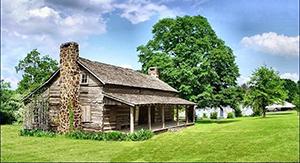
Millards Crossing 300The Sitton log house at Millard’s Crossing Historical Village.During Indian raids, Massie showed herself a woman of courage and prayer, gathering local women and their children together and hiding them in thickets on her property until the raids were over. While the women huddled together, sometimes for days at a time, they formed prayer, Bible study and mission groups. They longed for a church to be established in their part of Texas.

Soon, their prayers were answered. Massie’s late husband’s brother, Richard Sparks, donated five acres of land upon which a church could be built in Sparks Settlement, just north of the growing village of Nacogdoches. Massie invited Isaac Reed to preach the first Baptist sermon to a small group of Americans on April 21, 1836, beneath a huge spreading post oak tree at the nearby springs. This tiny congregation determined to build a one-room cabin that could be used both as a schoolhouse, which they later named Liberty School in honor of the Battle of San Jacinto fought that day, and a church building. The log structure was raised later that year. Old North Church constituted in 1838, with Isaac Reed and Robert Green presiding. John and Betsy Eaton, Charles Whitaker, Sarah Tipps, Mary Crain, Emily Knight, Ruth Anderson and two slaves, Anthony and Chancy, brought letters for membership. Charles Whitaker was elected church clerk.

This cabin was used until 1852, when the church constructed a frame building on the same foundation. In 1882, the building was remodeled and painted. In 1933, the sanctuary was situated to face the oak tree, where it remains today. When Hurricane Rita swept through Texas in 2005, the historic old post oak tree that had stood since long before 1838 was destroyed.

Nearby is the site of the earliest baptisms in East Texas, and the Old North Church Cemetery, adjacent to the church. Established in 1836 before the church was organized, it is the oldest Protestant cemetery in Nacogdoches County. Veterans of the American Revolution, the War of 1812, the Texas Revolution, and some 47 Confederate Civil War soldiers are buried here. The early Baptists of Texas credited this work to Massie, whom they named “the greatest of the great pioneer women.”

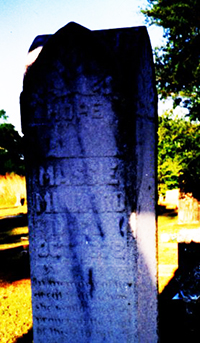
massie millard headstone 200Visit the church and find Massie Millard’s headstone in the cemetery nearby. It is a tall rectangular pillar that reads: “Massie Millard, died October 1878. In memory of her great faith when she knelt at the foot of this old hill.” Also visit the Historic Millard’s Crossing Historical Village, a collection of 19th century buildings brought together and arranged in the pattern of a small village on part of a 37-acre estate by Mrs. Albert Thomas. All of the restored structures are from Nacogdoches County and are an effort to preserve and display early buildings, antiques, tools and memorabilia that are part of the state’s cultural heritage. The Ruby M. Mize Azalea Garden in Historic Nacogdoches, the largest azalea garden in Texas, is a wonderful last visit to make this historic jaunt complete.

For more information:

• Learn more about Old North Baptist Church here.

• Read more about this story and of many other Texas Baptist women here.

• Discover more about Massie Millard’s life here.

• Read more about the Old North Church in the Handbook of Texas online.

• Find more interesting sites nearby here.

• Learn more about the Ruby M. Mize Azalea Garden here.


Directions to Old North Church and Cemetery near Nacogdoches

From Dallas

Follow US-175 E to TX-204 E in Jacksonville.

Follow TX-204 E to US-259 S in Nacogdoches County.

Continue on US-259 S to Industrial Blvd. Take the Farm to Market 343 exit from US-59 S.

Continue on Industrial Blvd. Drive to Co Rd 205 one mile.

From Houston

Take I-45 N.

Follow US-59 N to Industrial Blvd in Nacogdoches County.

Take the FM 343/Industrial Blvd exit from US-59 N.

Take the FM 343/Industrial Blvd exit.

Continue on Industrial Blvd. Drive to Co Rd 205 one mile.


Texas Baptist delivers food to school and hospital in North Korea

A Korean Texas Baptist minister returned recently from North Korea, where he verified delivery of 3.5 tons of corn to a school for orphans and one ton of noodles to a hospital.

Yoo Yoon, director of the Korean-American Sharing Movement of Dallas, has journeyed to North Korea more than two dozen times in the last two decades, typically to supervise the delivery of food and other supplies provided by Texas Baptist Men and other donors.

Corn and soccer balls to school for orphans

On the most recent trip, Yoon ensured the delivery of corn to Jungdung Hakwon, a Kangwon Province school for 210 orphans ages 13 to 18, in Moonchon City. He also delivered soccer balls the school had requested.

“We had a conference with the staff, and they asked us to install a solar water heater for the students” before the winter, Yoon said.

Noodles and gasoline to hospital

Yoon visited a provincial hospital in Wonsan City that serves about 250,000 people. In addition to supervising delivery of a ton of corn noodles, he also verified the arrival of one ton of gasoline for the hospital’s generator.

Yoon orphan school 350Yoo Yoon enjoys spending time with students at a school for orphans in North Korea’s Kangwon Province.While in Wonsan City, Yoon also visited Aeyukwon, a school for orphans ages 3 to 6 years old. School officials invited him to participate in activities as part of the International Children’s Day observance June 1.

“We played with the children, and I personally ran the race twice with the chosen boy and girl,” he said.

Contact with Korean Christians

In an officially atheistic country where Christians are less than 2 percent of the population, Yoon visited two churches. At each church, the pastor invited him to sing a hymn, and he offered the benediction at one worship service.

“We strongly felt the presence of the Holy Spirit,” he said. “We prayed that our activities might touch souls by the power of the Holy Spirit.”

Presence of governmental officials

Yoon also met with officials from the North Korea Education Foundation, the Compatriot Department and the Korean-American Relations Committee.

Throughout his time in North Korea, four “guides” accompanied Yoon and his traveling companions, keeping them under constant surveillance.

A Korean American asked one of the guides—a 48-year-old man with an undergraduate degree and a master’s degree from the most respected university in Kangwon Province—what he knew about church.

“He replied he had never heard of the word ‘church,’” Yoon said. “He asked us, ‘What is church?’”

During the group’s time in North Korea, they helped explain not only the meaning of church, but also were able to talk about Jesus Christ as the head of the church.

“The love and grace of our Lord have moved and melted the hearts of our agents, so the atmosphere became free and friendly,” Yoon said. “His love and grace is like the sun that melts away the ice—not quickly, but slowly and powerfully during 12 days of missions.”


Three former students sue Baylor, alleging sexual assault

WACO—Three women filed a federal lawsuit June 15 against Baylor University, alleging they were sexually assaulted on or near campus.

The suit, filed in U.S. District Court, identifies the women simply as Jane Doe 1, 2 and 3.

It accuses Baylor of a “deliberately indifferent response to three events of student-on-student sexual assault and subsequent sex-based harassment.”

The lawsuit alleges violations of Title IX—the law that prohibits sexual discrimination, including sexual harassment or assault—in educational institutions that receive federal funds, as well as the Clery Act, which requires universities to keep and disclose information about crime on or near their campuses.

University issues response

In response, Baylor issued a statement: “Due to the deeply personal and sensitive nature of individual cases and federal law, we do not publicly address specific cases, even when a student publicly shares details or reports of his or her own experience. This safeguard also helps assure other students that their right to confidentiality will be protected. The decision to report to the university or other authorities is a brave and personal choice and occurs on the student’s timetable. We’re committed to and have already begun to implement changes in order to provide a safe and supportive environment for students and faculty.”

Jane Doe 1

One of the women who filed suit asserts her assailant was a Baylor Bears football player, who sexually assaulted her April 26, 2014, at a university-owned apartment complex. According to the suit, she reported the assault two days after it occurred to a university physician who misinformed her about her legal rights. She also reported the alleged assault later to the Baylor advocacy center, but the university failed to act.

Due to the “heavy anxiety and depression” she experienced, she struggled academically and lost her scholarships. She eventually left Baylor with “substantial student debt with little academic credit to show for it,” the suit states.

Jane Doe 2

The second woman who joined the suit asserted she was sexually assaulted Sept. 4, 2004, at a house near the Baylor campus. At the time, she was under age 18.

She reported it to the chaplain and hall director in the dormitory where she lived. She also reported it to the Baylor Police Department, but the suit alleges the officer involved failed to include important facts in the report. The Baylor Health Center performed a physical examination but did not prepare a rape kit.

A Baylor dean who learned about the alleged assault encouraged the assault survivor to withdraw from the university, given the academic struggles that followed, the suit asserts. After she was suspended from the university and lost her scholarships and financial aid, she moved out of state in 2008.

Last year, she returned to Baylor to resume her studies but was denied grade forgiveness for the courses she failed after the alleged assault. She currently is suspended from Baylor.

Jane Doe 3

The third woman who joined the lawsuit asserted she was sexually harassed and assaulted starting in the fall of 2013 and continuing through December, 2015. At the time, she and the alleged assailant both worked in the university dormitories, where the assault occurred.

She reported the assaults to Baylor’s counseling center and health center and eventually informed the Baylor Police Department. The case remains open.

The suit asserts all three women “have suffered and continue to suffer untold psychological damage, profound emotional distress, permanent loss of standing in their community and damage to their reputations, and their future relationships have been negatively affected.”

In the past year, multiple women have announced publicly they were assaulted as students at Baylor, and they asserted the university failed to adequately address their claims.

Pepper Hamilton notes ‘fundamental failure’

Last September, Baylor’s board of regents hired Pepper Hamilton, a Philadelphia law firm, to investigate the university’s response to reports of sexual violence. 

Last month, they received a “comprehensive briefing” from Pepper Hamilton. The firm’s investigation revealed a “fundamental failure” by Baylor to implement Title IX and the Violence Against Women Reauthorization Act of 2013, according to a 13-page “Findings of Fact” document the regents released. 

Regents make personnel changes

As a result, Baylor’s board of regents demoted then-President Ken Starr, who subsequently also stepped down from his position as chancellor. The board also suspended “with intent to terminate” Head Football Coach Art Briles and sanctioned Athletic Director Ian McCaw, who resigned a few days later. 

In addition to the “Findings of Fact” document, Baylor regents also released a 10-page set of recommendations from Pepper Hamilton. 

Baylor implements recommendations

The university already has implemented some of the recommendations, and it will implement them all, Interim President David Garland said

Baylor put into place 10 broad-based implementation teams to address Title IX protocols and policies, athletics, engagement and education, centralized reporting and resolution, public safety, counseling, advocacy and other issues. They involve faculty, staff, administrators and students, Garland said.

Reagan Ramsower, senior vice president for operations and chief financial officer, heads a sexual assault task force, and Provost Greg Jones leads an initiative focused on spiritual life, Christian character formation and creating a caring culture.

Cases involve high-profile football players

Baylor’s regents hired Pepper Hamilton last year to conduct an independent external investigation soon after Sam Ukwuachu, a former Baylor Bears football player, was convicted and received a 180-day jail sentence and 10 years’ probation for sexual assault.

The assault, reported by a then-18-year-old soccer player, occurred in October 2013—about five months after Ukwuachu transferred to Baylor from Boise State, where he was dropped from the football team after an earlier act of violence involving a female student.

Two years ago, defensive end Tevin Elliot was convicted of sexual assault and sentenced to the maximum of 20 years in prison.

In March, a former Baylor student who reported Elliott raped her filed a lawsuit asserting multiple Title IX violations and negligence. The suit names Baylor’s board of regents, Briles and McCaw as defendants. 

Multiple news sources reported several major donors to Baylor pressured regents to consider reinstating Briles after a one-year suspension. Regents met June 13 but did not vote on Briles’ employment, a Baylor spokesperson told several news outlets.

To read more of the Baptist Standard’s coverage of Baylor University’s handling of campus sexual violence, click here.


Journey to Fort Parker: Early Texas Baptist Cynthia Ann Parker

Fort Parker, near Groesbeck, is the site of the amazing story of one of the first Baptist families to settle in Texas.

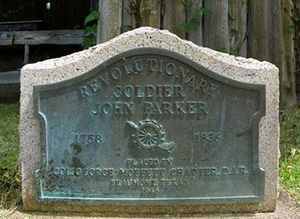
John Parker 300Col. John Parker—who lived from 1758 to 1836—was an American patriot, veteran of the American Revolution, frontier Ranger, surveyor and a Primitive Baptist preacher. When he was young, he scouted the western frontier of what became Kentucky and Tennessee with his friend, Daniel Boone. Parker named his first son Daniel in Boone’s honor. (To read about Daniel Parker of Elkhart, click here.) The Parkers made their way to Georgia, Tennessee and Illinois before they migrated south to Texas at the request of Stephen F. Austin.
Parker led a small colony of settlers—mostly members of his family—from Cole County, Ill., to Central Texas in the fall of 1833. About 30 people settled a mile west of the Navasota River and almost three miles northwest of the then-tiny village of Groesbeck in Limestone County. They built a log fort and stockade for protection against Indians and called it Fort Parker.

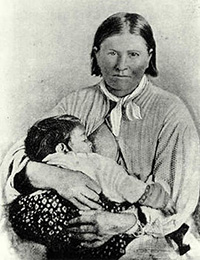
Cynthia Ann Parker 200Cynthia Ann Parker On May 19, 1836, just 29 days after Sam Houston’s victory at the battle of San Jacinto, a horrific tragedy occurred at Fort Parker. Some of the men had gone into the fields to work, leaving open the gates to the fort. Without warning, several hundred Comanches, Kiowas, Caddos and Wichitas attacked the fort, killing five men, including John Parker and two of his adult sons, Silas and Benjamin. They left for dead his wife, Sallie Parker, and many others. They also carried away into captivity two women and three children—Elizabeth Kellogg; Rachel Plummer and her toddler son, James Pratt Plummer; and 8-year-old Cynthia Ann Parker and her 5-year-old brother, John Richard Parker, children of Silas and grandchildren of John Parker. The survivors struggled to reach Fort Houston, living on “polecats and terrapins,” finally arriving there May 24.

Elizabeth Kellogg was in captivity about six months, during which time she was sold to the Keechis, resold to the Delawares, and eventually purchased by Sam Houston into freedom.

Rachel Plummer never saw her baby James again, and her other newborn, who arrived shortly after her capture, was killed. After almost two years, she finally was ransomed by traders in the Rockies, a 17-days’ ride north of Santa Fe, was purchased by the Donoho family, and taken to Independence, Mo., where she was restored to her extended family.

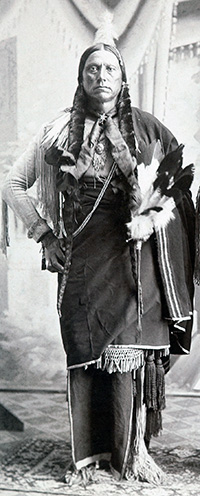
Quanah Parker 200Quanah Parker Separate tribes of Comanches abducted Cynthia Ann and John Parker.  Cynthia Ann grew up as a Comanche, married the son of  a chief, Peta Nocona, and had three children. Her son, Quanah Parker, became the last great Comanche chief. She was rescued in 1860 at the battle of the Pease River, more than 24 years later, and taken to live with relatives, but she could not adjust to the cultural change. Her heart was broken. After her baby daughter, Prairie Flower, died of pneumonia, Cynthia Ann stopped eating and died of influenza in 1870. Her brother survived and lived the rest of his life in Mexico.

The Old Fort Parker State Historical Museum and Park stands today on the site of the original settlement. Each Christmas, the town of Groesbeck and its historical society host Christmas at the Fort, where re-enactors set up walled tents and tepees and interact with visitors.

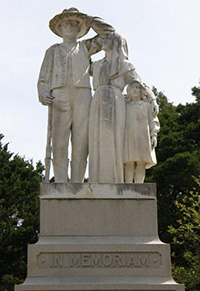
MemorialCemeteryStatue 200Down the lane and around the corner is the old Fort Parker Cemetery, where early Texas Baptist victims of the Fort Parker raid were laid to rest.

Visit Old Fort Parker State Historical Museum Park and the nearby cemetery and imagine how difficult the hardships were for early settlers of Texas—Baptists among them—and how precious it must have been to gather to worship with other believers in conditions such as these.

For more information:

• Read J. M. Carroll’s History of Texas Baptists, pg. 90-93. Also see Empire of the Summer Moon by S.C. Gwynne.

• Visit Old Fort Parker Historical Park website for admissions, map, and information.

• While you are in the area, enjoy the nearby Fort Parker State Park.

• See the Parker Memorial Cemetery website for directions, map and free admission.

Directions to Fort Parker:

Located 100 miles south of Dallas and 150 miles north of Houston.

Take Highway 14 between Groesbeck and Mexia.

Turn west on Park Road 35, just south of Fort Parker State Park, and drive one mile.


Statewide, children need Christian foster families

AUSTIN—Texas is in dire need of foster families after a spike in the number of children removed from their families in 2016 has left dozens of children sleeping in state offices.

The Associated Press reported more than 24 young people spent at least two April nights in state offices. That follows 42 children who spent at least two nights in social workers’ offices during March, when no foster homes were available for them.

Buckner Children and Family Services—which provides foster care in nine regions across the state, including North Texas, Lubbock, Amarillo, Longview, Lufkin, Beaumont and the Rio Grande Valley—is asking parents to pray about opening their homes to children at this crucial time.

“Each day, more children enter the foster care system,” reported Samela Macon, Buckner International’s senior director for domestic foster care. “They are hurting and alone. We are asking people to help care for them in their time of need.”

CPS has removed an average of 1,599 children from their homes every month this year, according to the Department of Family and Protective Services. In 2015, more than 30,000 children were in state care.

The compounding nature of the system in distress often puts pressure on the very people it is intended to serve.

“It’s such a traumatic experience for a child to be separated from their siblings,” Macon said. “Many of our children are caregivers for their siblings. When those kids are separated, they are left not knowing if their sibling will be taken care of or if they’ll even ever see them again. The experience re-traumatizes them.”

On average, children in the foster care system will experience more than six placements while in care, state statistics show. Although the average length of service from the point of removal to relinquishment of Department of Family and Protective Services responsibility is 54.3 months, 6 percent of the children who exited foster care last year will return within the next 12 months.  

“We have a tremendous need for foster families,” Macon said. “There’s a shortage of families and a shortage of families who can take in sibling groups. Beyond providing places of safety, foster families provide love and stability for children at their most vulnerable. Texas needs families to step forward to care for these children in need.”

Buckner staff members are working hard to recruit more foster families, she said.

To find out more about becoming a foster parent, request more information by clicking here or by calling (855) 264-8783.

Buckner offers training, education and encouragement along the journey of becoming a foster parent.


Lack of transportation hinders summer meal program

WACO—Lack of transportation creates a hurdle for many low-income families in Texas whose children could benefit from free summer meals, a study by the Texas Hunger Initiative at Baylor University shows.

THI 300“This is important work,” said Kathy Krey, research director of Texas Hunger Initiative, a program in Baylor’s Diana R. Garland School of Social Work, launched in partnership with the Texas Baptist Christian Life Commission.

“For years, we’ve heard from those who work with the summer meals program that transportation is a barrier. But this is the first published study looking at the summer meals program that corroborates this anecdotal evidence: Transportation is a problem.”

Partnerships encouraged

Partnering with local public transportation and communities in innovative and alternative ways to provide awareness of and access to the meals sites might increase participation, researchers suggested in the study, published in the Journal of Applied Research on Children: Information Policy for Children at Risk.

“That could range from putting advertisements on buses about site locations to distributing maps that people can pick up to find meals sites,” Krey said. “Some cities have experimented with using church vans to get kids to meal sites.”

The Texas Hunger Initiative partners with the Texas Department of Agriculture and Texas Department of Transportation Rural Transit to assist underserved areas where transportation is a common barrier to summer meals participation. This past year, the initiative met with local transit authorities to identify transportation barriers, identify assets and develop next steps.

In Lubbock, for example, a collaboration between the local Head Start and Spartan Transportation enabled car rides for children to summer meals sites.

Scope of the problem

Hunger is a major problem in Texas, where 17.2 percent of households are food-insecure, compared with 14 percent nationally. Food-insecure households have difficulty at some time during the year providing enough food for all their members due to a lack of resources. 

While participation is high in the United States Department of Agriculture’s school-year programs such as the National School Lunch Program and the School Breakfast Program, “we see the Summer Meals Program as an underutilized resource,” Krey said.

Texas requires school districts with 50 percent or more students who qualify for free or reduced-price meals to offer the summer meals program for at least 30 days. If a school does not continue to operate that program after those 30 days, other groups often step in to fill the gap, Krey said.

Need for sites and workers

Organizations often need neighborhood locations and volunteers, as well as to create spaces that are attractive—perhaps offering recreation opportunities—and comfortable in varying weather conditions, she noted.

For the study, researchers merged administrative program data, including total meals and reimbursement dollars, with Census-tract level demographic data from the U.S. Census Bureau. Tracts vary in physical area and generally have a population size between 1,200 and 8,000 people, with an optimum size of 4,000 people.

The study revealed:

  • Urban areas have the most summer meal sites, but they also have the most unmet need.
  • Availability of transportation in a Census tract strongly influences the meal site coverage and site density in both urban and rural areas.
  • Urban tracts—with more people who carpool, use public transportation or walk to work—are more likely to have access to a federally funded summer meals site.
  • Rural tracts with higher numbers of households who walk and take public transport are more likely to have sites than rural areas that relied more on cars.
  • In the suburbs, where more households use cars, people are less likely to have access to a summer meals site.
  • In rural and suburban areas, households with an unemployed primary wage earner are more likely to live in tracts without access to a site. But in urban areas, tracts with more jobless people are more likely to have summer meal sites.
  • Tracts with public housing units were more likely to have a summer meals site in suburban and rural areas, so those may be key areas for outreach for the summer meals program.

“Even if you have access to transportation, there can be safety concerns,” Krey said. “In an urban area, if you have a site across an Interstate from you, the parents may not want a child to walk for safety reasons. In urban areas, you’re likely to have a site closer to you, but it may be harder to get to for other reasons. Those are things you have to look at.”

For those who are some distance from a site, “we’ve had some parents who said it would cost them more money to go to a meal site for healthy meals than to go to the corner for chips and soda,” Krey said.

Increase awareness

Making people aware of the sites is another issue, she said—which is why collaboration with public transportation to advertise could be helpful.

Cultural barriers—such as language differences or distrust of government programs—also play roles in whether children attend summer meals sites, the study found. Some families may be reluctant because they fear a stigma for participating.

“While urban areas certainly have the largest number of tracts with sites, they also have the greatest need,” Krey said. “This isn’t surprising, as urban poverty is generally more visible, and residents may have increased access to government programs.”