Texas Baptists respond to Syrian refugee crisis in Lebanon

Texas Baptists continue to work with ministry partners in Lebanon to make life more bearable for Syrian refugees and provide educational opportunities for refugee children—including learning about Jesus.
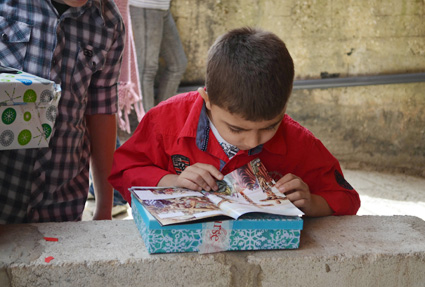
lebanese syrian boy425In Lebanon, a refugee boy from Syria reads as part of an educational program supported by Texas Baptists.Last year, Texas Baptists gave more than $17,000 to help Syrian refugee families in Lebanon. Combined with gifts from other partners, Texas Baptists’ donations helped buy 4,375 blankets, 1,235 mattresses, 200 stoves and 535 fuel vouchers, along with illustrated children’s Bibles, for Syrian refugees, working through the Lebanese Society for Education and Social Development.

“Our mission is to empower the church through educational and social ministry. The distribution to families is all done by the churches in Lebanon,” said Nabil Costa, executive director of the society. 

His organization chooses to “stay in the background” so the predominantly Sunni Muslim refugees recognize Christian churches as their benefactors, he noted.

“Grace and sacrifice are at the center of our faith,” he said. “These people see the difference. As Christians, we cannot help but love them, regardless of who they are.”
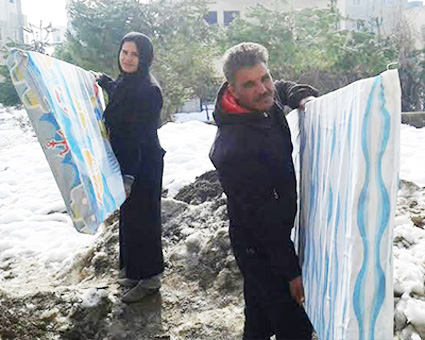
lebanese winter425Texas Baptist donations help provide winter survival supplies for refugees in Lebanon.The United Nations High Commissioner for Refugees reports about 1.08 million registered Syrian refugees in Lebanon, but Costa estimates the total number is closer to 1.5 million—between one-fourth and one-third of Lebanon’s population.

He succinctly describes conditions in the refugee camps: “In a word—terrible.” 

Refugees live in flimsy tents that offer little protection from bitter winter wind. Many possess only the thin clothing they wore when they escaped from Syria. While the U.N. High Commissioner for Refugees provides enough food for their survival, the distribution process strips the people of their dignity, he said.

“They are humiliated,” Costa said. “They do not feel loved or respected. … Our No. 1 job as Christians is to love them. We pray for them and let them know we have a heart to care for them.”

Children appreciate the illustrated Arabic Bibles the society provides, and many of their parents—who are looking for ways to occupy their time in the refugee camps—also read them. A significant number have accepted Christ as Savior, and many attend church, he noted.

But receipt of winter survival gear or other assistance does not depend on how the refugees respond to Christianity, he emphasized.
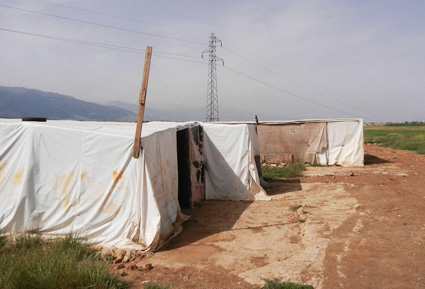
lebanese refugee tent4251.08 million registered Syrian refugees are in Lebanon, many living in tents like these.“We do our job and show them love. However they respond, we know the Holy Spirit is at work,” he said.

In addition to providing winter gear, Costa’s organization wants to do more to give refugee children enhanced educational opportunities.

“We are working with students with special needs,” he said. “Some have behavioral issues and need counseling. There are 300,000 Syrian students in Lebanon. Many need to learn life skills and social skills.”

Costa hopes Texas Baptists not only will respond to the immediate needs of the refugees this winter, but also will consider sponsoring refugee children. For $300 a month, a Texas Baptist family could provide the clothing, food and school supplies for a Syrian child, he noted.

In terms of winter supplies, $578 provides a family with three blankets, two mattresses, one stove and fuel vouchers for four months, and $248 provides two blankets, one mattress, one stove and fuel vouchers for a month. As little as $68 can buy four blankets and a mattress.

“Now is the right time to live out our practical Christianity,” he said. “Now is the right time to show people our love by giving to help truly needy people, regardless of their race or religion.”

To learn more or to contribute to refugee relief, click here.

EDITOR’S NOTE: The second paragraph was edited after the article originally was posted to clarify the information.

God can heal creation, environmental scientist tells Wayland chapel

PLAINVIEW—If God’s people take seriously their responsibility as stewards of creation and change their behavior, God still can heal damaged land with dwindling resources, an environmental scientist told students, faculty and guests at Wayland Baptist University

David Foster, professor of biology and environmental science at Messiah College and vice chair of the Au Sable Institute of Environmental Studies board of trustees, spoke at a chapel service during Wayland’s annual Creation Care Week emphasis.

Foster labeled creation care “this ancient thing that is part of our faith that we are rediscovering.”

Dominion assumes responsibility

Citing the first chapter of Genesis in the Old Testament, Foster said God gave humankind dominion over the earth. Responsibility to care for creation comes with dominion, he insisted.

“God left us in charge, and one day he’s going to come back and ask us for it,” he said. “We serve creation, and it serves us.”

Foster compared creation care to the biblical principle of Sabbath. In the Old Testament, the Sabbath was a period of rest through which not only people, but also the land and its resources were replenished. Farmers rotated crops or did not plant them at all as the land rested. 

Periods of inactivity allowed the resources and animals to replenish, he said. It also allowed time for the poor to regain some of what they had lost, as land ownership returned to its original people, families or tribes.

God establish Sabbath rest for the land as a way to bring heaven on Earth, he said.

“We go to church and we pray, ‘Thy kingdom come, thy will be done on Earth as it is in heaven.’ Do we really mean that?” he asked.

Hope for healing

At a time when it is easy to feel hopeless about the state of creation, dwindling resources and the ways humans are hurting the earth, Foster insisted there still is hope. God promised if his people will change, he will heal that land, he noted.

“Not if everyone changes, but if his people change,” Foster clarified. 

If God’s people change and care for creation, then the land will be healed and made complete through Jesus Christ, he said.


Loving acts earn a hearing for the gospel, Metaxas tells DBU audience

DALLAS—Christians not only should engage the culture in authentic and engaging ways, but also lead with loving and caring acts that provide an opening for them to present the gospel, author and cultural analyst Eric Metaxas told professionals in medicine, business, religion and education during a leadership lecture at Dallas Baptist University.

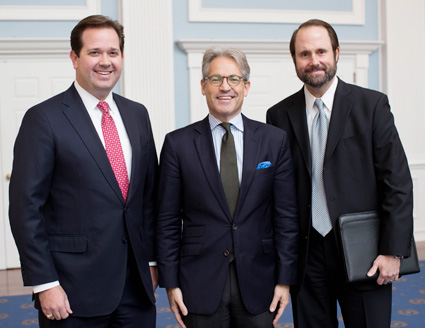
metaxas wright denison425Cultural analyst and author Eric Metaxas (center) is welcomed to Dallas Baptist University by Adam Wright (left), vice president and dean of the Gary Cook School of Leadership, and Jim Denison, founding president of the Denison Forum on Truth and Culture and senior fellow of the Institute for Global Engagement at DBU. (Photo / Brittany Partain)“We have to live our faith in a real way,” Metaxas said. “That’s the No. 1 thing we can do. If we demonstrate our love for others, that communicates something that is very, very important.”

Humble and loving acts—not irrefutable logical arguments—earn Christians a hearing for their faith, he insisted. 

“I think that it is important for us to understand that even though the Bible is logical and our faith is logical, at the end of the day, it isn’t about logic. It’s about the Holy Spirit,” he said. “Sometimes we have to understand that for someone to even listen to the logic or to whatever we have to share, it is going to take an act of love and an attitude of humility.  

“Being sensitive is a form of love. You are not going to change the truth, but you are going to change how you communicate if you really love them and want to reach them.”

Institute for Global Engagement Leadership Lecture Series

Metaxas, whose biographies of Dietrich Bonhoeffer and William Wilberforce remained on the New York Times bestseller lists several weeks, spoke on the DBU campus as a part of the inaugural Institute for Global Engagement Leadership Lecture Series. DBU’s Institute for Global Engagement sponsored the event.

Metaxas recently launched a daily radio show that highlights his practical engagement of Christian truth with the culture. He delivered the keynote address at the 2012 National Prayer Breakfast in Washington D.C.

In addition to the leadership lecture, Metaxas also spoke to the DBU student body in chapel, presenting his Christian testimony. 

“The Lord wants to speak to each of us,” Metaxas told the students. “And he does so in a variety of ways.”

Established in the summer of 2014, the Institute for Global Engagement is a joint effort between DBU’s Gary Cook School of Leadership and the Denison Forum on Truth and Culture. The institute provides programs and events that bridge the gap between academics and professional life, attempting to provide thoughtful and practical Christian engagement in the public sphere.

Metaxas a ‘model’ for institute

“When we began looking toward what the IGE could mean and these types of lectures could accomplish, we wanted to begin with somebody who would capture and would model as an example all that the IGE intends to be,” said Jim Denison, founding president of the Denison Forum on Truth and Culture and senior fellow for the institute. “So, we began with Eric Metaxas. He was not only our first choice; he was our only choice.”

Adam Wright, vice president and dean of the Gary Cook School of Leadership, noted university leaders felt privileged to have Metaxas on campus.

“Eric Metaxas is the type of voice we want to bring to campus for these events—a voice that helps to bring the power of the gospel to bear on the daily work of our lives,” Wright said.


BGCT messengers to vote on officers and budget

FRISCO—Messengers to the Baptist General Convention of Texas annual meeting will elect new officers, consider a $35.4 million budget and explore distinctive Baptist beliefs and polity.

“Deep Roots: Living Legacy” is the theme of the meeting, Nov. 8-10 at Dr Pepper Arena in Frisco. 

rene maciel130Rene MacielPrior to the annual meeting, three Texas Baptists announced their willingness to be nominated for office—Rene Maciel, president of Baptist University of the Américas and incumbent BGCT first vice president, for president; Bedilu Yirga, pastor of Ethiopian Evangelical Baptist Church of Dallas, incumbent second vice president, for first vice president; and Danny Reeves, pastor of First Baptist Church in Corsicana, for second vice president.

At the recommendation of the BGCT Executive Board, Texas Baptists will vote on a $35.42 million budget, compared to $35 million for 2015. The proposed 2016 budget depends on $31 million in Cooperative Program receipts from churches—down about $900,000 from the 2015 budget. 

However, the recommended budget anticipates $4.42 million in investment income, compared to $2.6 million from investments and $500,000 from individual donors this year. The $1.32 million increase is available in part due to invested proceeds from the sale of the former Baptist Building to Baylor University’s Louise Herrington School of Nursing. The BGCT Executive Board staff offices moved to a building at Rambler Park, near Presbyterian Hospital in North Dallas, at the end of August.

Including revenue from the North American Mission Board, conference and booth fees, product sales and other miscellaneous sources, the BGCT anticipates spending $37,996,806 next year—an increase of $212,509 over 2015.

The proposed budget includes no salary increases for staff, but it absorbs a 20 percent increase in medical insurance instead of passing along the cost to employees.

If approved by messengers, the BGCT will continue to divide undesignated receipts in the same manner as in recent years, with 79 percent allocated for BGCT and 21 percent for worldwide causes. Each church determines the recipient or recipients of its worldwide giving. The Executive Board proposal recommends $1.47 million for Texas worldwide missions initiatives and partnerships, unchanged from the 2015 budget.

joel gregory250Joel Gregory, professor of preaching at Baylor University’s Truett Theological Seminary.A variety of workshops—including a panel discussion with BGCT Executive Director David Hardage and former executive directors Bill Pinson, Charles Wade and Randel Everett—will focus on Baptist distinctives.

Featured preachers at the annual meeting include Joel Gregory, professor of preaching at Baylor University’s Truett Theological Seminary; Taylor Sandlin, pastor of Southland Baptist Church in San Angelo; and Ralph West, pastor of The Church Without Walls in Houston.

Prior to the annual meeting, affinity group rallies are scheduled at 6:30 p.m. Nov. 8. The African-American rally will be at Friendship Baptist Church in The Colony, and the Hispanic rally will be at Pilgrim Chapel on the Dallas Baptist University campus.

Texas Baptists’ annual meeting concludes with a concert at 7 p.m. Nov. 10  at Cottonwood Creek Baptist Church in Allen featuring The Singing Men of Texas, marking the group’s 40th anniversary.


Houston voters reject gay rights ordinance

HOUSTON (BNG)—Voters overwhelmingly rejected Houston’s Equal Rights Ordinance, designed to expand the rights of lesbian/gay/bisexual/transgender citizens.

 The Nov. 3 referendum failed 61 percent to 39 percent to add sexual orientation and gender identity as protected classes in laws that prohibit discrimination in housing, employment, city contracting and business services. 

Annise ParkerThe vote followed a yearlong court battle marked by a religious liberty controversy after city officials sought to subpoena sermons of pastors who spoke out against the ordinance.

Ed Young, pastor of Houston’s Second Baptist Church, declared the referendum a moral issue—not a vote about discrimination—at a watch party for the Campaign for Houston, which opposed the ordinance.

“Everybody’s interpreted this as a political thing, and that’s not the perspective from which I come,” Young said, according to the Texas Tribune. “This is beyond politics. Someone asked earlier if Houston would be perceived by the national press, and other cities, as a place that discriminates. You know this great city. That’s not who we are.”

At First Baptist Church in Houston, Pastor Greg Matte used the church website to urge church members to vote against the measure.

“This proposition isn’t about equalization,” Matte said. “It’s about normalization of something that goes against God’s design.”

‘Bathroom bill’

Supporters—including Mayor Annise Parker—accused the campaign against the proposed ordinance of using scare tactics like calling it the “bathroom bill” that would permit sexual predators to enter women’s restrooms and locker rooms by pretending to be transsexual.

Last year, religious liberty advocates registered concern about subpoenas ordering five Houston pastors to turn over sermons as evidence in a lawsuit seeking repeal of the non-discrimination ordinance originally adopted by the City Council.

Parker later withdrew the subpoenas after meetings with local and national clergy. The Texas Supreme Court ruled in July city officials either must repeal the measure or put it on the ballot for voters to decide.

Mayor pledges to continue fight

After voters defeated the ordinance, Parker—who is a lesbian—pledged to continue fighting against LGBT discrimination.

“No one’s rights should be subject to a popular vote,” she said in a concession speech. “It is insulting, it is demeaning, and it is just wrong.”

The mayor called the opposition effort “a campaign of fear mongering and deliberate lies.”

“They just kept spewing an ugly wad of lies from our TV screens and from pulpits,” she said. “This was a calculated campaign by a very small but determined group of right-wing ideologues and the religious right, and they know only how to destroy, not how to build up.”


TBM volunteers care for fire and flood survivors

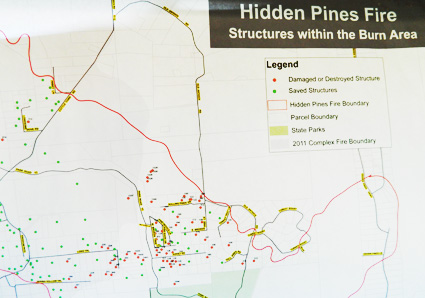
SMITHVILLE—With chainsaws and skid-steer loaders, Texas Baptist Men volunteers removed charred trees and debris from burned-out home sites in the Hidden Pines area in Bastrop County and sifted through ashes to help residents reclaim mementos that survived the blaze.

tbm bill mcdowell425Bill McDowell, a Texas Baptist Men disaster relief volunteer and part of the chainsaw crew from Harmony-Pittsburg Baptist Association, fells a charred tree at a secluded home site northwest of Smithville. (Photo / Ken Camp)Meanwhile, other TBM disaster relief workers traveled to the Rio Grande Valley to shovel mud out of flooded homes in Weslaco, to Floresville to provide a portable shower unit to displaced people, and to San Marcos, Hondo and New Braunfels to assess needs in response to widespread flooding.

The Hidden Pines wildfire north and west of Smithville spread across more than 4,500 acres, destroying 66 homes, the Bastrop County emergency management office reported. In less than three weeks, TBM volunteers completed about 20 job requests from area residents. 

When emergency management officials initially allowed residents to re-enter the burned-out area, TBM volunteers—including volunteer chaplains trained in critical incident stress management—were among the few outsiders granted access.

tbm harm pitt 425Damage from the Hidden Pines Fire in Bastrop County in October covered 4,582 acres.“It is a precious privilege for us to be allowed in,” said Henrietta Gentry, volunteer chaplain coordinator from First Baptist Church in Vidor. “We are present, just to let the people know we care about them.”

Some residents were reluctant to talk, but others were eager for someone to hear their story, she added. If they were open to conversation, chaplains let them know about the services TBM disaster relief volunteers could offer at no charge to them.

At first, she noted, some view any offers with suspicion, fearing scams. In time, however, some of the most skeptical disaster survivors become some of the most outspoken advocates for TBM’s disaster relief work, she said.

As he drove down dirt roads into secluded areas north of Smithville to monitor the quality of site-clearing operations, residents greeted Butch Moore, a TBM disaster relief volunteer from Second Baptist Church in LaGrange, as a welcomed friend. 

tbm butch moore425Owners of a burned-out residence outside Smithville greet Butch Moore (left), a Texas Baptist Men disaster relief volunteer from Second Baptist Church in LaGrange, who coordinated deployment of skid-steer loaders and their operators in Bastrop County. (Photo / Ken Camp)Moore coordinated deployment of skid-steer loaders and their operators to job sites. First, heavy-equipment operators cleared metal from sites to give residents and volunteers a safe place to work. Next, TBM volunteers sifted ashes in areas residents identified as likely locations for jewelry or other valuables they might reclaim. Finally, the skid-steer operators cleared slabs and the surrounding area of debris to allow homeowners a clear site for rebuilding.

One former homeowner Moore met was living in a tent near his burned-out home site. The man told him he intended to rebuild on the same site.

“I asked him how he intended to do it, and he said, ‘I have a hammer and a handsaw,’” Moore recalled. 

tbm hiddenpines map425Once the local utility company restored electricity to the area and installed a pole with electrical outlets, Moore brought the man several power tools and a heavy-duty extension cord.

A TBM chainsaw crew and skid-steer loader operator from Harmony-Pittsburg Baptist Association cleared the site of a home belonging to a Bastrop County firefighter. The fires consumed his house while he was trying to contain the wildfire and save the homes of his neighbors, Moore noted.

Mud-out in Weslaco

Meanwhile, TBM deployed an incident-management team to facilitate a multi-faceted disaster relief operation in Weslaco, where floods filled about 1,000 homes with water ranging from one foot to four feet in depth. 

tbm billblackwell dozer425Bill Blackwell, a Texas Baptist Men disaster relief volunteer from Canyon Lake, uses a skid-steer loader from Gonzales Baptist Association to clear metal from a burned-out home site northwest of Smithville. (Photo / Ken Camp)Mud-out crews shoveled mud from homes, rip out soaked flooring and damaged drywall, and then power-washed and disinfected surfaces. Other volunteers distributed cardboard boxes and helped residents gather scattered possessions.

To contribute to TBM disaster relief, click here or send a check designated “disaster relief” to Texas Baptist Men, 5351 Catron, Dallas 75227.

While TBM volunteers provide immediate relief to disaster victims, Texas Baptists’ Disaster Recovery office mobilizes volunteers for long-term recovery and rebuilding. Some families in Central Texas whose homes flooded during Memorial Day storms flooded again in recent days—particularly San Marcos and the surrounding area of Hays County and parts of nearby Caldwell County. 

“Texas Baptists’ Disaster Recovery is working with long-term recovery efforts in Hays and Caldwell counties,” said Marla Bearden, disaster recovery specialist with the Baptist General Convention of Texas. “Our hope is to repair and/or rebuild up to 12 homes in these counties, working with the Blanco River Regional Long-term Recovery Committee.”

BOUNCE rebuilding projects scheduled

Bounce—the student branch of Texas Baptists’ Disaster Recovery—has rebuilding projects in San Marcos scheduled during spring break 2016.

“We are also beginning plans to repair homes in the Rio Grande Valley area that were affected by flooding over Memorial Day” and again in late October, Bearden added. “We are working with First Baptist Church in Weslaco, the Rio Grande Valley Baptist Association and the Hidalgo Faith Communities for Disaster Recovery.

Texas Baptists’ Disaster Recovery also is working with First Baptist Church in Del Rio to enlist volunteers to rebuild homes in Acuña, Mexico, hit by a tornado.

“Needless to say, it has been a busy year,” Bearden said. “We are soliciting funds to help us rebuild and repair homes. We work with the uninsured and the under-insured, as well as the elderly and disabled.”

To contribute to recovery efforts, mail checks to Texas Baptists’ Disaster Recovery, 7557 Rambler Rd., Suite 1100, Dallas 75231-2310 or click here.   


Missions emphasis at UMHB changes student’s life

BELTON—During the annual missions emphasis week at the University of Mary Hardin-Baylor, missionaries from around the world travel to the Belton campus to introduce students to the missionary lifestyle. For some—like Kacie Kripner—it plants seeds that ultimately change their lives. 

umhb kacie kripner400Kacie Kripner of Villages of Hope-Africa with a friend.As both an undergraduate and graduate student at UMHB, Kripner took part in missions emphasis week. She attended a few seminars and visited the exhibits missionaries set up inside the student union.

“I got to meet missionaries and be encouraged by that,” Kripner said. “It really opened my eyes to what was happening around the world, because all I really knew at that point was what my youth group had done.”

Kripner participated in youth mission trips to Mexico and around the United States, but she didn’t have any experience with global missions.

“It was another seed that was planted in this journey,” Kripner said. “And it continued to grow in me.”

While she was finishing her master’s degree, Kripner received a job offer she had been dreaming about since she was 5 years old.

“I got hired by Sea World as an animal trainer,” Kripner said. 

Life-changing trip

Two years into her dream job, Kripner went on a trip that changed her life.

“I thought I was only going on a short-term mission trip with Villages of Hope-Africa,” Kripner said. “But the Acholi people of Uganda broke my heart and changed my world.”

After returning from Uganda and going back to her job at Sea World, Kripner continued to work with Villages of Hope. In fact, she devoted so much time to the missions organization, it became the equivalent of a second full-time job. After praying for direction, Kripner left her dream job to follow God’s calling on her life.

Today, Kripner works full-time with Villages of Hope-Africa, training short-term teams and leading them while in Uganda. 

When she returned to the UMHB campus for missions emphasis week, this time she was one of the missionaries sitting behind the tables she visited as a student.

“I feel so blessed to come back here and get to talk to students,” Kripner said. “This school is making disciples to go out and make disciples of all nations. That’s what we’re teaching students.”

Kripner is proud of the way her university emphasizes missions.

“The campus comes around and supports this week in a way that I don’t think a lot of other campuses do,” Kripner said. “It shows that these four or five years that students spend here are about so much for than time in a classroom.”

God can use you

Kripner cites her personal experiences to assure students whatever career they pursue, God can use them.

“Our purpose in life is bigger than any job title,” Kripner said. “It’s to be a disciple for Christ.”

Asked what she would say to a younger version of herself walking by tables in the university’s student union, Kripner answers: “Live in the moment. Be bold. We’re planting seeds and being light for Christ.”


DBU alum Ben Zobrist a missionary to teammates

KANSAS CITY, Mo. (BP)—Ben Zobrist has proven his value on the baseball field to the Kansas City Royals, homering in two key situations during the American League Championship Series. More important to him, however, is his Christian influence on teammates.

“Ben, by virtue of the providence of God, has ended up being a missionary in a very difficult mission field of professional sports,” said Byron Yawn, senior pastor of Community Bible Church in Nashville, where Zobrist and his wife, Julianna, are members. “Ben deeply values those connections he has with people, the relationships that he has.”

dbu zobrist425Ben Zobrist (center) is the son of an Illinois pastor who played college baseball at Dallas Baptist University before entering the Major Leagues. (PHOTO/Kansas City Royals)Zobrist, son of a pastor in Eureka, Ill., became a Christian as a child. In high school, after realizing sports held too prominent of a place in his heart, he recommitted himself to Christ. 

After a collegiate career at Dallas Baptist University, Zobrist spent most of his professional career with the Tampa Bay Rays, making the American League All-Star team twice and playing in the 2008 World Series. 

A trade after the 2014 season sent him to Oakland. Kansas City acquired Zobrist in a mid-season acquisition this year, and he offered the Royals what he has brought to teams throughout his career—a little bit of left field, a little bit of third base, a little bit of right field—before settling in at second base down the stretch.

‘Do your job with excellence’

“Like anybody else that goes and does their job, there’s a way to do your job with excellence,” Zobrist said in an interview with the Florida Baptist Witness. “You want to represent Christ well with doing your job, first and foremost, because that’s what you’re there to do.”

For Zobrist, family is a major part of his life, whether it’s his wife and their kids, his baseball family or his church family. The Zobrists have two children, with a third child due just days after the World Series ends.

Even with Zobrist on the road so much for his job, the couple made a commitment never to be apart more than six days at a stretch—which means his wife and children spend a fair amount of time traveling with him or hanging out at the ballpark. 

“There’s not a question within anybody’s mind around the Zobrists, and especially Ben, that his family is an incredibly tight unit, and a major, major priority in his life,” Yawn said.

His teammates are another of Zobrist’s priorities, and his positive attitude and approachable spirit in the locker room make him a unifying force with the team. He often prays for his teammates and engages them in conversations about the gospel, and Yawn said he’s able to do this because of the respect he has earned as a steady and solid leader.

“The consistency of the godliness of his life is a natural attraction to a diversity of personalities on the team,” Yawn said. 

Staying connected

Even though his job requires him to be absent from his church family much of the year, Zobrist stays connected to Community Bible Church. He listens to podcasts of the sermons, and church members make it a point to stay in touch during the season, keeping him abreast of all that is happening, providing accountability and letting him know he isn’t forgotten, even when he isn’t in attendance.

“We try to view Ben somewhat like we would a salesman that has to travel throughout the year and be gone a majority of the time, where we accommodate this season of his life,” Yawn said. “Of course, his spirit is such that when he’s done with baseball, we know exactly where he’ll be.”


Athens church wants community to know the point of its steeple

ATHENS—Practically speaking, First Baptist Church in Athens recently erected a new steeple to fix a leak the same age as the church’s 54-year-old cupola. But the church also saw it as a teachable moment to re-envision how it presents itself to its neighbors.

athens steeple workers425First Baptist Church in Athens erected its new steeple Oct. 21. Pastor Kyle Henderson used it as an opportunity to teach the church and community the point of the steeple. (Photo / Steve Gowan)Pastor Kyle Henderson wanted his congregation and community to understand the point of the steeple. So, he outlined its components and explained each.

• The cross. Mounted atop the peak of the steeple, it represents Jesus. Rolled up inside it is a Scripture: “And I, when I am lifted up from the earth, will draw all people to myself” (John 12.32). A document also describes the steeple’s meaning, signed by 100 church members who were there to witness the steeple-raising.

The spire. It represents God the Father, points up toward and holds up the cross, and houses the Scripture, “To you, O Lord, I lift up my soul” (Psalm 25:1).

The cupola. With slotted vents that allow the steeple to breathe, it represents the Holy Spirit.  Inscribed in it are these verses: “The wind blows wherever it pleases. You hear its sound, but you cannot tell where it comes from or where it is going. So it is with everyone born of the Spirit” (John 3:7-8). 

• The connector. It connects the two main parts of the steeple and represents the church body connecting to God. In it is written, “For Christ holds the whole body together with its joints and ligaments, and it grows as God nourishes it” (Colossians 2:19).

The lantern. Inside frosted windows is a light that will shine out to the city. The lantern represents the Bible as the guide for God’s people. Written inside is this verse: “Your word is a lamp for my feet, a light on my path” (Psalm 119:105)

The clock. It represents a moment in time and symbolizes every moment matters. Inscribed in it is a New Testament passage: “Now is the time of God’s favor, now is the day of salvation” (2 Corinthians 6:2)

 • The base. It represents the foundational concept of grace. God’s grace is the church’s message to its city. “There is a remnant chosen by grace. And if by grace, then it cannot be based on works; if it were, grace would no longer be grace” (Romans 11:5-6).


Developer honors heritage of former church building

DALLAS—A funny thing happened after real estate developer David Spence bought an abandoned church building, intending to demolish it and create a parking lot to serve nearby storefront property he was renovating. 

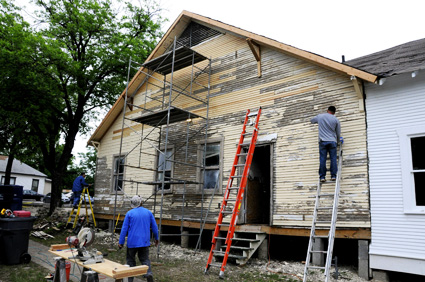
plates renovation425Workers scrape the exterior of the building originally occupied by Davis Street Baptist Church, preparing to repaint it. Eventually, developer David Spence hopes a restaurant will lease the building. For now, it houses the Sacred Plates exhibit as a tribute to the church’s spiritual impact on its community. (PHOTO / David Spence)“I fell in love with the building,” said Spence, founder of Good Space, who grew up attending First Baptist Church in Waco. 

While builders were salvaging floorboards from a former Sunday school classroom, they discovered a sheaf of papers, including fliers from 1941 inviting Oak Cliff residents to attend a revival meeting at Davis Street Baptist Church led by Pastor Virgil E. Hunton. 

Curious about the church’s history, Spence searched the Internet and found a 1936 newspaper article about Hunton. He learned Hunton, who worked days as transportation manager at the Alolphus Hotel in downtown Dallas, built the church—both the congregation and the structure in which it met—himself.

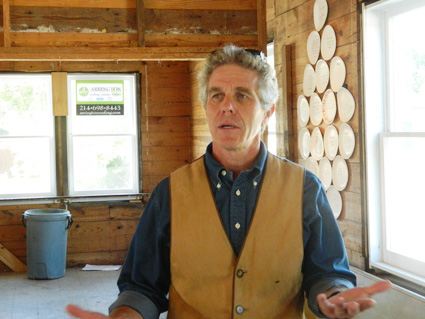
plates spence425David Spence created the Sacred Plates exhibit, on display in the building originally occupied by Davis Street Baptist Church in Oak Cliff, to pay tribute to the congregation and offer a “spiritual snapshot of the community.” (PHOTO / Ken Camp)Spence tracked down Hunton’s sole surviving son, B.J., age 90, in Mesquite. He described how his father started a church at a storefront in the Cement City community in what is now the Chalk Hill area of West Dallas. In time, that congregation purchased property near the intersection of Davis and North Tyler in Oak Cliff.

Hunton, his sons and other volunteers labored at the property after work each day as long as daylight permitted, digging holes for foundation piers and erecting the building. Once he and his helpers completed the structure, Hunton set out to build up its membership, his son recalled.

plates hunton program newsp425Pastor Virgil Hunton founded Davis Street Baptist Church, and he and his sons—together with other volunteers—constructed the building where the congregation worshipped in the Oak Cliff area of Dallas. Also shown are a newspaper clipping about his ministry and a 1941 revival program. (PHOTO / Courtesy of B.J. Hunton family)“He said that whenever his dad saw a moving van coming into Oak Cliff, he would follow it and invite the family to church,” Spence said. 

Hunton, who died in 1972, went on to build three churches in New Mexico. Davis Street Baptist Church continued to grow and eventually relocated to the south, becoming Bishop Avenue Baptist Church. Several other congregations—Tyler Street Baptist Church, Tyler Heights Baptist Church and Iglesia del Señor—later occupied the structure at Davis and Tyler.

Instead of leveling the church building, Spence looked for creative ways to honor the congregation that worshipped there, the pastor who founded the church and the spiritual heritage of the surrounding community.

plates single425The Sacred Plates exhibit in the building originally occupied by Davis Street Baptist Church features Scripture verses and other “favorite soulful words” from Oak Cliff residents. (PHOTO / Ken Camp)He enlisted Brent McDougal, pastor at Cliff Temple Baptist Church, to lead a brief “decommissioning” service for the building. 

“We offered a word of thanks for all the good that had been done there, and we prayed it will continued to be used for kingdom work, even if it no longer will be a church,” McDougal said.

Although the building no longer provides a practical meeting place for a congregation, Spence recognized the building could be renovated and leased to a restaurant, offering community residents a place to gather and enjoy life together.

“I just can’t bear the idea of somebody putting a bar in here,” he said, joking he feared for his eternal destiny if he allowed it. 

plates front425Developer David Spence originally planned to demolish the building where Davis Street Baptist Church met. But after learning more about the church’s history, he determined to pay tribute to the spiritual impact the congregation had on its community. (PHOTO / Courtesy of David Spence)When boutiques and galleries that surround the property scheduled a street festival in mid-October, Spence put together an exhibit linking the church building’s past and future—Sacred Plates.

He distributed paper plates at a variety of gathering places in Oak Cliff and invited people to write a Scripture verse, song lyrics, quotation or “favorite soulful words” on the plates. 

Spence solicited involvement from three Oak Cliff churches—Cliff Temple Baptist; Kessler Park United Methodist, where he is a member; and a nondenominational congregation. He also sought submissions from students at Dallas Baptist University and patrons of local businesses, including a pie shop, a bookstore, an art gallery and a yoga studio.

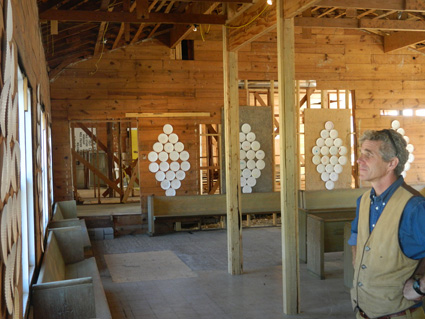
plates inside425David Spence hopes whoever leases the property originally occupied by Davis Street Baptist Church will continue to display the tribute he created to honor the congregation and its founding pastor, Virgil Hunton. (PHOTO / Ken Camp)He arranged more than 300 plates into displays in the church building’s stripped-down sanctuary, combining it with effective lighting and accompanied by a soundtrack that includes music ranging from Southern Gospel songs, to Gregorian chants, to soul music, to selections from Handel’s Messiah.

“The result is a lovely spiritual snapshot of the community,” Spence said. Reflecting on the seasonal TV classic, It’s the Great Pumpkin, Charlie Brown, he added, “Oak Cliff is a sincere pumpkin patch.”

He is opening the church building from 7 to 10 p.m. every Monday until Thanksgiving, allowing local residents to view the display and add a plate with their own message.

Spence won’t require any prospective restaurateur who leases the building to maintain the Sacred Plates exhibit, but he hopes the proprietor at least will maintain the small tribute section he created to honor the church’s founding pastor. 

Ideally, Spence would love to see a family-style home-cooking restaurant or soul-food restaurant inhabit the space. 

“Wouldn’t it be a great place for a Gospel brunch?” he suggested.


BUA ethics speakers spotlight issues related to race

SAN ANTONIO—Power-sharing in churches—particularly across lines of culture, language and race—only occurs within “the realm of God’s grace,” Albert Reyes, president of Buckner International, told a crowd at Baptist University of the Américas.

Reyes recounted childhood memories with white and black friends and his sadness at looking across so many congregations of one race and culture. 

“We can’t be who we say we are and look at others in ways that diminish their humanity,” said Reyes, former BUA president.  

Voluntarily sharing power

“The biblical model of ethnic relations in (the New Testament book of) Acts was when the group in power—the Hebrew-speaking believers—voluntarily shared power, control and resources with those who didn’t have them—the Greek-speaking believers.” 

Reyes spoke on “The Jesus Agenda and the Samaritan Factor: Incarnational Race Relations” as part of BUA’s inaugural T.B. Maston Symposium. The symposium honors the legacy of the pioneering professor of Christian ethics at Southwestern Baptist Theological Seminary.

Reyes also joined a panel discussion along with other symposium speakers—ethicist Bill Tillman, director of theological education for the Baptist General Convention of Texas, and Kathryn Freeman, public policy director for Texas Baptists’ Christian Life Commission.

Tillman issued a wakeup call to churches. He particularly called on Christians to recognize racism in American society and courageously identify what it is doing to whom. 

Racial reconciliation

Before Texas Baptists can hope to achieve racial reconciliation, they need to get to know people of other races and cultures, Freeman said.

“How can we be reconciled if we don’t know one another?” she asked.

Invoking Jesus’ parable of the Good Samaritan, she challenged Christians to move out of their comfort zones and work to “make sure that people stop being beaten up on the Jericho Road, and not just complain because they had to travel that road.” 


Persecution real & widespread, Everett tells DBU crowd

DALLAS—An average of 20 Christians a day are martyred for their faith—7,000 a year globally. And Christians in areas of greatest persecution want to know why followers of Jesus in the West remain mostly silent, Randel Everett, founding president of the 21st Century Wilberforce Initiative, told students and faculty at Dallas Baptist University.

Everett, former executive director of the Baptist General Convention of Texas, delivered the T.B. Maston Lecture in Christian ethics at DBU. The lecture series honors the legacy of a pioneering 20th century ethics professor at Southwestern Baptist Theological Seminary.

Extent of religious persecution

“The foundation of all our freedoms is the freedom of religion,” Everett said. But more than three-fourths of the world’s population—about 5.3 billion people—live in a context of religious persecution or repression, he said.

“More than 300,000 people of all faiths have been killed in the last 10 years because of their faith,” he said.

Last year, more than 1,000 church buildings were destroyed or seriously damaged in one province in China, he reported. And at Garrisa University in Kenya, Al-Shabab gunmen killed 147 students who dared identify themselves as Christians.

“There were 1.5 million Christian in Iraq before 2003. There are about 250,000 now,” he said.

Everett recalled a conversation with a pastor from Syria.

“They are killing our fathers. They are raping our women. They are burning our churches. And the church in the West couldn’t care less. Why?” the pastor asked.

Everett identified five sources of religious persecution:

• Government oppression. He cited North Korea and Eritrea as two of the “darkest” nations in terms of denying religious liberty. “In Eritrea, 2,000 to 3,000 Christians currently are in prison because of their beliefs,” he said.

• Militant religions. In Libya, the Islamic State—also known as ISIS—beheaded 21 Coptic Christians, he noted. “In Nigeria, Boko Haram continues to terrorize the nation, where over 650,000 are displaced and over 100,000 have become refugees,” he said.

• Religious intolerance. “Genocide is taking place in the Middle East,” he said, noting religious minorities are targeted.

• Mob violence. In Bangladesh, Pakistan, Indonesia and other parts of the world, violent mobs have victimized religious minorities.

• Family disapproval. In some cultures, women who violate religious customs are murdered by their own fathers or brothers in so-called “honor killings” when they are accused of bringing shame on a family.

Persecution ranges from verbal harassment, workplace discrimination and rejection by friends to the loss of freedom and loss of life, Everett said.

Christians must speak up for people who are persecuted for their faith, because the Bible commands it, he said.

“We can make a difference,” he insisted, noting Jesus set the example of a ministry focused on release for captives and setting free the oppressed.

“We when are doing that, we are operating in the arena where Jesus is at work,” he said. “Persecution keeps people in darkness about the gospel.”