Multiracial churches may not promote progressive racial attitudes

WACO—A national study raises troubling questions about multiracial congregations’ potential to address racial inequality.

Researchers at Baylor University, the University of Southern California and the University of Chicago conducted the study, “United by Faith? Race/Ethnicity, Congregational Diversity and Explanations of Racial Inequality,” published in the journal Sociology of Religion.

kevin dougherty120Kevin Dougherty“We find little evidence that multiracial congregations promote progressive racial views among attendees of any race or ethnicity,” the researchers wrote. Views of minorities in multiracial congregations contrast to those generally held by religiously affiliated African-Americans and Hispanics.

“Whose interests are multiracial congregations serving?” asked researcher Kevin Dougherty, associate professor of sociology at Baylor. “We want to believe that they promote a shared, integrated identity for all. But the truth may be that many are advancing a form of Anglo-conformity instead.”

The study focused on explanations for socio-economic differences between African-Americans and Anglos in the United States. Previous research shows African-Americans and Hispanics point to discrimination as a cause of black disadvantage, while whites often emphasize personal motivation as a cause, researchers said. 

Explanations become more similar

But inside multiracial congregations, explanations for inequality become more similar across groups, coming to resemble the views of the whites.

Although more of America’s faith communities are becoming racially and ethnically mixed, the dominant white racial frames may go unchallenged. That potentially influences minority attendees to embrace those attitudes, or multiracial congregations may attract minorities more likely to accept the attitudes in the first place.

“The ongoing racial desegregation taking place in America’s congregations has many costs,” said lead author Ryon Cobb, National Institute on Aging postdoctoral fellow at USC. “For blacks and Hispanics, affiliation with racially diverse congregations costs them a perspective on racial inequality that is distinct from their white counterparts within and outside their racially diverse congregation.” 

Researchers analyzed nationally representative data from General Social Surveys and National Congregations Studies, with 1,485 respondents from more than 100 denominations encompassing all major religious traditions.

Congregation size also affects attitudes

In a previous study, researchers found congregation size also affects attitudes about racial inequality. Individuals attending very large congregations do not tend to attribute social divisions and economic gaps between blacks and whites to discrimination or lack of quality education but to some other factors. Further research is needed to determine the “why” of those differing perceptions, researchers said.

Also involved in the research was doctoral candidate Samuel L. Perry of the University of Chicago’s sociology department.



Churches must be creative to meet coming ‘Boomer wave’

SAN ANTONIO (BNG)—Congregational coaches are warning churches against becoming so fixated on Millennials and other young people that they ignore the surging population of Baby Boomers already in their midst.

But those experts say most congregations simply aren’t ready to listen to that advice, especially when reaching out to potential members in their 50s, 60s and 70s doesn’t seem as exciting as ministering to younger generations.

bill wilson130Bill Wilson“A lot of churches say, ‘We have to reach young families,’ but they are surrounded by Boomers, not young families,” said Bill Wilson, director of the Center for Healthy Churches, a North Carolina-based ministry that provides consulting and coaching services for American churches.

“Elementary schools might be closing around them while early retiring Boomers are surrounding them, and they don’t pay attention to them.”

And that’s likely to become an increasingly common challenge for churches, as Wilson and others who track church trends anticipate the coming of a “Boomer wave.”

Some groups are taking steps to help congregations with a demographic surge created by a generation turning 65 at nearly 10,000 people a day.

On Sept. 9-11, the Baptist General Convention of Texas’ adult discipleship team will offer its 4th annual “Catch the Boomer Wave” National Boomer Ministry Conference at Trinity Baptist Church in San Antonio to address how to minister to Boomers effectively.

boomer conference425Participants will learn Boomers require a very intentional approach to ministry. In other words, inviting them to church for coffee, conversation and crafts isn’t enough.
“Rather than be ministered to, Boomers have a great desire to make an impact in the second half of their lives,” said Keith Lowry, adult education consultant and Boomer ministry specialist for Texas Baptists. 

That means “ministry with Boomers must move in an entirely different direction than traditional senior-adult ministries have in the past,” he added.

Boomers’ dissatisfaction with most senior-adult ministries can be measured in their absence and departure from the church, said Eddie Hammett, an author, congregational consultant and president of North Carolina-based Transforming Solutions.

“Boomers often feel overworked, under-challenged and ignored by most churches,” Hammett said in an email.

eddie hammett130Eddie HammettDiscussions about the so-called “nones” and “dones” often focus on those religiously unaffiliated groups as young people, including Millennials. And many are, but not all.

“I further believe that many of the ‘nones’ and ‘dones’ and churchless believers are from the Boomer generation, or they will be, if something significant is not done soon in churches and denominations,” said Hammett the author of Reaching People Under 30 While Keeping People Over 60, due for release in October.

Churches that make themselves welcoming places for Boomers stand to enjoy renewal if they become entrepreneurial in ministry design, focus and mission, he said. Those that don’t embrace this change are likely to watch as other churches grow.

“Boomers value faith and tradition but are seeking pathways to significance in faith, relationship and engagement during the second half of life,” Hammett said.

Wilson often tells clients it’s unlikely most churches will heed the warnings about the coming and needs of Boomers.

Not as ‘glamorous’

“It’s not as glamorous” to work with Boomers as it is with younger people, he said.

“There will be at least one significant church in every community that will recognize this and ride the Boomer wave and do well. Why not you?”

Some experts point to good news for churches that have been focusing a lot of energy on attracting young people: Millennials and Boomers want many of the same things from churches.

Boomers, especially in retirement, are known for their thirst for fulfillment and significance. And churches should have a leg up on providing it to them.

“That’s what we do,” Wilson said. “We provide significance.”

Neither group wants to do anything that seems like wasting time, he said. They don’t want busy work. They want activity full of meaning and purpose.

“Churches that are more missionally focused and less programmatically driven will appeal to both Millennials and Boomers,” Wilson said.

Be creative

But those churches also will have to be creative. Boomers often have grandchildren visiting on weekends, travel to see their own kids or may have season tickets to college or professional sports. Or they may be caring for aging parents.

That means they may be in church only 20 to 25 Sundays a year, he said.

“It takes a lot more creativity than saying, ‘We are going to schedule adult senior events,’” he said.

Leah Reynolds of Texas Baptist Communications contributed to this report.


Former Buckner border ministry director joins CBF Texas missions staff

SAN ANTONIO—The Cooperative Baptist Fellowship of Texas governing board named Jorge Zapata, a South Texas pastor and former director of Texas/Mexico border ministries for Buckner International, associate coordinator for missions.

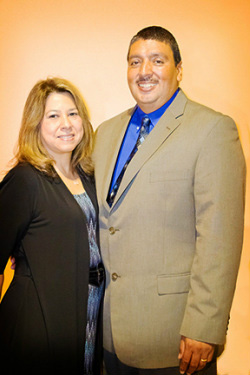
jorge rosa zapata250Jorge and Rosa ZapataZapata, who assumes his new role Sept. 1, will work out of the CBF Texas office in San Antonio. He will promote missions involvement and Hispanic ministries, particularly the Together for Hope rural poverty initiative along the Rio Grande, as well as other CBF global missions projects in Texas, said Rick McClatchy, CBF Texas field coordinator.

Zapata worked from 2002 to 2013 with Buckner International, coordinating mission teams along the border and the Mexican interior. He played a key role in the Buckner/CBF KidsHeart partnership, involving volunteers in service to families and children in the Rio Grande Valley.

His experience with missions teams along the border and his network of contacts there—along with his expertise in working with Hispanics, from first-generation Spanish-speakers to third-generation English-speakers—impressed the search committee, McClatchy noted.

The committee—chaired by Les Hollon, pastor at Trinity Baptist Church in San Antonio—also noted Zapata’s philosophy of missions aligns with CBF’s, and he already has been involved with the fellowship. While he worked for Buckner, he served three years as moderator of CBF’s Together for Hope network.

“He believes that doing social ministry opens the door for sharing the gospel,” McClatchy said. “He wants the church to be at the center of ministry out in the community.”

Zapata has been pastor of Texas Baptist churches in Athens, Mercedes, Harlingen and, most recently, New Wine Church in La Feria. Under Zapata’s leadership, New Wine Church has planted several congregations in colonias—unincorporated communities—along the border and formed a nonprofit organization to help meet needs of people in those often-underserved areas.

Zapata and his wife, Rosa, have four adult children—George, Kristy, Mindy and Joshua.


Texas Tidbits: Buckner receives foundation grant

The Dallas Foundation’s Mary Ratliff Critical Needs Fund awarded a $30,000 grant to Buckner International’s North Texas Crisis Relief Center. The gift will help Buckner strengthen and support southeast Dallas families by providing client assistance and meeting basic life needs during crises. This year, the center anticipates serving more than 15,000 Dallas children and families. The center provides clients with food, clothing, furniture, financial aid, school supplies and English-as-a-Second-Language classes. 

ETBU nursing grads perfect on licensing exam. Recent graduates of the East Texas Baptist University department of nursing earned a 100 percent pass rate on the National Council Licensure Examination for Registered Nurses. They represent the sixth cohort of ETBU nursing graduates who scored 100 percent on the national exam. 


Presidential search committee named at Hardin-Simmons

ABILENE—Michael Waters, retired chief executive officer of Hendrick Health System in Abilene, will chair a 15-member presidential search committee at Hardin-Simmons University charged with finding a successor to longtime HSU President Lanny Hall.

lanny hall130Lanny HallJerry Sawyer of El Paso, chair of HSU’s board of trustees, appointed the committee in consultation with other board officers. The committee includes representatives from the university’s trustees, faculty, staff, alumni and student body. 

The committee’s first meeting tentatively is scheduled for early September, when a national search firm is expected to be selected, Sawyer said.

He named the committee less than a month after Hall announced his retirement as HSU’s 15th president, effective June 1, 2016. 

Hall was elected as HSU’s president for the second time in 2009 after previous service as president from 1991 to 2001. He also was the school’s chancellor from 2001 to 2003.

In addition to serving as chair of the search committee, Waters also is vice chair of the board of trustees and chair of the board’s governance committee. Sawyer also will serve on the search committee.

Other committee members

Other search committee members are Jud Powell, a financial consultant in Abilene; Melinda Stricklin, a business leader from Colleyville; Joe Sharp, retired businessman from McKinney; George Newman, an Abilene-area rancher, retired Taylor County judge and HSU professor; Lynn Craft, retired president and CEO of the Dallas-based Baptist Foundation of Texas; Richard Darden, pastor of Shining Star Fellowship in Abilene; Jerry Phillips, a business leader from Lubbock; Louise Jones, retired educator from San Angelo; Rene Collins, head of the Department of Educational Studies at HSU; Larry Wheeler, head of the Theater Department at HSU; Britt Jones, assistant vice president for advancement and director of alumni relations at HSU; Candy Noble, a community volunteer in Lucas; and Alexa Rae Gist, HSU student body president.

“Our committee has scheduled its first meetings, and it is our intention to recommend a candidate to the full board early next spring or, hopefully, sooner,” Waters said. “We will consult with the various constituencies of the university in this process and will seek, with their help and God’s leadership, to find the right person to lead Hardin-Simmons into its very bright future.”

Soliciting feedback

In addition to seeking and vetting candidate finalists for presentation to the board, the search committee also will solicit feedback from a variety of campus constituencies, formulate a candidate profile and select a national search firm. 

“I am excited about the future for the university,” Sawyer said. “I look forward to working with our board of trustees as we begin the process of entering into this new era. I am convinced our Lord will continue to richly bless Hardin-Simmons.”


Judge’s sentence out of bounds, Americans United asserts

WASHINGTON (BNG)—An East Texas judge had no right to sentence a man to marriage and court-ordered Bible study, a Washington-based church-state watchdog group insists.

Americans United for Separation of Church and State attorneys wrote Smith County Judge Randall Lee Rogers after a local television station reported he ordered a 20-year-old defendant to marry his 19-year-old girlfriend and write out Bible verses or spend 15 days in jail for assault.

Judge Randall Lee RogersAccording to ABC affiliate KLTV in Tyler, during his sentencing for getting into a fight with girlfriend Elizabeth Jaynes’ ex-boyfriend, Rogers asked defendant Josten Bundy, “Is she worth it?”

The judge later asked Bundy if he was married to Jaynes and then added, “You know, as a part of my probation, you’re going to have to marry her … within 30 days.”

The couple said they would have preferred a more formal wedding, but Bundy feared if he served two weeks in jail, he might lose his job. So they applied for a marriage license and scheduled a ceremony before a justice of the peace.

Americans United Executive Director Barry Lynn described the incident as “outrageous and unconstitutional.”

“Judge Rogers seems to think he’s running a combination Sunday school and relationship counseling service,” said Lynn, an ordained minister in the United Church of Christ. “He needs to get back to dispensing secular law.”

In their letter, Americans United lawyers asked the judge to “refrain from imposing conditions requiring religious activity—including Bible reading or the writing of Bible verses—or conditions relating to fundamental privacy interests such as marriage,” and to “rescind any such requirements from existing orders.”

As government officials, judges cannot coerce parties to engage in religious activities, and ordering citizens to marry violates a right to privacy recognized under the 14th Amendment, Americans United claimed.

“All citizens, including those convicted of crimes, have the right to decide whether and when to get married,” the letter said. “And under the Constitution, they are entitled to make that decision without the threat of imprisonment.”

Americans United attorneys requested a reply within 30 days.


DBU’s ServantU goes international

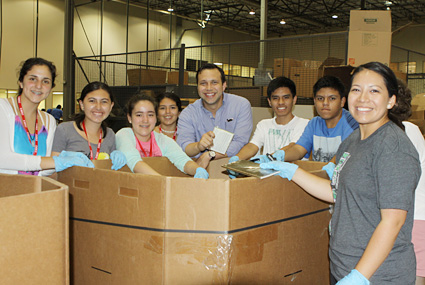
DALLAS—More than 120 students from Chile, Peru and Colombia participated in ServantU International on the Dallas Baptist University campus.

dbu servantu sort425A group of students from South America sort books and CDs at Goodwill alongside (center) Desi Henk, director of service learning at Dallas Baptist University, and (far right) Abby Florian, DBU student. (DBU Photo / Courtney Hackett)DBU has offered ServantU the last four years as a weeklong camp intended to offer high school students a collegiate experience that develops leadership skills within the context of service. The camp gives students an opportunity to encounter academics, student life, spiritual life and servant leadership on the campus of a Christian university.

This year, DBU launched ServantU International, geared specifically toward South American students. They participated in classes in Christian leadership, English and their choice of business, fine arts, science or education. They practiced their English with DBU students and learned from DBU professors.

In addition to learning inside the classroom, the South American students experienced Texas-style U.S. culture. They participated in outings to local malls, Six Flags over Texas amusement park, the Fort Worth Stockyards and a Texas Rangers baseball game.

“We had such a fun time sharing our culture with these South Americans” said Shelby Hackett, sophomore student volunteer. “We were able to teach the students how baseball is played, and they laughed at us as we sang ‘Deep in the Heart of Texas’ as loud as we could. We were able to share aspects of each other’s cultures in unforgettable ways.”

True to the camp’s focus on servant leadership, the students spent each afternoon working with local organizations such as Goodwill Industries and Mission Arlington. From sorting clothes and toys to packing boxes and moving furniture, the group experienced service in various venues.

dbu servantu rangers425Two Peruvian students learn the game of baseball as they watch the Texas Rangers play at Globe Life Park in Arlington. (DBU Photo / Courtney Hackett)“Many of the students remarked that serving is not typical where they are from” said Shannen Smith, director of DBU North and ServantU staff sponsor. “They hope to make it a part of their daily relationship with the Lord.”

Tiffany Walker, a DBU student volunteer and worship leader, appreciated the times of worship and learning together that took place over the course of the camp. 

“After spending 10 days with these students, I learned that God wants to be the center of our affections—in every nation and in every tongue,” she said.

Smith pointed to “academic and spiritual learning” that occurred during the week.

“This was a very special camp to be a part of, and I am so grateful to have had the opportunity to share our culture, city and university with these students,” Smith said.


Sixteen states side with HBU and ETBU in appeal

WASHINGTON—Legal representatives of 16 states filed a friend-of-the-court brief with the U.S. Supreme Court supporting two Texas Baptist universities and a Pennsylvania seminary in the schools’ challenge to the Health and Human Services mandate of the Affordable Care Act, popularly called “Obamacare.”

Several religious groups—including the Southern Baptist Convention’s Ethics & Religious Liberty Commission and International Mission Board—also filed briefs supporting Houston Baptist University, East Texas Baptist University and Westminster Theological Seminary.

Claim contraceptives cause abortions

The schools object to providing—directly or through a third party—drugs they believe cause abortions. Although a federal judge ruled in the schools’ favor in 2013, the 5th Circuit Court of Appeals ruled against them in June. affordable care act425The three-member federal panel decided the schools’ religious liberty is not substantially burdened by a requirement they formally opt out of HHS-mandated emergency contraceptive coverage and shift responsibility to a third-party provider. 
States joining in the brief supporting the schools’ case are Alabama, Arizona, Florida, Georgia, Kansas, Louisiana, Michigan, Montana, Nevada, Ohio, Oklahoma, South Carolina, South Dakota, Texas, Utah and West Virginia.

“The continued assault on religious liberties in our nation threatens every single American and undermines the foundation of our Constitution,” said Texas Attorney General Ken Paxton, who filed the brief. “No government should impose costly fines on its citizens for living in accordance with their convictions, and today the state of Texas stands with all religious institutions seeking protection from the overreaching mandates of Obamacare.”

Brief gives states’ interest in religious liberty

The brief asserts states have a substantial interest in protecting the religious beliefs of nonprofit organizations, and it argues those entities are entitled to the same exemption granted to churches.

“Petitioners share with churches the same religious conviction about providing health insurance without contracting with companies that will then have to pay for drugs regarded as abortifacients,” the brief states.

The brief cites the national Religious Freedom Restoration Act and similar laws in place in 20 states. They prevent government from placing a substantial burden on the free exercise of religion unless it is for a compelling reason and accomplished by the least burdensome means.

The federal government already exempted churches and some other employers from the HHS mandate, “showing its understanding that means less restrictive than the mandate will serve its general interest in promoting access to contraceptives,” the brief says.

Difficult to see ‘compelling interest’

“It is difficult to see any basis for finding a compelling government interest in regulating religious objectors rather than using whatever methods the government deems acceptable for employees of churches and other employers already excluded from the mandate,” the brief states.

The brief also cites Burwell v. Hobby Lobby Stores, which allows closely held for-profit business an exemption to a law to which its owners object on religious grounds, if there is a less-restrictive mean of advancing the law’s interests.

Hobby Lobby instructs that RFRA’s substantial-burden test does not allow courts to question a religious adherent’s judgment that certain conduct makes the adherent morally complicit and is therefore forbidden to them,” the brief states.

In addition to the brief filed by the 16 state attorneys general and solicitors general, others joining the Southern Baptist agencies in filing legal briefs supporting the schools are the Christian and Missionary Alliance Foundation, the Alliance Community for Retirement Living, Simpson University, Crown College and the 181-member Council of Christian Colleges and Universities.

Lawsuit originally filed in 2012

ETBU and HBU first filed a lawsuit in October 2012, objecting to a requirement that female employees be provided access to all Food and Drug Administration-approved preventive birth-control methods, including emergency contraceptive drugs they assert cause abortions. Final HHS regulations include an accommodation for faith-based organizations, stipulating they are not required to contract, arrange, pay for or refer for contraceptive coverage they oppose on religious grounds. 

However, the schools insisted the self-certification process—in which they would notify the government they were opting out of the provision—would result in employees automatically receiving the drugs through a third-party administrator, and that would make the universities morally complicit in facilitating abortions.

A federal district judge in Houston ruled in the schools’ favor in 2013, saying the mandate violated the universities’ rights guaranteed by the federal RFRA. But the 5th U.S. Circuit Court of Appeals overturned that decision, ruling the self-certification process does not substantially burden the universities but shifts the burden to a third-party administrator, who is reimbursed by the government.

Latest ruling : Burden shifted to ‘third parties’

“Although the plaintiffs have identified several acts that offend their religious beliefs, the acts they are required to perform do not include providing or facilitating access to contraceptives,” the circuit court panel ruled. “Instead, the acts that violate their faith are those of third parties. … 

“The plaintiffs’ religious beliefs forbid them from providing or facilitating access to contraceptives, but the requirement that they enter into the contracts does not force them to do so. The acts that violate their faith are the acts of the government, insurers and third-party administrators, but RFRA does not entitle them to block third parties from engaging in conduct with which they disagree.”

The Supreme Court likely will consider petitions in late September or early October. If the petition is granted, the case would be decided before the end of the court’s term next June.


Bryan minister sees changes in religious education

BRYAN—While a growing relationship with Christ remains the focus of church-based religious education, Bill Wiman saw significant changes in methods and approaches during more than three decades he invested in the education ministry at First Baptist Church in Bryan.

One of the biggest changes involved the proliferation of Sunday school and discipleship curriculum, said Wiman, who retired as minister of education and administration July 31.

bill wiman350Bill Wiman, retired July 31 after more than 30 years in religious education ministry at First Baptist Church in Bryan.“Back in the day, it was Life and Work” curriculum from the Baptist Sunday School Board, he recalled. “It was easy to conduct workers’ meetings when you all were teaching the same material. You could model for the teachers how to present the material, and I did that for a number of years.”

The Bryan church’s 31 Sunday morning Bible fellowships—a change in terminology and approach from traditional Sunday school—employ about a half-dozen curriculum series. It is impossible to conduct a one-size-fits-all teacher-training meeting, he said.

While he admits he first resisted the change from one curriculum, he now sees variety offers some advantages.

“You have people who are in different places and stages in life,” Wiman said. “You also have people who learn differently. So, having different curriculum choices allows them to find the right fit for their group.”

A matter of focus

Sometimes, it is a matter of focus.

“Some want a curriculum that is more application-oriented, others want more biblical content, while still others want popular teachers and authors,” he said. “Some want to study a book of the Bible, and we’ll often use BaptistWay Press for them.”

Each leader decides what matches the needs of his or her group and reports the choice to the church’s education office, which orders curriculum for each Bible fellowship.

Still, with a variety of options, “everybody is not on the same page and studying the same material, so it is hard to drive a focus,” Wiman pointed out.

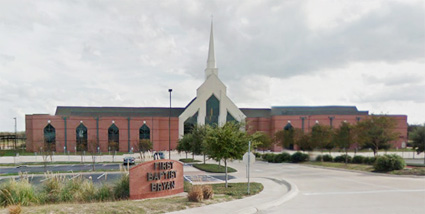
fbc bryan425When First Baptist Church in Bryan prepared to move to its new location (above) from downtown, Wiman said the congregation wisely increased its debt retirement and avoided a money crunch.Another major change during his time in Bryan was geographical. The congregation moved from a downtown facility to its present location along one of the main traffic arteries in Bryan about eight years ago.

Wiman identifies a key element that made the relocation successful: The church eliminated much of its debt prior to the move. 

Before First Baptist moved, Wiman studied the relocations of several other churches. He noticed a common problem—increased debt required churches to release staff after the move, and that only compounded their problems.

Debt retirement

“We led the church to increase debt retirement consistently over several years as we moved toward relocation,” he said. “That gave us the opportunity to be ready to include that in our budget. We moved from $100,000 to more than $600,000 in debt retirement over four or five years. 

“We were paying ourselves that amount of money out of the budget each month. … We ended up having more saved up for debt retirement that was needed to service the loan.

“I feel real good about that because we were ready to take the step when the step came.”

Another change centers on reduction of growth campaigns initiated by the convention. 

“I don’t see that emphasis in our day—that intense support from the denomination for growth,” he said. 

He acknowledges it began to get harder to get churches to participate. 

Increase in discipleship emphasis

“I do, however, see a greater intensity among churches in the matter of discipleship,” he observed. “We have what we call a ‘ministry map,’ which is believe, connect, grow and share. Where are you in that process? Are you a believer but not connected with a church or the fellowship of a small group? Are you growing in your faith? Are you sharing that faith with others?” 

Growing as a disciple requires more than participation in a small group, he added.

“A lot of discipleship is on a personal level—your own personal devotion and the spiritual disciplines that you apply to your own life,” he explained. “We find that small groups are a strong help in furthering discipleship and creating a desire for pursuing those disciplines.”

First Baptist in Bryan sponsors numerous small groups. The church provides curriculum for many emphases, and if a group wants to study something not on the approved list, a copy of the material is presented to a layman, who serves as small-group coordinator, for his approval.

Although he has retired from his duties in religious education and administration, Wiman will continue to serve the congregation as a pastoral care associate about three days a week.

“It’s been a good journey,” he said. “God has blessed me with some great relationships with people. One of the joys is seeing a division director you had a hand in enlisting 20 or more years ago still doing a fabulous job.”


Biffar recalls fun by design serving Texas Baptists

DALLAS—Looie Biffar generally worked behind the scenes, but anyone who attended a Baptist General Convention of Texas annual event reaped the benefits of her labor. 

And anybody who hung a poster on a church bulletin board promoting a Texas Baptist emphasis or perused a BGCT brochure in the last four and a half decades likely saw her handiwork.

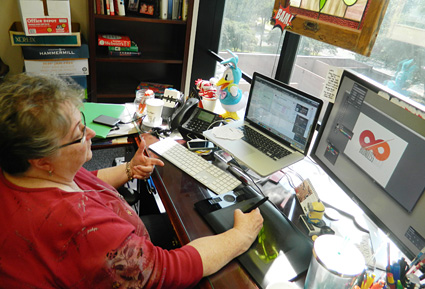
looie biffar425Looie Biffar retires Aug. 13 as senior designer for Texas Baptists’ communications office after more than four and a half decades working for the Baptist General Convention of Texas. (PHOTO / Ken Camp)Biffar retires Aug. 13 as senior designer with Texas Baptists’ communications staff after a career that included service to six BGCT executive directors—T.A. Patterson, James Landes, Bill Pinson, Charles Wade, Randel Everett and David Hardage—and work at three Baptist Building locations. 

For more than three decades, she designed, coordinated and supervised the set-up of the exhibit hall at the BGCT annual meeting.

As BGCT communications director from 1980 to 1999, Tom Brannon supervised Biffar. He described her as “the ideal employee” and “one of the most totally loyal, hard-working and creative people” with whom he worked.

“Looie loved to laugh, and she always made the day brighter for everyone she met,” Brannon said.

Put people ahead of projects

In spite of a busy schedule, Biffar managed to put “people ahead of events and projects,” and her work reflected her love for God, he added.

“Looie has spent more than four decades making the BGCT stronger and better,” he said.

When Biffar began work at what then was called the BGCT public relations office in 1968, she used a drawing board, rapidograph pen, utility knife and T-square. Over the last two and a half decades, she became proficient in multiple types of graphic-design computer hardware and software.

“Technology changed things,” she said—including the workload.

During her early years as a designer with the BGCT Executive Board staff, she typically handled four or five projects at a time. When she was art director of the fully staffed graphic services area of the communication office in the 1990s, she worked with three other full-time and one part-time designer on about 300 projects at peak season, leading to the BGCT annual meeting. Even in recent years, when she generally handled graphic design alone for the most part, she often juggled up to 50 projects at the busiest times.

Moving with the BGCT

Biffar vividly recalls moving from windowless first-floor offices at 703 N. Ervay in downtown Dallas to the 13th floor of the nearby 511 N. Akard building, which the BGCT Executive Board staff occupied along with the Southern Baptist Convention’s Annuity Board.

“When we moved to the 511 building, I remember us rolling our desk chairs across the street,” she said.

When the BGCT Executive Board staff moved to 333 N. Washington, adjacent to the Baylor University Medical Center campus, staff not only appreciated the new facilities and covered parking, but also the opportunity to offer suggestions about how the workspace could be designed, she recalled.

In a career spanning 47 years—interrupted on two occasions by just a few months—Biffar not only witnessed changes in technology and location, but also in personnel.

“I think the greatest change is in the number of women and people of different ethnic groups serving on the consultant or director level,” she said. 

Appreciates BGCT’s progressive and inclusive attitudes

She credits Texas Baptist leaders who maintained a commitment to traditional Baptist principles while demonstrating progressive and inclusive attitudes toward women in Christian service—particularly in light of Southern Baptists’ ultra-conservative shift in the last three decades.

“Women would not have had a place here if it had gone another direction,” she said. “It’s wonderful to have been able to do what I feel like God called me to do.”

Other memories also stand out for Biffar:

• Covering beer advertisements at Reunion Arena with black drapes prior to a Youth Evangelism Conference.

• Being sent home from the office for wearing a pantsuit to the Baptist Building.

• Perpetrating good-natured practical jokes on other staff.

• Going to lunch with a printer, returning to find the printer’s car stolen and realizing all the artwork for a major project was in the backseat.

• Deep-sea fishing off the South Carolina coast with co-workers prior to a professional workshop—and being one of only two people other than the boat’s crew who escaped seasickness.

“How many people have the opportunity to work in a place where you have the freedom to do what God has called you to do, to see results of your work and have fun while doing it?” she asked.

Back to oil painting

When Biffar retires, it won’t mean going back to the drawing board. It will mean returning to a brush, easel and canvas.

“I’m turning part of my garage into a studio, and I’m looking forward to oil painting, which I haven’t done in years,” she said. She also plans to work two days a week with Woman’s Missionary Union of Texas, volunteer at First Baptist Church in Lewisville, spend time with her nephews and play with “the kids in the neighborhood.” 


Sacred Vocation program reinforces hospital system’s ideals

DALLAS—Baylor Scott & White Health’s Sacred Vocation program—a branch of the healthcare system’s Faith in Action Initiatives—will extend to all North Texas hospitals in the fall, and the program continues to expand in Central Texas, as well.

baylor sacredvocation grads425Sacred Vocations Facilitator Miles Range (left), a retired respiratory therapist, and Don Sewell (right), director of Faith in Action Initatives for Baylor Scott & White Health, congratulate employees Naytasha Beasley and Tammy Villarreal upon their successful completion of the Sacred Vocations class. (PHOTO / Courtesy of Baylor Scott & White Health)Sacred Vocation encourages hospital employees to live purpose-driven and meaningful lives, as well as to work toward their calling. The program was designed at the University of Texas Health Science Center at Houston. It has been a part of the office of mission and ministries at Baylor Scott & White Health for 10-plus years, and it boasts more than 2,500 graduates.

“I’m happy to be a champion and cheerleader for a great program like this,” said Mark Grace, the chief mission and ministry officer for Baylor Scott & White Health.“It embodies the heart and soul of what we’re about as a Christian ministry.”

Healing and the value of human life

The program lasts six weeks and six sessions, and during that time, employees of all positions and levels in the hospital participate in the course for 90 minutes each session. Classes are small, and each session involves participants in discussions of topics like healing and harming, oaths and goals as a healthcare professional, and the value of a human life.

“This is a unique way to help people choose to be the best that they can be in living their life of purpose and meaning through their work,” said Elizabeth “Chick” Deegan, the program manager of spiritual support. “By doing that, they then treat patients with more compassion, dignity and respect, and then they do that with each other, as well.”

In the first session, the employees are asked to write their own eulogy and must ask themselves what legacy they will leave behind. Through the program, participants set goals and learn to recognize the value of healthcare professions as they consider the big picture of their career, said Tiffanie Diaz, the executive assistant to the vice president and chief nursing officer at Baylor Plano. 

Nurturing of the soul

“God has me here for a reason, and he had me in the class for a reason,” said Diaz, who also is the chair of the Sacred Vocation Council at Baylor Plano. “I intertwined every aspect of that class with faith. It’s really about nurturing our soul and doing good in life.”

Sacred Vocation connects personal faith to personal calling and challenges employees to treat patients and each other with respect and keep healing in mind, an overall theme at Baylor Scott & White, leaders of the Faith in Action Initiatives noted.

“We’re dedicated to be the best place to receive care. So, this program that’s based on engaging people around their value and faith identity has practical benefits,” Grace said.

While the program uses personal calling and faith as a platform, it doesn’t directly tie into a particular set of doctrines, which allows employees of all or no faith to participate.

“Within our work force, we have those of all faiths,” Deegan said. “So, we try to help people find ways to let their light shine and live their faith in the world, because that’s part of who they are, and it’s what fulfills their personal mission and purpose and meaning.”

Increased job satisfaction

The program has increased job satisfaction and retention, Grace said. 

It helps connect hospital employees in a support system by teaching them they all have the same emotions, experiences and frustrations in the workplace, Diaz added.

“It cemented into me that I’m where I need to be. Even though I’m not clinical, I make an impact to patients every day. It’s about not only making an impact with our patients but an impact with our coworkers,” she said.

At Baylor Plano, Sacred Vocation graduates are celebrated for their accomplishments and welcomed into a community of employees who appreciate their job. Graduates reconnect twice a year and go on a yearly retreat, as well.

Not only is Sacred Vocation useful in the workplace, but also graduates and facilitators of the program agree their personal lives are affected positively, Deegan said.

Susan Thompson, an occupational therapist and facilitator of Sacred Vocation, agrees the program’s mission reinforces the values the hospital system and its Faith in Action Initiatives stand for.

“We focus on being healers and trying to maintain our jobs as a sacred place for working God’s mission on Earth loving others,” she said. “It realigns and strengthens the connection between their belief in God and their mission on earth.”


CommonCall: Overcoming setbacks, embracing joy

Flo McKinney, age 83, broke an arm and injured a shoulder earlier this year running in the rain.

That setback put a damper on one of her favorite activities—pushing her wheelchair-bound friends around Baptist Retirement Community in San Angelo, where she has lived the last 12 years. 

flo mckinney300Flo McKinney recommends “a good dose of joy each day.”But it has not clouded her disposition, nor has it kept her from being showered with God’s blessings. 

Despite the busted wing, her spirit soars, and the rest of her body, her mind and most of all her desire to serve the Lord and others remain strong. 

Although she required surgery after her accident, she doesn’t consider herself weakened.

“Weakness is a falling away from the Lord—he is my strength; he is my all. Weakness has nothing to do the physical,” McKinney, a former missionary to China, said. “I feel the distinct knowledge that I’m not growing older, I’m growing better and stronger and more filled with his love and his grace in my age.

“The joy of the Lord is my strength, and that carries me through each day. I recommend a good dose of joy each day. Like the song says, ‘The longer I serve him, the sweeter it grows.’”

She does admit, however, maintaining a joyful spirit can be challenging.

“It’s a prayer request for me that I continue to look at life with a pleasant attitude,” she acknowledged. “I say, ‘Lord give me your joy.’”

Ministry continues

Although her wheelchair-pushing days are on hold, God continues to allow her to minister.

“God has brought people into my life, and they call,” she said. “They have problems, and I am able to listen to them and talk with them, so my life is taking a bit of a different turn, but the joy is still there. 

“Praise the Lord. I just get up and thank him every morning. My shoulder is in his hands, whatever happens.”

Her ministry extends beyond the other residents of her retirement community.

“This is a tremendous mission field,” she said. “The staff, the nurses, they have their problems. And they come to you—marital problems, husband problems, children problems, financial problems. And it’s a joy to be able to sit down with them and tell them about God’s love and to help them find his will for their lives.”

I recommend a good dose of joy each day.

McKinney acknowledges she would not have chosen the change in lifestyle necessitated by her accident.

“I have to adjust to a different path now,” she said. “I keep praying: ‘Lord, I know you’re trying to teach me something. Help me to learn it fast.’ I think one of the things he’s teaching me is patience.”

Through the experience of physical infirmity and unanswered questions, she has learned where to find strength, she noted.

“This is a time that I’ve grown closer to the Lord,” she said. “I’m relying on his wisdom. I don’t know why all this has happened.

“I do, though, have time to read, time to think, time to pray, and time to say, ‘Thank you, Lord.’ 

“And he’s also given me his wisdom.  The people he’s given me to minister to, the things I tell them are from him, not from me. I’m going deeper with my Lord.”

The depth of God’s love

Her accident and its aftermath taught her the depth of God’s love for her, she added.

“God loves me so much—absolutely and no matter where I fail,” she said. 

When his children fall—physically or spiritually—God looks on them through eyes of love, not focusing on how they stumbled, she noted.

“He doesn’t see that. He sees me through his eyes,” she said. “That has been so tender and so wonderful. We don’t have to strive; he gives his grace to us.

“I want to share that with people who are sad, who are sick, who are not as positive. I want them to know that God loves them so much—and all they need to do is love him back.”

Read more articles like this in the August issue of CommonCall magazine. CommonCall features inspiring stories about Christians living out their faith and informative articles about ministries that actually work. An annual subscription is only $24 and comes with two complementary subscriptions to the Baptist Standard. To subscribe to CommonCall, click here.