Ministry to homebound too important to neglect

ONALASKA—Churches cannot afford to neglect ministry to homebound adults, a veteran senior adult minister told a Texas Baptist workshop.

America is aging, and churches need to respond to the demographic reality, Randall Perry, associate pastor of adult discipleship and senior adults at First Baptist Church in Waco, told participants at a senior adult workshop at First Baptist Church in Onalaska.
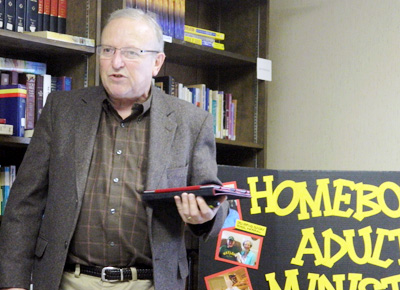
homebound perry400Churches cannot afford to neglect ministry to homebound adults, Randall Perry, associate pastor of adult discipleship and senior adults at First Baptist Church in Waco, told participants at a senior adult workshop at First Baptist Church in Onalaska. (PHOTO / George Henson)In 1900, 3 percent of the American population was 65 years old or more, Perry noted. In 2010, that segment of the population reached 22 percent. In 2030, a projected 35 percent of Americans will be over the age of 65.

“It’s going to be very important that our churches recognize the need for developing a ministry to homebound adults,” Perry said.

A congregation is supposed to be a spiritual family, he reminded participants.

“Can you imagine what it would be like if you ignored the older generation of your family? What would people think about you if they were never visited? If their needs were never addressed? We would be talked about forever,” Perry said. “There are churches that never even think about the needs of the homebound adults in their church.”

Homebound ministry shows appreciation to senior adults.

“Many of our homebound members were active and faithful—making the church what it is today,” he said.

Most churches fall short

Even so, most churches fall short.

“In most churches, there is a gap between the needs of homebound senior adults and the church’s ministry to meet those needs,” Perry said.

To bridge that gap, each church needs to make an assessment of the needs of the congregation’s homebound adults.

To identify those people, a month-long campaign needs to be waged periodically, asking the congregation for names and contact information for homebound adults they know. That plea should be included in every church publication for maximum effectiveness, he said. Every time Perry has tried this blitz, the church has discovered new names.

“This can be an outreach tool, because they will turn in the names of homebound adults who are not members of your church. The tendency is to say, ‘We don’t need to minister to them, because they are not members of our church.’ But their church may not be doing anything for them,” Perry said.

Survey te needs

Next, volunteers must go to the homes to survey the needs of those individuals.

“You don’t want to duplicate what already is being done. If Meals on Wheels is already bringing them food, that’s already being taken care of,” he pointed out as an example.

In Perry’s experience, the homebound experience problems in three areas—loneliness, transportation and lack of spiritual enrichment.

To combat loneliness, volunteers need to visit at least once a month. The volunteers in Perry’s ministry bring small gifts as well, usually made by the children of the church.

“It lets them know they are thought about and cared for by the children of the church,” he said.

The church places postcards on tables on during Wednesday night services so members can write encouraging notes to those unable to attend church.

“We mail those to them, reminding them that our church is thinking of them and praying for them,” Perry said.

The church also provides poster-sized birthday cards for the congregation to sign, which are delivered by the person who regularly visits that particular homebound person.

Offer transportation

Volunteers can offer transportation to the doctor, drug store, grocery store and church.

“Some volunteers don’t want to commit to making a monthly visit, but they will agree to providing sporadic transportation,” he said.

Most spiritual needs stem from feeling disconnected from their spiritual family—the church, Perry said.

“You cannot imagine how deep-seated some of this feeling is. We always alert our first-time visitors that they may be the first contact to this homebound adult in a long, long time. They should let them vent about that lack of attention and assure them we’re going to do a better job in the future,” he said.

One way of meeting that need is for the visitors to deliver large-print devotional materials quarterly.

“When you do that, as they do their devotional reading, they think every day about how much their church cares for them by providing that for them,” Perry said.

The church also provides a recorded Sunday school lesson. Classes are encouraged to announce who is present so they will feel more included.

Televise services

First Baptist Church in Waco televises its services, so a deacon and minister deliver individual servings of the Lord’s Supper during the week prior.

“They are encouraged to wait and take the Lord’s Supper with the rest of the church,” he said.

“This is very meaningful to them, because for the majority of them, it’s been forever since they’ve observed the Lord’s Supper with their congregation.”

It is not a one-way ministry, however.

“This is a blessing to the person making the visit,” he said. “I don’t want this to sound like a burden. I get notes constantly about what a blessing the relationship they’ve established with their homebound adult is.”


Texas Baptists respond to crisis in Philippines

As the Philippines continues to deal with the impact of a deadly typhoon that killed more than 5,200, injured 23,000 and left 3 million people homeless, Texas Baptists are responding in multiple ways.

Texas Baptist Men is shipping 10,000 water filters to the southern Philippines, working with Remote Island Ministries, a program of Victory Missionary Baptist Church in Sherwood, Ark. The ministry focuses primarily on the southernmost area of the island of Mindinao, in the Gulf of Davao region.

Bob Young from The Heights Baptist Church in Richardson and Russell philippines young400Bob Young, a Texas Baptist Men volunteer from The Heights Baptist Church in Richardson, packs water filters to carry on a plane to the Philippines. Young and another TBM volunteer, Russell Schieck, will deliver 290 water purification filters to the typhoon-ravaged country. (PHOTO/Courtesy of Stephanie Midkiff/Texas Baptist Men)Schieck from First Baptist Church in Ralls will deliver 290 water purification units to the Philippines.

Young and Schieck—whose Dec. 3-16 trip to the Philippines was planned before the typhoon hit—will distribute the water filters, train pastors and community leaders how to use them, and assess needs.

Working with Pastor Derick Jacinto from International Baptist Church in Manila, they will travel to Bicol region, at the southern tip of Luzon Island, and to an area in the Eastern Visayas region that still lacks electricity and where communication with pastors has been difficult.

The ceramic filters they will use to purify water not only protect against bacteria, but also against viruses, according to a Food & Drug Administration-registered laboratory. Each filter can serve a family of six to eight people for a year, helping prevent the spread of typhoid and cholera, as well as other water-borne diseases.

An assessment team representing TBM and Texas Baptists’ Disaster Recovery ministry will travel to the province of Iloilo, where early reports indicated the typhoon destroyed about 95 percent of the homes in the coastal towns of Estancia, Carles and Concepcion.

The team—which includes Ernest Dagohoy, executive pastor of First Philippine Baptist Church in Missouri City and vice chair of the Baptist General Convention of Texas Executive Board—will determine where to concentrate efforts and work together with the Convention of the Philippine Baptist Churches to formulate a response plan.

Tyler church responds

An East Texas Baptist church also responded to needs in the Philippines after the typhoon. Green Acres Baptist Church in Tyler has a longstanding partnership with Word of Hope Church in Manila and its Hope Leadership Institute.

After the storm hit, Word of Hope Church launched Operation Hope to provide food, medical supplies and temporary shelter to some of the areas most affected by the typhoon, setting an initial goal of raising $100,000 for the effort. Pastor David Dykes challenged Green Acres Baptist to raise $10,000.

“On the first Sunday, our people gave $48,000. They have continued to give, and currently the total given through Green Acres is $116,000 for the relief effort,” said Dale Pond, minister of missions.

In addition to providing immediate relief, Operation Hope also plans to help rebuild many of the church facilities destroyed by the typhoon.

Green Acres Baptist gave $116,000 before launching its annual offering for worldwide missions, which supports international, North American and Texas missions causes, as well as 15 strategic missions partnerships. Pond predicted the congregation will surpass its $600,000 goal for the missions offering.

How to help

To donate to TBM disaster relief efforts, click here.

To donate to BGCT disaster recovery, click here.


Consider end-of-life issues before crisis occurs

ONALASKA—End-of-life issues become easier if decisions are considered before a crisis arises, Ferrell Foster, director of ethics and justice for the Texas Christian Life Commission, told participants at a senior-adult ministry conference held at First Baptist Church in Onalaska.

end of life foster400End-of-life issues become easier if decisions are considered before a crisis arises, Ferrell Foster with the Texas Christian Life Commission told participants at a senior adults ministry conference in Onalaska. (PHOTO/ George Henson)The decision to follow Jesus makes all the other decisions easier to discuss, he said. But even in the best of situations, discussion about end-of-life decisions remains difficult.

“It’s not a subject we like to talk about, because for those of us who are left behind, it means loss and separation,” Foster said. “We as Christians bring a different perspective to death. We bring a hope to death. It should not be the scary topic for us that it is for others.”

Some people simply may not realize what questions they should consider. Foster pointed participants to an online resource to walk them through the things that should be discussed and decisions that need to be made, such as advance medical directives, wills and similar topics. That website is a product of the Department of Aging and Disability services.

“An advanced directive is a legal form that will give medical professionals direction on how you would like the decision-making processes to go if you cannot speak,” he explained.

The Christian Life Commission of the Baptist General Convention of Texas has a webpage  devoted to advance directives, including what they specifically do and what they do not do.

Talk to family and doctors

Talk to family and doctors about what should happen if tragedy struck, he advised. This can help families avoid bitter disagreements about the course to take when they should draw together to minister to one another.

“People, good Christian people, have different perspectives on these issues. If we want our wishes followed when we get into a situation at the end of life, we have to talk about it now,” Foster said.

Christians should consider end-of-life issues in light of their beliefs about the sacredness of human life, he added.

“We don’t value life just because we think people are important. We value life because God created it, and we are created in God’s image,” Foster said.

Quality of life

Quality of life also is a consideration, however.

“Fullness of life is important. Death is not the ultimate tragedy,” he said. “It bothers me that as Christians, we sometimes treat death like everybody else—likes it’s the worst thing that can happen. It’s not. The worst thing that can happen is for someone to die without Christ.

“Is death a tragedy? Yes, especially for those left behind, because we miss somebody we love. But it’s not the ultimate tragedy if they know Jesus.”

A delicate balance

The tension between balancing considerations of the sanctity of life and quality of life creates difficult end-of-life decisions, he said, referencing Baptist ethicist and theologian Bill Tillman.

“Love involves seeking what’s best for another, even when it’s difficult. Sometimes when we keep people we love around, it’s for selfish reasons—we don’t want to lose them. The Christian faith teaches us to love others as ourselves. Sometimes, I think we forget to do that,” Foster said.

Christians don’t enter into this difficult time alone, however.

“One of the things we can be guilty of is forgetting the great resource we have in Scripture and the Holy Spirit. We are not alone,” he said.


Life turned ‘upside-down’ lands in place of joy

TYLER—Linda Taylor didn’t know it at the time, but now she can see God traded her security for joy.

Taylor enjoys her job as director of development at Breckenridge Village in Tyler, a Baptist Child & Family Services ministry for intellectually disabled adults. But she admits God’s plan—not her own desires—brought her there.

breckenridge taylor400Linda Taylor, director of development at Breckenridge Village in Tyler, works at Christmas in the Village, a popular annual event at the Baptist Child & Family Services ministry for intellectually disabled adults. (PHOTO/George Henson)“God put my life upside down to get me here,” she acknowledged.

Taylor owned her own hair salon and health food store, and her husband, Morris, had worked for the same company 33 years. They were comfortable—until her husband lost his job.

“He absolutely could not find a job” in Texas, Arkansas or Oklahoma in spite of an extensive search, Taylor said. After almost a year without his salary, the Taylors found themselves in tough financial straits.

She recalled telling her husband on their way to church one Sunday: “We’re not going to pray for a job anymore. That’s not working. We have to say, ‘God, what are you trying to show us?’”

Two women whose hair she cut worked at Breckenridge Village, and they kept inviting her to visit the facility. One day, the Taylors finally visited the campus, just as a new group home was about to open.

They immediately received an offer to become house parents. Taylor, thinking of the 25 years she had invested in her businesses, gave an unqualified “no.”

Two weeks later, she received a call from Breckenridge Village’s director. Another couple had resigned as house parents.

breckenridge memorialgifts400Residents of Breckenridge Village surrounded by honorarium or memorial crosses, representing gifts to the ministry.“He said, ‘I can’t get y’all off my mind. Would you just come back and talk to me about it?’” Taylor recalled.

After that meeting, Taylor talked to her husband. “I told him, ‘I don’t know what this is, but I do know we have only one door open to us, and we have to decide if we’re going to walk through it.’”

The couple walked through that door 14 years ago and spent 4? years as house parents. Taylor then worked a year in community relations before becoming director of development.

“It was the lowest part of our lives, but God had to do that to get us here, or we would have gone right on working our jobs,” she said.

Taylor’s mother died with she was 7 years old, and she always had wanted to do something with orphans.

“It’s ironic how God brought us here to work with his forever children. I am thankful every day that he got me here. I count it a privilege to be a part of their lives and to have them as a part of mine,” she said.


See the December issue of CommonCall magazine to read about Christmas Village at Breckenridge Village in Tyler. To subscribe, click here.


Evangelical leaders protest race in sentencing

Baptists are among 27 evangelical leaders who signed a Nov. 21 letter on behalf of an African-American man condemned to death after his sentencing jury was told he was likely to be a future danger because of his race.

Texas Baptists who signed the letter asking Harris County District Attorney Devon Anderson to allow a new hearing for Duane Buck, a black man on death row for double murder, included Paul Basden and Jim Johnson, pastors of Preston Trail Community Church in Frisco; Roger Olson, the Foy Valentine professor of Christian theology and ethics at Baylor University’s Truett Theological Seminary; and Chris Seay, pastor of Ecclesia in Houston.

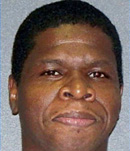
duane buck130Duane BuckThe evangelical leaders joined more than 100 civil rights leaders, elected officials, former prosecutors and judges and a former Texas governor advocating on Buck’s behalf after a Texas court of appeals voted 5-3 to reject his appeal and allow the DA’s office to set a date for his death by lethal injection.

Buck was convicted in 1997 for the murders of his ex-girlfriend, Debra Gardner, and the man who was with her, Kenneth Butler. He also shot a third person, but she survived.

Race called a factor in ‘dangerousness’

In testimony, an expert witness listed race among “statistical factors we know to predict future dangerousness.” The psychologist was cited later for giving racially influenced testimony to juries. Seven cases, including Buck’s, were identified. The other six were granted resentencing hearings, but Buck’s was denied.

“As evangelical Christians, we are disturbed by the impact of racial bias on our justice system,” the faith leaders said. “We are all created in the image of God, and race should never blind us to that fundamental truth in our interactions with others. Racial discrimination in any form is incompatible with Christ’s message in the Gospels—it should have no room in our hearts or in our justice system.”

Buck now a Christian

The letter signers also cited the fact that Buck is now a Christian, who has expressed deep remorse for his crimes and never received a disciplinary write-up during his incarceration.

Others signing the letter included Alan Bean, an ordained American Baptist minister who leads the Arlington-based Friends of Justice; David Gushee, ethics professor and director of the Center for Theology and Public Life at Mercer University; Shaine Claiborne of The Simple Way in Philadelphia; Fisher Humphreys, retired professor at Samford University; Christian author Brian McLaren; Sojourners founder Jim Wallis; and Jonathan Wilson-Hartgrove, associate pastor of St. John’s Missionary Baptist Church in Durham, N.C.


Texas Tidbits: Waco creates Baylor Stadium Authority

Waco creates public authority to book Baylor Stadium. The Waco City Council voted to create the public Baylor Waco Stadium Authority to lease Baylor University’s new stadium and oversee a private contractor that will book it for non-Baylor events year-round. As a local government authority, it will have limited legal liability that will give Baylor legal protection during non-Baylor events, according to Mayor Malcolm Duncan. The public authority also will be able to allow events that serve alcohol without conflicting with the university’s no-alcohol policy, the Waco Tribune-Herald reported.

DBU receives $1 million challenge grant. The J.E. and L.E. Mabee Foundation of Tulsa, Okla., awarded Dallas Baptist University a $1 million challenge grant for construction of a building housing the Gary Cook School of Leadership. To receive the grant, the university must raise the remaining $2.5 million to complete the project by July 2014. In 1991, the Mabee Foundation issued a challenge grant of $750,000 toward the completion of the John G. Mahler Student Center. The foundation also gave a $1 million grant in 1998 toward the $6.3 million Spence Hall women’s dormitory and in 2006 issued a $1 million challenge grant to complete the $24 million Patty and Bo Pilgrim Chapel campaign. The Mabee Foundation assists religious, charitable and educational organizations in Arkansas, Kansas, Missouri, New Mexico, Oklahoma and Texas.

Texas giving to SBC increases. Giving by Baptist General Convention of Texas-affiliated churches to the Southern Baptist Convention for 2013 has increased 2.7 percent compared to the same time period last year. From January through September, Texas Baptist churches gave $13 million to support the SBC Cooperative Program, compared to $12.7 million in 2012. Giving to the SBC had been declining since 2007, BGCT Treasurer Jill Larsen noted. Giving to designated funds for the SBC, including the Lottie Moon Christmas Offering and the Annie Armstrong Easter Offering, increased by 2.3 percent in 2013, totaling $8.5 million in gifts through September. Through partnership with the SBC Cooperative Program, Texas Baptist churches gave $6.5 million to support the International Mission Board, $2.86 million to support the North American Mission Board and $2.85 million to six theological seminaries across the United States.


Chaplain brings God to soldiers and soldiers to God

FORT SILL, Okla.—Twenty-four soldiers sat on the Quarry Hill chapel stage before spiritual formation classes began at Fort Sill. The soldiers, who came from varied backgrounds and more than 20 states, had little in common—except a shared spiritual birthday.

They stood before a room filled with peers and told how they knew they needed Jesus, how God had changed their lives and what they are going to strive for in their new walk with Christ. Then they walked outside to a large water tank where Texas Baptist Chaplain Kevin Burton baptized them.

chaplain baptism vert300More than 200 soldiers have been baptized at Fort Sill in the past 14 months.  (PHOTOS/Kalie Lowrie)They joined more than 200 soldiers Burton has baptized in the last 14 months at Fort Sill. Many others have rededicated their lives to Jesus Christ.

“This is by far the most fruitful ministry I have been a part of,” Burton said.

Fort Sill represents a unique mission field, he noted. As a basic training facility, the soldiers—typically age 17 to 24—are there nine weeks before moving on to advanced training.

“Some of them hear the gospel for the first time here in basic training,” Burton said. “Most of them probably do not come thinking, ‘I’m going to basic training so I can find Christ.’ But a lot of them find Christ while they are here.”

Burton sees his job as bringing God to soldiers and soldiers to God. On a typical Sunday morning at Fort Sill, 900 soldiers gather for a contemporary Christian worship service in Sheridan Theater, the only space large enough on base to hold the congregation. Burton leads the service, alongside four other chaplains who work to provide spiritual guidance and encouragement to Fort Sill soldiers.

Carrying heavy burdens

One of Burton’s main tasks on base is counseling more than 100 soldiers a month, many of whom have left home for the first time and are carrying heavy burdens.

“It is our belief as chaplains that we can equip these soldiers by sharing the gospel with them if they are not Christians,” he said. “We can share with them how that personal relationship with Christ—how the promise that he will never leave us or forsake us—is true.

chaplain baptism soldiers400Soldiers watch as Chaplain Burton baptizes a comrade.“Even though we may walk through the valley of the shadow of death, Christ is with us. These soldiers who take that to heart and place their faith in Christ, or the strong believers who come to us already knowing Christ as Savior, are very resilient soldiers and do very well with the complexities of life.”

Burton served previously in the Air Force. Later, he was pastor of a Mission Arlington church seven years before rejoining the military as a commissioned Army chaplain. Leaving his congregation was difficult, but he knew his new mission field was where God was leading him.

‘A great honor and responsibility’

“As a local pastor, I waited for people in my church to come to me,” Burton recalled. “Now, I get to go meet my people wherever they are at—if they are on the range firing, on the confidence course or out on patrols. Wherever there are soldiers, I can justify being there. That is a great honor and responsibility and privilege that I have—to be able to walk hand in hand with soldiers wherever they may be and be there for them in their time of need.”

Grateful for the support he receives, Burton noted he could not do all he does through his ministry without his endorsement from the Baptist General Convention of Texas.

Being a Texas Baptist chaplain “gives us the opportunity to share the gospel in a setting with people who may not be able to be reached otherwise,” he said.


Retired missionary shows thanks by giving time to others

SAN ANGELO—Flo McKinney not only gives thanks daily. She shows thanks by giving time to other residents at Baptist Retirement Community.

McKinney, age 81, regularly escorts neighbors and friends to church, volunteers with the Baptist Retirement Community Auxiliary to help make the community a better place and performs other acts of kindness to continue a lifelong commitment to missionary service.

flo mcKinney200Flo McKinney, 81, shows thanks by giving time to help others at Baptist Retirement Community in San Angelo.“I was born and raised in China, as my parents were missionaries there,” McKinney said.

“I left China at 17 to come back to the United States and go to college at Baylor University. My husband and I traveled back to China to serve as missionaries for 27 years.”

Helping other people and leading them to God became a way of life, she noted.

“We all have gifts and talents and use them in different ways. I enjoy using mine to bring a smile to someone’s face,” she said.

“I really enjoy visiting with people and volunteering with the Baptist Retirement Community Auxiliary. Currently, I am the chair of the semiannual bake sale. We are planning to use the proceeds to purchase a new bus to transport residents around town.”

McKinney enjoys sharing the joys of her life and her faith in God with others.

“I had a wonderful time in China,” McKinney said. “Hong Kong is such a vibrant place to live, and we enjoyed the international community of people who also called it home. My husband and I worked in Chinese churches and took the youth on sailing trips, where we educated them about God and his work.

“We came back to the United States when we were ready to retire and do something different with our lives. We lived in Houston for a little bit, but eventually came to San Angelo to be close to my brother and his family.

flo mckinney family300Flo McKinney, her parents and her brother enjoyed doing missionary work in Hong Kong.“Since we left a buzzing community in Hong Kong, it is fulfilling to live in a community where I can be equally as involved and enthusiastic about doing things for others. Having served God my entire life, I find it rewarding to escort my friends and neighbors to church every Sunday. I have so many reasons to be thankful.”

Since much of her family lives far away and they do not get to see each other on every holiday, they set aside time to Skype and chat over the phone. And part of that time is spent counting blessings.

“I am most thankful for my good health and the daily blessings I receive from God,” McKinney said. “More people should be thankful for the simpler things in life and get up ready to enjoy the day they have been given.

“We should be thankful for the good days and the bad days. The bad days make us even more thankful for the good ones. People who live life with a pessimistic outlook need to look beyond themselves and see how they can help others, look for the needs of others and work to help fulfill those needs. There is goodness not only in things, but also in people.”

Quinda Feil-Duncan, executive director at Baptist Retirement Community, considers McKinney an inspiration and a joy to other residents in the community.

“Her attitude and outlook on life is contagious. We are thankful for her and appreciate that she cares about and serves her neighbors in a special way,” she said.


Volunteers build community one house at a time

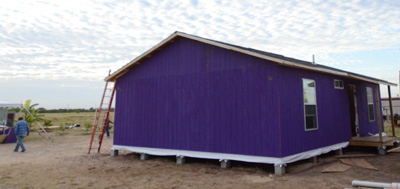
PEÑITAS—Down a road not tracked by Google maps and devoid of street signs, a brand-new purple house sits at the end of the block—built with love for the Lozado family by 25 volunteers with Woman’s Missionary Union of Texas.

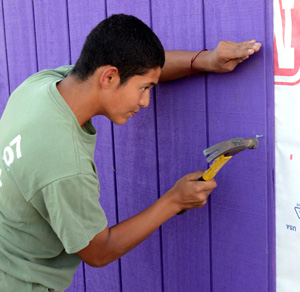
wmu valley laurajames300Laura James from Park Cities Baptist Church in Dallas works on a homebuilding project in Peñitas involving Woman’s Missionary Union of Texas, Buckner International and Rio Grande Valley Baptist Association. (PHOTO/Kalie Lowrie)

• See a video of the project here.

Parents Miguel and Julia Lozada and their sons, 14-year-old Hosea and 4-year-old Miguel Jr., are the latest beneficiaries of a partnership between Texas WMU, Buckner International and Rio Grande Valley Baptist Association. It marks the third consecutive year volunteers have built a home in Peñitas, a small colonia west of McAllen.

After school each day, Hosea Lozada arrived at the building site with a look of excitement on his face as he saw the progress made on his new home. He typically grabbed a hammer and began to hang siding or stepped inside to work on mudding the walls of his new room.

His brother, Miguel Jr., sat eating a popsicle, his eyes wide with wonder. He did not understand the language spoken around him. but he knew his new home was being built.

wmu valleybuild400Volunteers raise a wall for a new home for the Lozada family in Peñitas. (PHOTO/Kalie Lowrie)The boys’ mother worked side-by-side with the women each day, and their father contributed hours of labor. Through Buckner Foundation’s Family Hope Center in the Valley, the Lozadas qualified for a new home at no cost to their family.  

The 25 women on the building project varied in age and background. Some arrived only knowing how to hold a hammer; others had extensive building experience. Their love for God and their sense of calling to serve and minister to people in need formed their common bond, Texas WMU leaders noted.

“These women of varying different skill levels work their heart out and give their best, day-in and day-out, hour after hour,” said Sandy Wisdom-Martin, executive director-treasurer of WMU of Texas.

Chickens roamed the construction site, and the family dog stood watch over daily activities. The first-week team put up walls, set trusses, roofed, installed windows, ran wiring and hung siding around the house. A second team arrived the next week to work the interior as they hung sheetrock, put up insulation, painted, and installed electrical and plumbing fixtures.

wmu valley lozado300Hosea Lozada hangs siding on his family’s new home, built by volunteers with Woman’s Missionary Union of Texas, Buckner International and Rio Grande Valley Baptist Association. (PHOTO/Kalie Lowrie)“We came to share the hope and love of Jesus Christ with this family,” said Lanelle Amann from the Cowboy Church in Smithville. “We can build the house, but if that’s all we do, then we have failed. If we can shine and be Christ to them, that they might come to know him as their personal Savior, that’s what it’s all about.”

After watching the gospel lived out daily for two weeks as their home was built, the Saturday after construction was complete and the house had been dedicated, both Miguel and Julia Lozada committed their lives to Christ. 

Looking out from the front porch of the Lozada’s home, a turquoise house Texas WMU built last year is in view. From the back porch, a blue home—the house volunteers built in 2011— is in plain sight. Where dilapidated mobile homes and deteriorating structures once stood, three families now live in solid permanent houses.

The first year, WMU built a house for a man named Juan, whose son was hospitalized with pneumonia. The family previously had not been able to take him back to their old home because it was not safe for his health.

wmy valley house400With the work on the Lozado’s home almost completed, the project marks the third year volunteers have built homes in the community.Three years later, still grateful to Texas WMU for his family’s home, Juan helped lay the foundation for the Lozada family, just one street over from his house. He also volunteered to help with plumbing the house.

“I can’t help but cry when I think about Juan,” Wisdom-Martin said. “His story three years ago touched our hearts, and now to see him giving back to help us this year is just truly amazing.”

 Volunteers are helping transform Peñitas one house at a time, one life at a time, she noted. Texas WMU already has plans for next year’s building project.


TBM needs volunteers to assemble water filters

Texas Baptist Men needs volunteers to help assemble 10,000 to 12,000 water filters that will be shipped to storm-damaged areas in the Philippines.

tbm philippines200Bob “B.C.” Wychopen from Shiloh Terrace Baptist Church in Dallas helps assemble water filters for the Philippines. Filters need to be assembled before Nov. 27.

Volunteers are needed 8:30 a.m. to 4 p.m. Nov. 21 and 22 at the TBM Dixon Missions Equipping Center at 5351 Catron in East Dallas.

Eighteen volunteers are required each day to complete the task. Volunteers do not have to be certified in disaster relief. On-the-job training for assembly will be provided.

To volunteer, contact Cindy Finn at (214) 275-1177 or email cindy.finn@texasbaptistmen.org.


Baylor School of Social Work makes impact in Eastern Europe

WACO—When leaders of the Baylor University School of Social Work talk to students about making a difference in the world, they mean it literally. And they set the example through a partnership that provides social work education in one of Eastern Europe’s poorest nations.

dyer students2007 400The Dyers with a group of students in the social work program at the College of Theology and Education in Chisinau, Moldova. (Photos from the Dyers’ blog at dyersinmoldova.blogspot.com/)The Baylor School of Social Work’s partnership with the College of Theology and Education in Chisinau, Moldova, began in 2005 under the leadership of Preston Dyer, a now-retired Baylor social work professor, and his wife, Genie, a part-time professor at the school.

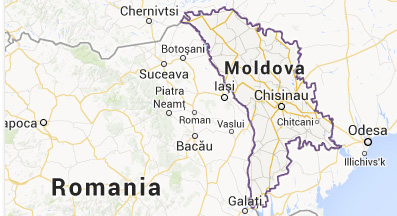
From the onset, the Dyers spearheaded the effort to teach master’s-level social work to indigenous students in the Republic of Moldova, a landlocked country between Romania and Ukraine.

The partnership served a dual purpose—to produce social workers to serve in Moldova, and to train a cohort of social workers who would be prepared to teach in the college’s undergraduate and master’s-level programs.

moldova college entrance400Main entrance of the College of Theology and Education in Chisinau, Moldova.In July, five students graduated with their master of social work degree from the Moldovan college, and one additional student has graduated since then.

Since classes in Moldova began in 2007, Baylor faculty have made six trips to teach graduate students there social work practices and train them to teach undergraduates. Now, the Baylor School of Social Work is turning the program over to them.

“We have done what the director and the dean asked us to do in 2005,” Dyer said. “We have trained a cohort of social workers for the country, and we have trained a cohort where most of them are prepared to teach at the university.”

Dyer met the dean of the Moldovan school in 2005 on his initial fact-finding trip. Dyer admitted he knew very little about the country before Diana Garland, dean of the Baylor School of Social Work, asked him to lead the exploratory trip. He and a small team of colleagues flew to Moldova to investigate the possibilities of working with the school to create a master of social work program.

genie dyer students church400Genie Dyer with students at Voice of Truth Baptist Church in Chisinau during the Dyers’ 2007 visit.“I couldn’t even say the word ‘Moldova,’” he said. “I had never heard of Moldova. None of us here had ever heard of Moldova.”

The Union of Baptist Churches in Moldova founded the college in 1993, and it initially received funding from the Southern Baptist Convention and state conventions, Dyer said.

The Dyers taught the first classes five weeks in the summer of 2007. Through a Romanian translator, they taught two courses for eight hours each day.

Dyer found satisfaction in teaching students in Moldova, because he knew they truly appreciated him. It marked the first time in nearly 40 years of teaching that students consistently thanked him for his lesson in the classroom, he noted.

“I have never had students as appreciative of learning as these students were,” he said.

He quickly noticed the need to change some of his instructional styles to teach effectively in the foreign country. Assigning long essays or giving multiple exams, as he was accustomed to in the United States, was out of the question because of the language barrier. Students learned social work primarily through oral presentations, case studies and practical applications. Professors taught the master’s students basic social work skills, statistics, how to do research and social work technology.

moldova market400Women sell their wares at a market in Chisinau.Students in the program gained hands-on social work experience by volunteering or working—for little pay—with nonprofit organizations or foster-care agencies.

Dyer noted the Moldovan school’s undergraduate program placed more emphasis on the theory of social work rather than the practice.

“What they got was a lot of sociology and psychology,” he said. “They got almost nothing that was really practical or skill-based and probably out-dated psychological theory. They were able to teach them the empathy, the compassion, the biblical foundation for doing social work, but they weren’t able to give them social work technology. That’s what we were able to give them.”

Baylor professors taught students in a country in desperate need of proper social work training because of a multitude of social issues. Cynthia Harr, who taught the final courses of the program two weeks this summer, said the biggest social problems in Moldova are tremendous poverty, a high rate of alcoholism, unemployment and the prevalence of inadequately cared-for street children.

dyers voiceoftruth400Genie and Preston Dyer in front of school where the Voice of Truth Baptist Church meets.Many students in the master’s program took the knowledge they gained in the classroom and applied it by working with agencies that helped orphans prepare for independent living after the ninth grade.

Nearly 40,000 social orphans live in state-run institutions in a country whose population is only 3 million, Dyer said. According to Moldovan law, all child orphans must remain in those institutions until they finish the ninth grade, at which point they are required to leave. After that, 90 percent of those girls—typically age 14 or 15—end up in the sex trade, and 70 percent of the boys end up in organized crime, Dyer said.

Although few in number, Baptist social workers in Moldova are making a great social contribution by helping social orphans transition to independent living, he said.

“The Baptist churches in Moldova were head and shoulders above churches in the U.S. in terms of social ministries,” he said. “Everyone we encountered (was) involved in some kind of ministry.”

Students in Moldova were diligent in their preparation and in their studies, Harr added. She was impressed with their work ethic and the heart her students showed while practicing social work in Moldova. And she was equally impressed with the perseverance of the Moldovan people in general.

Doing a lot with very little

“They do a lot with very little,” she said. “They do it out of a heart of service and love, not because of any financial gain or any recognition they will get. … I think they have learned how to be resilient. They are survivors.”

From the end of World War II until 1991, Moldova was under the rule of the Soviet Union. Although the country has been independent more than 20 years, Russian forces have remained on Moldovan territory.

Although Moldova still remains heavily influenced by Russian and Romanian culture, it is becoming influential in its own right, specifically for social work. People from surrounding countries now attend the Moldovan school to learn and practice social work, Harr said.

“The cohort has become a place where countries who don’t have any social work programs send students there to be educated,” she said. “So, it is not only impacting Moldova. It is impacting the central Asia region. It’s starting to become something that is reaching out into other countries that we could not go into and that very few people could go.”

120 graduates since 2007

The Moldovan school’s bachelor of social work program is accredited now, and 120 students have graduated with an undergraduate degree since 2007. Many of their teachers were the graduate students the Baylor professors taught.

Although numerous staff and faculty made the Moldovan partnership possible, including a $14,000 gift that financed the last two trips, the Dyers have given the most to the partnership, Harr said.

“Preston has led out and stayed consistent in advocating for this program,” she said. “He has invested by going twice. He has invested a lot of his heart and his life, and so has his wife, by making this happen.”

It was worth the amount of time and effort it took to complete the Moldovan partnership because of the strong influence it had on the lives of many, Harr insisted.

“I think it was very well worth the investment because of the impact,” she said. “It wasn’t a huge impact in the numbers of those who received their degree, but the impact of those who received their degree in that part of the world, I think, is really tremendous.”


Baylor program prepared Moldovan woman for doctoral studies

AUSTIN—Connie Belciug is living her dream, pursuing a doctorate in social work at the University of Texas. She credits Baylor University’s School of Social Work with making it possible.

Belciug, a 31-year-old wife and mother of a 3-year-old daughter, received her second master’s degree in July. One month later, she and her family moved from Moldova to Austin so she could begin her doctoral studies.

moldova map397Belciug received her first master’s degree from the State University of Moldova in 2010. Three years later, she is a graduate of the Baylor School of Social Work’s master’s degree program at the College of Theology and Education in Chisinau, Moldova.

She, along with five other students, received a master’s of social work degree in a program organized and taught by Baylor professors. Belciug expressed gratitude for the Baylor program, because it paved the way for her doctoral studies.

The master’s degree program Baylor launched “gave me a lot of practical skills and a different perspective on the issues our country was fighting with,” she said. “I believe that because of (the Baylor program), I understood that I actually needed to study more, and I couldn’t stop there.“

Encouragement

Tanya Brice, a Baylor School of Social work professor, taught classes in Moldova in summer 2012 and inspired Belciug to apply for the doctoral program at the University of Texas. Belciug noted Brice encouraged her and trusted in her more than she trusted in herself at that time, but all her Baylor professors encouraged her pursuit of continued education.

The Baylor-initiated program “helped me broaden my horizons and made me strive to know even more,” she said. “All my Baylor professors were highly supportive of me. They provided me with their mentorship and inspiration to want to continue my education in a Ph.D. program. I would have definitely not been here without all of their contributions.”

The Baylor professors all showed grace, kindness and joy through their teaching, she said.

Preston Dyer, who helped launch the program, “had a special passion for our cohort,” she said. “I know he invested a lot in this program and was always an advocate for us. He also successfully combined in his teaching theoretical concepts and practical applications, showing cultural competence and sensitivity.”

Cynthia Harr taught the final courses of the program over last summer and attended the graduation ceremony in July when Belciug received her master’s degree.

‘Goodness and kindness’

“One specific thing I remember from what (Harr) said is that teachers need to teach students with goodness and kindness,” Belciug said. “She said she learned this over time, and she definitely taught us with a lot of kindness and respect.”

While earning her master’s degree at the Moldovan college, Belciug put into practice the knowledge and skills she gained from the Baylor program. For five years, she served as the Moldovan national director for Children’s Emergency Relief International, the global arm of San Antonio-based Baptist Child & Family Services. In that role, she worked with institutionalized children in orphanages and poverty-stricken families.

Belciug excelled inside and outside of the classroom while working for the nonprofit organization, Harr noted.

“She was an excellent student who did extremely well academically and really reached out through her organization to meet the needs of a lot of vulnerable children and adolescents,” Harr said.