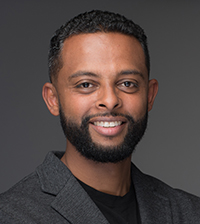
Tony Evans discusses Kingdom Race Theology

WILLOW GROVE, Pa. (BP)—God uses circumstances in society to draw people near to him, Dallas Pastor Tony Evans said, comparing the approach to his own courtship with his late wife Lois.

A scary ride at an amusement park was Evans’ ticket to speeding her approval, he recalled.

“It had a rollercoaster called the Wild Mouse. It went to the edge like it was going to jump off the track and then turned real quick,” Evans said in a public conversation with National African American Fellowship President Frank Williams.

“So I got two tickets on the Wild Mouse. The wilder the ride got, the closer she got,” Evans said. “By the time the ride was over, you’d (have) thought only one person got on there. … Why did I get those two tickets? To create distress, because I knew if it got bad enough, she’d get close enough.”

‘Stacked purposefully by God’

In the same way, God maneuvers things to draw people closer to him, Evans said in the discourse on critical kingdom issues facing the church today. It was the first in a planned series of NAAF-sponsored Kingdom Conversations on critical contemporary issues facing the church in America.

“What God has allowed is multiple pandemics stacked on each other. He’s allowed a virus, a political crisis, a racial crisis, an economic crisis,” Evans said. “This is stacked purposefully by God.”

Evans referenced the distress recorded in 2 Chronicles 15:3-6.

“It says nation rose up against nation—international conflict. City rose up against city—urban conflict,” he said. “And then it says at the end of verse 6, ‘For God troubled them with every kind of distress.’

“Let me tell you what we’re experiencing in America. We’re experiencing the passive wrath of God,” Evans said, drawing also from Romans 1:24, 26 and 28. “God turned them over (to their own minds and desires.) In other words, God said, ‘I’m out of here. I’m abandoning you. Since you don’t want me, my values and all of that, I’m leaving.’ Whenever you create that space, evil and conflict take over.”

God has ‘allowed the chaos’

Evans addressed the church’s pathway forward in racial reconciliation against a centuries-old backdrop including slavery, racism and injustice, a point of his Kingdom Race Theology he unveiled to this congregation at Oak Cliff Bible Fellowship and poses in an upcoming book.

“What God has done, he has allowed the chaos, because he’s sovereign,” Evans said. “So people made up their own rules. So now you’ve got all this conflict. Masks; no masks. This; that. … Everybody’s all over the place. So because of spiritual departure, there was divine departure.”

Is there any hope for the church today, in the face of hypocrisy, pretense and self-righteousness those outside the church have perceived for generations, Williams posed in the conversation broadcast Oct. 28 at 7 p.m. from First Baptist Church of Crestmont in Willow Grove, Pa., and available on the NAAF Facebook page.

“In their distress, they turned to the Lord God of Israel, and he let them find him,” Evans responded. “He wanted to be found, but only on his terms. He’s not going to be found on our terms, our sermons, our preaching and our programs. He’s only going to be found on his terms.”

‘We’ve been in a racial quicksand’

Evans summarized church history he said has been at odds with God’s word and his kingdom, which he points out in Kingdom Race Theology.

“We’ve been in a racial quicksand, and the harder we try to come out of it, the deeper we sink,” he said. “What is missing is we have been more cultural than Christian. Anglo Christians have wrapped their faith in the American flag and have developed a Christian nationalism that is foreign to Scripture.

“Ezekiel 43 says don’t bring your kings next to my throne like we’re equals. There must be a distinction between the kingdom of God and the kingdom of men.

“Often what the Black church does is wrap our faith in Black culture, so that if it’s Black and we feel it, it must be biblical. And so I saw flaws on both sides,” Evans said.

Scripture never separates righteousness and justice, he said, referencing Psalm 89:14.

“We were missing this comprehensive view, and so now we get stuck with CRT (critical race theory) and Black Lives Matter and 1619 Project and 1776 Unites,” he said. “What does God have to say about this subject? And since the kingdom is God’s overarching theme, then I wanted to give a kingdom view of race.”

God is ‘not blinded by color’

Evans summarizes Kingdom Race Theology as “the reconciled recognition, appreciation and celebration of the ethnic differences, the multiracial ethnic differences established by God, through which he manifests his kingdom purposes.”

“The Bible is full of race,” he said. “In heaven, everybody’s going to be the same race they were on Earth. … John says, ‘I saw people from every nation, every tribe … and every tongue. He said, ‘I saw them.’ So there were visual differences.

“So God is not colorblind. He’s just not blinded by color.”

Williams is senior pastor of both Wake Eden Community Baptist Church and Bronx Baptist Church in New York. As NAAF president, he serves a group of more than 4,000 Black Southern Baptist pastors. Jerome F. Coleman is pastor of First Baptist Church of Crestmont, which hosted the event.



Baylor and Harvard researchers explore human flourishing

WACO—Baylor University researchers are partnering with Harvard University scholars in a $43.4 million international project to investigate the factors that influence human flourishing.

The five-year Global Flourishing Study will involve 240,000 individuals in 22 countries and allow researchers to explore questions about what it means to live well and experience a sense of purpose.

Livingstone 200
Linda Livingstone

Baylor’s Christian mission, its focus on being a top-tier research university and its commitment to finding solutions to global challenges makes the Global Flourishing Study “a natural fit” for the university, Baylor President Linda Livingstone said.

Research is one of the four pillars of Illuminate, Baylor’s strategic academic plan, and one of its five signature academic initiatives focuses on human flourishing, leadership and ethics, she noted.

The unprecedented scale of the study will provide a better understanding of religion’s role in human flourishing in a global context, said Byron Johnson, director of Baylor’s Institute for Studies of Religion.

byron johnson300
Byron Johnson

“It’s an extraordinary opportunity for the Baylor-Harvard team to lead a panel study like this. Because our sample size is so large, we will be able to examine all of the world’s great religions and the role, if any, that they play in human flourishing,” said Johnson, co-director of the study with Tyler VanderWeel, director of the Human Flourishing Program at Harvard.

The study will involve individuals from Argentina, Australia, Brazil, Egypt, Germany, India, Indonesia, Israel, Japan, Kenya, Mexico, Nigeria, the Philippines, Poland, Russia, Turkey, South Africa, Spain, Tanzania, Ukraine and the United Kingdom, along with the United States.

Preparation for the study began in 2018, and pilot work in each of the 22 countries took place between January and June this year.

The study’s longitudinal design will enable researchers to advance substantially scientific knowledge about the determining factors of human flourishing, VanderWeel noted.

“The Global Flourishing Study is exactly the type of work needed to deeply understand the interplay of key elements in human experience that help us live well, be happy and experience a sense of meaning and purpose,” he said.

An open-access resource

In addition to Baylor and Harvard, the initiative utilizes Gallup’s data collection and management expertise, as well as the Center for Open Science’s coordination and leadership.

By working with the Center for Open Science, researchers will make data from the Global Flourishing Study an open-access resource available to other researchers, as well as journalists, policymakers and educators worldwide.

“The rigor and transparency applied to its analysis will increase trust in the research that comes from this work and will lower barriers to worldwide, equitable access to this information,” said David Mellor, director of policy at the Center for Open Science.

Over the next five-plus years, researchers will analyze longitudinal data on the patterns and determinants of human flourishing, and they will explore their social, psychological, spiritual, political, economic and health-related causes.

“There are several examples of probability-based, nationally representative studies that track the same respondents over time in a single country, but few have attempted to cover multiple countries,” said Rajesh Srinivasan, global research director of the Gallup World Poll. “The scope of this project is unprecedented and likely to yield valuable insights for global survey research using this type of methodology.”

The largest funded research project in Baylor’s history

Overall, the project’s goal is to build a field of study around the science of human flourishing, producing research findings that will influence the direction of social and health policy.

“The Global Flourishing Study is a methodological innovation that can truly change the world—truly change how the world is led,” said Jim Clifton, Gallup CEO.

The $43.4 million initiative—the largest funded research project in Baylor’s history—depends on support from a consortium of funders including the John Templeton Foundation, the Templeton Religion Trust, the Templeton World Charity Foundation, the Fetzer Institute, the Paul Foster Family Foundation, the Wellbeing for Planet Earth Foundation, Well Being Trust and the David & Carol Myers Foundation.

In addition to Johnson, other faculty from Baylor’s Institute for Studies of Religion serving on the Global Flourishing Study team include Matt Bradshaw, Alex Fogleman, Sun Joon Jang, Philip Jenkins, Thomas Kidd, Matthew T. Lee, Robert Woodberry and George Yancey.

Other scholars representing a variety of disciplines who will be part of the research team are Merve Balkaya-Ince, Brendan Case, Ying Chen, Jeff Levin, Tim Lomas, Katelyn Long, Van Pham, Sarah Schnitker, and John Ssozi.

Based on information provided by Lori Fogleman of Baylor University Media & Public Relations, with additional reporting by Managing Editor Ken Camp. 


Middleman turns church’s burden into ministry’s blessing

WACO—Jesus’ instruction to his disciples—“Freely you have received; freely give”—not only guides Middleman Ministries’ approach to reaching teenagers on the margins of society. It also governs its approach to churches and other ministries.

Giving away custom-made skateboards and other equipment to young people who may consider themselves misfits offers Middleman Ministries an avenue for introducing teenagers to the free grace God offers in Jesus Christ.

In addition to skating clinics and outreach in skating parks, Middleman—a ministry partner of Columbus Avenue Baptist Church in Waco—also seeks to pair adult Christian mentors with young people. One way the adults and teens bond is by working together on old cars.

“They learn by doing—lessons about restoration, redemption and vision. … By working on old cars, they learn about restoring value to what some may not see as valuable,” said John Barnard, Middleman’s founding director.

The newest aspect of that ministry centers on turning old vans some churches may see as a burden into a gift other skateboarding ministries view as a blessing.

Pastor M.L. Walker of Living Witness Missionary Church in Waco recently turned over to Middleman Ministries the keys and title to a church van. (Photo courtesy of Middleman Ministries)

The church van initiative involves Middleman receiving donated old vans from churches that no longer need them. Mentors and teens then restore the vans, and Middleman gives them to other skateboarding ministries around the country.

Barnard sees the initiative as a “win-win” for everyone involved. Churches are freed from the responsibility of maintaining insurance and registration for vehicles they are not using. Mentors spend quality time with young people working on the vans. And skating ministries can use the vans to transport skaters and their equipment to events.

“This is a gamechanger, as most skate ministries in the country are volunteer-led with tiny—if any—budgets,” Barnard said.

Middleman is committed to making the process as easy for churches as possible, he noted.

“All a church does is hand over a title and the keys. We put the insurance in our name the same day,” Barnard said. “We even have a car hauler trailer if the van doesn’t start.”

Middleman then works with the receiving skateboard ministry to put the vehicle in their name within 30 days.

Pastor M.L. Walker of Living Witness Missionary Church in Waco recently turned over to Middleman Ministries the keys and title to a church van.

“He was excited to not have the burden of insurance anymore after four years of paying on a van that didn’t run,” Barnard said.

Any church interested in donating a van to Middleman Ministries can contact John Barnard at 979-270-0822 or john@middleman-ministries.org.  


Baylor study analyzes impact of COVID-19 on pediatric nurses

WACO—While pediatric advance practice registered nurses are being affected by the COVID-19 pandemic in multiple ways, the most difficult challenge is mental health struggles experienced by themselves and their families, according to a new Baylor University-led study.

The study—led by Jessica Peck, clinical professor at Baylor’s Louise Herrington School of Nursing and published in the Journal of Pediatric Health Care—examined the holistic effects of COVID-19 on pediatric-focused advance practice registered nurses

Based on a survey of 789 participants, the study shows pediatric advance practice registered nurses experienced increased burnout and mental health concerns during the COVID-19 pandemic.

Pandemic alters pediatric care delivery

A consequential impact of COVID-19 has been the alteration of pediatric care delivery. Pediatric agencies have experienced disruptions in care provisions, patient presentations, clinical practices, immunizations and revenue, according to the study.

Furthermore, some pediatric nursing professionals have transitioned to working with adult populations, while others have been furloughed or laid off due to a strong demand for critical care nursing services and a lower demand for primary care nurses.

“While physical disease impacts on children have generally not been as dire as some historic precedents like polio, they are by no means spared,” Peck said.

“Pandemic conditions have fundamentally altered the norms of pediatric care delivery and, as a profession, we share collective concerns: severe COVID in children with pre-existing conditions, life-threatening multi-system inflammatory syndrome, disturbing disparities in severity of illness and death, particularly for children of color who account for 75 percent of pediatric COVID-19 deaths, and free-falling immunization rates with recovery not yet in sight.”

The research shows that 34 percent of pediatric advance practice registered nurses are experiencing moderate to extreme concern for professional burnout, while 25 percent of respondents feel anxious or nervous and another 15 percent are experiencing depression or hopelessness.

Overall, 20 percent of participants reported feeling moderate to extreme concern for their mental health.

“As a profession, many pediatric nursing professionals are working far more hours for far less compensation, isolated from professional networks. They are learning new technologies and implementing new policies in little time with even less support. Pediatric clinics are severely disrupted,” Peck said.

“Children’s hospitals received less than 1 percent of all federal relief monies provided to U.S. hospitals, leaving children without access to care. Faculty are exhausted and experiencing vicarious trauma hearing devastating stories from their students. All of this contributes to destabilized pediatric infrastructure, which disproportionately impacts marginalized children.”

Not only has COVID-19 impacted registered nurses, but it also has had significant impact on their families. Most respondents noticed an increase in clinical presentations of child mental or behavioral health concerns (73 percent), isolation and limited socialization (72 percent) and parental anxiety (71 percent).

One of the most alarming findings was the increase in child mental or behavioral health concerns that nurses noticed, Peck said.

“This problem is multifactorial, with isolation, loss of safety net services, family stressors and trauma and deferred care and services all compounding this issue across communities worldwide,” she said.

More than a third of the respondents had moderate to extreme concern over professional burnout due to rapid changes and disinformation.

In addition, lessons learned during the pandemic will shape the next generation of pediatric advance practice registered nurses.

Peck noted three practical implications of the study:

  • Nurses are not heroes or angels and should be treated as humans with physical and mental health needs. Nurses should be supported to prioritize individual health promotion behaviors and resource access.
  • Health care organizations and leaders need to affirm and reinforce the value of nursing with diverse and equitable representation in decision-making forums and assurance of access to supportive resources without fear of discrimination, stigma or bias.
  • Support for public civility towards nursing professionals and public health experts is crucial, with policy support for zero tolerance of violence towards nurses.

Kate Nelson is a student news writer with Baylor University Media and Public Relations.  


Texas Baptists honor some of the state’s BEST educators

Texas Baptists recently recognized nine public school educators as BEST—Baptist Educators Serving Texans.

The Baptist General Convention of Texas established the annual BEST Awards to celebrate Christian educators who are living out their faith daily among their students and recognize the Texas Baptists institutions that taught them.

The award recipients are:

  • Hector Marquez, a graduate of the Baptist University of the Américas and a 9th grade science teacher and coach in the Lamesa Independent School District.
  • Ashley Minton, a graduate of Baylor University and principal of Canyon Ranch Elementary in Irving.
  • Cynthia Spencer, a graduate of Dallas Baptist University and a 5th grade math teacher in Mansfield Independent School District.
  • Jennifer Carlile, a graduate of East Texas Baptist University and a 2nd grade teacher at Bullard Independent School District.
  • Daisy Sanchez, a graduate of Hardin-Simmons University and a counselor in Bronte Independent School District.
  • Jonathan Powell, a graduate of Houston Baptist University and principal of Keefer Crossing Middle School in New Caney.
  • Bobbette Bell, a graduate of Howard Payne University and a high school librarian in Salado Independent School District.
  • Dolores Kemp, a graduate of the University of Mary Hardin-Baylor and a retired teacher and administrator at Belton Independent School District.
  • Rodney Wallace, a graduate of Wayland Baptist University and principal at Ash Program in Plainview.

The award process was coordinated by Cooperative Program Director Bruce McCoy and the office of Cooperative Program ministry.

The annual BEST Award is presented to select Texas Baptists institution graduates who currently serve in faculty or administration roles in the Texas public school system and are members of a church supportive of the Baptist General Convention of Texas. One graduate is selected from each Texas Baptist educational institution.

Graduates from these universities represent an estimated 6 percent to 8 percent of the more than 357,000 public school educators in Texas.

“These BEST Award recipients serve as our representatives of the Lord Jesus Christ in the Texas public school system as the ‘salt of the earth’ and the ‘light of the world’ (Matthew 5:13-14),” McCoy said.

“These recipients are shining examples for Christ as they represent thousands of other Texas Baptists educators just like them who serve the Lord with wisdom and skill. We gladly celebrate each of our 2021 BEST Award recipients.”

EDITOR’S NOTE: This article originally posted on Oct. 22, was revised on Oct. 26. In the original version, based on information provided by Texas Baptists, the recipient from BUA was misidentified. The actual recipient is Hector Marquez.


Texans will decide if governments can limit religious services

AUSTIN (RNS)—Texas voters will decide Nov. 2 whether state and local governments can impose limits on religious services, such as the public health orders that shut down houses of worship and businesses earlier in the COVID-19 pandemic.

If voters approve the measure, known as Proposition 3, it would add a clause to the Texas Constitution forbidding state or local authorities from prohibiting or limiting religious services.

CLC to relocate to Austin by SeptemberThe amendment has divided religious groups in Texas and also amassed bipartisan support, passing both the state Senate and House of Representatives with a number of Democrats joining unanimous Republican support.
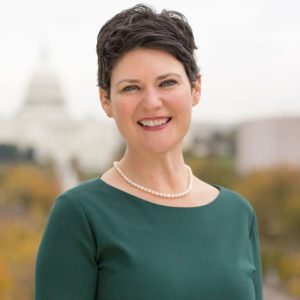

State Rep. Scott Sanford, a Republican who sponsored the Freedom to Worship Act, has said closing churches in the wake of COVID-19 eliminated critical ministries “in a time of crisis” and “violated their religious freedom.”

In addition to being a legislator, Sanford is executive pastor of Cottonwood Creek Baptist Church in Allen, a congregation dually aligned with the Baptist General Convention of Texas and the Southern Baptists of Texas Convention.

Bipartisan support not surprising

Eric McDaniel, a professor of government at the University of Texas at Austin, told Courthouse News Service the bipartisan support of the amendment was not surprising.

“Religion, especially in Texas, is very important to people, and no politician wants to be seen as anti-religion,” McDaniel said. “Going after religion in Texas is probably worse than going after Social Security.”

Similar measures have made their way to states across the country. A February analysis by the Deseret News found legislators across the United States were “considering nearly 50 bills dealing with religious freedom protections during a pandemic.”

In California, Sen. Brian Jones’ “Religion Is Essential Act,” which would have deemed religious services as an essential activity during a declared emergency, failed to pass a state Senate committee.

But in Arkansas, a new law declares the governor cannot prohibit a religious group from continuing to engage in religious services during an emergency.

Unnecessary and overly broad

Texas’ Proposition 3 has its share of critics.

Amanda Tyler

Amanda Tyler, executive director for the Baptist Joint Committee for Religious Liberty, said the measure is overly broad and unnecessary. She told Religion News Service it sends “a damaging message that religious people are more concerned about special treatment than they are about the good of their communities.”

Tyler said Texas already has strong protections, pointing to the state’s Religious Freedom and Restoration Act “that we believe provides the right balancing standard to decide issues in the free exercise rights of individuals and communities (that) might come into conflict with government interests.”

“I would hope that the voters of Texas would understand the strong protections for free exercise that they already enjoy and understand that this extra provision in the [Texas] Constitution is unnecessary, over broad and could actually jeopardize the health and safety of their communities,” Tyler said.

In a column opposing the measure in El Paso Matters, David Marcus of Join Us for Justice, the El Paso chapter of Americans United for Separation of Church and State, wrote that Proposition 3 “could have deadly consequences if the COVID-19 pandemic worsens or if we face a more contagious virus.”

The headline of a Houston Chronicle editorial urged voters to vote “No” on the proposition “that goes too far,” arguing the measure “ties the hands of officials trying to keep people safe.”

A crucial measure

But to John Greiner, pastor of Glorious Way Church in Houston, this measure is crucial. Last year, Greiner joined three other pastors in filing a petition with the Texas Supreme Court calling for Harris County Judge Lina Hidalgo’s order—that banned closed churches in the midst of COVID-19—to be deemed unconstitutional.

From the pulpit, Greiner has preached about the importance of voting in favor of Proposition 3. Through his My God Votes campaign, Greiner wants to empower faith leaders to take a stand on issues surrounding religious freedom.

“We’re trying to let people know that the church ought to provide voting guidance for people and help them make an educated Christian decision when they go to the voting booth,” Greiner told RNS, adding that in this case it means voting “yes” on the measure.

“When everyone else was closed, we got a tremendous response from the faith community, because many of them were very upset that their pastor closed their churches and limited their services to livestream,” he said. “We had a lot of people that came to our church while theirs were closed, and some of them never went back. Some of them stayed with us.”

To Greiner, individual churches and people who go to church “should be in charge of their own health care decisions, their own risks to reward behaviors.”

“The church should be the place where people go to get healed. There’s lots of churches and some don’t believe in healing. … They should be free to close if that’s what they want to do, but I don’t think that the government should impose that upon any group at all,” Greiner said.

With additional reporting by Editor Eric Black.


Truett program tackles emerging issues facing churches

WACO—Truett Theological Seminary’s newly established Program for the Future Church is seeking to tackle emerging modern issues facing the church.

By serving as a “visible bridge” between the church and Truett Seminary at Baylor University, the program will include a diverse group of individuals to serve as collaborative partners to religious institutions.

Angela Gorrell

Under the direction of Angela Gorrell, assistant professor of practical theology, and Dustin Benac, visiting assistant professor of practical theology and Louisville Institute Postdoctoral Fellow, the program will bring together professors, church and community leaders, and students to create a time and space for listening and imagining.

The goal is for groups of collaborators and researchers to find system-wide solutions to system-wide challenges, such as how churches respond to mental health concerns or how churches can prevent pastoral burnout.

“Our hope is that we can be a good partner and a good bridge builder,” Benac said. “Collaboration is the way forward for the future church.”

Truett’s Program for the Future Church sees this time of transition from in-person church engagements to mixed media church opportunities as a time of great possibility.

Walk alongside churches to develop solutions

The organizers hope to be a center for resources and insights as they walk alongside local congregations and faith-based organizations that are taking the next steps in addressing issues faced by churches across the country.

Gorrell emphasized the value of groups with members who have different perspectives to help guide churches to formulate meaningful solutions.

As an example, Gorrell points to the intersection of mental and spiritual health as a chief concern the Program for the Future Church hopes to help address. With a rise in the incidence of mental health issues, she said, she is curious as to what spirituality might have to offer those in need.

“We are working to put together research hubs of practitioners, academics and students who are at different levels of their education, with the goal of the research hub to have practitioners and academics work together to pilot solutions,” Gorrell said.

The directors want to begin by serving Waco, calling on Baylor students and scholars to participate in this initiative to support the vitality of the local community since it is seen as the basis for all future work. The need for this local collaborative work is to be met primarily with “catalytic collaboratories” and research hubs.

“We are committed first to be attentive to and grounded in our particular locale,” Benac said.

Among many other goals, the group aims to create regular opportunities for scholars and Truett students to engage with the stories of church and community leaders, develop research groups that will investigate pressing and emerging challenges facing the church and contribute to Baylor University’s aspirations to become a Tier-1 institution as a center for research and innovation.

“There’s no sort of bounds to the kinds of meaningful responses that a research hub might come up with for a solution to an issue,” Gorrell said.

Lexi Nitishin is a student news writer with Baylor University Media and Public Relations.


Call to courageous conversations about race

HOUSTON—Systemic injustice, implicit bias, educational inequity and historical reckoning should be part of the courageous conversations Christians must engage in as they confront racism, speakers told the No Need Among You Conference in Houston.

Avoiding overt racist acts are not enough, Pastor D.Z. Cofield of Good Hope Missionary Baptist Church in Houston told participants at the Oct. 6-8 conference, sponsored by the Texas Christian Community Development Network.

“Will you commit to be anti-racist?” he asked.

‘No reconciliation without repentance’

Racism involves systems that benefit the majority culture at the expense of people of color, he noted. Too often, white Christians “put the cart before the horse” in discussions about racial reconciliation.

“There is no reconciliation without repentance,” Cofield said. “Is racism a sin? If it’s a sin, then it’s something I have to repent of. But I don’t want to repent of something that benefits me.”

Cofield pointed out how white churches in the United States historically endorsed racist systems, from chattel slavery to Jim Crow laws.

“When we look at our country, more atrocities and acts of terrorism have been committed in the name of Jesus that in the name of Allah,” he asserted.

Cofield participated in a panel discussion about “Church and Race” that also included Ikki Soma, lead campus pastor at Bayou City Fellowship at Spring Branch, and Sonja Gee, executive director of Memorial Assistance Ministries. Jim Herrington, founding executive director of Mission Houston and co-founder of The Leader’s Journey, facilitated the discussion.

Gee’s grandfather was a Chinese immigrant to the United States. He benefitted from growing up in Texas, rather than Louisiana or Mississippi, she noted. In Louisiana and Mississippi, Asians were considered people of color and attended schools for Black students. In Texas, Asian students were allowed to attend school with white students.

Gee’s grandfather went on to graduate from Rice University and the University of Texas Law School. However, after he completed his law degree, he was turned down by 40 law firms that only hired white men, she noted.

Somo recalled an effort after the killing of George Floyd to enlist white pastors to preach regularly on the sin of racism. Out of 200 who attended an informational meeting about the initiative, 150 pledged to participate. However, within a relatively brief time, only five continued to identify with the movement, due to the resistance they encountered in their congregations.

Reality of implicit bias

Elia Moreno, executive director of the Texas Christian Community Development Network, helped lead a workshop about an initiative seven women of diverse backgrounds launched to study the Bible and engage in “courageous conversations” about race every other week, via Zoom.

“I don’t know how to be at the table without being transparent,” Moreno said. “I want the conversation to get harder. It’s time to wake up.”

Moreno described how she has been treated because she is “a woman and brown”—sometimes discriminated against in overt ways and other times through more subtle actions that reveal bias.

“We all have implicit bias, whether we know it for not,” Moreno said.

Educational gaps

Ruth Lopez Turley, professor of sociology at Rice University and founder of the Houston Research Consortium, challenged conference participants to think about Jesus’ parable of the Good Samaritan as an indictment of religious people who deliberately avoid people in need.

Ruth Lopez-Turley uses the parable of the Good Samaritan to illustrate how some religious people avoid contact with people in need. (Photo / Ken Camp)

Like the priest and Levite who crossed the road rather than come into contact with an injured man who had been beaten by robbers, Christians in the United States have a similar “track record” when it comes to low-income non-Anglo children.

Historically, enrollment in private schools—particularly Christian schools in the South—“skyrocketed” in direct response to court-ordered integration of public schools, she noted.

Today, 76 percent of Black students and 80 percent of Hispanic students in Houston attend high-poverty schools with limited resources, while only 14 percent of white students attend high-poverty schools, she noted.

“This leads to enormous gaps in educational attainment,” she said.

The racial concentration of poverty has a serious impact on student achievement, she added. Based on test scores, Black students in Houston are 3.6 years behind their white peers, and Hispanics are three years behind Anglo students.

“It’s as if they were absent one-fourth of their K-12 academic experience,” she said. “And that’s not unique to Houston.”

‘Who gets to speak for the dead?’

Chassidy Olainu-Alade, coordinator of community and civic engagement with the Fort Bend Independent School District, insisted the past must be acknowledged before progress can be made.

Chassidy Olainu-Alade, coordinator of community and civic engagement with the Fort Bend Independent School District, talked about the discovery of “The Sugar Land 95.” (Photo / Ken Camp)

When a backhoe operator was excavating the site of a career technology center for the Fort Bend school district in 2018, he unearthed a large cemetery of unmarked graves. Archaeologists found the remains of 95 African Americans ranging in age from their mid-teens to 70, buried between 1878 and 1911.

Those individuals—who came to be known as “The Sugar Land 95”—were convicts from a labor camp that was part of the state-sanctioned convict-leasing system that provided cheap labor to plantation owners in the decades after the Civil War. Their bodies revealed evidence of repeated injury, disease and malnutrition.

“When Black history is unearthed, who gets to speak for the dead?” Olainu-Alade asked.

The Sugar Land 95 offers a case study in how a community can “consider the history of underserved, impoverished or marginalized communities,” she said.

‘We are 99.9 percent alike’

Michael D. Reynolds, who works in the Division of Education with the Church of God International, explained race as a social construction rooted in 18th century pseudo-science—not a biological reality.

Michael Reynolds described race as a social construction, not a biological truth. (Photo / Ken Camp)

Johann Fredrich Blumenbach in 1775 divided humanity into five races, identifying Caucasians as the primary race, with the other four representing degenerations of the original type.

Later, Samuel Morton studied skulls representative of Blumenbach’s five races and attempted to calculate brain size based on his measurements. He claimed his research proved Caucasians had the largest brains, while Africans had the smallest brains.

“He used his findings to justify slavery and the superiority of people of European ancestry,” Reynolds said.

In fact, modern science reveals a commonality transcending differences in skin pigmentation or other cosmetic differences, he said.

“Scientists can find no difference in people’s blood or bodily systems that reliably identify race. We are 99.9 percent alike,” Reynolds said, asserting that evidence points to the Creator of all humankind.


Brian Fikkert: Alleviate poverty by reconciling relationships

HOUSTON—Until Christians acknowledge their own brokenness, their attempts to assist the materially poor are more likely to hurt the poor than help them, economist Brian Fikkert said.

The first step toward poverty alleviation involves Christians repenting of their sins of pride, their feelings of superiority to the poor and their embrace of materialism, he said.

“Broken people create broken systems, and broken systems create broken people,” said Fikkert, co-author of When Helping Hurts.

Some churches that criticize government for throwing money at problems do the same thing when it comes to how they approach the poor, Fikkert, founding president of the Chalmers Center for Economic Development at Covenant College, told participants at the No Need Among You Conference in Houston. The Texas Christian Community Development Network sponsored the Oct. 6-8 event.

Misdiagnosing the problem

Too often, Christians prescribe the wrong treatment for poverty because they have misdiagnosed the ailment, he asserted.

They focus only on material poverty, rather than looking also at poverty of spiritual intimacy, poverty of being, poverty of stewardship and poverty of community, he asserted.

In essence, Christians base their view of humanity on the western economic model that sees a human being as “a physical, highly individualistic, self-centered, materialistic creature,” he said.

“The Christian church has embraced the story of western materialism but tacked a soul onto it: Get the soul to heaven for all eternity, and live the American dream right now. …We need a better story. We need to rediscover the gospel,” Fikkert said.

In contrast to the materialistic worldview, the biblical model presents human beings as “highly integrated body-soul relational creatures who are deeply wired for relationships,” he explained.

“Poverty alleviation is about reconciling relationships,” he said.

Relief, rehabilitation and development

Churches miss the mark when they treat people living in chronic poverty the same way they respond to those who need emergency relief, Fikkert said.

“Know how to distinguish between relief, rehabilitation and development,” he said.

Relief is an appropriate short-term response to victims of a natural disaster or unexpected crisis, comparable to applying first aid to stop bleeding, he explained.

Rehabilitation begins after the bleeding stops, and it seeks to work with victims of a disaster to restore the positive elements of their pre-crisis condition.

Development, on the other hand, is a long-term ongoing process of “walking alongside” people to “bring them into right relationship with God, self, others and the rest of creation,” Fikkert said.

Rather than asking poor people what is wrong and what they need, ask them to identify their gifts, abilities and resources, he recommended.

“Don’t habitually do things for people that they can do for themselves,” he said.

Rather than adopting a paternalistic approach that gives poor people a blueprint to follow, help the materially poor discover their own solutions, he suggested.

“Live into a different story,” he said.


Jimmy Dorrell: Concern for the poor permeates the Bible

HOUSTON—God’s special concern for the poor permeates the Law, the Prophets and the New Testament, said Jimmy Dorrell, co-founder of Mission Waco and pastor of the Church Under the Bridge.

“There are more than 2,000 verses in the Bible about the poor. And yet, people can go to Sunday school and church for years and never hear them,” Dorrell told a workshop during the No Need Among You Conference in Houston. The Texas Christian Community Development Network sponsored the Oct. 6-8 event.

Genesis makes it clear all people—including the poorest and most marginalized—possess inherent dignity because they are created in God’s image.

“The image of God is imprinted on who they are,” Dorrell said.

Broken world, broken systems

But Genesis also teaches that due to human sin, God’s good creation has been marred and broken, he added.

“We live in a broken world. And not only is the world broken, but the systems in it are broken,” he said.

Both the Levitical Holiness Code and the Deuteronomic Code include laws that provide for and protect the poor and vulnerable, he noted.

“The Law is clearly on the side of the poor,” he said.

God gave the Law to the Hebrew people not only to govern their actions, but also to teach them they could “never be good enough” to overcome what sin had broken, apart from God’s intervention, Dorrell emphasized.

All people—regardless of material wealth or poverty—suffer the effects of sin and fallenness, and that should make God’s people humble and teachable, he stressed.

“We come to minister in our brokenness, ministering to brothers and sisters who are broken in another way,” Dorrell said. “The poor have things to teach us.”

Justice for the vulnerable

The eighth century Hebrew prophets emphasized justice as a reflection of God’s character, he continued. The prophets called for fair treatment of the poor and the most vulnerable—widows, orphans and immigrants—and they pushed back against injustice and unjust systems.

The Hebrew prophets also challenged God’s people to practice generosity, he said.

“We are blessed to bless. How you spend your money is a symbol of your faith,” Dorrell said.

While the word translated “justice” appears more than 200 times in the Old Testament, that specific word almost disappears in the New Testament. However, the word translated into English as “righteousness” carries a similar meaning, he noted.

Throughout his ministry, Jesus taught both by word and example God’s special concern for the poor and the outcasts. Rather than isolating himself from those whom others considered unclean, Jesus welcomed the ostracized and marginalized, Dorrell stressed.

“Jesus touched the poor and the lepers, and he hung out with tax collectors and sinners. He was in the mix,” Dorrell said.

In messiness, ‘the kingdom breaks in’

Love for one another and sharing possessions with each other characterized the early church, he observed. Like Jesus, the early disciples did not fear touching the unloved and connecting with those whom others neglected.

“Today, we have moved away from the poor. We have to worker harder to connect—to touch and be touched,” Dorrell said.

Reflecting on his own experiences working with the unhoused, Dorrell said about one-third of the people who attend the Church Under the Bridge have some form of mental illness.

“It’s messy stuff, working with the poor. But in the craziness of what looks like disorder, the kingdom breaks in,” he said.

“If we are going to change the world, the poor have to be involved in it. I have learned more about the kingdom of God from broken people than I ever learned in seminary.”


StartCHURCH y Convención colaboran para proporcionar recursos legales y administrativos en español

StartCHURCH se ha asociado con la Convención Bautista Hispana de Texas para apoyar y proporcionar recursos y herramientas para los pastores y plantadores de iglesias de la Convención.

StartCHURCH ayudará a las casi 1,100 iglesias bautistas hispanas en Texas con experiencia en las áreas de: incorporación de iglesias, estatutos, políticas, exención de impuestos, administración financiera, ordenación y otros asuntos de cumplimiento de normas.

StartCHURCH proporcionará recursos gratuitos a las iglesias de la Convención, que incluyen:

  • Paquetes de recursos con políticas y documentos esenciales para cada congregación
  • Recursos para fortalecer las finanzas de la iglesia
  • Recursos de recaudación de fondos
  • Un blog y un podcast en español
  • Una consulta gratuita para cada iglesia

Los recursos gratuitos en español están disponibles en: http://espanol.startchurch.com/convencion

Las iglesias y los líderes también recibirán seminarios gratuitos en línea y talleres presenciales en los próximos eventos de la Convención y la reunión anual en junio de 2022.

Las iglesias de la Convención también recibirán descuentos especiales por cualquier servicio adicional pagado que les gustaría recibir de StartCHURCH.

Lester Ruiz, el Director de Negocios de StartCHURCH, dice: “Hemos tenido el privilegio de ayudar a miles de pastores y plantadores de iglesias a establecer una base legal sólida para su iglesia cada año y nos sentimos honrados de asociarnos con la Convención Bautista Hispana de Texas para ofrecer las herramientas, consejos, capacitación y servicios que necesitan para proteger sus iglesias y prevalecer en su misión”.

“Personalmente he visto los desafíos que enfrentan las congregaciones hispanas con los problemas para cumplir con las normas”, dijo Jesse Rincones, Director Ejecutivo de Convención. “Los desafíos que enfrentan las iglesias son cada vez más complejos y ya no es suficiente tener una visión. Más que nunca, es necesario contar con un socio durante todo el proceso. Estamos contentos de que StartCHURCH sea nuestro socio”.

“El corazón de esta colaboración es ayudar a todas las iglesias de la Convención con un socio de confianza que las acompañe en su llamado a llevar la esperanza del evangelio a todas las naciones”, dice Ruiz.

StartCHURCH ha servido a más de 19,000 iglesias y ministerios durante sus 21 años de servicio. Brinda servicios en los 50 estados y Puerto Rico.


Cross-cultural pastor nominee for BGCT second vice president

Nebiye Kelile, pastor of both Pathway Church and Orchard Hills Baptist Church in Garland, will be nominated for second vice president of the Baptist General Convention of Texas.

Ethiopian Evangelical Baptist Church is the sponsor of Pathway—a BGCT-supported start-up church geared toward reaching Millennials and Generation Z—and also is the host site for Orchard Hills.

Ryan Jespersen, executive director of Dallas Baptist Association, announced his intention to nominate Kelile.

“We have said so very often that we need men who will step up and pastor traditional churches as well as start new works. Pastor Neb is doing both at the same time by being the pastor of Pathway Church and Orchard Hills Baptist Church. I believe this unique role gives Neb the ability to lead well in Baptist life,” Jespersen said.

“I am grateful for his ability as a speaker, as a leader, and as a person who is working hard to bring people together. He is working to both give an existing church the ability to leave a great legacy, and to start a new work, which is so needed in Baptist life.”

Nebiye Kelile

Kelile, who was born in Ethiopia, grew up in California after his family moved there when he was 2 years old. He has served 16 years as a preacher and pastor. He helped an immigrant church in Sacramento, Calif., develop an English-language ministry to reach and disciple the rising generation.

When leaders of Ethiopian Evangelical Baptist Church learned about Kelile and his work through a network of churches devoted to reaching Ethiopian immigrants in the United States, they invited him to move to the Dallas area to launch Pathway Church.

Pathway not only reaches English-speaking individuals with family ties to Ethiopia and Eritrea, but also has drawn young couples from other backgrounds—many of them previously unchurched.

As pastor of Orchard Hills Baptist Church, Kelile ministers primarily to senior adults who are longtime members of the church whose building Ethiopian Evangelical Baptist Church now occupies.

“If we are going to bridge the generations and reach more people for Christ, I believe Pastor Neb Kelile will be a strong voice in the room to help work toward this task,” Jespersen said.

If elected, Kelile said, he would be “honored to serve and contribute to the mission of Texas Baptists beyond what I’m already able to do as a pastor and church leader.”

“We need to be known for what we are for instead of only what we are against. We are for the gospel,” he said.

Kelile noted this time in the life of Texas Baptists parallels in many respects his own “personal journey” in ministry.

“I believe in giving priority to strengthening established churches and starting healthy new churches,” he said.

Because of his background, Kelile said he feels equally comfortable among various ethnic groups, as well as in majority-culture settings.

As a next-generation leader working with Millennials and Generation Z, Kelile wants to help Texas Baptists wrestle with the challenge of “learning how to disciple the next generation of Christians, for whom there is no social capital to be gained by identifying as a Christian or joining a church.”

Kelile and his wife Hiwot have four children—Lydia, Daniel, Haset and Zaema.