Jehovah’s Witnesses sue Norway after registration revoked

WASHINGTON (RNS)—After Norway deregistered the Jehovah’s Witnesses last year, some human rights experts say the nation’s reputation as a bastion of religious freedom could be in question.

Now, the Jehovah’s Witnesses of Norway are suing the state for revoking their national registration and withholding state funds. According to Jehovah’s Witnesses, they are the first religious group to lose their national registration in Norway, which recognizes more than 700 faith communities.

The trial, which began Jan. 8, will determine whether some practices of the Jehovah’s Witnesses violate Norway’s Religious Communities Act or whether withdrawing the Jehovah’s Witnesses’ registration violates their right to freedom of religion and freedom of association, as guaranteed in the European Convention on Human Rights.

“It’s certainly the most important trial about a religious freedom issue in Norway in decades,” Willy Fautré, director of the Brussels-based organization Human Rights Without Frontiers, told Religion News Service.

Accused of defying Norway’s Religious Communities Act

In January 2022, Valgerd Svarstad Haugland, the county governor of Oslo and Viken, in Norway, denied Jehovah’s Witnesses state grants for the year 2021 in response to concerns about what she perceived as exclusionary practices. The Jehovah’s Witnesses had received the grants, which currently amount to around $1.5 million annually, for three decades.

These funds typically are used for international disaster relief work and supporting religious activity in Norway, including translating literature and building kingdom halls, said Jørgen Pedersen, spokesperson for Jehovah’s Witnesses in Norway.

The county governor of Oslo and Viken claimed Jehovah’s Witnesses are forbidden to contact disfellowshipped members, as well as people who voluntarily dissociate, which can hinder a person’s ability to freely withdraw from the group.

She also argued Jehovah’s Witnesses may disfellowship children who have chosen to be baptized if they break the religious community’s rules, a practice she said constituted “negative social control” and violated children’s rights.

These practices, the county governor argued, defy Norway’s Religious Communities Act.

“We have assessed the offenses as systematic and intentional, and have therefore chosen to refuse grants,” a statement from the county governor said.

Clarifying stance on disfellowship

In an email to RNS, Jehovah’s Witnesses spokesperson Jarrod Lopes said Witnesses only disfellowship an unrepentant member who “makes a practice” of serious violations of “the Bible’s moral code.”

Even then, Lopes added, Jehovah’s Witnesses don’t force members to limit or cease association with former congregants, whether they’ve been disfellowshipped or withdrawn voluntarily—that’s up to individuals.

“Congregation elders do not police the personal lives of congregants, nor do they exercise control over the faith of individual Jehovah’s Witnesses,” Lopes wrote.

Serious sins that might lead to disfellowship include manslaughter, adultery and drug use, Pedersen explained. A congregation always will try to help an individual restore his or her relationship with God. But if the problem persists, Jehovah’s Witnesses feel compelled to respect the entire Bible, including instructions not to associate with unrepentant sinners, such as 1 Corinthians 5:11.

Though the Witnesses appealed the county governor’s decision, in September 2022 the Ministry for Children and Families upheld the ruling.

In October that same year, the county governor said in a press release that unless Jehovah’s Witnesses would “rectify the conditions that led to the refusal of state subsidies,” they would lose registration, which they did a few months later, in December.

Without its national registration, Jehovah’s Witnesses cannot perform marriages, and they lose entitlement to government grants.

Should the state interpret religious texts?

The Jehovah’s Witnesses of Norway filed two lawsuits against the state in December 2022—one challenging the denial of state grants and another challenging their loss of registration. Those lawsuits have since been combined.

Though the Oslo District Court initially granted the Jehovah’s Witnesses an injunction that suspended their deregistration until that case was argued, the Ministry challenged the injunction, and in April 2023, the court removed it.

As the trial plays out at the District Court of Oslo, Jason Wise, an attorney acting as a consultant on the case for the legal team representing the Jehovah’s Witnesses in Norway, said part of the Witnesses’ argument is that there is no evidence of harm and it’s not the place of the state to interpret religious texts.

The state continues to contend that the Jehovah’s Witnesses’ practices are in conflict with the Religious Communities Act, particularly, they claim, by exposing children to psychological violence.

Since 2022, Jehovah’s Witnesses have reported an increase in vandalism, harassment and physical assaults in Norway. In September 2022, two Jehovah’s Witnesses in Harstad, Norway, reported that a man screamed at them and repeatedly attempted to hit one of them. That same month, a man in Kristiansand, Norway, reportedly set a Jehovah’s Witnesses mobile display car on fire, and a month later, someone attempted to set fire to a Jehovah’s Witnesses meeting place in Fauske, Norway.

“What we see now is that the state of Norway is taking a look at my beliefs, saying, we don’t like that, we don’t like that,” said Pedersen. Asking Jehovah’s Witnesses to change their beliefs, he said, is a “violation of my integrity as a person, as a religious person, as a person with a conscience. That’s the core issue of this case.”

Norway isn’t the only place where Jehovah’s Witnesses’ practices have been under scrutiny. In December, the Belgian Court of Cassation—the highest court in the Belgian judiciary—rejected an appeal of a lower court’s decision, ruling in favor of Jehovah’s Witnesses’ right to avoid contact with former members.

“Norway is just the tip of another phenomenon,” Fautré said. “That is a source of concern, because we see that there are more and more attempts in Europe by state institutions to interfere and intrude into the teachings and practices of religious groups, which is forbidden by the European Convention. The risk is they would open the door to more court cases against other religious groups.”


Persecution of sub-Saharan African Christians highlighted

WASHINGTON (RNS)—In its annual list detailing countries of concern when it comes to persecution against Christians, the watchdog organization Open Doors International highlighted outbreaks of violence against sub-Saharan African Christians, where 16.2 million were forced out of their homes at the end of 2022.

The report, published at the beginning of every year, tracks discrimination and violence against Christians and ranks countries based on the severity of the threats faced by Christian communities there.

The 2024 list looks at attacks against Christians from October 2022 to September 2023 and is based on data collected by field workers, experts and persecution analysts.

This year’s report notes violence against sub-Saharan African Christians, a long-term problem according to the organization, is the consequence of actions by autocratic regimes and jihadist groups.

Victims of the gunmen attack in north central Nigeria, receive treatment at Jos University Teaching hospital in Jos Nigeria on Wednesday, Dec. 27, 2023. Musa Ashoms, commissioner of information and communication for Plateau State, reported 195 deaths due to the attacks. (AP Photo/Sunday Alamba)

“Christians are purposefully targeted or extra vulnerable in a continent that is beset by the twin problems of radical Islamic elements and increasingly autocratic regimes. This is the ever-growing threat for Christians south of the Sahara Desert and, if left unchecked, these twin pressures are expected to overwhelm them and force them out of their homes and villages,” wrote Frans Veerman, Open Doors World Watch Research’s managing director.

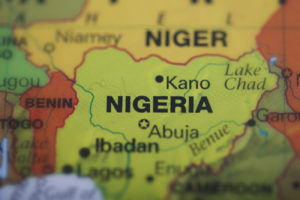
More than 82 percent of Christians killed for their faith globally this year were in Nigeria, according to the organization, which has the country ranked as No. 6 on the 2024 list.

Boko Haram, the jihadist group responsible for the abduction of 276 Christian schoolgirls in 2014, though still active, has ceded power to the Sunni Islamic extremist group ISWAP, which has extended its influence into majority Christian southern Nigeria.

Violence against Christian communities particularly is concerning in the Plateau state of Nigeria, which has seen a rise in attacks against rural communities by armed gangs.

Voids in governance and security plague countries of the region and have given jihadist groups occasions to take control over certain areas, the report explained.

Wagner group involved in abuse

In Mali, the Russian paramilitary group Wagner, which is there as an ally of the current military junta in power, has expanded its presence and made it harder for local Christian communities, per the list.

“Their influence has significantly stifled the civic space for Christians,” according to the organization.

The Wagner group, formerly run by President Vladimir Putin’s ally Yevgeny Prigozhin, until he died in 2023, was involved in several abuse cases conducted with the Malian army, according to Human Rights Watch. It also is present in other African countries—including Libya, Central African Republic, Sudan Faso—and has replaced other Western powers in the region.

Christians fear being associated with voices who criticized the presence of Wagner on the continent, Open Doors noted.

The new Malian Constitution, which includes a recognition of Christians as a minority, should improve Christians’ living conditions in the country, Open Doors reported. The text, which intends to prepare a return to civilian rule, was approved in June in a referendum with 97 percent of the vote.

The report also noted the growing influence of the Islamic Allied Democratic forces in war-torn Congo.

North Korea still tops Watch List

(Photo / Stefan Krasowski / CC BY 2.0)

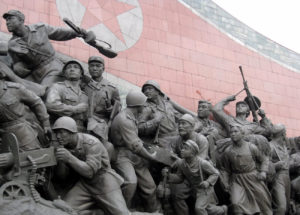
This year’s World Watch List included actions taken against Christians by their governments. North Korea, at the top of the list for many years, continues to track illegal house churches and condemn Christians to “hard labor,” according to the organization.

China increased its crackdown on house churches through a set of “old and new authoritarian measures,” explained the watchdog group. Thousands of churches closed in the past year, and 83 percent of closures documented in the report happened in China and India.

The report also describes a degrading climate for Christians in Nicaragua due to President Daniel Ortega’s anti-clergy policies. Last August, the government confiscated the University of Central America, a Jesuit-run institution, accusing it of being a “center for terrorism.”

Kim Neineng, 43, a tribal Kuki, cries as she narrates the killing of her husband, at a relief camp in Churachandpur, in the northeastern Indian state of Manipur, Tuesday, June 20, 2023. (AP Photo/Altaf Qadri)

In February 2023, Bishop Rolando Álvarez was sentenced to 26 years in prison for “criticizing religious freedom conditions.” The bishop of Matagalpa was released Jan. 16 with 18 other priests after negotiations with the Vatican.

Open Doors also raised the alarm on the situation for Indian Christians and reports a rise in Christian killings and attacks on Christian schools and hospitals in that country.

Last May’s ethnic violence in northeastern India, between the Kuki Christian minority and the Meitei, Manipur’s biggest and largely Hindu ethnic group, led to the death of 160 Christians and forced thousands more out of their homes.

The organization said the ouster of Prime Minister Narendra Modi’s Hindu nationalist party from India’s southern Karnataka state might improve the situation for Christians there, as long-standing anti-conversion laws are repealed.

The 2024 top 10 list is: North Korea, Somalia, Libya, Eritrea, Yemen, Nigeria, Pakistan, Sudan, Iran and Afghanistan.


Baptists in Belarus voice concern about new law

Both registered and unregistered Baptists in Belarus voiced concern about a bill recently signed into law requiring all registered religious communities to reregister or face punishment for illegal religious activity.

On Dec. 30, President Aleksandr Lukashenko authorized a law that—among other things—requires registered religious groups in Belarus to register again between July 5, 2024, and July 5, 2025.

The law solidifies the government’s power to inspect and monitor religious communities. It also grants the state sweeping authority to shut down religious communities and arrest religious practitioners deemed guilty of “extremism” or who are critical of the regime in power.

Forum 18 news service quoted an individual associated with the Council of Churches Baptist—whose member congregations choose not to seek government permission to exercise freedom of religion—as saying compulsory registration “began in the Soviet Union, and nothing has changed.”

“As the Bible says, there’s nothing new under the sun,” he told Forum 18, a religious freedom-focused news service affiliated with the Norwegian Helsinki Committee. Council of Churches Baptist congregations “will stick to our firm position” not to seek state registration, he insisted.

Leonid Mikhovich, president of the Baptist Union in Belarus, welcomed some changes to the final text of the law as published Jan. 5, compared to an earlier draft. The final version removed a requirement for religious organizations to report to local executive committees about the religious education of children.

However, Mikhovich voiced concern about a requirement for a religious community to have a minimum of 20 adult founders.

“In some villages, we do not have the required number of people, while the law provides no other option other than to have 20 people to be allowed to hold regular worship meetings,” he told Forum 18.

Mikhovich also noted the law requires the founders of religious communities to provide the state with extensive personal information.

“It is still necessary during registration to submit information about their place of work,” he said.

The office of the president in Belarus reported 3,590 registered religious institutions as of Jan. 1 last year, representing 25 religious denominations and 173 religious organizations, such as monasteries, convents and religious educational institutions, and 3,417 religious communities.

Of those religious communities, 1,733 are part of the Belarusian Orthodox Church, and 500 are Roman Catholic. Evangelical Baptists have 281 registered communities.


ETBU baseball team impacts Dominican Republic

The East Texas Baptist University baseball team showed God’s love by serving communities in the Dominican Republic last month.

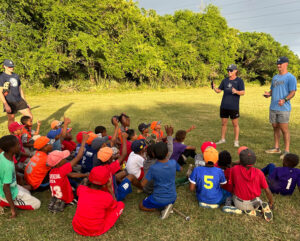
The East Texas Baptist University baseball team and coaches led clinics for children in the Dominican Republic. (ETBU Photo)

The seven-day mission trip, which included competing with local baseball teams, painting homes and leading sports clinics for children, was part of the Tiger Athletic Mission Experience. ETBU created TAME to allow student-athletes opportunities to use their talents and abilities as avenues to share their faith with people globally.

“For us to have the opportunity to go and serve the people of the Dominican Republic was a huge honor for our club,” ETBU Head Baseball Coach Jared Hood said. “Our guys got to experience a culture much different than our own and an unbelievably loving people. We were shown that God is present in the Dominican Republic, and his blessings are abundant.

“To experience a culture much different than ours and to see the presence of God was truly humbling. To have the chance to leave our mark and be embraced by the people of the Dominican Republic was an experience like no other.”

The team competed in five games during the trip, playing against local teams made up of mostly MLB minor league players. They also competed with teams from the Dominican Air Force Academy and the Dominican Republic Army.

“During the games, we had the opportunity to witness the love and passion all Dominicans show toward the game of baseball,” Ben Burroughs said. “Whether they are in the stands or on the field, the love of the game is all the same, and it makes the atmosphere amazing.”

After each game, players were able to share their testimonies with the team and pray over their opponents.

Following the final game of the week, the ETBU baseball team donated their uniforms and backpacks to youth in local neighborhoods.

“Through this journey, we’ve witnessed God’s hand at work within our team. We’ve learned not to take things for granted, understanding that material wealth doesn’t guarantee happiness,” Charles Gordon said. “This trip has been instrumental in providing both me and my teammates with a life-changing experience, bringing us closer to Christ and fostering a deep sense of gratitude.”

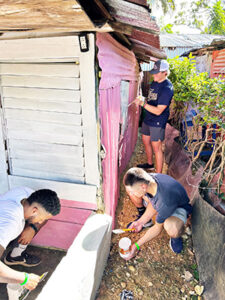
Members of the ETBU baseball team began their mission trip to the Dominican Republic by spending a day painting the exterior of homes in Boca Chica. (ETBU Photo)

The team began their mission trip by spending a day painting the exterior of homes in Boca Chica.

“Our first day in the Dominican Republic was eye-opening,” Carson Wilson said. “We visited a once-thriving sugar cane village now extremely run down, with houses made from scrap metal, and stray dogs and goats roaming freely.

“Despite the challenging conditions, the residents greeted us with smiles. We painted three homes and connected with grateful locals. Remarkably, a group of 12- to 14-year-old boys, unrelated to the homes we painted, eagerly joined us, some with torn-up shoes and some with no shoes at all, to contribute to their community. Their selfless act is something I will never forget.”

Throughout the week, the Tiger baseball team had the opportunity to engage with children through baseball camps and clinics. The team performed baseball drills, played catch and interacted with the kids. At the end of the camps, team members led devotional times with the children.

“The camp was buzzing with the pure joy of kids, excited to be out there playing their favorite game,” Ethan Brister said. “One special highlight was during our devotional time, witnessing some kids proudly reciting John 3:16 from memory. … We didn’t just share the love of baseball. We connected with over 100 kids, bringing them both the joy of the game and the love of God.”

During a visit to an orphanage, the team’s head coach had an unexpected and welcome encounter. A child whom he met during a TAME trip six years ago remembered him and excitedly ran to greet him.

“I met Victoria on our trip to the Dominican Republic in 2017,” Hood said. “At that time, my daughters were 5 and 2, and Victoria’s personality reminded me a lot of them. We played the entire time that day at the orphanage, and she was so happy and full of life that it was hard not to have an impact on me.

“Seeing her again meant the absolute world to me. She was just as I had remembered her. I am so grateful to have had a chance to reconnect with Victoria and see that she is well.

“Just like seeing one of the houses that we had painted previously in 2017, it is a reminder that not only does our impact on lives last longer than the service that we do, but those impacts have a lasting effect on our lives as well.”

Since 2016, ETBU sthletics has sponsored TAME trips to Costa Rica, Nicaragua, the Dominican Republic, Brazil, Serbia, Israel, Jamaica, Slovakia, France, Japan, Greece, Scotland, Australia, Spain, Portugal, Northern Ireland and New Zealand.


Neither Nigeria nor India cited for serious violations

In spite of a Christmas Eve massacre of about 200 Nigerians in predominantly Christian areas and evidence of India’s growing transnational repression of religious minorities, neither nation was designated as a Country of Particular Concern by the U.S. Department of State or placed on its Special Watch List.

In response to the omissions, the U.S. Commission on International Religious Freedom called for a congressional hearing, noting the State Department’s own reported evidence of religious freedom violations in both countries.

U.S. Secretary of State Antony Blinken announced Jan. 4 the State Department redesignated a dozen nations as Countries of Particular Concern—a category reserved for nations that engage in or tolerate “systemic, ongoing and egregious violations” of religious freedom.

The State Department-designated CPCs are Burma (also known as Myanmar), China, Cuba, Eritrea, Iran, Nicaragua, North Korea, Pakistan, Russia, Saudi Arabia, Tajikistan and Turkmenistan.

Kim Neineng, 43, a tribal Kuki, cries as she narrates the killing of her husband, at a relief camp in Churachandpur, in the northeastern Indian state of Manipur, Tuesday, June 20, 2023. Neineng escaped with her four children to a nearby relief camp when a Meitei mob descended on their village. Her husband was killed by the mob  (AP Photo/Altaf Qadri)

“There is no justification as to why the State Department did not designate Nigeria or India as a Country of Particular Concern, despite its own reporting and statements. USCIRF calls on Congress to convene a public hearing on the failure of the State Department to follow our recommendations,” U.S. Commission on International Religious Freedom Chair Abraham Cooper and Vice Chair Frederick A. Davie said in a joint statement.

The USCIRF in its 2023 annual report recommended all 12 countries be redesignated as CPCs without any waivers on sanctions and also recommended the CPC designation for India, Nigeria, Afghanistan, Syria and Vietnam.

“We met with the State Department on many occasions to sound the alarm about these countries, but not all of our recommendations have been followed. We will not be deterred and will continue our role as a congressionally mandated watchdog to ensure the U.S. government prioritizes religious freedom as a key component of U.S. foreign policy.”.

Cooper and Davie pointed to the Christmas Eve attacks on Christians as “just the latest example of deadly violence against religious communities in Nigeria that even the State Department has condemned.”

In regard to India, they noted not only “egregious religious freedom violations” and religious violence internally, but also increased transnational repression targeting religious minorities.

Others echo concerns about omissions

21Wilberforce, a human rights organization focused on religious freedom, echoed the concerns raised by the bipartisan commission.

“21Wilberiforce joins the chorus of those in government and civil society who are very disappointed that Nigeria and India are missing from the State Department’s latest religious freedom violations country list. Both countries clearly meet the legal standards for designation as CPCs,” said Lou Ann Sabatier, spokesperson for 21Wilberforce.

“Violence and atrocities in Nigeria continue to rapidly increase with the most recent incident reported two weeks ago on Christmas Eve. And growing incitement of religious violence against religious minorities in India, whose government turns a blind eye, is deeply troubling.”

ADF International, the global arm of Alliance Defending Freedom, particularly condemned the Biden administration for failing to acknowledge “egregious violations of religious freedom” in Nigeria and urged congressional action.

“The United States should increase pressure on Nigeria for the blatant violations of religious freedom occurring in the country. More Christians are being killed in Nigeria for their faith than in all other countries combined,” said Sean Nelson, legal counsel on global religious freedom for ADF International.

“The U.S. government should do everything within its power to support ending the persecution and bringing about the peaceful coexistence of faith communities in Nigeria. Since it is clear that the State Department will not take significant action over the terrible religious freedom conditions in Nigeria, it is vital that Congress makes its voice heard.”

In addition to the CPC designations, the State Department placed Algeria, Azerbaijan, the Central African Republic, Comoros and Vietnam on its Special Watch List—a second-tier designation for countries where there is evidence of religious freedom violations.

Contrary to USCIRF recommendations, the State Department issued waivers on sanctions for Pakistan, Saudi Arabia, Tajikstan and Turkmenistan.

“USCIRF formally requests a detailed justification by the State Department as to why our policy recommendations were not fully implemented, including the waivers,” Cooper and Davie stated.

Blinken acknowledged “significant violations of religious freedom also occur in countries that are not designated,” but he did not cite specific nations.

“Governments must end abuses such as attacks on members of religious minority communities and their places of worship, communal violence and lengthy imprisonment for peaceful expression, transnational repression, and calls to violence against religious communities, among other violations that occur in too many places around the world,” Blinken said.

“The challenges to religious freedom across the globe are structural, systemic, and deeply entrenched. But with thoughtful, sustained commitment from those who are unwilling to accept hatred, intolerance and persecution as the status quo, we will one day see a world where all people live with dignity and equality.”

Blinken also announced the State Department named al-Shabab, Boko Haram, Hayat Tahrir al-Sham, the Houthis, ISIS-Sahel, ISIS-West Africa, al-Qa’ida affiliate Jamaat Nasr al-Islam wal-Muslimin, and the Taliban as Entities of Particular Concern.


TBM-built facility in Turkey drawing crowds

“If you build it, they will come.” The catchphrase made popular by Field of Dreams could be used now for a Texas Baptist Men project but in the past tense: “You built it, and they came.”

A TBM team constructed a community center in Antakya, Turkey, last August.

Since construction, the Christian group meeting there is “bursting at the seams, with in excess of 60 folks in attendance,” said Rupert Robbins, associate director of TBM Disaster Relief.

The building was needed after widespread destruction in Antakya caused by the January 2023 earthquake.

Two TBM Rebuild teams worked last year in the city of 400,000 people. The first TBM team built temporary homes in April 2023. The September 2023 team built the community center.

The center is a modular building, “built in two components, with the intention of eventually being moved to a new location,” Robbins explained.

Since construction, “the local response has been overwhelming, with standing-room-only crowds,” Robbins said.

“The impact of that facility has led the local believers to purchase property in the nearby neighborhood where the structure will be relocated and plans for expansion have already begun,” he said.

“It is amazing to see how God works when his people are given a place to worship and minister. It changes a whole community.”


TBM helps feed Ukrainian war refugees in Romania

Baptist churches around Suceava, Romania, continue to care for and feed Ukrainian refugees almost two years after the Russian invasion, and Texas Baptist Men has come alongside the congregations to help provide the meals.

“The churches in and around Suceava have been an important lifeline for the refugees,” said Mickey Lenamon, TBM executive director/CEO. “They asked if we could help. We could. So, we did. Our generous financial donors made this possible.”

Baptist churches around Suceava, Romania, continue to care for and feed Ukrainian refugees almost two years after the Russian invasion, and Texas Baptist Men has come alongside the congregations to help provide the meals.

Suceava is about 28 miles south of the Romanian-Ukrainian border. TBM funds sent to the churches are providing rice and bread, among other food items.

“When the world’s attention has moved on to other world events, the war and displacement of families continues,” said Rupert Robbins, associate director of TBM disaster relief.

“It is humbling and amazing to see how God continues to use TBM and these partners in Romania, as well as others in the region, to make a kingdom and eternal impact in the lives of the hurting.”

Pastor Cătălin Croitor, who is president of the regional Baptist association, expressed his gratitude to TBM in an email to Robbins.

“I would like to take this opportunity in order to express my thanks to you for the generous donation that Texas Baptist Men have made towards helping the Ukrainian war refugees,” Croitor wrote.

“Your sacrificial giving is not taken for granted and it is very much appreciated by us. It is an answer to prayers, a great encouragement to us and a blessing to many.”


Baptists among Nigerians killed in Christmas Eve attacks

A Baptist pastor and his wife were among nearly 200 Nigerians killed in a series of coordinated attacks that began Christmas Eve.

Militant Fulani militia targeted more than two dozen predominantly Christian communities in Central Nigeria’s Plateau State, starting at about 10 pm. on Christmas Eve and continuing into the early hours of Christmas morning.

Nine members of the Nasara Baptist Church—including Pastor Solomon Gushe and his wife—were killed in the assault on Dares in the Bokkos local government area. Convention leaders cancelled a planned Dec. 27 Christmas celebration in response to the attacks.

Elijah Brown

“In Nigeria, the bells of Christmas turned into wails of mourning as Baptists and Christians faced the reality of attack and persecution,” said Elijah Brown, general secretary of the Baptist World Alliance.

“We mourn with these faithful families. We join with the Nigerian Baptist Convention in calling upon the Nigerian government to launch an immediate and thorough investigation that holds those responsible to judicial accountability.”

The Nigerian Baptist Convention issued a public statement condemning “the wanton killings of Christians and the destruction of churches by the Fulani militia.”

Victims of the gunmen attack in north central Nigeria, receive treatment at Jos University Teaching hospital in Jos Nigeria on Wednesday, Dec. 27, 2023. Musa Ashoms, commissioner of information and communication for Plateau State, reported 195 deaths due to the attacks. (AP Photo/Sunday Alamba)

Israel Adelani Akanji, president of the Nigerian Baptist Convention, called on security agencies to bring the perpetrators of violence to justice, and he urged President Bola Tinubu to “provide necessary security to all Nigerians.”

The statement from the convention noted Akanji believed the Fulani militia “decided to strike during the Christmas celebration when people are in the mood of giving thanks to God for the birth of our Lord Jesus Christ.”

Musa Ashoms, commissioner of information and communication for Plateau State, reported 195 deaths due to the attacks. Amnesty International Nigeria reported more than 190 killed, while the Nigerian Red Cross confirmed 161 deaths and more than 32,000 people affected. At least 300 people were injured.

Caleb Mutfwang, governor of Plateau State declared a week of mourning from Jan. 1 to Jan. 8, encouraging “all citizens to use these days for intense prayers to seek the intervention of the Almighty God in defending our territories against wicked men that have risen against us.”

While some groups have dismissed the violence in Nigeria as a “herder-farmer clash,” the governors of the nation’s north central states disputed that characterization, said Dawari George, director of the 21Wilberforce Global Freedom Network Africa, who is based in Rivers State, Nigeria.

George joined in calling for a thorough investigation into the attacks and for the Nigerian government to take firm and decisive action.

“This is one attack too many. It is an attempt to stifle a people’s means of livelihood, wipe out a people, their history, religion and identity,” George said.

“The attack was premeditated, with intelligence on the imminent attack known to authorities, and with no action taken until the attack occurred. This requires an investigation by unbiased international organizations and the Nigerian government.

“The impunity of the perpetrators and the kid-gloves response of the government sets the stage for future occurrences if left unchecked.”

‘Cycle of impunity’

Volker Türk, United Nations High Commissioner for Human Rights, issued a statement Dec. 28 urging government officials in Nigeria to stop the “devastating violence” in its central region and hold perpetrators accountable.

“I call on the Nigerian authorities to investigate this incident promptly, thoroughly and independently, consistent with international human rights law, and to hold those responsible to account in fair trials,” Türk said.

“The cycle of impunity fueling recurrent violence must be urgently broken. The government should also take meaningful steps to address the underlying root causes and to ensure nonrecurrence of this devastating violence.”

Mervyn Thomas, founding president of Christian Solidarity Worldwide, likewise deplored the “appalling violence” and urged Nigerian authorities to ensure “the security and welfare” of their nation’s citizens.

“We extend our deepest condolences to those bereaved in this appalling violence, which was timed to disrupt the festive season in predominantly Christian areas,” Thomas said.

“The fact that such enormous loss of lives and property occurred before security forces responded in sufficient numbers is indicative of the lamentable ongoing failure of successive federal and state authorities to uphold the Nigerian Constitution by ensuring the security and welfare of citizens as their primary purpose.

“CSW concurs with High Commissioner Türk’s call for the cycle of impunity to be broken and urges the Nigerian authorities, once again, to prioritize the pursuit, arrest and prosecution of these terrorists, seeking international assistance when needed. It is also vital that members of the international community significantly increase their efforts to assist Nigeria in this endeavor, and to hold the authorities accountable for any failure to protect its citizens.”

Not the first attack during the Christmas season

Last month, more than two dozen faith leaders and human rights advocates sent a letter to Congress encouraging U.S. lawmakers to take action regarding religious persecution in Nigeria.

They noted 5,000 Christians in Nigeria had been killed for their faith in 2022, and about 17,000 churches had been burned or attacked since 2009.

The faith leaders joined the U.S. Commission on International Religious Freedom in calling for the State Department to designate Nigeria as a Country of Particular Concern and to appoint a special envoy for Nigeria and the Lake Chad Region. The CPC designation is reserved for nations that engage in or tolerate “systemic, ongoing and egregious violations” of religious freedom.

Frederick A. Davie, vice chair of the commission, expressed concern in mid-December about the frequency of violence in Nigeria and the potential for escalation around Christmas.

“This momentum is not stopping, and we cannot stand by and watch more Nigerians being targeted on the basis of their faith, especially as we near the holiday season, where we have seen this escalation in the past,” Davie said.

In 2020, at least a dozen Christians were killed and several churches burned on Christmas Eve. The previous year, terrorists released a video of 11 hostages being executed on Christmas Day.


Mexico Baptists help churches rebuild after hurricane

Two months after Hurricane Otis slammed the area surrounding Acapulco, Baptists in Mexico—with help from Texas Baptists—continue to rebuild damaged church buildings, provide financial support for pastors and supply food to families in need.

Hurricane Otis made landfall at 1:25 a.m. on Oct. 25 near Acapulco as a Category 5 hurricane with sustained winds of 165 mph. It claimed at least 50 lives and caused more than $10 billion in property damage—including significant damage to churches in the state of Guerrero.

Baptists in areas of Mexico unaffected by the hurricane responded quickly to meet needs in hard-hit communities.

Regional Baptist conventions—the equivalent of associations of churches in the United States—worked with the National Baptist Convention of Mexico to mobilize volunteers and provide aid.

Baptists throughout Mexico supplied food for people in need and began helping churches rebuild damaged facilities. The Baptist General Convention of Texas provided financial assistance.

David Hernandez Nuño, legal counsel for the National Baptist Convention of Mexico, wrote a Dec. 20 letter to Josué Valerio, director of Texas Baptists’ Center for Missional Engagement, expressing appreciation and reporting plans for the immediate future.

“The offering you have sent has been invaluable in the supply of provisions like a community feeding center, materials and tools needed to rebuild church buildings, and financial aid for pastors whose income has been greatly impacted by the natural disaster. Your offerings have been a blessing for our brothers and sisters in Guerrero,” he wrote.

Baptists in Mexico viewed the gifts from Texas Baptists as coming “from the goodness of God’s hand,” he continued.

“Your generosity is a living testimony of love and the solidarity that characterizes our communities of faith, and it is an encouragement to us to continue collaborating, so that in every difficult circumstance God’s love is manifested,” he wrote.

Over the next three months, the National Baptist Convention of Mexico will provide financial aid to 19 pastors in communities affected by Hurricane Otis, he reported. The Mexican Baptist convention also will supply food for community feeding centers.

“Baptist regional conventions in Mexico are helping in this effort of provision and rebuilding,” he wrote.

“On behalf of all the members of the National Baptist Convention of Mexico, we express our sincere gratitude to Texas Baptists for your generosity and love. May God’s grace guide your efforts and that we’ll continue to collaborate in the work that has been entrusted to us.”


Ukrainian Baptist leader says spread of the gospel at stake

KYIV, Ukraine (BP)—Christians in the United States should consider the spiritual dimensions of Russia’s war on Ukraine, especially as military aid to Ukraine grows uncertain, a Ukrainian Baptist Union leader said.

Elijah Brown (left), general secretary of the Baptist World Alliance, and Igor Bandura, vice president of the Baptist Union of Ukraine, stand behind a pulpit made from a missile shot down over Ukraine. (Photo from Twitter)

“You should remember the spiritual dimensions of this war, especially the attempt of the evil one to use Russia to destroy Ukraine as a goalpost for Christianity in Eastern Europe,” said Igor Bandura, vice president of the All-Ukrainian Union of Associations of Evangelical Christian-Baptists, shortly after a December trip to the United States.

“This is not only a war of Russia against Ukraine. This is a war for Christian values, for the possibility to spread the gospel in freedom, and to fulfill the Great Commission of the Lord Jesus.”

Bandura describes Ukraine as “the home of evangelism and missions in eastern countries,” pushing back against a post-Christian climate.

The spiritual dimensions of the war are notable, Bandura said, as the United States considers continued military aid to Ukraine, and as Hungary blocked a $50 billion aid package to Ukraine from the European Union.

The Baptist Union has lost 300 churches in Russian occupied territories including Crimea, he said, which Russia has occupied since 2014.

Entire congregations fled for safety in the wake of the February 2022 invasion. Displaced pastors have planted about 100 churches in the European Union to serve Ukrainian refugees, he said, and additional displaced pastors are leading churches that were already established abroad.

Training pastors to plant churches

As congregations persevere, Southern Baptist missionary Michael Domke, based in Hungary, works with Ukrainian pastors Rustam and Anatoly to train men who hope to plant churches, teaching methodology through Generation Ministry.

Pastors spanning the entire country enrolled in the program. They are planting churches in areas where they live, overcoming infrastructure damages of war.

“Ukrainians are very resilient, and the condition of a building is not something that stops them from doing church work,” Domke said. “I’ve been in churches in wintertime with no heat, and it’s been full of people. That doesn’t stop them.”

Before the war, Generation Ministry typically trained five or seven church planting teams a year, but today it is conducting three schools simultaneously, hoping to train 24 church planting teams through September 2024, Domke said.

Those enrolled complete about seven two-day, three-night sessions spread over a year. Most will plant churches with no compensation.

“One of the major motivations,” Rustam said, “they feel the calling and the duty that they’re supposed to do that for the nation of Ukraine in these hard times.”

Church planters secure meeting spaces by applying for government facilities at no cost or repairing older church facilities.

At least one pastor currently enrolled in Generation Ministry hopes to plant a church in Bucha, the scene of mass civilian carnage when Russia occupied the city for a month in February and March. Rustam attends Bethany Baptist Church in Bucha, which is recovering after 80 percent of its members fled during Russia’s occupation.

Bandura pastors Bible Church in Irpin, one of the first areas Russia captured and Ukraine has since recovered. All of Bible Church’s members evacuated during Russia’s attack, Bandura said, but about 70 percent have returned. Bible Church actively serves surrounding communities through six volunteer centers the church established. In cities surrounding Irpin, Bandura counts three new churches plants.

As the war endures, churches are challenged to remain hopeful.

“The last few months were very difficult for us emotionally and spiritually, because our expectation that the war would … end was not fulfilled. The war is still here,” Bandura said. “And there is no understanding when it will be finished.

“We all started to realize that the war would be going on at least the next year, unless God will work a miracle.”

Congress failed to pass a December aid package that would have included $61.4 billion for Ukraine. Instead, President Biden pledged $200 million in available drawdown funds for weapons, artillery and ammunition, urging Congress to do more.

Bandura expressed strong gratitude for the love, commitment and support of Baptists in the United States, and he appreciates continued prayers until God provides a solution to the war.

“If Ukraine (does) not survive in this war … what we are sure is that there would not be room for Baptist churches,” Bandura said. “Baptists like me and other Baptists would either run away from the country, or we would be arrested and killed.”

He encouraged Baptists to advocate for Congress to find a way to continue aid to Ukraine, terming such aid a matter of life or death.

“This is what we are praying for, and we are hoping for help from the United States, because it’s very difficult to live under threat and discouragement a long time.”


Action urged to address persecution in Nigeria

Representatives from multiple human rights and religious liberty organizations joined the U.S. Commission on International Religious Freedom in urging Congress to take action regarding ongoing persecution in Nigeria.

Randel Everett

Randel Everett, founding president of 21Wilberforce and a former executive director of the Baptist General Convention of Texas, and Brent Leatherwood, president of the Southern Baptist Convention’s Ethics and Religious Liberty Commission, were among more than two dozen faith leaders, human rights advocates and former U.S. lawmakers who signed a letter to Congress regarding religious persecution in Nigeria.

The letter—entered into the Congressional Record on Dec. 12—calls for Nigeria to be designated a Country of Particular Concern by the U.S. Department of State and for the appointment of a special envoy for Nigeria and the Lake Chad Region.

Under the International Religious Freedom Act of 1998, the CPC designation is reserved for nations that engage in or tolerate “systemic, ongoing and egregious violations” of religious freedom.

The State Department failed to include Nigeria in its annual CPC list in 2021 and 2022 after including it in the 2020 list. The U.S. Commission on International Religious Freedom repeatedly has recommended CPC status for Nigeria since 2009.

‘Slaughter’ of Christians in Nigeria

The letter specifically urges members of Congress to support HR 82—introduced by Rep. Chris Smith, R-N.J., and Rep. Henry Cuellar, D-Texas—that calls on the State Department to designate Nigeria as a CPC and to appoint the special envoy.

“A staggering 90 percent of all the Christians killed for their faith worldwide last year were killed in Nigeria, according to Open Doors, an increase from the 80 percent it reported in 2021,” the letter to Congress stated.

It pointed out 5,000 Christians were reported to have been killed for their faith in 2022.

“Most of this slaughter is now carried out by militants within the Fulani Muslim herder population, who have been allowed to act largely with impunity,” the letter stated, adding terrorist groups such as Boko Haram and the Islamic State West Africa also have attacked and killed “thousands.”

Since 2009, about 17,000 churches have been burned and attacked, the letter noted.

“As Africa’s most populous country and its largest economy, Nigeria wields significant influence in sub-Saharan Africa. By allowing religious persecution to proliferate within its borders, Nigeria is compounding already heightened regional insecurity,” the letter concluded. “Both American interests and the International Religious Freedom Act require a response.”

Frank Wolf

Frank Wolf, a former member of the U.S. House of Representatives who now serves on the U.S. Commission on International Religious Freedom, signed the letter to lawmakers.

“The United States must hold the Nigerian government accountable for failing to protect the religious communities within Nigeria,” Wolf said.

In addition to designating Nigeria as a CPC and appointing a special envoy, Wolf urged Congress to ask the Government Accountability Office to “investigate the effectiveness of U.S. assistance to Nigeria in achieving religious freedom objectives in the country.” The United States gave Nigeria more than $1 billion in foreign aid last year.

Two days after the letter was presented to Congress, the U.S. Commission on International Religious Freedom issued a statement condemning “the recent uptick of Islamist insurgent attacks across Nigeria targeting communities based on religion.” The statement reiterated the commission’s call for the State Department to designate Nigeria as a CPC.

“In the past month, Islamic insurgent-directed Fulani gangs killed at least 10 Christians in Taraba State, while a dozen similar gunmen kidnapped over 150 people in Zamfara State, and Boko Haram killed 15 rice farmers in Borno State. These incidents serve to further escalate tensions in a country where violence divides and erodes trust, threatening Nigerians’ freedom of religion or belief,” the commission stated.

Frederick A. Davie, vice chair of the commission, expressed alarm about the frequency of violence in Nigeria in recent months.

“This momentum is not stopping, and we cannot stand by and watch more Nigerians being targeted on the basis of their faith, especially as we near the holiday season, where we have seen this escalation in the past,” he said.


Ukrainian Christians unite in Dec. 25 observance

KYIV, Ukraine (BP)—Baptist, Ukrainian Orthodox and Greek-Catholic churches will celebrate Christmas in unison Dec. 25 for the first time, the latter two abandoning their traditional Jan. 7 observance.

But despite a new law establishing Dec. 25 as the nation’s official observance, the Ukrainian Orthodox Church of the Moscow Patriarchate is expected to observe the holiday Jan. 7 according to the Julian calendar, a Baptist leader there told Baptist Press.

“This year will be very unique to us, because finally all Ukrainian churches will celebrate Christmas together on Dec. 25,” said Igor Bandura, vice president of the All-Ukrainian Union of Associations of Evangelical Christian-Baptist.

“Before that, evangelical churches celebrated on Dec. 25, but Ukrainian Orthodox Churches and the Greek-Catholic Church celebrated on Jan. 7.”

The Baptist Union encouraged the united observance for years without success, Bandura said, but the idea only gained popularity after Russia waged war against Ukraine in February 2022.

“That was one of the final signals that helped people to make this tremendous step to change their church calendar. And now, we will celebrate Christmas in unity, and focus together with the rest of the world,” Bandura said.

“We hope that during these days Russia would not attack us by missiles and kamikaze drones, and we will share time to come together as churches in different places, and glorify Christ and share the message … of the one who brought peace to all the world.”

Some Orthodox Christians observed Christmas on Dec. 25 in 2022 to distance themselves from Russia.

Ukrainian President Volodymyr Zelensky officially changed the national observance to Dec. 25 in July, distancing the country from the Russian Orthodox Church’s Jan. 7 celebration. Worldwide, about 12 percent of Christians mark Christmas on Jan. 7, Time Magazine reported

The law included an explanatory note, Time reported, stating a goal to “abandon the Russian heritage” of celebrating Christmas Jan. 7, and noting Ukraine’s “successful” struggle for its identity and Ukraine’s desire to preserve its own traditions.

Christmas comes as Ukraine’s Parliament continues to consider a law that would criminalize Ukrainian Orthodox churches supporting Russia’s war effort.

Bandura, who follows the law’s development as a representative for the Baptist Union, said Parliament carefully is drafting the law to maintain religious liberty while also protecting national security.

The bill passed Oct. 19 the first of two required procedural votes in Ukraine’s lower house of parliament and is subject to a second draft, which must also pass Parliament and be signed by Zelensky before becoming law.

Before the 2022 war began, Ukrainian Orthodox Church of the Moscow Patriarchate congregations numbered 12,000 in Ukraine, but about 1,500 of them had voted to join the independent Ukraine Orthodox Church as of September, National Public Radio reported. Ukrainian Orthodox churches number about 7,600.