Commission documents worst violations of religious freedom

In its 2021 annual report released April 21, the U.S. Commission on International Religious Freedom singled out 14 nations as the worst violators of religious liberty.

The commission recommended the U.S. State Department add four nations to its Countries of Particular Concern list—India, Russia, Syria and Vietnam—and renew the CLC designation for Burma, China, Eritrea, Iran, Nigeria, North Korea, Pakistan, Saudi Arabia, Tajikistan and Turkmenistan.

It marked the second consecutive year the commission recommended India be designated as a CPC—a recommendation the State Department did not follow last year. The report asserts the Indian government is guilty of “Hindu national policies resulting in systemic, ongoing and egregious violations of religious freedom.”

Religious freedom conditions “deteriorated” in Russia last year, the report asserted. “The government continued to target ‘nontraditional’ religious minorities with fines, detentions and criminal charges,” the report stated. “Russian legislation criminalizes ‘extremism’ without adequately defining the term, enabling the state to prosecute a vast range of nonviolent religious activity.”

In Syria, religious freedom “remained under serious threat, particularly amid the country’s ongoing conflict and humanitarian crisis,” the commission report stated. “The regime of President Bashar al-Assad brutally enforced its authority over populations under its control, including its efforts to solidify an iron grip on religious affairs.”

In Vietnam, authorities “continued to actively persecute independent religious minority communities,” and ethnic minority communities “faced especially egregious persecution for the peaceful practice of their faith,” the report asserted.

Violations against Rohingya Muslims in Burma

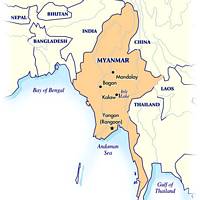
With regard to Burma, also known as Myanmar, the report highlighted “widespread and egregious religious freedom violations, particularly against Rohingya Muslims.” The report calls on the U.S. government to “definitively and publicly conclude whether the ongoing and severe atrocities committed by the Burmese military meet the legal definitions of crimes against humanity and/or genocide.”

The commission recommended Cuba and Nicaragua remain on the State Department’s Special Watch List and that 10 countries be added to the list—Afghanistan, Algeria, Azerbaijan, Egypt, Indonesia, Iraq, Kazakhstan, Malaysia, Turkey and Uzbekistan.

The commission determined “religious freedom concerns remain” in three countries—Bahrain, the Central African Republic and Sudan—but conditions last year “did not meet the high threshold required” to recommend continued SWL status.

The report also urged seven nonstate actors be designated again as Entities of Particular Concern—al-Shabaab, Boko Harm, the Houthis, Hay’at Tahrir al-Sham, the Islamic State in the Greater Sahara, Jamaat Nasr al-Islam wal Muslimin and the Taliban.

Challenges created by COVID-19 pandemic

The commission noted particular challenges to religious freedom caused by the global COVID-19 pandemic.

Some restrictions on in-person gatherings for religious purposes “complied with international human rights standards protecting freedom of religion or belief, but in some cases they did not,” the report noted.

“Such measures must be necessary to protect the legitimate state interest of preventing disease and proportionate to meeting that aim, must not be discriminatory, and must be lifted once the crisis has passed,” the report continued.

Commission monitoring “revealed that in some countries, already marginalized religious minorities faced official and/or societal stigmatization, harassment and discrimination for allegedly causing or spreading the virus,” the report stated.

“This past year was challenging for most nations trying to balance public health concerns alongside the fundamental right to freedom of religion or belief. Though some governments took advantage of the restrictions to target specific religious communities, we were encouraged by the positive steps various countries took. For example, as a result of COVID-19 outbreaks, many prisoners of conscience were furloughed or released, such as in Eritrea,” said Gayle Manchin, chair of the U.S. Commission on International Religious Freedom.

The commission will “continue to monitor how countries respond to and recover from COVID-19, and whether the loosening of restrictions is fair to people of all faiths and nonbelievers,” she added.

Need to raise refugee resettlement ceiling

The report recommends the U.S. government increase the refugee resettlement ceiling to the historically typical 95,000 number. The refugee ceiling for the current fiscal year is 15,000, a historic low point.

“The current refugee ceiling level fails to reflect that unprecedented numbers of individuals worldwide are forcibly displaced by conflict or persecution, including based on their religion or belief,” Manchin said. “We hope that the United States will open its doors to more refugees as soon as possible.”

On April 16, President Biden signed an emergency declaration to expedite refugee admissions but did not raise the ceiling, although he had announced in February it would be increased to 62,500 in this fiscal year and to 125,000 in the next fiscal year. Later, a White House spokesperson said Biden is expected to increase the refugee ceiling by mid-May.

As part of the February announcement, the Biden administration suggested the possibility of creating several new priority categories for refugee resettlement, including severely persecuted religious groups.

Commission Vice Chair Tony Perkins urged the administration “to prioritize the most vulnerable refugees, which includes survivors of the most egregious forms of religious persecution.”

“To stand by our nation’s commitment to religious freedom, the United States should be a safe haven for persecuted religious communities, including those who have fled genocide and crimes against humanity,” Perkins added.

Special concerns about China

Last month, China imposed sanctions on Manchin and Perkins because the commission condemned the genocide of Uyghur Muslims, the destruction of Uyghur religious sites and the government-sponsored detention centers throughout Xinjiang.

“Beijing’s attempts to intimidate and silence those speaking out for human rights and fundamental freedoms only contribute to the growing international scrutiny of the ongoing genocide and crimes against humanity in Xinjiang,” Secretary of State Antony Blinken said.

The annual report urges the United States to impose targeted financial and visa sanctions on the Chinese government for severe violations of religious freedom and to support legislation such as the Uyghur Forced Labor Prevention Act.

Religious freedom groups lament rising Nigerian persecution

WASHINGTON (BP)—Seven years after Boko Haram kidnapped 276 girls from a majority Christian school in Chibok, Nigeria, U.S. religious freedom advocates are lamenting escalating religious persecution in the African country.

The United States Commission on International Religious Freedom noted the growing number of abductions of students and other residents by terrorists and bandits copying Boko Haram’s tactics.

“Nigerians have waited too long for the violence to stop,” Tony Perkins, vice chair of the commission, said April 14. “Seven years since the outrageous abduction of the Chibok schoolgirls, copycats are still popping up all over, taking inspiration from Boko Haram and other extremist groups. It is the Nigerian people who pay the price.”

600 students kidnapped since December

The commission noted the kidnappings of 600 students between December 2020 and March, compounded by “ongoing attacks against Christian communities, Muslim congregations and houses of worship.”

Amnesty International said Wednesday that kidnappings have forced the closure of hundreds of schools because of safety concerns, and that hundreds of children have been “killed, raped, forced into ‘marriages’ or forced to join Boko Haram.”

The United States Commission on International Religious Freedom estimates about 10.5 million children between the ages of 5 and 14 are out of school in Nigeria because of the closures and violence.

Various Nigerian government officials are “apathetic and negligent,” Commissioner Frederick A. Davie said.

“Nigerian officials at all levels, from the president (Muhammadu Buhari) and federal officials to local governors, police commissioners and courts need to do more to prevent growing insecurity and hold accountable those who perpetrate violent acts,” Davie said.

He urged the U.S. government to ensure progress in Nigeria by leveraging the U.S. State Department’s December 2020 designation of Nigeria as a country of particular concern.

‘No lessons have been learned from the Chibok tragedy’

Osai Ojigho, director of Amnesty International Nigeria, said the failure of Nigerian authorities “shows that no lessons have been learned from the Chibok tragedy. The authorities’ only response to schoolchildren being targeted by insurgents and gunmen is to close schools, which is increasingly putting the right to education at risk.”

Seven years after the Chibok kidnapping, about 100 of the abducted girls remain missing, although others have escaped or been released. Leah Sharibu, kidnapped from her school in Dapchi in 2018, still is being held for refusing to denounce her Christian faith, although 104 students were released to their families. Five girls were killed in the kidnapping conducted by the Islamic State West Africa Province.

A series of kidnappings early this year in northwest Nigeria, which resulted in the death of Christian student Benjamin Habila, were blamed on loosely organized bandits copying Boko Haram.

But many terrorist groups, including Boko Haram, Boko Haram faction of the Islamic State West Africa Province and militant Fulani herdsmen are active in Nigeria’s northeast and Middle Belt.

Open Doors’ 2021 World Watch List designates Nigeria as the ninth most dangerous country for Christians, compared to its number 12 ranking on the 2020 list. From November 2019 to October 2020, more than 3,530 Nigerian Christians were killed for their faith, Open Doors said in its report.

Christians are abducted and killed while going about their daily lives. In one of the most recent attacks, Christians blame militant Fulani herdsmen for kidnapping eight members of the Redeemed Christian Church of God from the church bus as it traveled from Kaduna to Kafanchan in late March, Morning Star News reported.


Baptists offer meals after volcanic eruption in Caribbean

KINGSTOWN, St. Vincent (RNS)—Pastor Cecil Richards is working with members of his Kingstown Baptist Church to help feed people in St. Vincent who have been evacuated due to the volcanic eruption on the island nation.

Soon after the initial eruption on April 9, volunteers prepared 170 meals from their church kitchen to distribute to evacuees at shelters in the southern part of the main island. The total meals increased to 250 by April 12 and, he hopes, 300 soon.

“That is only our immediate response,” he said of his church that is usually attended by 250 to 300 people in non-COVID-19 times. “That can’t be it.”

The pastor is already looking ahead to longer-term needs of Vincentians, who last experienced an eruption in 1979. His church and other religious groups—including international relief agencies—are preparing to assist with physical and spiritual needs during what is expected to be a long recovery.

About 100,000 people live on the eastern Caribbean island, and 16,000 to 20,000 were evacuated, the U.N. said. An April 13 bulletin from the country’s National Emergency Management Organization said 87 shelters had been opened and were housing more than 3,800 people.

On April 12, the U.N. reported the eruption had left the population on the main island of St. Vincent and the Grenadines—as the entire country is known—without clean water. Ash from La Soufrière volcano covered much of the country, weighing down plants and standing inches high on housetops.

“How do we counsel as they get stressed? How do we handle some of the emotional needs? How do we minister to them as an organization of faith, representing God?” Richards said. “These are all needs that we will as a church mobilize ourselves to meet.”

Faith-based organizations ramp up operations

A number of faith-based relief organizations are ramping up to help Vincentians prepare for recovery from the volcanic eruptions—which some scientists have predicted could continue to occur for weeks.

Dan Curran, spokesman for United Methodist Committee on Relief, reported: “Since there is ongoing volcanic activity, plans are not yet finalized, but UMCOR’s initial plan is to provide funding and expertise so the local team can deliver basic human needs for people in the disaster shelters that are currently operational. Many are located in churches.”

Food For The Poor, an interdenominational Florida-based organization, and Chabad-Lubavitch of St. Lucia, an Orthodox Jewish organization on a nearby island, have gathered supplies. The Primate’s World Relief and Development Fund, a Canadian Anglican organization, is working with church representatives in both St. Lucia and Grenada, another neighboring island, to gather donations.

Bartow Baptist Association in Georgia, which has sent teams of people to the island in the past to lead Vacation Bible School and church revitalization work, is raising funds to wire money to help in St. Vincent, said missions director David Franklin, and readying to meet additional needs as Baptist leaders evaluate what will be the most appropriate assistance.

SBC relief ministry provides food boxes

Send Relief, the Southern Baptist Convention’s national and international compassion ministry, is “providing food boxes for those who have been evacuated to shelters as well as health and hygiene supplies for women and girls at the shelters,” said spokesman Mike Ebert.

Richards, a St. Vincent native, was a young boy when the 1979 volcanic eruption occurred. He said he became a Christian after a Southern Baptist missionary worked to distribute clean water to residents like him who had none at the time.

Now, working with Southern Baptists and others, he hopes to pay that gesture forward.

“He spent his entire day, day after day after day, delivering drinking water to people,” Richards, now in his 50s, recalled of the missionary. “Sometimes the loudest sermon you preach is not from the pulpit. Sometimes the loudest sermon you preach is with a bucket of water in your hand.”


Baptists of Burma organize Washington rally against coup

WASHINGTON (RNS)—Clara Thethtet Tunwin had had enough.

Tunwin, who emigrated with her family from Myanmar in the early 2000s, had been closely following news of protests against the military coup in her home country and was angered at the violence she saw.

“I just could not take it anymore,” she said.

So Tunwin, a member of the Karen ethnic group who belongs to a Baptist church in Minnesota, started praying. Then she got to work.

One of her first calls was to church leaders in the Karen Baptist community in the United States. Then she began to call leaders from other Burmese ethnic immigrant groups around the country, asking for help in organizing a protest against the military.

The 33-year-old Tunwin, who described herself as just an ordinary person, said leaders kept giving her the same answer: “Let’s do this.”

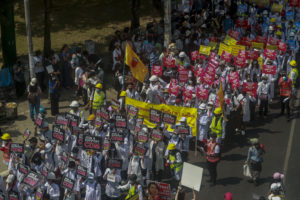
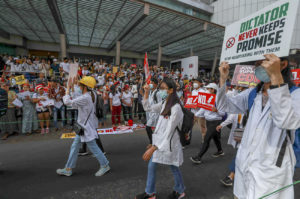
Myanmar doctors, supporters of the Civil Disobedience Movement, attend an anti-coup march in Yangon, Myanmar, on Feb. 25, 2021. (AP Photo)

In February, Myanmar’s military, known as the Tatmadaw, seized power in the country. The country’s leader, Daw Aung San Suu Kyi, and other political leaders were arrested. Hundreds of people have been killed and thousands detained since the coup, which has been met with massive civilian protest.

Tunwin and other organizers planned a mass protest on April 10 in Washington, D.C., against the coup in Myanmar. Organizers expected about 800 to 1,000 participants at the protest, including groups from churches in New York, Minnesota and about nine churches in the Washington, D.C., area.

M Tu Aung, general secretary of the Nationalities Alliance of Burma (USA) and a coalition of immigrants from Myanmar, from the Kachin, Karen, Karenni, Mon, Rakhine and Shan ethnic groups, helped organize the event.

Aung is also a leader in the Kachin Baptist Convention, which has a large presence in Myanmar.

Among the first missionaries from the United States were Adoniram and Ann Judson, who went to Myanmar in the early 1800s. Originally Congregationalist, the Judsons became Baptists during their long voyage from the United States, according to the Southern Baptist Convention’s International Mission Board. Baptists have become one of the largest Christian groups in Myanmar, especially among the country’s ethnic minorities.

Multiethnic immigrant coalition concerned

Aung said the coalition represents about 200,000 ethnic immigrants from Myanmar in the United States, most of them Christian. He said the group is concerned about the current political crisis in Myanmar as well as the long-term political and humanitarian crisis in the country.

Aung said protesters wanted to show their support for opponents of the coups and call for action to end the violence in the country.

“We call for the release of all who have been unlawfully detained and an end to unlawful night raids, arrests, detentions and break-ins,” Aung said. “We ask for strong action from the international community to stop these atrocities.”

Protesters planned to begin their demonstration at noon outside the Chinese Embassy and then will protest outside the Myanmar Naval & Air Attache office on California Street NW, before ending at the Washington Monument.

Ethnic minorities in Burma, like the mostly Christian Karen people and the Muslim Rohingya group, have long been targets of Myanmar’s military. Thousands of ethnic minorities have been displaced from their homes due to the ongoing conflict between the government and ethnic minority resistance groups, which began in the 1950s.

Support for democracy and human rights

Aung said the Nationalities Alliance of Burma, which was started in 2019, has tried to unite Myanmar immigrants from different groups together in support of democracy and human rights.

He said the “multiethnic Burmese diaspora” in the United States denounces the coup and the ongoing violence in the country.

“We are horrified, angry, frustrated and deeply concerned about military attacks on civilians,” he said. “We stand with the people of Myanmar in the struggle for peace and justice, and we are in support of our brothers and sisters in Myanmar in their demonstrations, protests and civil disobedience.”

Tunwin said local churches in the D.C. area were providing food and other logistical support for protesters. And she is glad to see people from a variety of Burmese ethnic groups working together.

She also said many immigrants from Myanmar left the country because their communities have been under attack for decades, so they understand what people in the country are going through in the recent coup.

“People are just so very fed up, and everybody’s just coming together,” she said. “It’s going to be a long fight, but everyone is united and doing what they can right now.”


Baptists in Ukraine urge prayer for peace

In light of a buildup of Russian troops on the Ukrainian border, Baptists in Ukraine called on Christians around the world to pray for peace in their nation.

In a social media post shared by the European Baptist Federation on April 6, the Baptist Union of Ukraine asked for Baptists globally to “have a special time of intensified prayers at every church or small-group meeting for God’s protection of our country.”

“This week we are seeing a large escalation of military forces around Ukraine,” the Baptist Union stated. “This is happening near the Ukrainian borders. Through prayer, we hope to seek reconciliation and peaceful resolution.”

Baptists in Ukraine urged other Christians to:

  • “Pray for safety for our country.”
  • “Pray for God’s mercy for all our people to live peacefully in Ukraine.”
  • “Pray that God’s plans and his will be carried out in every part of our land.”

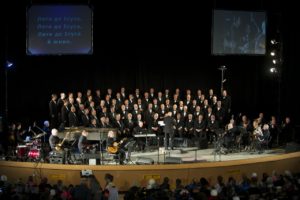
In 2017, the Singing Men of Texas presented concerts in eastern Ukraine, and more than half of the 12,000 who attended made recorded commitments to Christ. (Photo courtesy of Singing Men of Texas)

The statement—which quotes James 5:16, Psalm 118:5 and Psalm 118:10-14—adds, “The mighty word of God has the power to work in and through us.”

In an April 8 briefing, White House Press Secretary Jen Psaki told reporters Russia has more troops on Ukraine’s eastern border than at any time since 2014, and the United States is concerned about growing “Russian aggression.” Western estimates of Russian troops on Ukraine’s border in spring 2014 varied from 25,000 to more than 30,000, according to Reuters.

In an April 9 email, Pastor Igor Bandura, an officer in the Baptist Union of Ukraine, explained Ukraine has been “in a state of war of varying intensity for seven years,” but the call to prayer was prompted by “a sudden and significant increase in Russia’s military presence on Ukraine’s eastern and northern borders, as well as in annexed Crimea.”

“No one understands why Russia needed a huge increase in military forces near Ukraine’s borders,” Bandura wrote, adding some observers believe Russia is seeking to put pressure both on the Ukrainian government and on the United States and NATO.

“It is also seen as an attempt to show that Russia has consistently adhered to its plans to hold Crimea despite all sanctions. Unfortunately, confidence that there will be no military operation in the near future is diminishing,” he wrote.

Bandura specifically asked Christians to pray for:

  • “Peace and preservation of the territorial integrity of Ukraine.”
  • “Local churches in the occupied territories of the Donetsk region. They are persecuted and forbidden to preach the gospel.”
  • “Missionaries and their families organizing new churches in villages and towns near the demarcation line.”
  • “Chaplains at the front, in military units, hospitals and among widows with children.”
  • “Wisdom for Ukrainian government and all international partners who are working on the solution to the situation.”


Christian school in Liberia plans to rebuild after destruction

MONROVIA, Liberia (BP)—It wasn’t too long ago Eddie Gibson was visiting the Dellanna West O’Brien School in Liberia, ducking in and out of classrooms, talking and laughing with the teachers and students.

He remembers working hard to get some ceiling tiles fixed, so the school would be the best it could be.

The Dellana West O’Brien school building was destroyed when a man in the community who was angry over a land dispute allegedly drove a bulldozer through the campus.

But Gibson went back to a different scene March 31.

Some weeks before, a man in the community who was angry over a land dispute allegedly drove a bulldozer through the buildings on the school’s campus.

“Everything is down—pillars, foundations, everything,” Gibson said. “To do anything else with the school, we would have to take everything down and rebuild.”

For him, it’s heartbreaking and personal. A Liberia native, Gibson graduated from Liberian Baptist Theological Seminary before fleeing to Alabama during the country’s civil war in 1990. His heart stayed tied to Liberia, and he felt God had given him a vision to build schools there.

One was the Marla H. Corts Mission School, a pre-K to ninth grade school in Gibson’s hometown named after the widow of former Samford University President Tom Corts. Another was the Dellanna West O’Brien School, named after the late national Woman’s Missionary Union executive director. That school is located outside Monrovia, Liberia, and serves preschool through high school students.

‘We wanted to prepare people for life’

Gibson wanted the children to have a school within walking distance where they could learn life skills and, most importantly, grow as disciples of Jesus.

“We wanted to prepare people for life,” he said.

He bought the land for the Dellanna West O’Brien School in 2003 using funds raised through Eddie Gibson International Ministries, which is based in Birmingham. During his years in Alabama, he had served as a pastor of Baptist churches and earned a Master of Divinity degree from Beeson Divinity School.

He also became close to a number of Southern Baptist missions advocates, including Corts and O’Brien.

O’Brien “listened to my heart to come back to Liberia and serve,” Gibson said, noting that she became like a “missions auntie” to him.

And after she, her husband Bill and others accompanied Gibson on a vision trip there and encouraged him to keep going, he named the school after her.

The Dellanna West O’Brien School kept growing without incident until 2015, when the controversy over the land began. For the past six years, Gibson said he’s been trying to resolve it in court.

‘Praying for wisdom’

But since the situation escalated, he’s now focused on helping the school decide what to do next and how to keep going.

“The students, the community, our ministry supporters—everyone wants us to rebuild to the glory of God,” said Gibson, who also currently serves as pastor of Brewster Road Community Church in Birmingham. “We’re praying for wisdom, praying to make the right decisions.”

He said the people around the school love the school so much that they named the community surrounding it Dellanna. The impact has been broad. The school has provided jobs for some in the community and taught needed job skills to others. And Gibson himself has baptized both students and teachers who have decided to follow Jesus.

Despite everything that’s happened to the school’s facilities, approximately 300 students haven’t stopped meeting. They’ve completed lessons outside under trees and sat under tarps when it’s rained.

“I came here (on this recent trip) to thank them for not giving up on the school,” Gibson said. “My heart is aching, but I’m trusting God.”

For more information on efforts to rebuild the O’Brien School in Liberia, contact the WMU Foundation.


Trailblazing global evangelist Luis Palau dead at 86

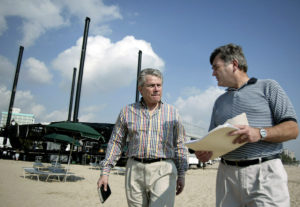
WASHINGTON (RNS)—Luis Palau, a Christian evangelist described by some as “the Latino Billy Graham,” died March 11 at his Portland, Ore., home. He was 86.

In this March 20, 2003 file photo Argentinian evangelist Luis Palau (left) discusses preparation’s for BeachFest, his multi-media Christian revival, with assistant Fred Conklin as they stroll Fort Lauderdale Beach, in Fort Lauderdale, Fla. Palau, an evangelical pastor who was born in Argentina and went on to work as Billy Graham’s Spanish interpreter before establishing his own international ministry, died March 11, 2021, in Portland, Ore. He was 86. (AP Photo/Marianne Armshaw, File)

Over the past half-century, the Luis Palau Association, based in Beaverton, Ore., estimates it has reached 30 million people in 75 countries. Under its Argentine-born founder’s leadership, the association “has coordinated hundreds of citywide campaigns in dozens of nations, including major evangelistic festivals on five continents.”

In the process, he worked with thousands of churches in hundreds of cities around the world, with gatherings in London, Hong Kong, Singapore, Chicago, Moscow, Madrid, Mexico City, Buenos Aires, Washington and elsewhere.

Palau wrote dozens of books and was featured in radio broadcasts in English and Spanish on 3,500 radio outlets in 48 countries. In April 2019, the ministry released a feature-length film about the evangelist’s life and legacy in North and South American theaters, as well as in Spain.

In a January 2018 video, Palau disclosed to ministry supporters and friends he had been diagnosed with late-stage lung cancer, and his illness was terminal.

“Everything is ready, and if the Lord wants to take me home in the next few months or two years or whatever it is, I’m ready,” he said. With him in the YouTube video were his sons, Kevin and Andrew, who Palau said would lead the team that succeeds him.

The diagnosis, which he had learned several months earlier, came as a surprise, he wrote in a statement posted on the Luis Palau Association website: “As you can imagine, this isn’t news we were expecting or hoping for. Yet our trust in the Lord remains rock solid.”

Palau appeared at an outdoor crusade in Madrid in the summer of 2019. Then, in recent days, Palau’s sons wrote to friends and supporters: “As you know, Dad has been fighting lung cancer for more than three years. For most of that time he has felt great. It has been a blessing.

“Sadly, at the beginning of the year that changed, and Dad took a turn for the worse. He spent two weeks in the hospital in January, dealing with heart and lung issues. … Although the doctors thought they had stabilized his condition and were happy to send him home, he returned to the hospital last Friday.

“After meeting with doctors, the decision was made to stop all treatment and start on hospice care. All the medications and treatments were proving to be too much for his body to handle. On Tuesday, Dad returned home where he can rest, be more comfortable, and spend time with family.

“We know this is probably hard for you to hear. Please know that the entire family is so thankful for your encouragement, prayers, and friendship.”

Bridge between Latino and U.S. evangelicals

Luis Palau pictured with his mentor, evangelist Billy Graham. (Photo courtesy of the Luis Palau Association)

Palau, born in Buenos Aires in 1934, heard a Billy Graham Crusade on a radio broadcast while still a teenager, by which time he had already dedicated his life to Christ. He moved to Oregon in 1960 to attend Multnomah Bible College and married his wife, Pat, there. After several years of missionary work, the couple returned to Oregon and, with $100,000 seed money from Graham, Palau founded his association.

His evangelism was conducted in both English and Spanish. In 1980, his nine-day Festival of the Family Crusade, held at the Los Angeles Sports Arena, drew 52,000 to hear Palau preach in Spanish, at a time when, according to Christianity Today, fewer than 25,000 Latino evangelicals were estimated to live in the greater LA area.

“Luis Palau was the quintessential bridge between Hispanic Christians and the collective of American evangelicalism,” said Sam Rodriguez, chairman of the National Hispanic Christian Leadership Conference. “He emerged as a Latino evangelical. He departs this planet as an evangelical—a period, without a hyphen, without an asterisk. He was literally the first to have achieved such a grandiose task.”

Gabriel Salguero, founder of the National Latino Evangelical Association, remembered the influence Palau had on him throughout his life.

“I grew up evangelical, so I knew about Luis Palau since I was a child,” Salguero said. “He was legend in Latino evangelicalism; I knew about his crusades, his revivals with hundreds of thousands of people. He’s like Billy Graham; I listened to his radio show since I was very young.”

For years Palau modeled his evangelism after Graham’s crusades. But about the turn of the 21st century, Palau shifted strategy, turning to what he called “festival evangelism”—edgy, upbeat outdoor gatherings.

Innovating to reach the unchurched

The old crusade model, Palau explained in 2005, would draw Christians, but not the unchurched he wanted to evangelize.

“We were not seeing the crowds that we wanted to come,” he said at a 2005 Orlando, Fla., gathering. “It was a church crowd, a large church celebration.”

Palau noticed the one evening of the multiday crusade designated as “Youth Night” was drawing the kind of high-energy seekers he was looking for.

“I bought into it,” he recalled, taking the advice of his sons and younger associates. He shortened the crusades from five or six days to two and started calling them festivals.

He began holding free outdoor festivals that featured skateboarding and BMX races. Christian hip-hop music was added, along with Hollywood stars and professional athletes. Few crosses or other Christian symbols were in evidence, but Christian messages were given throughout the day.

Normally, Palau would speak each day at dusk, holding performances of the best-known musicians until he finished his message. Despite the change in context, from crusade to festival, Palau said in an interview, “the content hasn’t changed. The essence hasn’t changed. It can’t.”

The formula worked. “The people came,” he said, especially young people hungering for faith. The ministry’s months-long, 2015 New York “CityFest” drew tens of thousands of people at a Central Park evangelistic rally.

Integrity, humility, humor

Palau eschewed a lavish lifestyle. Until a decade ago, he would often fly economy class, sometimes sitting in the middle seat, even on transatlantic flights, until the ministry’s board insisted he at least fly business class.

“I knew him as a legend,” Salguero said, “but I was overcome by his humility. … The three things I most remember about Luis Palau are integrity, humility and his sense of humor—he was so incredibly funny. He wasn’t just good with crowds. He was humble; he was very personable. He was the same, whether it was 100,000 people in Central Park, or one-on-one over coffee.”

Palau was devoutly nonpolitical and nondenominational, and took no offerings at his festivals. In each city, his team offset costs by recruiting corporate sponsors.

Palau “reinvented himself with his festivals,” Salguero said. “He was an innovator. Any young Hispanic evangelist in America or Latin America owes a debt of gratitude to Luis Palau, for his ministry and his role modeling.”

On Feb. 26, in what Luis Palau said was likely his last letter, he wrote to close friends that he was home from the hospital, no longer taking medicine, apart from palliative care.

“My time here on earth is done,” he wrote. “I see the finish line right before me and I trust I will win the prize God has offered up to me.”

If he could encourage his friends in one way, he said, it would be this: “Never let the fire of evangelism fade. Stand strong for the gospel! … I know I will close my eyes to this world and open them to glory … to the face of my Savior.”


Conditions deteriorating in Myanmar, Baptist doctor says

Conditions continue to deteriorate rapidly for citizens peacefully seeking to resist military rule in Myanmar—and particularly for medical personnel who are caring for injured protesters, a Baptist physician in the troubled nation reported.

Anti-coup protesters march in Yangon, Myanmar, on Feb. 25, 2021. (AP Photo)

“Doctors, nurses and first responders have become the No. 1 enemy of the military for our role in saving lives and also for the countrywide civil disobedience movement we initiated,” she wrote in a March 5 email.

The medical doctor—who asked to be identified only as Octavia—was living safely in Singapore when the military coup occurred Feb. 1, but her Christian faith compelled her to return to her homeland of Myanmar, also known as Burma.

“As a humanitarian worker all my life, I wanted to be with my people, knowing they will need me most, and I will be able to contribute more amidst them than living in Singapore,” she wrote.

She pointed to the words of Jesus in Matthew 25—“For I was hungry and you gave me food, I was sick and you looked after me, I was in prison and you came to visit me”—as her motivation for service in a dangerous situation.

“Helping the least among us is my faith and my mission,” she wrote.

Through her contacts with the Baptist World Alliance, Octavia stressed she wanted to let others around the world know what is occurring in her nation and to “be a voice for those who cannot speak.”

Medical community led in peaceful protest

She and her health care colleagues were “the first to defy the coup and lead the CDM (civil disobedience movement), followed by teachers and engineers,” Octavia wrote in a March 1 email. Soon, civil servants and students joined the peaceful protests.

“The first victim due to a gunshot wound was a 19-year-old female student from Naypyidaw. She had been taking shelter behind a bus stop from the police’s water cannon,” she reported.

During a nationwide strike on Feb. 22, a 16-year-old male was shot in the head while trying to retrieve an injured man from the crossfire in Mandalay, she wrote.

“The excessive use of force, beatings, firing live rounds, arresting innocent civilians for no apparent reason became a routine for the armed police and soldiers,” Octavia wrote. “Widows, orphans and mourning parents became a common scene. Doctors and teachers are the main targets, followed by young students.

“The police and military continue to block roads and commit atrocities across the country and the death toll keeps rising daily. Many lives have been lost to a brutal coup, but the people of Myanmar are determined to continue with their struggle till the end.”

BWA helped support charitable clinics

Baptist World Aid helped Octavia and other Christian health care workers establish charitable clinics in key locations.

“Little did we know that our charity clinic announcement would have such an impact on our health care colleagues who saw us standing together with them in solidarity to fight for a good cause,” she stated.

In her March 5 email, she wrote: “Currently, we are focusing on three key areas, supporting CDM workers, supporting needy families of the fallen heroes and charity clinics. At the time of this writing, we have four charity clinics across the country and plans to set up more.”

Through the clinics, health care professionals not only treat general ailments, but also care for wounded protesters. Because of that, they and the first responders who work with them are targeted by the military, she said.

“Ambulance drivers and rescue teams were brutally assaulted, and one died due to a fracture of the skull caused by repeated beatings with a rifle butt,” she wrote.

In addition to protesters and those who offer them medical attention, the military also has harassed and detained members of an ethnic Kachin Baptist congregation.

Members of ethnic Baptist church arrested

International Christian Concern reported the military police raided the Kachin Baptist Church in Lashio, in the Burmese state of Shan, on Feb. 28 and arrested four ministers and several youth.

Elijah Brown
Elijah Brown

BWA General Secretary Elijah Brown confirmed the arrest, although details surrounding the cause of their arrest remained unclear. BWA learned from two sources the arrested church members had been released, Brown wrote on March 3.

“While we note with thankfulness that they have been released, we continue to ask for prayers for them and their families as they process what appears to be an unjust arrest,” Brown stated. “We are also continuing to call upon the Myanmar government to respect all people of faith and all ethnicities in Myanmar and to stop targeted arrests that damage families and undermine community peace.”

After the military seized control of the government in Myanmar, declared a state of emergency and placed the nation’s elected leader and members of her party under house arrest, BWA issued a call to prayer, advocacy and solidarity for the people of Myanmar.

Octavia expressed her appreciation for the support BWA provided and for the prayers of Christians globally.

“Please stand with us, pray for us and also support many who have given up their jobs, livelihoods and lives,” she wrote. “The future is bleak, the air is filled with tear gas and our roads are stained with blood flowing from innocent lives.”


Christians remain vulnerable in northwest Nigeria

ZAMFARA, Nigeria (BP)—A surge in school kidnappings in northwestern Nigeria is blamed loosely on bandits rather than clearly defined Islamic terrorist groups, according to news reports. However, Christians remain at greater risk of harm than Muslims.

At least one Christian student was killed in a recent spate of kidnappings blamed on bandits, Morning Star News reported. Morning Star identified Benjamin Habila, whom bandits shot dead as he tried to escape, as one of at least eight Christians among 43 people abducted Feb. 17 from the Government Science College in the state of Niger.

“A Christian student, Benjamin Habila, was shot dead by the bandits as he tried to escape from them, while seven other Christian students and staff were captured alongside other non-Christian students, staff and their family members,” Morning Star quoted resident Justina Aliyu Feb. 22. “They were taken away at gunpoint into forests.”

The remaining 42 captives were released Feb. 27.

Bandits, some of whom falsely claimed in videos to be members of Boko Haram, are blamed for at least four kidnappings in Kamfara, Katsina and Niger states—predominantly Muslim areas—since late December. About 600 students and others have been released in these kidnappings. Most recently, unidentified abductors released 279 schoolgirls March 2. The girls had been kidnapped Feb. 26 from their boarding school in Jangebe, Zamfara state, BBC News reported.

“Most of us got injured,” BBC quoted one of the schoolgirls, who were forced to walk on foot into forestland after the nighttime kidnapping. Such kidnappings are becoming common by bandits who seek ransoms, according to many news reports.

“Kidnapping for ransom is a widespread criminal enterprise across the country—people are seized by gunmen on almost a daily basis—with both the rich and the poor falling victims,” BBC said in an analysis.

“Security personnel have been held, too. People often speak of how they have managed to secure someone’s release by raising funds from friends and relatives—or even selling their assets.”

Islamist militants active in Nigeria

After the kidnapping of nearly 350 schoolboys Dec. 11 from the Government Science Secondary School in Katsina, International Christian Concern said such kidnappings put Christians at greater risk of harm. Local government officials negotiated with the bandits for the schoolboys, who were released Dec. 17.

“It is also unclear if any of the children taken were Christians. If any of them are, it is likely that they will be treated differently than those who are already Muslims,” ICC stated.

The organization referenced the 2018 kidnapping of 110 schoolgirls in Dapchi, when all were released except the lone Christian student Leah Sharibu, who is still being held captive nearly three years later because she refused to convert to Islam. The Islamic State West Africa Province, a splinter of Boko Haram, kidnapped the Dapchi girls.

Boko Haram and ISWAP are more active in northeast Nigeria than northwest, where the latest kidnappings have occurred.

Among the most publicized kidnappings, Boko Haram militants kidnapped 276 girls from a secondary school in the mostly Christian community of Chibok. Many were released, but more than 100 still are missing.


Jehovah’s Witness in Russia sentenced for her faith

WASHINGTON (RNS)—A Jehovah’s Witness has been sentenced to two years in a Russian prison for practicing her faith, marking the first time the country has imprisoned a woman since a 2017 ruling that declared the faith group “extremist.”

Valentina Baranovskaya, 69, was sentenced to two years in a Russian prison for practicing her faith, along with her son, Roman Baranovskiy, 46, who received a six-year sentence. (Photo courtesy of Jehovah’s Witnesses)

Valentina Baranovskaya, 69, was sentenced Feb. 24 along with her son, Roman Baranovskiy, 46, who received a six-year sentence.

“Today, Judge Elena Shcherbakova ruthlessly imprisoned a harmless, elderly woman and her son on baseless charges,” said Jarrod Lopes, spokesman for the Jehovah’s Witnesses. “The ruling was a mockery of the rule of law—both international human rights law as well as Russia’s constitution, which protects religious freedom.”

In October, a Jehovah’s Witness named Yuriy Zalipayev was acquitted and shortly afterward six other members of the faith were given suspended sentences by a different judge.

Russian authorities raided the Baranovskiy home in 2019, along with the homes of three other Jehovah’s Witnesses in Abakan, in south-central Russia. Law enforcement officers confiscated Bibles, personal records and electronic devices.

Proceedings in Baranovskaya’s case were postponed when she was diagnosed with a stroke in July, but they resumed in December.

Action condemned by human rights groups

Human rights watchdogs condemned the sentencings.

“Valentina Baranovskaya and her son, Roman Baranovskiy, have done nothing wrong, and they should be immediately freed,” said Rachel Denber, deputy director of Human Rights Watch’s Europe and Central Asia Division. “Russia’s authorities should stop the campaign of persecution against Jehovah’s Witnesses.”

U.S. Commission on International Religious Freedom Commissioner Gary Bauer, noting Baranovskaya’s age and health, called her sentencing “a new low in Russia’s brutal campaign against religious freedom.”

Lopes noted that international criticism of Russia’s actions is ongoing.

“Nevertheless, Russian authorities across the federation have persisted in imprisoning and at times beating peaceful Jehovah’s Witnesses practicing their Christian beliefs,” he said. “We hope that Jehovah’s Witnesses will one day be allowed to freely read the Bible and worship in Russia as they do in over 200 other lands.”


Two Christians in Pakistan charged with blasphemy

A pair of young Christians in Pakistan have been charged with violating that nation’s blasphemy law—an offense that carries a mandatory death penalty if the accused is found guilty.

Human rights organizations that focus on the persecution of Christians have reported Haroon Ayub Masih and Salamat Mansha Masih were accused of making derogatory remarks against Islam and the Quran while distributing Christian literature and preaching in Lahore.

Conflicting accounts

The United Kingdom-based Centre for Legal Aid, Assistance and Settlement reported Haroon Ahmad registered the complaint against the two young Christians.

He claimed the two young men approached him and his friends in Lahore’s Model Town Park, handed him a copy of the “Water of Life” evangelistic booklet and began preaching. According to the complaint Ahmad filed, the two Christians told him the prophet Muhammad had strayed from true religion and only the Bible—not the Quran—is true.

However, attorney Aneeqa Maria, who is representing Haroon Ahmad Masih, offered a different account, as reported by Morning Star News. He said the two young Christians were studying the Bible together in the park when a group of Muslims approached them and told them to stop.

When Haroon Masih told the group it was not a crime to read the Bible in a public place, the Muslims began questioning them about their faith, Maria told Morning Star News. When asked if any reading material was available to help understand the Bible, Haroon Masih offered a copy of the “Water of Life” booklet, he said.

Haroon Masih returned home, but Masha Masih remained in the park. A few minutes later, Maria said, the Muslim youth returned and attacked Harron Masih. They then summoned the park’s security officers, saying the two Christians had used derogatory terms for the Quran and the prophet Muhammad.

Someone summoned individuals from the Tehreek-e-Labbaik Pakistan, an extreme Islamist political party, who pressured the police to file blasphemy charges against the two Christians, Maria added.

‘Intolerance and violence’

The exact circumstances in this case notwithstanding, everyone has the right to preach and propagate their religion under Pakistani law, said Nasir Saeed, director of CLAAS-UK.

However, Saeed said, Pakistani society “has been torn apart by intolerance and violence,” which he called “a far cry” from the nation’s highest ideals.

“Religious minorities are increasingly the targets of bigotry, which is often instigated by extremist forces, Islamic political parties and their leadership,” Saeed said.

Currently, 24 Christians are in Pakistani prisons due to blasphemy charges, International Christian Concern reported.

“We here at International Christian Concern are concerned for the safety of the Haroon Ayub Masih and Salamat Mansha Masih. We are also concerned for the safety of the broader community these men represent,” said William Stark, regional manager for International Christian Concern.

“In many cases, the mere accusation of blasphemy against a Christian is enough to spark mob violence in Pakistan. This violence is often not limited to those accused. There are many examples in which a blasphemy accusation has exploded into violence against an entire Christian community,” Stark said.

“We call for a complete and fair investigation into the accusation against Haroon and Salamat. Too often, Pakistan’s blasphemy laws are misused to justify mob violence or settle personal vendettas. Too often, these laws have been a tool in the hands of extremists seeking to stir up religiously motivated violence against minority communities.”

Last December, both the U.S. Senate and House of Representatives passed resolutions calling for the repeal of blasphemy and apostasy laws around the world. The Baptist Joint Committee for Religious Liberty was part of a broad-based coalition that has called for an international ban on blasphemy laws.

Both the U.S. Commission on International Religious Freedom and the U.S. Department of State have designated Pakistan among their Countries of Particular Concern, a designation reserved for egregious offenders of religious liberty and freedom of conscience.


Christians in Congo face growing terrorist violence

EASTERN CONGO (BP)—Spiraling Islamist terrorism that has killed more than 100 people in a two-week span in the Democratic Republic of Congo is calling renewed attention to Christian persecution there.

The terrorist group Allied Democratic Forces is blamed for the deaths in at least three attacks in late December and early January in efforts to establish a Muslim caliphate in the predominantly Christian country, Open Doors reported.

“The killing of innocent civilians on an almost daily basis is an underreported tragedy,” Open Doors senior analyst Illia Djadi said after the attacks spanning Dec. 31-Jan. 14. “It is a reminder of what is happening in other parts of the central Sahel region.”

Djadi compares the violence to that spreading across the Sahel region of northern Nigeria, where Boko Haram and related extremists are blamed for 37,500 deaths since 2011, according to a new report from the U.S. Commission on International Religious Freedom.

“Think of groups like Boko Haram in northeast Nigeria for example,” said Djadi, who covers freedom of religion or belief in Sub-Saharan Africa for Open Doors. “The ideology, the agenda of establishing a ‘caliphate’ in the region, and the way they operate is the same, and we can see how they afflict terrible suffering on innocent people.”

Congo on Open Door’s World Watch List

ADF has been active in Congo for decades, but its expansion led Open Doors to include Congo for the first time this year on its World Watch List of the 50 most dangerous countries for Christians.

Congo, which is 95 percent Christian, debuted at number 40, mainly ranked for violence, persecution against churches and social persecution against Muslims to convert to Christianity.

“The attacks from the ADF and other militant groups in the DRC are why violence is a huge risk for the Christian population and churches in the regions where militants are active,” Open Doors said in its 2021 Watch List.

“The violence has resulted in more than a million internally displaced people. Additionally, followers of Jesus are at risk for kidnappings and having their homes destroyed.”

ADF attacks have reportedly increased since authorities launched an offensive against the group in October 2019. In the latest attacks in Congo, the ADF is blamed for killing 46 members of the Pygmy ethnic group in Ituri province on Jan. 14, 22 civilians in an overnight raid on the village of Mwenda on Jan. 4, 17 residents of a nearby village the previous week, and 25 people in the village of Tingwe on Dec. 31, Open Doors said. ADF used guns and machetes.

The U.N. has said the ADF is connected to a network of jihadists across Africa. Unlike Boko Haram, the ADF has not linked itself to the Islamic State group, but ISIS has begun to claim responsibility for ADF attacks.

ADF, Boko Haram and the Islamic State in West Africa Province are broadly accused of committing war crimes and crimes against humanity. In its latest report, USCIRF said there is reasonable evidence that Boko Haram and the ISWAP have committed such crimes, and recommends regional approaches to fighting such violence.

“Regional approaches continue to put pressure on violent jihadist groups operating in this region, primarily through military operations. However, militant Islamist groups in Nigeria demonstrate remarkable staying power and threaten to coopt and ‘Islamize’ other violent conflicts in Nigeria and throughout the region,” USCIRF said. “Thus, these groups will likely continue to pose threats to religious freedom in Nigeria and elsewhere in the future if efforts do not adapt to address the challenges facing the current approach.”