Gaza Baptist Church, ‘functioning’ but ‘restricted,’ says Brother Andrew

SANTA ANA, Calif. (ABP) – The last remaining evangelical church in Gaza is functioning but in danger of dying, famed Bible smuggler Brother Andrew said after a recent visit to Gaza Baptist Church.

“Christians in the west are surprised to learn that there is a church [in Gaza], a functioning church, a suffering church, a restricted church, but there is a church in Gaza… and I think its dying," the founder of Open Doors, an organization dedicated to support of Christian minorities who are persecuted because of their faith, said in a video clip.

“Today only one active evangelical church remains, Gaza Baptist Church,” the video says, “a church that has suffered the effects of perpetual war, the murder of a prominent member and a devastating drop in attendance from 100-plus to less than 12.”

An unidentified pastor says Christians number fewer than 2,000 in a tiny strip of land populated by 1.6 million Muslims, and evangelicals are a small minority even among Christians. Oppressed by both Israel’s economic blockade and Islamic militancy, many Christians have opted to leave.


Hanna Massad

Hanna Massad, the pastor of Gaza Baptist Church who fled to Jordan after a church member who managed Gaza’s only Christian bookstore was murdered execution-style in 2007, recently traveled to Gaza from Amman through Egypt.

“You cannot imagine the relentless stress suffered by church leaders in a small, crowded area like Gaza (140 square miles),” Massad wrote supporters in a letter Nov. 9. “They are isolated from the rest of the world, surrounded by [non Christians], ruled by Hamas and oppressed by the extremists and the even more radical Salafists. Every day, they battle depression and hopelessness.”

Massad said his visit on Thursday was with a couple of his former students at Bethlehem Bible College, who lead a home Bible study. “For hours, we talked about the unique ministry challenges they face and sought God together to find ways to serve better and to reach out to the territory’s tiny Christian community,” he said.

He then counseled a pastor and other discouraged church leaders and visited a family that recently lost its father to cancer. “There is much sickness in Gaza,” he said, “a lot of it caused by the stress of daily life in addition to the diseases and infirmities that we all face.”

But Massad said the “number one disease” in the Gaza Strip is worry, so that was his main topic when he led home Bible studies, spoke to school teachers and preached and taught two Sundays in church.

“One day, I walked into a pharmacy and my heart nearly broke as the owner, who is a good friend, broke down crying uncontrollably the moment she saw me,” Massad said. “She could not believe that I was actually there. She was able to share the oppression and pain she is suffering and later told me how the Lord used my visit to comfort and strengthen her.”

Massad said poverty is great in Gaza and unemployment high, but through his Christian Mission to Gaza he managed to help 27 families – Christian and non-Christian – with food and medicine. Most live in the Deir El Balah refugee camp, where nearly 20,000 people are packed into 39 acres.

Food packages included olive oil, corn oil, different kinds of beans, rice, sugar and other supplies, worth about $60, with food purchased locally.

Massad, who spoke at the New Baptist Covenant Celebration in Atlanta in 2007, said he hopes to visit Gaza again in January and while there to teach a course on the Gospel of John through the Gaza extension of Bethlehem Bible College.

Watch video

Exiled Palestinian pastor returns from Gaza Strip

Gaza pastor says slain bookstore manager was martyr

Gaza Baptist Church caught in crossfire


Baptist fined in Uzbekistan

OSLO (ABP) – The leader of a Baptist church in Uzbekistan was fined 80 times the minimum monthly wage Nov. 21 for holding what authorities considered an illegal religious meeting outside of a registered house of worship.

Forum 18, a Norwegian news service that tracks religious-freedom abuses, quoted anonymous Baptists in Uzbekistan who said charges against Sergei Kozin were fabricated and the case was prosecuted after the legal time limit. 

The arrest stemmed from the raid of a group of Baptists who were reading together while on a holiday from work. The verdict stated that Kozin only had a right to hold religious meetings at the legal address of the church.

Baptists, a small ethnic minority in Muslim-majority Uzbekistan, have had a series of run-ins with the law. In 2009 a judge removed three leaders of the Baptist Union of Uzbekistan convicted of illegal religious instruction at a summer youth camp they had previously held several years without incident.

In September a delegation from the Baptist World Alliance and the European Baptist Federation conducted a joint human-rights visit to Uzbekistan to promote religious freedom and strengthen the relationship with the Baptist union.

In addition to the case against Kozin, Forum 18 reported that police raided the home of an unregistered Baptist church member Nov. 19 in the eastern town of Fergana, allegedly without a search warrant.

The officially registered Baptist Church in Angren, Tashkent Region, was raided twice on Oct. 16. Two schoolgirls questioned in that case stopped coming to church after police threatened them that "they will be in police records and thrown out of school," Baptists elsewhere told Forum 18.


–Bob Allen is managing editor of Associated Baptist Press.


Chinese government awards Baptist missionary

VALLEY FORGE, Pa. (ABP) – An American Baptist missionary was the only foreigner among more than 30 recipients of a prestigious charity award granted recently by the government of Jiangsu Province, China.

Chosen from nearly 1,000 nominees, recipients of the first-ever Jiangsu Charity Award presented Oct. 12 in the ancient capital city of Nanjing included Judy Sutterlin, an American Baptist International Ministries missionary in the People’s Republic of China appointed in 1995.

Judy Sutterlin

The award, designed to recognize the role played by charity and philanthropy in improving people’s lives and promoting social harmony, recognized Sutterlin as a “most caring and benevolent model” for service.

Sutterlin, who teaches at Nanjing Union Theological Seminary, was nominated by the Amity Foundation, an International Ministries partner created at the initiative of Chinese Christians in 1985. The foundation’s initiatives include education, social welfare, basic health and public hygiene, environmental protection, rural development, church-run social services and disaster relief, reconstruction and rehabilitation from China’s coastal provinces in the east to the minority areas of the west.

Sutterlin teaches general, biblical and theological English at the seminary campus in the southern part of the Nanjing metropolitan area with 250 students. As faculty and students improve English skills, they gain access to additional Bible study resources, increase their ability to dialogue with Christians from around the world and acquire proficiency that can enable them to lead English outreach ministries now existing in some city churches.

“Judy has been recognized as a caring and benevolent model, because her work demonstrates care for the whole person — intellectually, spiritually, relationally and physically,” observed Reid Trulson, executive director for American Baptist International Ministries.

On top of her theological and academic work at the seminary, Sutterlin helps with orientation and care for the Amity Foundation's English teachers and serves as a liaison to Amity projects supported by IM. Those include help for children orphaned by HIV/AIDS, support for remote village clinic work, drug rehabilitation and economic development projects.

The Amity Foundation is overseen by the China Christian Council, an umbrella organization for China’s Protestant churches and member of the World Council of Churches. Amity Printing Company, a joint venture between the Amity Foundation and United Bible Societies, has published more than 86 million Bibles since it was established in 1988.

According to the U.S. State Department, China’s religious-affairs agency reports the official Protestant population as 16 million in more than 50,000 churches registered under the Three-Self Patriotic Movement, formed in 1950 on principles of self-governing, self-support and self-propagation.

The Pew Research Center estimated in 2007 that another 50 million to 70 million worship in unregistered religious gatherings, also known as “house churches.” Some unofficial estimates of the number of Chinese Christians are as high as 130 million,


–Bob Allen is managing editor of Associated Baptist Press.


BWA voices solidarity with Iranian pastor facing death sentence

FALLS CHURCH, Va. (ABP) – An international Baptist leader called on Baptists around the world to call on their government leaders to advocate on behalf of an Iranian pastor sentenced to death after refusing to recant his faith.

Last week the White House condemned the reported impending execution of Pastor Youcef Nadarkhani, 34, for leaving Islam as a teenager. Over the weekend Iran claimed his conviction was not for apostasy but violent crimes including rape.

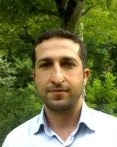
Youcef Nadarkhani

Raimundu Barretto, director of freedom and justice for the Baptist World Alliance , said Oct. 3 he had lobbied Iran’s representatives in Washington, the United Nations and the United States ambassador-at-large for religious freedom to do all they can to “reverse this terrible verdict.”

"It is distressing and outrageous for someone to be sentenced to death for a crime of conscience," Barreto said. "We firmly stand in solidarity with Pastor Youcef Nadarkhani, are praying for his release, and are making all efforts possible to influence the outcome of this situation."

Barreto, who is Brazilian, said he also contacted Brazil’s U.N. office because Brazil and Iran have a “somewhat good relationship.”

Barreto called on the world’s Baptists to make representation to their own governments on Nadarkhani's behalf.

"We encourage Baptists in different countries to call on their government representatives to increase communication with the Iranian government on this situation," he said.


–Bob Allen is managing editor of Associated Baptist Press.


Haitian Baptist leader released unharmed

CAP-HAITIAN, Haiti — The Haitian Baptist leader who was kidnapped early Sept. 29 was released unharmed later that day without a ransom payment, the Baptist World Alliance reported Sept. 30.

Emmanuel Pierre, general secretary of the Baptist Convention of Haiti, was kidnapped by armed men who broke into his home at about 2 a.m. Sept. 29 and demanded a ransom. But that afternoon at about 5, they let him go without payment, the BWA said.

Emmanuel Pierre greets a representative of the American Baptist International Ministries after the earthquake in Haiti in 2010.

“We are glad to inform you that Rev. Emmanuel Pierre was safely released this afternoon,” Joel Dorsinville, coordinator for disaster relief for the Haiti convention, told the BWA. “He is now back home with his family. Thank you all for your support in prayers.”

Other regional Baptist leaders also expressed relief.

“We do praise the Lord. Let us continue to pray for [Pierre] and his family,” said Jules Casseus, president of the convention-owned Northern Haiti Christian University.
 
Everton Jackson, executive secretary/treasurer of the Caribbean Baptist Fellowship and BWA regional secretary for the Caribbean, said, “We join with family, friends and the Baptist community in celebrating the safe release of the Rev. Emmanuel Pierre. The family and the Baptist convention [in Haiti] have expressed their appreciation to all for standing with them in prayerful solidarity.”

“It is with joy that we receive news that Emmanuel has returned safely to his family,” said BWA general secretary Neville Callam, a native of Jamaica. “We thank God for God’s grace and protection upon our brother and express appreciation to Baptists around the world who prayed along with our Baptist brothers and sisters in Haiti.”


Baptist leader in Haiti kidnapped

(BWA)–Emmanuel Pierre, general secretary of the Baptist Convention of Haiti, has been kidnapped.

Emmanuel Pierre greets a representative of the American Baptist International Ministries after the earthquake in Haiti in 2010.

The incident occurred in Cap-Haïtien, the second largest city in Haiti, and where the convention offices are located.

Several armed men reportedly broke into his home at approximately 2 a.m. September 29, took the Haitian Baptist leader by force, and are now demanding a ransom for his release.

Gedeon Eugene, president of the convention, is negotiating with the kidnappers. He told the Baptist World Alliance that Haitians are praying for the speedy and safe release of the Haitian Baptist leader.

BWA General Secretary Neville Callam assured Haitian Baptists of the prayers of Baptists around the world for the safe return of Pierre to his family and friends.


White House condemns death sentence for Iranian Christian

WASHINGTON (ABP) – The White House condemned Sept. 29 the conviction of a pastor sentenced to death for converting from Islam to Christianity in Iran.

Youcef Nadarkhani, 34, pastor of the Church of Iran, was tried and convicted of apostasy — the act of leaving Islam — in 2010. After refusing to recant, a court sentenced him Sept. 28 to death by hanging under Islamic Sharia law.

Youcef Nadarkhani

Nadarkhani converted from Islam to Christianity at age 19 and became a pastor of a small evangelical church. He was arrested in 2009 while attempting to register his church in his home city of Rascht.

A trial court found that Nadarkhani had not been a practicing adult Muslim prior to his conversion but ruled him guilty of apostasy because he is of Muslim descent. Iran’s Supreme Court upheld the conviction, with a provision of annulment for the death penalty if Nadarkhani recanted his faith.

The verdict prompted protests around the world. They included author and mega-church pastor Rick Warren, who asked followers on Twitter to join the protest Sept. 28.

On Thursday White House Press Secretary Jay Carney issued a statement condemning the conviction and calling for the pastor’s release.

“Pastor Nadarkhani has done nothing more than maintain his devout faith, which is a universal right for all people,” Carney said. “That the Iranian authorities would try to force him to renounce that faith violates the religious values they claim to defend, crosses all bounds of decency, and breaches Iran’s own international obligations. A decision to impose the death penalty would further demonstrate the Iranian authorities' utter disregard for religious freedom, and highlight Iran's continuing violation of the universal rights of its citizens.”

—Bob Allen is managing editor of Associated Baptist Press.


Baptist delegation visits Uzbekistan

FALLS CHURCH, Va. (ABP) — The Baptist World Alliance and the European Baptist Federation conducted a joint human-rights visit to Uzbekistan Sept. 8-12. The purposes were to promote religious freedom in Uzbekistan and strengthen the relationship between the Baptist Union of Uzbekistan and the larger Baptist family.

Religious freedom concerns in Uzbekistan include a law against proselytism, tough conditions and the long process required for churches to be registered, and actions against congregations and individual Christians by state authorities.
 
Religious liberty violations reported to the BWA/EBF team included the detention of a Sunday school teacher at Third Baptist Church of Tashkent, and the April 2011 police raid of Second Baptist Church of Tashkent for allegedly running an unauthorized Bible school and illegally printing and selling Christian literature. An estimated 53,000 books and brochures, along with computers and a printer, were confiscated in the raid.
 
The Baptist delegation was comprised of Raimundo Barreto, BWA director for freedom and justice, Christer Daelander, EBF religious freedom representative, and Pavlo Unguryan, a Baptist youth leader from Ukraine and a member of the Parliament of Ukraine. They met with Baptist leaders and pastors, as well as leaders from the Orthodox Church in Uzbekistan, Turkmenistan, Kirgizstan and Tajikistan; the Pentecostal church and the Bible Society.
 
Meetings were also held with Juriy Savchenko, the ambassador of Ukraine to Uzbekistan, Behzod Kadyrov, chief expert of the State Committee of Religious Affairs, as well as with the project coordinator for the Organization for Security and Co-operation in Europe. The Baptist delegation raised issues of concern on religious freedom in Uzbekistan
 
Baptists in Uzbekistan are primarily Russian speakers who are a small ethnic minority in the Muslim majority country. The Baptist union comprises 20 registered and 30 unregistered congregations with a total of 5,500 members. 


Baptists aid Syrian refugees pouring into Lebanon

FALLS CHURCH, Va. (ABP) – Thousands of Syrian refugees pouring into Lebanon in recent months are being met with Baptist aid.

The Lebanese Society for Educational and Social Development and the Rahbe Baptist Church have coordinated receipt and spending of nearly $100,000 collected through Baptist World Aid, German Baptist Aid, Canadian Baptist Ministries, BMS World Mission and American Baptist Churches USA, according to a BWA news release.

"LSESD has decided to focus on a few issues that fill gaps being left by other organizations," said spokespersons for the ministry formed in 1998 to serve the church in Lebanon through spiritual, educational and social development.

The society has helped to provide food, hygiene kits and medical supplies to address humanitarian needs caused by the influx of families fleeing a government crackdown of protests that has killed at least 2,600 since mid-March.

So far Baptists have helped 615 refuge families and 248 Lebanese families. Several reported it was the first aid they had received since leaving Syria months earlier.

Baptist leaders said the aid was being used to support individuals opening up their homes and sharing their already-scarce resources to help refugees. “This will help decrease 'host-fatigue' and the need to move refugees to tented camps or communal living options,” according to the press release.

Many of the refugees being helped by Baptists live in situations described as “tenuous.” Five families were found sharing one unfurnished dwelling. One house had 36 refugee occupants, several families lived in tents and 32 people had been living inside a school for at least three months.

Refugees received medical attention for ailments including anemia, diabetes, epilepsy, asthma and high blood pressure. They told stories of family members who were shot or missing. Others heard their homes had been destroyed and believed they had nothing to return to in Syria.

The project faced significant challenges from the beginning, because Lebanon’s new government did not favor welcoming and permitting refugees into the country.

A “significant number” have not self-identified by registering as refugees, fearing retaliation, Baptist leaders said. As a result nobody knows their exact number, but they continue to arrive, even while others are able to return to their homes in Syria.

The Lebanese Society for Educational and Social Development is an umbrella organization that operates the Arab Baptist Theological Seminary, Beirut Baptist School and Dar Manhal Al Hayat publishing house. Most recently it expanded into ministry with children and youth.

Thirty-two churches with about 1,600 members comprise the Lebanese Baptist Convention, a BWA member body.

The Baptist movement in Lebanon dates to 1893 and began with a single person. While on a trip to the United States, photographer Sa’eed Jureidini visited Third Baptist Church in St. Louis, accepted Christianity and was baptized. A delegation from the church visited Lebanon two years later and ordained him as the country’s first Baptist pastor.

After World War I Baptists from the United States, Canada and Europe delegated missionary work in the Middle East to the Foreign Mission Board of the Southern Baptist Convention. Missionary couple Finlay and Julia Graham came to Lebanon from Palestine in 1948. The Grahams founded the Beirut Baptist School, Arab Baptist Theological Seminary and publishing house in 1960.

Southern Baptists handed over all three ministries in 1998 to what is now known as the Lebanese Society for Education and Social Development, sometimes called the Lebanese Baptist Society.

-30-

Bob Allen is managing editor of Associated Baptist Press.


Religious restrictions increased for 2 billion, study says

WASHINGTON (RNS)—One-third of the world—about 2.2 billion people—live in nations where restrictions on religion have substantially increased, according to a new report.

The Pew Forum on Religion & Public Life study also shows intolerant countries growing more hostile to religious freedom and tolerant ones growing more accommodating.

“There seems to be somewhat of a polarization,” particularly in countries with constitutional prohibitions against blasphemy, said Brian Grim, the primary researcher of the report. “When you have one set of restrictions in place, then it’s easier to add on.”

Among those nations with the greatest increases in government religious restrictions, ranked from most to least populous, were Egypt, France, Algeria, Uganda and Malaysia.

Among those nations where government restrictions declined, ranked from most to least populous, were Greece, Togo, Nicaragua, Republic of Macedonia and Guinea-Bissau.

The report, culling data from 198 countries and territories from 2006 through 2009, also measured social hostility toward religious groups. North Korea, one of the most repressive regimes, could not be included for lack of reliable data.

Researchers collected statistics before the Arab Spring, but said the report may shed light on this year’s uprisings across the Middle East.

“It’s indisputable that increasing levels of restriction were part of the overall context within which the uprisings took place,” Grim said. “Whether they were the trigger or they were just part of this trend in societies is difficult to tease apart at this point.”

As other reports on religious freedom have found, it is scarcest in the Middle East and North Africa. But Europe, the study noted, has the largest proportion of countries where social hostilities related to religion rose. In France, for example, women are barred by law from wearing face-covering veils.

More than other groups, Muslims and Christians suffered harassment based on their religion. But Pew researchers noted that together, these groups comprise more than half the world’s population. Smaller religious groups that suffered disproportionately, the study found, included Jews.

Representing less than one percent of the world’s people, Jews were harassed in 75 countries.

Overall, about 70 percent of the world lives in nations with significant religious repression —a figure that matched that of a similar study Pew undertook two years ago. But the nations in which religious repression is increasing tend to be populous, the study’s authors noted.


Baptists in Azerbaijan warned not to meet without state approval

OSLO, Norway (ABP) – Police in Azerbaijan raided a Baptist church in June in the port city of Sumgait, and a judge warned the congregation’s leader that he would be fined for a second offense of meeting for worship without state permission, according to Forum 18, a news service that tracks abuses of religious freedom.

The Sumgait congregation is a member of the Baptist Council of Churches, which refuses to apply for state registration in all the former Soviet states where it operates because they believe applying for state permission to exist would lead to state interference in their internal affairs.

Church leader Pavel Byakov reportedly explained the congregation's rejection of state registration, but the judge refused to accept the defense and issued a verbal warning not to hold unauthorized worship services again.

Police reportedly seized religious literature in the raid interrupting Sunday morning worship on June 12 and has not released the confiscated material.


U.S. Baptists provide funds for drought-ravaged East Africa

ATLANTA (ABP) – Baptist groups in the United States have sent funds to provide food for drought victims in East Africa.

The Cooperative Baptist Fellowship sent an initial $5,000 to aid programs for refugees pouring into Kenya from Somalia. Food will be distributed in the Garissa area by Sisters Maternity Health Outreach, a ministry partner of CBF field personnel Melody and Sam Harrell, who are currently in the U.S.

Somali refugee

Nine-year old Habiba Husseim Hassan, a Somali girl whose family fled drought and war at home to trek for a month across east Africa, waits with her family on July 21 to be registered in the Dadaab refugee camp in northeastern Kenya. Tens of thousands of newly arrived Somalis have swelled the population of what was already the world’s largest refugee camp. (CHurch World Service Photo: Paul Jeffrey/ACT Alliance)

American Baptist Churches USA released an emergency relief grant of $20,000 in One Great Hour of Sharing funds to Church World Service to provide aid in several drought-ravaged countries in East Africa.

The United Nations recently declared two areas of southern Somalia a famine, a benchmark meaning acute malnutrition rates among children exceed 30 percent and more than two people out of 10,000 die per day due to lack of access to food and other basic necessities.

Officials say that in the wider Horn of Africa, which includes Kenya, Ethiopia, Sudan and Eritrea, more than 10 million need emergency rations to survive, and diseases like measles and cholera pose a risk.

“This is expected to be the worst famine in the last generation,” said David Harding, one of CBF’s field personnel in Ethiopia and the Atlanta-based Fellowship’s international disaster-response coordinator.

Jeff Palmer, executive director of Baptist Global Response, a non-profit ministry that works with Southern Baptist relief ministries and other worldwide partners, described a “red alert” regarding waning support for the Southern Baptist Convention’s World Hunger Fund.

Palmer said the fund, overseen by the SBC Ethics and Religious Liberty Commission, is at its lowest level in 20 years and 40 percent of what Southern Baptists were giving to fight world hunger a decade ago.

Both the CBF and ABC/USA appealed for donations. The Fellowship asked that donors send a check with “#17007 – Sub-Saharan Africa Response” in the memo line to Cooperative Baptist Fellowship, P.O. Box 101699, Atlanta, Ga., 30392

American Baptist officials said donations can be made online on the International Ministries website or by checks payable to “One Great Hour of Sharing – East Africa Drought” and mailed to: International Ministries, P.O. Box 851, Valley Forge, Pa., 19482.

“Our churches have responded generously to disasters in Haiti, Chile and Japan in recent years and months,” commented Charles Jones, International Ministries area director for Africa, Europe and the Middle East. “The tragedy emerging right now on the Horn of Africa is different. It has been unfolding quietly over a longer period of time, yet it is no less destructive and painful. It is claiming its victims slowly and painfully, as they struggle to find sources of food and shelter.”