BGCT president: A new journey

What a journey it has been to serve as president of Baptist University of the Américas these past 10 of the 30 years I have served in Texas Baptist higher education. It has been a joy and life-changing for me to be at BUA.
rene maciel headshot130René MacielThis cross-cultural learning environment that is unashamedly training Christian leaders is a Texas Baptist treasure. God has been using BUA for 69 years to prepare students for ministry, and he used this university to prepare me for a new journey.

BUA began as the Mexican Baptist Bible Institute in San Antonio in 1947, changing its name to Hispanic Baptist Theological Seminary, then Hispanic Baptist Theological School and, in 2003, to Baptist University of the Américas as the scope expanded to grant accredited college degrees while maintaining the focus on training ministers for Hispanic churches. Our mission statement expresses the challenge—“the formation, from the Hispanic context, of cross-cultural Christian leaders.”

The primary language of instruction was Spanish until 2000. For most of those years, the school offered a non-accredited, non-certified diploma in traditional seminary areas like Bible, religious education and music. With the exception of those who came from Latin America, Puerto Rico and Spain who already had theological education, most Baptist Latino(a) ministers in Texas were trained either at the school or one of the affiliated Bible institutes.

The school experienced some of the best years in enrollment and support during the 1970s and 1980s after moving to a 12-acre site in South San Antonio, but suffered a decline in enrollment during the 1990s, when programs were dropped and reduced. Some considered closing the school, but leaders decided to invite Albert Reyes as president of the school, and a new period of growth began.
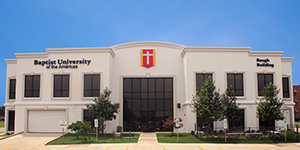
Baugh Bldg 300Baptist University of the Américas moved into a new campus this year, the Baugh Building.During Dr. Reyes’ tenure from 1999 to 2007, the Texas Higher Education Coordinating Board authorized BUA to grant bachelor of arts degrees, and the school received full accreditation from the Association for Biblical Higher Education. Since accreditation and certification in 2003, BUA students have been able to transfer credits to other Baptist institutions, other ABHE schools and seminaries. BUA students who earn their bachelor’s degree now can transfer directly into master’s programs at Association of Theological Schools seminaries and many religion departments of Baptist universities.

In 2007, I was invited to serve as president. Across these years, a period of sustained growth and deepening of BUA’s historical roots has been taking place.

Changing the primary language of instruction to English made it possible for BUA to expand its reach to a greater diversity of students and allowed students from multiple cultural/language groups, such as African-Americans, Anglos, Koreans, Dutch, Hungarians, Japanese, Turkish, Indian and students from Africa and non-Spanish-speaking Latin American countries to enroll.

BUA’s expanded curricular offerings include the associate of arts degree in cross-cultural studies, and bachelor of arts degrees in biblical/theological studies, business leadership, human behavior, music and Spanish.

In 2015-2016, enrollment reached its highest level, with 336 students in degree programs, certificate programs and English-as-a-Second-Language.

A certificate program, under the name of Baptist Bible Institute, continues to bless congregations in Texas, the United States and around the world with a solid biblical and theological education delivered at the point of need and in the language spoken by those congregations. Currently, BUA has more than 34 extension centers that serve more than 400 students.

Graduates have enrolled in graduate programs at institutions across the United States. Many of these students are serving in multiple capacities in churches—as pastors, music/worship ministers, church planters and other areas of ministry—serving at community ministry organizations, teaching public school, teaching at colleges and universities, and working in the general workforce.

This fall, in order to better serve our students and to continue our journey toward excellence, we acquired a new campus—a former medical office building, re-designed as a college campus and named the Baugh Building in honor of the Eula Mae and John Baugh Foundation’s financial support. It joins a student-housing complex opened in 2008 for single and married students with families.

The new campus signals our new journey toward the future we have envisioned and have accepted as God’s calling and mission in the church and in the workplace: “Baptist University of the Américas, within the context of its Hispanic heritage, will be the standard for educating all students for Christian ministry and missions to change our world.”

René Maciel is president of the Baptist General Convention of Texas and president of Baptist University of the Américas in San Antonio.



Pray for those who are lost and dying in their sins

I read an article by Franklin Graham on how his grandfather and other men met at different locations outdoors around their hometown of Charlotte, N.C., to pray for revival across their state and to the ends of the earth.

richard ray130Richard RayOn one of those occasions, in May of 1934, his grandfather hosted one of these prayer meetings and a paper salesman by the name of Vernon Patterson suggested they ask God to raise up someone from their hometown who would take the gospel to the ends of the earth. None of those men who prayed was thinking of young Billy Graham, who had not yet given his heart to Jesus Christ.

Billy Graham did not learn of that prayer until years later. He once said, “A mystery and wonder of prayer is that God often waits until someone asks.”

First John 5:14-16 tells us: “This is the confidence we have in approaching God—that if we ask anything according to his will, he hears us. And if we know that he hears us, whatever we ask, we know that we have what we asked of him.”

We are at a moment in time where prayer is the only solution to the strife we live in. However, prayer alone is not enough. It is what we pray for that matters. It is what we ask of God that matters.

LifeWay Research reported only 20 percent of people pray for those who have no faith. However, 82 percent of our prayers are for family and friends, and 74 percent of our prayers are for our own problems and difficulties.

If we want our world to change for Jesus Christ, then we must pray for those who are lost and dying in their sins, to give their hearts to Jesus Christ for Salvation. Our priority in prayer should be that the lost find Jesus Christ and that through salvation our world would change.

I encouraged you to begin to pray boldly with confidence for those who are dying in their sins to find salvation in Jesus Christ.

Second, pray for those yet to come—like a Billy Graham—who will evangelize our community, our state, our country and the world for Jesus Christ.

Last, pray for boldness and courage in your own life, so that you will be able to spread the gospel of Jesus Christ to your community, your state and your country until it reaches the ends of the earth.

As Billy Graham once said, “A mystery and wonder of prayer is that God often waits until someone asks.” Let us begin to ask.

The Lord has called you to serve, but he has not called you to serve alone. Contact me at tririversdom@gmail.com or at (432) 202-1526 for more information, or visit our website to learn how the Bivocational/Small Church Association can minister and serve you.

Remember, “Together, no church is too small.”

Richard Ray is executive director of the Bivocational/Small Church Association and director of missions for Tri-Rivers Baptist Area.


BGCT president: Following his footsteps

For many reasons, I wanted to follow in my dad’s footsteps.

This strong Hispanic man was a teacher and a coach 30 years, and I was fortunate to be around him quite a bit during my high school years. I even had one class with him, and, of course, I always was an illustration somewhere in his teaching. He also was my high school golf coach, not to mention my coach in other sports from very early in my childhood.

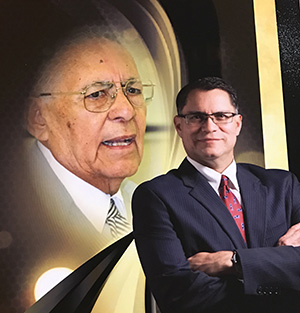
Maciel and Maciel 300Baptist General Convention of Texas President René Maciel poses with a photograph of his late father and mentor, Charles Maciel.He loved education and graduated in 1952 from Baylor University. He then went back to his hometown, Tucumcari, N.M., and in those years in education, he received awards for being an excellent teacher. He always was a good communicator and counselor with his students. He was a disciplinarian and very organized. He was very committed to his work and his family.

As I grew up around him, I began to see his love for people and his passion to serve others. As a boy, I also saw him make a life change. He was at home by himself one Sunday morning when he asked Christ to come into his life. That was a time when our family also changed.

The transformation in his life became contagious, not only for us as a family, but even for his students and others who were around him at school.

I began to watch him more. He would catch my attention by how he cared for people and how he would speak boldly about his new faith in God.

I not only watched; I began to listen to him more. I began to follow him more. I became more obedient and interested in his life and his walk. I also began to follow in his footsteps of a changed life, a life of commitment and listening to my heavenly Father.

My dad was a gift from God in showing me how to care for his family, how to care for others, and how to serve. But the greatest gift I received from him was learning how to follow. After 30 years of teaching and still being very young and capable of teaching for many more years, he received a call to go and preach. Once again, I watched him hang up his teaching career and take another life step, a step of following Christ to the church.

He did not know where that call would take him; he had no idea what the people would be like or what condition a church might be in. He just followed and surrendered his will to Christ. Wherever God would lead him, in God’s time and in his will, my dad followed the footsteps of Jesus. I am so grateful God used my dad to teach me “wherever he leads, I’ll go.”

“Take up thy cross and follow Me,”

I heard my Master say;

“I gave My life to ransom thee,

Surrender your all today.”

Wherever he leads I’ll go,

Wherever he leads I’ll go,

I’ll follow my Christ who loves me so,

Wherever he leads I’ll go.

René Maciel is president of the Baptist General Convention of Texas and president of Baptist University of the Américas in San Antonio.


BGCT president: Valley Baptist Missions Education Center

The Valley Baptist Missions Education Center began in September 1947 when it opened as Valley Baptist Academy and has grown to a 90-acre campus in Harlingen.

rene maciel headshot130René MacielIt now sits in the center of a region in deep South Texas populated by 2 million people from around the world.

Founded as a private Christian school and then as a missions training center, this Texas Baptist institution has clung to the principles of predominately educating and ministering to the Hispanic community.

When it was a school, students were trained for leadership in Christian work. Students from South Texas, Mexico, Central America and South America were sent or recommended to Valley Baptist Academy by pastors and supportive laypersons interested in advancing the cause of Christ. Students at the academy also were immersed in English as a Second Language and quickly gained fluency in English. They emerged from their studies to share their faith in Christ in two languages.

Graduates of both the academy and the education center are equipped with theological studies, as well as leadership and pastoral skills training. Many graduates went on to become business professionals, pastors, attorneys, homemakers and medical professionals. Today, alumni share Christ across much of this continent.

Scores of men and women sacrificially served the academy and education center as educators, board members and staff. Most noteworthy was Howard E. Gary, who served as president 32 years. Under his outstanding leadership, the campus and educational enterprise experienced robust growth. Alongside a small number of short-term presidencies was the beloved Robert E. Smith, who served in critical times for the institution. As retired director of missions for Rio Grande Valley Baptist Association, he served as president more than seven years.

Just as John Cartwright Dunn Jr., an early Texas pioneer, implored Rufus Burleson, first president of Baylor University, to come to Texas when the region was just a wilderness, the staff and board of Valley Baptist Missions Education Center invite and implore people interested in exciting and life-changing missions opportunities and training to come to the center and to be part of a great movement of Christ in a diverse region of the state.

The center encourages an individual to come as a student of the Great Commission, as a pastor seeking enrichment and training, as a missions volunteer, or as an educator as the new leadership of Valley Baptist Missions Education Center develops opportunities of service and education certain to extend in influence for Christ around the world.

To learn more, click here. www.vbmec.org

René Maciel is president of the Baptist General Convention of Texas and president of Baptist University of the Américas in San Antonio.


René Maciel: Baptist Standard & HighGround Advisors

Texas Baptists are fortunate to have a news vehicle that has the freedom to publish without being swayed by financial support from a state convention as well as a Baptist foundation that serves institutions and churches with stable financial advice.

rene maciel headshot130René MacielThe Baptist Standard has been keeping Texas Baptists up to date about God’s work in the world more than 127 years. Its founders launched the Baptist News in 1888. They intended to unify Baptists across Texas to accomplish far more together than they ever could do as individual churches. Specifically, they sought to rally congregations to support the newly formed Baptist General Convention of Texas. Their strategy worked: The BGCT became the largest state or regional Baptist group. And the Baptist Standard (the name it adopted in 1892) became a leading news source for Baptists in Texas and beyond.

Baptist Standard Publishing—the Standard’s parent company—enjoys a unique legacy that benefits Texas Baptists enormously. It is the only Baptist news organization not subsidized by a state, regional or national convention. While other Baptist state newspapers receive Cooperative Program support to fund one-third to 100 percent of their budgets, Baptist Standard Publishing never has received a budget subsidy from the BGCT. This means the Standard operates under an unprecedented level of freedom. The Standard is free—and responsible—to pursue truth and gather news on behalf of all Texas Baptists. It is not a promotional newsletter or political mouthpiece for any Baptist person or group.

BaptStand 250Over the past several decades, churning change has affected America’s churches and denominations, as well as the newspaper industry. Baptist Standard Publishing ministers at the intersection of both significant institutions, and it has felt the tremors of change from all directions. Guided by a strong, balanced board of directors, the company makes continual adjustments to serve its mission—to inform, inspire and challenge people to live like Jesus. To that end, Baptist Standard Publishing disseminates news and other information through three channels:

• The website, baptiststandard.com, contains the very latest news, opinion, photography and other information. The staff updates the site every weekday, as well as on weekends if breaking news happens.

• The Baptist Standard arrives in subscribers’ email boxes every Thursday. It contains all the week’s news and opinion in an easy-to-read format that looks like an illustrated table of contents.

• Subscribers also receive CommonCall, a magazine full of human-interest stories and articles about effective ministries, quarterly.

For information about how to subscribe, click here.

You may have noticed recently the 86-year-old Baptist Foundation of Texas now is known as HighGround Advisors. The foundation was founded in 1930 to offset the crippling economic disaster that threatened the existence of Texas Baptist universities, schools, children’s homes and hospitals following the stock market crash of 1929. It was a daring endeavor, undertaken by a handful of innovative business people who had faith, foresight and a firm belief in putting the Lord’s business ahead of their own.

HighGround 325Their vision was to build a Foundation that would play a unique role in enabling Baptist institutions to carry out their missions. The founders knew that by providing endowment management and charitable trust services, Baptist Foundation of Texas could provide invaluable support to its client institutions and thus enhance each institution’s ability to perform its charitable work.

For the past 86 years, the Foundation has consistently and successfully carried out this original mission. Net assets have grown to almost $2 billion with more than 6,000 endowments and 1,100 split-interest accounts currently under administration. Throughout its history, the organization has had a rich heritage of adding capabilities to its scope of services to better support Baptist ministries through the areas of account administration, minerals management and real estate services.

In 1996, a regulated trust company was added to protect the administration of the split-interest accounts. The growth of the trust company over the past 20 years has enabled the Foundation to serve clients beyond the Baptist world as well as provide additional service flexibility to the Foundation’s core mission.

In 2015, the Foundation undertook a brand study to better understand client and market perceptions of the Foundation. As a result of the brand study, the decision was made to rename Baptist Foundation of Texas to operate as HighGround Advisors.

HighGround Advisors is a fitting name that maintains the organization’s faith-based legacy and speaks to what it does for their clients. The HighGround brand takes the foundation to the next level of providing asset management for nonprofit organizations that transform lives.

It represents a commitment to be a resource and help to further the work of charitable organizations that are bettering the lives of those they serve. HighGround is creating a path forward by providing its institutions and prospective institutions with an expanded mix of financial products, services and tools. It promises to continue protecting, strengthening and growing endowment and split-interest assets.

HighGround Advisors’ staff and board of directors aim to continue to be an innovative and vigilant caretaker of the funds and assets entrusted to them by the institutions they serve and by the generous individuals who donate to those institutions. They commit to strive to develop strategies for enriching client and donor relationships, enhancing service offerings and fortifying funds to further causes of the nonprofits they serve.

To visit the HighGround Advisors site, click here.

René Maciel is president of the Baptist General Convention of Texas and the Baptist University of the Américas in San Antonio.


In Touch: Prayer, offering, anniversaries, HSU, DBU, conclave, annual meeting

Hello, Texas Baptists!The Week of Prayer for Texas Missions and the Mary Hill Davis Offering is this week, Sept. 11-18. With a statewide goal of $4 million, the offering will go to support missions endeavors around Texas through strategic ministry partnerships. I’m asking each church to double its gift to the Mary Hill Davis Offering this year. The work of the offering sends and supports our state-wide missionaries. Through our partnership, we can reach Texas with the life-saving gospel of Jesus Christ.

david hardage 130David HardageCongratulations to these churches celebrating anniversaries this month: First Baptist Church in Conroe, 125 years; First Baptist Church in Gatesville, 160 years;  Shiloh Terrace Baptist Church in Dallas, 60 years; and Garden Oaks Baptist Church in Houston, 75 years. Let us know if your church is celebrating an anniversary.

Congratulations to Eric Bruntmyer, who was invested as the 16th president of Hardin-Simmons University. I enjoyed participating in the ceremony that took place during the university’s quasquicentennial anniversary, celebrating 125 years. It was a historic day marked by prayer, joy and excitement for the future.

And congratulations to Adam Wright, who was inaugurated as the sixth president of Dallas Baptist University. He previously served as vice president and dean of DBU’s Cook School of Leadership, where he provided academic leadership and taught at both the undergraduate and graduate level. Thanks so much for allowing me the honor of participating in the service.

Youth Ministry Conclave is coming soon. This is a great time of training conferences and worship experiences for adults who oversee and serve in the youth ministry in their churches. Conferences include training in youth Bible study leadership, youth evangelism and youth ministry administration. Conclave 2016 will take place Oct. 10-12 in Arlington.

I hope you are planning to attend the 2016 Baptist General Convention of Texas annual meeting at the Waco Convention Center Nov. 13-15. We will have exciting and informative workshops and inspiring worship speakers like Cleophus LaRue and Lee Strobel.   

Your participation is vital as we make decisions that will impact our Texas Baptist family and ministry. Beginning now, you can pre-register online and print your messenger cards. The process is easy. If you need assistance, you can call us at (888) 244-9400. Click here to get started.  

David Hardage is executive director of the Baptist General Convention of Texas Executive Board.


BGCT president: Health care in Abilene and Waco

It was a joy to speak at Hendrick Medical Center in Abilene recently. I am grateful for the work and ministry that our medical institutions do in Texas Baptist life. We are blessed to have these wonderful institutions. I am thankful for the work they do and the caring ministry that exemplifies Christ. Be sure and stop by their information table at the Baptist General Convention of Texas annual meeting in Waco Nov. 13-15.

rene maciel headshot130René MacielHendrick Medical Center opened in 1924 as West Texas Baptist Sanitarium through the vision of Millard Jenkins, pastor of First Baptist Church of Abilene.

Throughout its 92-year history, the hospital’s purpose has been “to provide high quality healthcare emphasizing excellence and compassion consistent with the healing ministry of Jesus Christ.”

With the Great Depression occurring soon after its founding, the facility began accepting payment with farm animals and agricultural products. A gift from local businessman T.G. Hendrick saved the hospital financially, and it was renamed Hendrick Memorial Hospital.

Hundreds of families moved to nearby Camp Barkley in the 1940s, prompting the hospital to increase the maternity ward to care for the post-war baby boom. Another influx occurred when Dyess Air Force Base was established in 1952. A fund drive allowed the purchase of new equipment and the construction of Parker Hall in 1958 to accommodate the polio epidemic.

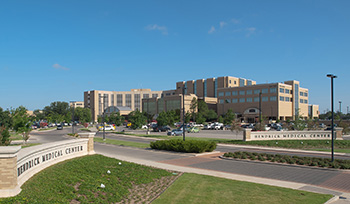
Hendrick 350Hendrick Medical Center in AbileneAs the Anderson Wing added 84 rooms and the Meek Wing housed the Children’s Hospital in the 1960s, Hendrick added space for a nursing school and became known as the largest hospital between Fort Worth and El Paso.

In the 1970s, the emergency room expanded to 24/7 service, the physical therapy department was added, and other units expanded. The professional center, offering physicians and services easy access to the hospital, opened with the name changed later to Hendrick Medical Center.

Future decades saw expansions in the labor and delivery unit, pediatrics, cardiac care, a cancer center, day surgery area and a rehabilitation center. Additionally, the service area expanded to cover 22 counties.

In the new millennium, the Patty Hanks School of Nursing opened, and the Hendrick Women’s Health Network was launched. Inpatient satisfaction remained in the 90th percentile in the nation as Hendrick introduced electronic systems to streamline processes and patient communication.

Project 2010 ushered in the largest expansion to date, bringing the new building to 10 times larger than the original campus. Since then, more expansion occurred. A partnership with Texas Tech University provided a federally qualified health center.

The latest projects include construction of a school of public health with Texas Tech and the free-standing Hendrick Hospice Care Center.

President Tim Lancaster, named in 2004, oversees 522 beds and more than 3,000 staff members.

For more information, visit Hendrick’s website.

Waco is the home of Baylor Scott & White Medical Center–Hillcrest, which started at the prodding in 1903 of James Britton Cranfill, editor of the Baptist Standard.

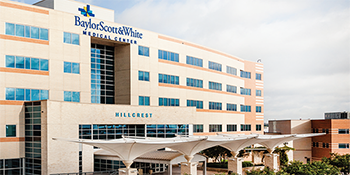
Hillcrest 350Baylor Scott & White Medical Center-Hillcrest in WacoChartered in 1916 largely through the efforts of Pastor Arthur James Barton of First Baptist Church in Waco, Hillcrest opened to serve residents of McLennan County and Central Texas.

In 2009, the doors opened to a 237-bed medical center on a new location at I-35 and Highway 6, including the region’s only dedicated women’s and children’s center and two new medical office buildings. It renovated the original Herring Avenue campus to become the region’s most comprehensive rehabilitation center with a skilled-nursing facility and a ministry wing.

The facility began writing a new chapter in its history with its affiliation with Scott & White Healthcare based in Temple.

When Scott & White Healthcare merged with Baylor Health Care System to form Baylor Scott & White Health in 2013, it assured an even brighter future for the hospital.

In 2014, the first-ever Baylor Scott & White acute care hospital signage was unveiled as Waco’s Hillcrest Baptist Medical Center became Baylor Scott & White Medical Center-Hillcrest. It became part of the largest faith-based, not-for-profit health system in Texas, preserving our rich Baptist heritage for decades to come.

As part of one of the premiere health care organizations in the nation, Baylor Scott & White Medical Center–Hillcrest, led by President Glenn Robinson, offers its patients and the communities it serves additional expertise and resources.

While continuing to focus on providing quality care to patients in the hospital, Hillcrest also is investing in keeping the community well by collaborating with other health care providers, physicians, community groups, area employers and others to enhance the value of the health care services.

The hospital also is focused on strengthening its long-held ties to Baylor University. This important relationship has resulted in unique programs to benefit student athletes and, Hillcrest is the provider of choice for University students’ emergency health care needs.

To find out more, visit Hillcrest’s website.

René Maciel is president of the Baptist General Convention of Texas and president of the Baptist University of the Américas in San Antonio.


Small churches build up the kindgom of God

An article sent to me compared mega churches versus small churches. In this article, a statement was made that in one part of town, you have a mega church that is saving thousands, and in the other part of town, you have small church that is saving a few. Therefore, the mega church is growing, while the small church is dying.

richard ray130Richard RayMy first response is churches should not be in competition with one another. Instead, churches should be striving to spread the gospel together.

This time of year, Texas Baptist churches begin to gather information for their Annual Church Profile. The numbers reported in the Profile assess growth of the church and may represent the decline of the church—if you are only looking at the church by using numbers.

Just as our Lord does not look at our outward appearance, we also should not look at the outward appearance of the church using only numbers.

For those who enjoy numbers, here are a few that might surprise you:

• Small churches that average 150 or less in worship make up 81 percent of Texas Baptist churches.

• The average attendance in these churches on any given Sunday morning worship is 31.

• When the convention’s 81 percent of these small churches gather to worship on Sunday, you have more than 136,000 people worshiping the Lord, serving the Lord and being a witness for the Lord.

Together, no church is too small. These churches are building up the kingdom of God, through their heart for missions, heart for service and heart of faithfulness. The size of the church is not what makes a difference; it is the heart of the church that makes the difference.

I want to encourage pastors serving on the small-church mission field: You are not alone, and you are not small in the eyes of our Lord. You are doing great things that are making a great impact to the furthering the kingdom of God.

Regardless of what your numbers are, this is not who you are. The Lord looks at the heart of the church, not what is listed on the Sunday school bulletin board. So let us measure the church not by numbers, but by their heart.

The Lord has called you to serve, but he has not called you to serve alone. Contact me at tririversdom@gmail.com or at (432) 202-1526 for more information, or visit our website to learn how the Bivocational/Small Church Association can minister to and serve you.

Remember, “Together, no church is too small.”

Richard Ray is executive director of the Bivocational/Small Church Association and director of missions for Tri-Rivers Baptist Area.


BGCT president: Revival!

“Revival” is not a word you hear very often. Growing up in a Southern Baptist church in Tucumcari, N.M., as a kid, I would hear that word on a yearly basis, and I also attended and preached a few revivals as I grew up in my faith.

rene maciel headshot130René MacielI was visiting with a pastor friend of mine last week, and he told me he had just completed a four-day revival. I was a little surprised and interested in hearing about the revival. I haven’t heard of many churches conducting revivals any more or at least using that name.

A dictionary definition of the word revival is “an evangelistic service or a series of services for the purpose of effecting a religious awakening; the act of reviving.”

When I worked at Baylor University a few years ago, I regularly would play basketball at noon with several Baylor faculty and staff. I never will forget one day as we were playing, a basket had just been scored and we all headed down the court with our heads turned to the other basket.

All of the sudden we heard a loud thud. It was one of the guys. He was having a heart attack. When we reached him, his facial expression was strained, his color was changing and his breathing was fading. He was dying and needed reviving. Immediately, someone began CPR, and fortunately, the gym was equipped with a defibrillator. In moments, the man was revived, restored and alive. They rushed him off to the hospital for greater care, but he had been revived, right there on that basketball court. We all saw it happen, and we were thankful to see him alive.

Another definition of revival is “restoration to life, vigor, and strength.”

It is truly sad to see and hear about churches across our state and country that are on their last breath. For some reason or another, they have stopped being the church, the body of Christ, and they have allowed many horizontal distractions to drive their attention and efforts. They have taken their focus off of bringing glory to God, a vertical approach that in Colossians says, “seek the things that are above, set your mind on things above.” They are slowly losing members, losing connection to the community and have turned their focus inward. They are strained, and changing and fading fast. They are dying and in great need of being revived.

That reviving has to be a church-concentrated effort to seek to bring God the glory each time they meet for the listener to experience a real encounter with Jesus Christ. When focus is given to its programs, good books and good works, then the church is in jeopardy of slowly moving away from lifting God up and on a road to a slow and steady decline that can eventually lead to death.

I love what James MacDonald says in Vertical Church, “Instead of seeing ourselves as people trying to connect with people, let’s see the church as people trying to connect with God and help others do the same.”

I think we need to get back to using the term “revival.” We need that new life, that new breath and that new passion that only God can give. God knows we need to be revived.

Praying for revival!

René Maciel is president of the Baptist General Convention of Texas and president of Baptist University of the Américas in San Antonio.


When we work together, no church is too small

“Together, No Church is Too Small” is the motto I want see lived out in many of God’s churches today.

richard ray130Richard RaySo often, a church feels it is too small to make a difference in the world, much less the kingdom of God. These churches often settle for less when they should be expecting more. All throughout God’s word, we find God uses the smallest of things to deliver the greatest of harvest.

The mustard seed in Matthew 13:31 came to symbolize small beginnings, denoting the smallest weight or measure, a tiny particle. This mustard seed is something small that does its part to expand and grow the kingdom of God.

Luke 12:31-32 describes God’s church as a “little flock,” noting: “But seek his kingdom, and these things will be given to you as well. Do not be afraid, little flock, for your Father has been pleased to give you the kingdom.” This “little flock” of followers would change the world for Christ.

In Matthew 7, Christ says the way that leads to eternal life is “narrow,” and “few” find it. In Luke 10, Christ states that the laborers are “few.”

Christ uses the few, the small and the little, even as little as a mustard seed, to deliver his message of salvation to a truly great harvest. In the eyes of Christ, there is no small church.

The Bivocational/Small Church Association realizes Christ uses the small church to deliver his message of salvation. When small churches come together, no church is too small to do all things in Christ. At times, you may feel your church is as small as a mustard seed; however, you were not planted alone in the field to be harvested. You are planted by God with thousands of other mustard seeds, thousands of other small churches, and together, these small churches that God planted will grow the Kingdom of God, just as God intended from the very beginning.

The Lord has called you to serve, but he has not called you to serve alone. Contact me at tririversdom@gmail.com or at (432) 202-1526 for more information on how the Bivocational/Small Church Association can minister and serve you.

Remember, “Together, No Church is Too Small.”

Richard Ray is executive director of the Bivocational/Small Church Association and director of missions for Tri-Rivers Baptist Area.


BGCT President: UMHB and HBU

The new school year is here!

Texas Baptists are so blessed to have nine great higher education institutions. My daughters had a wonderful experience at the University of Mary Hardin-Baylor under the leadership of President Randy O’Rear. I also had the experience of being back on the Houston Baptist University campus this summer for a Super Summer leadership camp. That university is led by President Robert B. Sloan.

rene maciel headshot130René MacielMake plans to come to the Baptist General Convention of Texas annual meeting Nov. 13-15 and stop by the booths of these two outstanding universities.

The two universities highlighted this week have the distinction of one being among the oldest colleges for women west of the Mississippi and the other being one of the newest Baptist universities.

The University of Mary Hardin-Baylor played a part in the formation of Baylor University when the male and female departments of a Baptist college were separated.

UMHB 300The University of Mary Hardin-BaylorIn the early 1800s, representatives in Washington County asked the Home Mission Board of New York to send missionaries to Texas before the state even achieved statehood. James Huckins and William M. Tryon were sent, and soon after, Judge R.E.B. Baylor came as a teacher, lawyer, soldier and preacher. They recommended forming an education society, and the Texas Baptist Education Society was organized in 1843.

On Feb. 1, 1845, a charter to establish a Baptist university was granted by the ninth Congress of the Republic of Texas.

The school initially included a preparatory division in addition to co-educational classes for college students at Independence. In 1851, under the same charter, a female department and a male department were created, ending co-education. In 1866, the female department obtained a separate charter as Baylor Female College, with its own board of trustees.

Twenty years later, due to changing transportation and economics in the area, leaders decided both schools should move. The male department consolidated with Waco University, retaining the name Baylor University in Waco. Baylor Female College moved to Belton.

Since then, UMHB has undergone several name changes, including Baylor College for Women, 1925; Mary Hardin-Baylor College in honor of a benefactor, 1934; and University of Mary Hardin-Baylor, 1978. In 1971, it became co-educational.

UMHB points to several notable milestones:

Starting the first work-study program for women in a college west of the Mississippi.

Serving as the campus model for the Baptist Student Union.

Establishing the first school of journalism in a college for women in America and being the second institution in Texas to offer the bachelor of journalism degree.

Being recognized as the first Texas Baptist college accepted into full membership in the Southern Association of Colleges and Schools.

Today, UMHB enjoys a robust enrollment of about 3,900 students and employs more than 400 full-time faculty and staff committed to Christian higher education. More information is available by clicking here.

Houston Baptist University is one of the younger Texas Baptist universities.

HBU 300Houston Baptist UniversityIn 1952, Union Baptist Association authorized a committee to study the possibility of locating a Baptist college in Houston. After the BGCT Education Commission approved the concept of establishing a new college, 25 businessmen pledged to provide $10,000 each to purchase land. By 1958, 196 acres was acquired in southwest Houston.

In 1960, the BGCT elected the first board of trustees and approved the charter for Houston Baptist College. The institution opened in September 1963 with a freshman class of 193 students, a cluster of new buildings and 30 faculty. A new class was added each year until the college attained a four-year program in 1966-67, bringing enrollment to about 900 undergraduates.

In 1973, Houston Baptist College officially became Houston Baptist University, and the first master’s degree program, in business administration, was offered in 1977. HBU received approval last December to launch a doctoral program in executive educational leadership, making the university a fully national, comprehensive university.

Today, HBU has more than 3,000 students and offers in excess of 40 majors through its eight colleges. The university now offers 20 graduate degree programs, and more than 900 graduate students take classes both on campus and online.

Students have the opportunity to join more than 60 organizations while they enjoy the benefits of living in one of the largest multicultural metropolitan areas in the nation.

Partnerships in the Houston area make it a thriving community and mission field for HBU students and graduates to volunteer, work and live. For more information, click here.

René Maciel is president of the Baptist General Convention of Texas and president of Baptist University of the Américas in San Antonio.


Let’s go to school!

The new school year is here! Students, teachers and administrators all will be heading back to school. There will be all kinds of back-to-school sales, promotions, events and attention given to the new school year. The traffic will get busy, school zones will be watched, school activities will be numerous and teachers will begin to teach classes full of students.

rene maciel headshot130René MacielThis also is a great opportunity for Texas Baptist churches to connect to their communities by praying for their teachers and administrators, maybe providing a breakfast and some kind of survival kit and/or inviting them to church to have a special service or recognition for their work and their calling to lead and teach.

It also is an opportunity to provide school supplies to assist families and children, to have a special service to pray over the families and students, and maybe to organize a prayer walk around the school on a Saturday to ask God to bless the school and school year.

texas baptist voices right120What a great time for Texas Baptists across the state to affect our public schools. I use the word “affect” because it is an opportunity for our churches to act on or produce an effect on our communities and schools. God has called us to be his witnesses in “Jerusalem”—our homes, our neighborhoods and our communities. What a wonderful way to love our communities and be connected to educating and training our students.

Matthew 5:13 says, “You are the salt of the earth.” Not only do we have the opportunity to add flavor and seasoning to our communities through the Spirit of Christ who lives in us, but we are a preservative to our culture against corruption and evil that happens all around us. We bring change. We bring healing, and hope and life. We can bring a difference to our schools and teachers and students—a difference schools and communities need and many of them are requesting in faith-based efforts to assist or share in training students today.

This is a time of year for Texas Baptist churches to be ambassadors “as though God were making his appeal through us.” As this new school year begins, we need a concentrated effort to affect our schools by asking God to use us to extend life. We should look for opportunities to connect, or maybe commission a few people from the church to be missionaries to their local schools. We are called into our world and communities to be Christ, to think and be used in kingdom work.

Start praying today about the schools across our state. It is a great mission field for us to connect and bring change. Let’s go to school!

René Maciel is president of the Baptist General Convention of Texas and president of the Baptist University of the Américas in San Antonio.