Kyle Streun: ‘The church is the hope of the world’

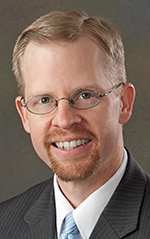
Kyle Streun has been pastor of First Baptist Church in Denver City since June of last year. From deep in the heart of one Texan, he shares his background and thoughts on church and ministry. To suggest a Baptist General Convention of Texas-affiliated minister to be featured in this column, or to apply to be featured yourself, click here.

Background

Where else have you served in ministry, and what were your positions there?

Pastor of First Baptist Church in Hereford, August 2005-June 2016

Pastor of family ministries at First Baptist Church in Crockett, May 2004-August 2005

Pastor of First Baptist Church in Olton, December 1995-May 2004

Where did you grow up?

I grew up in Hereford, and my home church was Temple Baptist Church, so I left my hometown after almost 11 years, which I thought I never would do, to come to Denver City.

How did you come to faith in Christ?

At a revival at Temple Baptist Church in Hereford as an 8-year-old boy, I had the “hell” scared out of me. Jim “Red” Bozeman was my boyhood pastor and such a dear help to our family as my mother raised four children as a single parent. It wasn’t ’til later that I understood the grace and love of God.

Where were you educated, and what degrees did you receive?

I went to play baseball at Howard Payne University right out of high school but transferred closer to home at Wayland Baptist University (in Plainview) after only one semester and received a bachelor of arts degree in mathematics. I also have a master of divinity degree from Midwestern Baptist Theological Seminary in Kansas City and have done work toward a doctor of ministry degree at both Denver Seminary and Truett Seminary.

Ministry/church

Why do you feel called into ministry?

The local church had a huge impact on my life growing up in a single-parent family, and God called me from a very young age to make my life count for eternity. I still feel very strongly about being a part of his plans for his glory and his kingdom and feel the church is the hope of the world.

What is your favorite aspect of ministry? Why?

I love building relationships with people and have found the best way to do that is to be involved in mission projects where you can be the hands and feet of Jesus and share his love while getting to know people more intimately than Sundays and Wednesdays allow. When you are working, loving and sweating together, you really come to appreciate and value one another and fulfill the Great Command and Great Commission in authentic, practical ways.

You also have to extend a great deal of grace to one another as you do life together, and I’m convinced that we are most appealing to the lost world as a church when grace is most apparent in our lives.

What one aspect of congregational life gives you the greatest joy?

Seeing children and young people come to know Christ and be involved in ministry to their peers at school and in the community.

I’ve always had the philosophy that children are not just the church of tomorrow, but the church of today. They are so pliable and teachable with the great truths of the Scripture and the gospel, and the growth that often occurs in people is rewarding and fulfilling.

What one aspect of congregational life would you like to change?

The mindset that the church is more for insiders than for outsiders. When we lose our outward focus and the reality that church is the only organization that exists, at least in part, for people who are not currently members, then the church begins to die. Established churches can easily lose focus on fulfilling the Great Commission and can be content to do church in a way that satisfies their personal preferences.

How has your ministry or your perspective on ministry changed?

I think early on in ministry I wanted to “make something happen” and always was looking for the next trend in ministry to try to follow or hot program to try to implement. I’ve tried to simplify my outlook and focus all of what we do as a church on keeping the Great Commandment to love God and people and staying focused on the Great Commission of making disciples.

I also realize more than ever that if anything of eternal value happens in the church, it’s not because I made it happen but because God, in his great grace, did something for us that we could not do for ourselves.

How do you expect congregational life to change in the next 10 to 20 years?

In the 20-plus years I’ve been a pastor, ministry has changed dramatically because of the rapid nature of information exchange, access to constant communication and social media. I have no idea what societal and cultural influences will change the next 10 to 20 years, but I do know the “higher tech” we get, the “higher touch” we need to be.

True fulfillment and value in life will still come from personal, authentic relationships and not technology. We can and should use technology to demonstrate the love, concern and care of Christ to an increasingly more distant and detached society living in a fantasy world of social media.

I also think there will be increasing challenges in church finances with the absence of the war generation and indebtedness of the following generations in the church. I know God has and always will finance what he wants done, but I also think it may take some different approaches to maintain and expand ministry in established churches.

What qualities do you look for in a congregation?

Three words are at the forefront of what I look for in a congregation—“biblical,” “missional” and “relational.”

I’ve found I get myself in trouble when I stray too far from what God has called us to do and to be in the Bible. When the church does the “one another”s of the Scripture, then the church is on course with being what God designed her to be. Churches have to have the right biblical foundation to know what we believe and why, and how to live for Christ in the present and be the presence of Christ to a lost world.

The church also has to courageously and energetically implement what they know from the Bible in a relational way. People may visit a church for a while for the preaching, music and various programs, but people almost always stay and get connected because of the people they connect with and establish relationships with.

About Baptists

What are the key issues facing Baptists—denominationally and/or congregationally?

Our great challenge is figuring out how to minister to a fast-changing, increasingly secular world that has less respect for the authority of Scripture or the Judeo/Christian moral ethic than ever before and is difficult for established churches and denominations to reach.

However, I’m still convinced because of the power of God, we as his people can still reach people.

About Kyle

Who were/are your mentors, and how did/do they influence you?

I have been blessed with great mentors.

Jim Bozeman, my boyhood pastor, taught me how to love and pastor people by example. I can’t remember a single sermon he preached, but I do remember how he loved.

Randall Stotts, a youth minister at First Baptist Church in Hereford and my friend and pastor in Blue Springs, Mo., continues to challenge me how to seek the Lord, pray and how to stay focused on reaching people far from God.

Dr. Hulett Gloer taught me the Scripture at Midwestern Seminary and again at Truett.

Bill Wright taught me how to be myself and get men involved in church and ministry.

Bobby Broyles helped me get involved in Baptist life and cooperate with other churches.

Mitch Wilson encourages me to stay focused on the Great Command and Great Commission.

What is the impact of ministry on your family?

I am so grateful for my wife, Jennifer (formerly Sherman). There never has been a moment in our 25-plus years of marriage when I thought ministry was too tough on my family to continue. We have served some great churches together. She’s a rock, the foundation behind the scenes that keeps me sane. She’s sensible and steady when I tend to be a little more up and down. God called her to ministry as well, and she knew the direction we were headed when we married, which has been invaluable. Every move we’ve made, or not made, in ministry, she’s been able to discern the Lord’s leading often better than I. I praise God for such a great pastor’s wife, partner in ministry, mother and friend.

All three of our children love the Lord and are involved in ministry largely because of the steadiness and faithfulness of their mother. She amazes me.

Name some of your favorite books (other than the Bible) or authors, and explain why.

I love Frederick Buechner, Calvin Miller and Max Lucado for their ability to turn a phrase and use words to tell stories and warm the heart.

I love John Grisham novels for their suspense and character/plot development.

Andy Stanley has much practical advice for leading, and I have several of his books, but The Best Question Ever? and Seven Practices of Effective Ministry have influenced my preaching, decision-making and leadership.

Too Busy Not to Pray by Bill Hybels is a practical guide for understanding and practicing prayer.

The Art of Pastoring: Ministry Without All the Answers by David Hansen was an early influence on my pastoral ministry.

Biblical Preaching by Haddon Robinson impacted my preaching by helping me focus on the main objective of the text and sermon.

The Purpose Driven Church by Rick Warren has given me great direction for the church for clarifying why the church exists and helping me stay on task.

So many books, so many authors, so much influence.

What is your favorite Scripture verse or passage?

The verse that warms my heart as much as any other is 2 Corinthians 5:21: “For our sake he made him to be sin who knew no sin, so that in him we might become the righteousness of God.” I am still amazed at the love of God and the sacrifice of his only Son made for my sake.

Jesus in my place is the essence of the gospel and what continues to motivate me in life and ministry.

To read other “Deep in the Hearts of Texans” columns, click here.


Second Opinion: Trump threatens to change the course of American Christianity

If you want to understand white evangelicalism in the age of Trump, you need to know Robert Jeffress, the pastor of First Baptist Church in Dallas.

Jeffress is not a household name in the United States, known mainly in Southern Baptist circles. But he has recently gained national attention as a “court evangelical”—my term for a Christian who, like the attendants and advisers who frequented the courts of monarchs, seeks influence through regular visits to the White House.

The court evangelicals are changing the religious landscape in the United States. …

Read the full article in the Washington Post.


Voices: What does 6.5% have to do with your church?

During the Cooperative Baptist Fellowship’s annual general assembly a few weeks ago, Baptist Women in Ministry hosted a worship service and two workshops.

Meredith Stone 150Meredith Stone

As people entered BWIM’s worship service, they received a pin. The pin was purple, and in white lettering, it said, “6.5%.” People began asking each other: “What does this mean? What is 6.5 percent?”

When BWIM Executive Director Pam Durso welcomed everyone to worship, she explained the meaning of the pin with words she also published in a blog posted the following week.

“Six point five percent is the percentage of Cooperative Baptist churches that are led by women pastors,” Dr. Durso said. “That percentage has been steadily increasing in the past 10 years—there is much to celebrate! But there is more work to be done. … We need everyone’s voice, everyone’s support as we work to move 6.5 percent to 10 percent and then to 20 percent and beyond.”

TBV stackedNumbers & perspectives

At the worship service, everyone was encouraged to wear the pin during CBF’s general assembly as a means to start conversations about women in ministry among CBF churches. The conversations varied from hope for continued growth, to disappointment the percentage wasn’t higher.

One male pastor even said to me, “I’m embarrassed to wear this pin that brags about my 93.5 percent.”

Among congregations affiliated with the Baptist General Convention of Texas, our percentage of women pastors is much lower—around 0.5 percent.

For some, this number is not a problem. They do not want to see women pastoring churches. Others are disappointed the number isn’t larger and hope the percentage can increase. They might even feel uncomfortable bragging about being in the 99.5 percent.

So, for those congregations that support women in ministry in BGCT churches and are feeling the tension of disappointment and hope, I would like to offer a few suggestions specifically to your search committees. While I hope pastor-search committees will consider these ideas, I offer the following encouragements to all search committees that might be considering women and men side by side for positions such as youth ministers, children’s ministers, associate pastors, education/discipleship ministers, etc.

Think the same

First, think about women candidates the same way you think about male candidates.

What I mean is if an issue isn’t something you would ask or worry about with a male candidate, then you shouldn’t ask or worry about it with a female candidate.

For example, if you don’t worry that a man’s handsome appearance would be too distracting for the female members of the congregation, then you shouldn’t worry that a woman is too attractive and would present a temptation for male congregants.

If you wouldn’t ask a male candidate if he is planning on starting or expanding his family during his ministry at your church, then you shouldn’t ask a female candidate that question.

If you don’t worry about a man’s ability to minister to both men and women in your congregation, then don’t worry if a woman can effectively serve congregants of the opposite sex.

Think differently

Second, think about women candidates differently than you think about male candidates.

Women are not afforded the same opportunities as men in church ministry, so women’s resumés look different. Committees would do well not to discard a woman’s resumé simply because she doesn’t have the requisite number of years of church ministry experience. Instead, committees should consider how a woman’s experiences translate into the skills and development required in the position for which she is applying.

For example, if a woman has been a teacher, her skills in teaching, curriculum development and interacting with students, parents and administration will translate well into children’s, youth or education ministry. If a woman has run a nonprofit, she has learned leadership—pastoral vision, relating to a board—working with deacons, and how to manage a budget—stewardship.

Discern presentation

Another way in which committees need to think differently about women candidates is in discerning how women may present themselves. Men who appear confident and self-assured often are revered and considered excellent leaders, while confident women often are called vulgar names and considered overly aggressive.

So, the women who committees interview might not say things the same way men say them. While a man might feel more comfortable saying, “I am called to be your pastor, so you should hire me,” a woman instead might say, “I feel as though God is leading me toward this type of ministry, and I hope you’ll consider me.”

Although the pieces of advice I mention here may seem to contradict each other, both are related to the way culture has taught us to perceive women.

By considering these things, we would hope, search committees will not let culture influence how God’s creation is judged, but instead they might be able to view 100 percent of people as created in the image of God.

Meredith Stone is director of ministry guidance and instructor of Christian ministry and Scripture at Hardin-Simmons University’s Logsdon School of Theology. She is a member of the Baptist Standard Publishing board of directors.

Editor’s note: To visit the Baptist Women in Ministry website, click here. To read Baptist Women in Ministry’s “State of Women in Baptist Life” report, click here.


Zambia: God uses willing servants in spite of weakness

God truly is strong when we are weak. It was a low day for me. I felt lonely, weak and bitter. I kept thinking about home, family and friends. I felt discouraged. But God’s word says, “My grace is sufficient for you, for my power is made perfect in weakness.”

Thank the Lord for my national teammate, David. When our program for the day was cancelled, David came over so we could look for some ministry opportunities. Before he came and before we left, I prayed that God would glorify himself in whatever we did. I prayed that God would make himself known despite my weakness. 

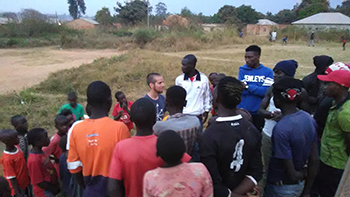
Zambia 350Tim Williams, who is serving with Go Now Missions in Zambia, presents the gospel to members of a soccer team. (Go Now Missions Photo)We walked to a soccer field in town with the hope of starting a pick-up game and sharing the gospel with the group afterward. God had another plan. A few young teenagers were sitting on the sideline at the field. They told us a game would start soon, and they were preparing. I could not move the conversation further. I froze, not knowing what to say. After a few minutes of silence, David gathered them and gave biblical advice on how to be a Christian on the soccer field. Praises! I became unfrozen and shared the gospel using a soccer analogy. When we finished, one of the teenagers asked us to speak to his coach. We did not know where this would lead, but we agreed. We soon realized his coach was also the coach of a professional men’s soccer team, which had begun gathering at the field. They were to play against a team from Colombia on Sunday. Before they started practice, the coach allowed me to present the gospel to the entire team—30 or so men! Fantastic! 

Next, we then presented the gospel and offered a word of encouragement to a child watching a soccer game, a soldier on break from duty, a group of school youth (where I got to hold guinea pig), and a young man walking home. In almost every instance, I would have kept walking. However, David would not allow it. He said, “Let’s go talk to them. … How about them? … We should go to them.” He wanted me to do most of the talking, but he initiated the conversations, and that was all the push I needed. I was even able to encourage David with Isaiah 55:10-11 and the story of Jim Elliott. God used me despite my weakness.

Now, as I sit here in my room alone, there is no bitterness, loneliness or discouragement. I feel renewed. Few people in Zambia will admit they are not yet saved, even though we show them the falsehood of their salvation beliefs, but we are encouraged by Isaiah 55:10-11. When God’s Word is spoken, it always fulfills the purpose for which it is sent. 

Tim Williams is a student at the University of North Texas, serving in Zambia with Go Now Missions.


President Trump, powerful words, needed discipleship

Offensive editorial

Your “Merry Christmas” Trump editorial is offensive to me as a Christian and a Trump supporter.

You’re showing your bias opinion when it should be open.

Who said people stop celebrating their birthdays at a certain age? You obviously do. I do not!

Less personal opinions and more facts will help us lead others to Christ!

Sonya McPherson

Kaufman


What makes America great?

In the 2016 Republican presidential primaries and in the general election, candidate Donald Trump rode his “Make America Great Again” campaign slogan to victory. His supporters wore baseball-type caps and T-shirts with “Make America Great Again” emblazoned on them. Those four words suggested that at one time, or some time, America was a great nation, but it is no longer great.

During the 2016 political campaigns, I don’t recall there was much, if any, discussion of when and why our country was especially great at a particular time in American history. In specifics, what lost American greatness did Trump, his voters and the Republican Party think needed to be recaptured? What makes a nation great?

Catchy campaign slogans will not a great nation make. President Trump, at best, is off to a rocky, wobbly start. It is not too late for him to clearly, comprehensively articulate what “Make America Great Again” means. If the president cannot do it or won’t do it, it is evident voters who voted for him were fooled or conned.

Paul L. Whiteley Sr.

Louisville, Ky.


Throwing words

I so agree with Jake Raabe’s column on the power of words.

We as Baptists—whatever label you want to wear: SBC, CBF, independent, liberal, conservative, whatever—are very good at throwing words at each other, no matter what the consequences are. We are quick to defend our way of thinking and slow or refuse to listen to others.

We have no right to destroy each other like we have. How this must grieve God’s heart.

We have carried around hurtful words and attitudes long enough. It is past time to lay down our pride of our words and move on to pride in God’s words. It is time for some self-examination under God’s light to see if our words—whether it be on the Internet or face to face—have met God’s standards. Or did they just further our own agendas?

Carol Bratton

Stephenville


Conversion plus discipleship

Ok, I see Garrett Vickery’s point. Conversion is only half the answer and the first half of the Great Commission.

The other half is discipleship, and the two combined in many people’s lives is a revival and then we will see a changed society.

As Dawson Trottman once said, leading someone to faith in Christ takes about 20 minutes, but discipleship will take about 20 weeks. Don’t leave your baby on someone else’s front doorstep to raise ! (Matthew 28:18-20)

Scott Cole

Brenham


Editorial: Resist Abbott/ Patrick reverse-Robin Hood approach to education

Ironically, the world premiere of Hood, a swashbuckling musical retelling of the Robin Hood myth, opened in Dallas a little more than a week before the Texas Legislature opens its special session.

knox newMarv Knox

In case you’ve forgotten your childhood folklore: In medieval England, greedy royals murdered Robin’s father and burned down the family home. Robin sought refuge in Sherwood Forest, where he gathered his “band of merry men”—similarly victimized by ruthless power-brokers. Enacting their own justice in a land of lawlessness, they robbed from the rich to support the poor.

In case you’ve missed your political news lately: In 21st century Texas, our government leaders, most notably Gov. Greg Abbott and Lt. Gov. Dan Patrick, are attempting to inflict upon our state a reverse-Robin Hood—take from the poor and give to the rich. Enmeshed in the governor’s legislative agenda is another run at providing private-school vouchers at the expense of public education.

Torqued process, dead bills

During the regular session of the Legislature, the House, led by Speaker Joe Straus, passed a $1.6 billion plan to overhaul the state’s public education finance system. Then the Senate, led by Lt. Gov. Patrick, torqued the process, proposing a voucher plan that would result in transferring public education funds to private, mostly parochial, schools. When the chambers couldn’t reconcile their bills, both plans died.

But now Gov. Abbott has placed the issue on the agenda for the Legislature’s special session, which begins July 18. Pray Straus and his colleagues in the House will prevail against Patrick and his allies in the Senate.

Opponents of school vouchers can recite a litany of reasons why vouchers are a horrible idea. Let’s discuss two that should appeal to responsible people of faith.

Protect the weak & vulnerable

First, vouchers violate the mandates of Jesus—and similar admonitions by the Hebrew prophets and teachings of other world religions—that call upon both individuals and societies to care for and protect the weakest and most vulnerable among them.

Aside from making certain poor people don’t starve, providing quality public education is the primary method by which a state cares for its people. If a generation receives education, it becomes capable of caring for itself, strengthening its society, and passing on an even-better future for its children. Conversely, a failure to educate dooms the rising generation, as well as the generations that follow, to poverty, dependency and hopelessness.

As a state, we should have no higher priority than giving our children a stellar education that prepares them for productivity and leadership across the coming decades. This makes sense morally; a bedrock Golden Rule principle is educating all children at the level we want our own offspring educated. This makes sense economically; even the small proportion of Texas children who might receive the finest education will live in a backwater if their peers are not taught well enough to hold down good jobs and thrive in a 21st century marketplace that will demand increasing levels of technical expertise.

Voucher advocates claim they will enable poor children to attend private schools. Those who can say that with straight faces deserve a reward. An Oscar. Even if voucher funds completely cover private-school tuition, the related costs of attending those schools—such as uniforms, transportation, technology, etc.—are beyond the reach of most poor families.

So, let’s call vouchers what they are: Educational subsidies for middle-class and rich families. They’re also a boon to private schools, which can recruit even more middle-class and rich kids to leave public schools for education in their enclaves.

Violated principles

Second, vouchers will violate reasonable principles of church-state separation or bedrock fundamentals of good, responsible government.

If voucher funds are handled responsibly, then their provision will introduce new levels of government involvement in private/parochial education. If the government provides funds—either directly or, more likely, as a pass-through from government to family to school—then it appropriately monitors and regulates those funds. On the other hand, if the government transfers voucher funds to schools without accountability, then it fails taxpayers and creates unprecedented opportunities for graft and corruption.

Either option should be reprehensible to Texans of both political parties, who historically have championed both religious liberty and responsible government.

So, what’s a God-fearing, compassionate, responsible Texan to do?

Most importantly, contact your state senator and representative—in-person or with a hand-written note, or at least with a phone call—and urge them to oppose vouchers.

If you want more background, the Texas Baptist Christian Life Commission and Pastors for Texas Children, which was launched by the CLC four years ago, can provide chapter and verse on why vouchers violate these two biblical truths of moral justice and responsibility.

Tell your senator and representative you’ll be watching the voucher debate and votes. Tell them you’ll hold them responsible for their actions. Lawmakers who fail to act in the best interests of our state don’t deserve to remain in office.

Follow Marv on Twitter: @marvknox


Voices: Will we become cyborg Christians?

I spent gobs of time sitting in airports recently. If you can believe it, I made it through a security line at Atlanta Hartsfield within 15 minutes. I think that’s a new record for me.

James Hassell 150James Hassell

Trying to kill time in an airport can be taxing, so I decided to peruse a noticeably thin copy of The Wall Street Journal. The headlines were what you would expect in just about any newspaper today. Nearly every story had to do with money, sex and/or power.

Then I noticed an incredible, half-page advertisement sponsored by an economic development organization called Enterprise Florida. The headline of the ad read: “The Future of Everything: Erasing the Line Between Human and Machine.” An especially thought-provoking line from the ad says, “The future of the mind, from mental health to cognition, is a fusion of mind and machine.”

I hope such an ad would get your theological mind spinning as it did mine. Are we really moving toward a time when the future of business and daily life consists of the fusion between people and machines? And if so, what does this mean for the church?

I don’t know about you, but I really have no interest in becoming a cyborg pastor, although the thought is a rather unique one to consider. It seems with all of our technological progress, many still seek eternal life without Jesus Christ. Permanent and perfect transformation comes through Christ and Christ alone.

Let’s be reminded of the Apostle Paul’s great admonishment to us in Romans 12: “Do not be conformed to this world, but be transformed by the renewing of your mind, so that you may prove what the will of God is, that which is good and acceptable and perfect.”

It also may be of great interest to know fine ethical minds among Texas Baptists already are considering this nearly front-page contemporary issue. Jeph Holloway, professor at East Texas Baptist University, presented some highly valuable lectures regarding this topic at the annual T.B. Maston Christian Ethics Lectures at Logsdon Seminary. To see the lectures on YouTube, click here.

Please take a few moments to think deeply about the rise of man-machine, for this issue is one that will impact us and our churches significantly in the next decade.

James Hassell is senior pastor of First Baptist Church in San Angelo, Texas.


Voices: Keys to church revitalization, Part III

This is my third post in a series focused on the findings from my doctoral research at Dallas Baptist University on revitalization in seven previously declining, established Baptist General Convention of Texas-related churches.

Ross Shelton 175Ross Shelton

The fourth finding showed each of the seven churches positioned itself so that its contemporary worship service or services became the primary focus in terms of musical selection, musical accompaniment, time of service, and how they “branded” themselves to the community.

For clarity sake, here are the definitions I used:

Contemporary worship style: “A corporate worship service that primarily sang newer songs and used a band as musical accompaniment. The service was also defined by a more relaxed dress style.”

Traditional worship style: “A corporate worship service that primarily sang hymns and used a piano and an organ as musical accompaniment. The service was also defined by a more formal style of dress.”

For most of the churches, the shift from focusing on a traditional worship style to a contemporary worship style was an important part of their revitalization. All of their contemporary services were growing. The churches did not present themselves to their community as a traditional church in terms of their musical/corporate worship style and methodology. As one pastor said about their brand shift, “The Southern Baptist church today is modern music.”

TBV stackedTraditional worship

Four out of the seven churches maintained a traditional worship at an earlier hour on Sunday morning. The primary purpose for keeping the traditional worship service was to maintain unity and relieve some of the frustration at attempts to provide a service blended with both styles.

It is important to note the focus on maintaining unity was essential for the pastors. They did not view the traditional service as a way “to throw a bone” to people. They wanted to do each of their services well and knew having such a service was important to the people who went to that service.

One pastor noted the people were relieved to have a service that could be uniquely traditional. While the traditional services were not necessarily growing, they served an important role in maintaining unity within the revitalized, established Baptist churches I researched.

Blended worship

Only one church was close to embracing a blended worship service, which combined both styles in one worship service. Nevertheless, for this church, the services were heavily slanted to contemporary worship.

Most everyone, especially the pastors, were critical of attempts to do a blended worship service. I was told by one pastor concerning a blended worship service or, as he called it, “multi-generational worship”: “Multi-generational worship is a farce. Multi-generation worship means you’re not gonna upset the old people. You don’t have children in the adult choir. You don’t have teenagers reading Scripture. You don’t have the youth minister preaching it. It’s not multi-generational. It’s, it’s, it’s ‘We ain’t gonna change.’”

While this was the most critical assessment of a blended worship style, it did represent an overall consensus that blended worship seems to make few happy and is more about not confronting/deferring needed changes.

Conflict and change

If you are a part of an established Baptist church, you know how much conflict is generated by discussions and proposed changes around worship styles.

In my 13-plus years as a pastor, the issue that has generated the most complaints and anxiety from church members has been associated with frustrations about musical accompaniment and selection. In other words, I know from personal experience and have the scars to prove that this is a topic that touches on deeply felt understandings/concepts about worship.

Three ideas

In light of my research and my personal experience, I’d like to propose the following:

If churches aren’t already, they are going to need to be clear about their identity in terms of corporate worship/musical style. Churches also will need to understand there are potential positive and negative consequences to these decisions in terms of their “branding” within the community.

One of the questions I’m still struggling with is whether there is something unique with contemporary worship styles that touches on Baptist churches in all locations—rural, urban, etc.—or whether the growth associated with a contemporary worship style is more about meeting the expectations of people in growing, suburban communities. That is, how important is the external factor of where these churches were located in relationship to the expectations of the majority of the people located in these growing, suburban communities?

This conclusion doesn’t mean worship styling was the cause for the decline or the growth. It does mean worship style selections are part of a process associated with either decline or growth.

Ross Shelton is pastor of First Baptist Church in Brenham, Texas.

To see his first Texas Baptist Voices column, “Keys to church revitalization, Part I,” click here.

To see his second Texas Baptist Voices column, “Keys to church revitalization, Part II,” click here.


Bryant Lee: A heart to plant dozens of neighborhood churches

Bryant Lee is lead pastor of Higher Expectations Church—The HEC—which he founded 10 years ago. From deep in the heart of one Texan, he shares his background and thoughts on church and ministry. To suggest a Baptist General Convention of Texas-affiliated minister to be featured in this column, or to apply to be featured yourself, click here.

Background

Where else have you served in ministry, and what were your positions there?

I served in various places around the world as a lay minister while serving in the military prior to retirement in 2013. Prior to planting Higher Expectations Church, I helped plant God First Church in St. Louis, and served as the associate pastor. 

Where did you grow up?

St. Louis

How did you come to faith in Christ?

Prior to coming to Christ, I was Muslim. My wife was led to the Lord in Fort Riley, Kan. One Sunday—angry and mad—I was going to the church to confront the pastor when I heard the gospel and surrendered my life to Christ. 

Where were you educated, and what degrees did you receive?

I hold a bachelor of arts degree in multi-disciplinary studies from Grantham University and a master of theology degree from Liberty University.  

Ministry/Church

 Why do you feel called into ministry?

Ministry since my conversion has been my passion. Sharing the gospel passionately to those far from Christ brings me great Joy. Pastoring the local church has been my highest honor and privilege to respond the call of God on my life. 

What is your favorite aspect of ministry?  

Reaching people and seeing them grow in their faith in the Lord. Why? The gospel provides transformation in people’s lives that impacts their families, leaves a legacy and has an eternal impact. 

What one aspect of congregational life gives you the greatest joy?

We are a deeply missional church that takes great joy in serving our local community. 

What one aspect of congregational life would you like to change?

We have become very multicultural and socially economically diverse. We are a reflection of the changing demographic of our community 

 How has your ministry or your perspective on ministry changed?

When I first entered the pastorate, I wanted to lead a large, fast-growing church for all the wrong reasons. Today, I still want to reach as many people as possible. However, I want to develop more leaders who can lead in more communities, even at the expense at growing large. My hope is that our legacy as a church would be many leaders trained and sent on mission. 

How do you expect congregational life to change in the next 10 to 20 years?

Our heart is to plant dozens of churches in local neighborhoods throughout Texas.  I believe we will see more people reached and churches serving their local community in smaller, more personal settings. Our hope is to launch a church-planting movement.

If you could launch any new ministry—individually, through your congregation or through another organization—what would it be? Why?

A gospel-centered after-school program that is family-focused designed to reach the next generation of believers. Our community is seeing a growth of young families in which both parents are working and leaving the kids to raise themselves. We want to help families find Jesus and rearrange their priorities to place God’s agenda first. This provides great joy. 

What qualities do you look for in a congregation?

Great Commandment and Great Commission focus: How are we loving each other and those outside the church in life-changing ways?

 What do you wish more laypeople knew about ministry or, specifically, your ministry?

The church of Jesus Christ needs them to be fully engaged in serving with their unique and spiritual gifts to see the church fully engaged. 

About Baptists

 What are the key issues facing Baptists—denominationally and/or congregationally?

Diversity issues and a challenging culture.

 What would you change about the Baptist denomination—state, nation or local?

I would love for us to place a priority on evangelism culture that goes beyond words and slogans. 

About Bryant

 What did you learn on the job you wish you learned in seminary?

Ministry happens in real time and requires us to be ready to shift as the needs and the Spirit of God leads. 

 What is your favorite Bible verse or passage?

Ephesians 3:20. God is working in and through us for his glory.

 Who is your favorite Bible character (other than Jesus)? Why?

Timothy. He was committed to serving. Even when he felt inadequate, he pushed through, because the gospel mattered more than his own fears and concerns.  

 Name something about you that would surprise your church.

I’m preparing to run in my first 5K in January 2018

 If you could get one “do over” in ministry, what would it be, and why?

I think I would have waited longer to plant our church and get more training to raise up more leaders. This would have made starting the church a lot less stressful. 

  To read the mission ministry of Higher Expectations Church, click here.

To read other “Deep in the Hearts of Texans” columns, click here.



Commentary: Mother—a deacon in heaven

For more than 30 years, my mother, Eva Aldredge Henley, advocated for the ordination of women deacons and pastors in her West Texas Baptist church. But that still hasn’t happened. She didn’t live to see this happen—at least not on earth. One of her church friends wrote in the memorial service guest book, “She’s a deacon in heaven!”

Jann Aldredge Clanton 185Jann Aldredge ClantonFor 90-plus years, Mother prayed, along with Christians around the world, “Thy will be done on earth as it is in heaven.” Our Creator’s will for her finally was done in heaven.

But why not on earth as in heaven? Why didn’t the churches she served so faithfully for so many years give her the freedom to become all she was created to be in the divine image while she was on earth? Far too many churches still deny the divine image in women by denying them the right to be deacons, pastors or priests.

Dedicated Christian, faithful church member

All her long life, Mother was a dedicated Christian and faithful church member. She taught Sunday school 82 years. The Sunday before she went to heaven, she taught her class. That class, “Any and All,” is aptly named, because she not only welcomed all to her class but actively sought them out. She invited anyone she saw—from the grocery store cashier to waiters at restaurants. Her class members have been of five races, various ages, genders and economic backgrounds—many who don’t feel comfortable in other Sunday school classes and churches. She lived Jesus’ words: “As you did it to one of the least of these my brothers and sisters, you did it to me” (Matthew 25:40).

She ministered to a diversity of people also in her role as pastor’s wife in four churches. Like my father, she had a seminary degree and abundant pastoral gifts. Her gregarious personality, dynamic speaking voice and exceptional leadership skills made her every bit as qualified as my father to pastor a church.

But she served churches as an unpaid, untitled outreach worker, events organizer, educator and development officer. She co-founded a missions organization and led mission trips to eight countries, including 46 mission trips to Ukraine. She raised money for missions around the world. In addition, she ministered to students 25 years in her position as a high school English teacher.

Not “qualified” to be ordained

In spite of her long, faithful service, churches did not consider her “qualified” to be ordained as a deacon or a pastor because she was a woman. They ordained men half her age and younger with far fewer gifts and far fewer years of dedicated service. They counted them worthy and qualified because they were men. But no woman, no matter how gifted or called or how faithfully she served the church, was deemed worthy and qualified—simply because she was female.

Sadly, churches’ discrimination against women is still widespread. This discrimination has consequences. In a Baptist Standard article titled “How Do Evangelicals Enable ‘Locker Room Talk’ about Women?” Editor Marv Knox calls out “male-dominated patriarchal” evangelical churches that contribute to “rape culture” by treating “women as objects” instead of as “creatures of infinite worth who bear the image of their Creator.”

He writes: “Women are the backbone of the church, but in most congregations, they are not allowed to exercise leadership equal with men. Few allow women to be deacons; fewer still allow them to be pastors. So, no matter how many times they tell their daughters, ‘God made you, and you can be anything God wants you to be,’ they don’t mean it. Girls and women have their limits.”

Human rights violation

President Jimmy Carter writes in A Call to Action: Women, Religion, Violence, and Power, “Discrimination and violence against women and girls is the world’s most serious violation of human rights,” and he points out the religious basis for this discrimination and violence: “There is a system of discrimination, extending far beyond a small geographical region to the entire globe; it touches every nation, perpetuating and expanding the trafficking in human slaves, body mutilation and even legitimized murder on a massive scale. This system is based on the presumption that men and boys are superior to women and girls, and it is supported by some male religious leaders who distort the Holy Bible and other sacred texts to perpetuate their claim that females are, in some basic ways, inferior to them, unqualified to serve God on equal terms.”

A Baptist Sunday school teacher more than 70 years, Carter gives thorough biblical support for the equality of women: “There is one incontrovertible fact concerning the relationship between Jesus Christ and women—he treated them as equal to men, which was dramatically different from the prevailing custom of the times. The four Gospels were written by men, but they never report any instance of Jesus’ condoning sexual discrimination or the implied subservience or inferiority of women. It is ironic that women are deprived of the right to serve Jesus Christ in positions of leadership as they did during his earthly ministry and for about three centuries in the early Christian churches. It is inevitable that this sustained religious suppression of women as inferior or unqualified has been a major influence in depriving women of equal status within the worldwide secular community.”

Discrimination has consequences

Churches’ discrimination against women has consequences. Our recent presidential election is a striking example. The majority of evangelicals and Catholics voted for a man who denigrated and abused women through his words and actions, even bragging about sexually assaulting women. This majority of evangelicals and Catholics didn’t value women enough to find this candidate’s behavior reprehensible enough to keep them from voting for him. Their churches have taught them that women are not really worth that much, not worthy enough to be ordained deacons, pastors or priests.

So, it’s little wonder they don’t think a presidential candidate’s misogynist words and deeds are a big deal. And since their churches have taught them women are not qualified and worthy to be deacons, pastors or priests, they don’t believe a woman, no matter how qualified, is worthy to be president either. They have learned well what churches, through words and actions, have taught them about the inferiority of women.

How long, how long will churches contribute to discrimination and violence against women by denying them freedom to fulfill their calling to be deacons, pastors or priests?

Now more than ever, I feel the urgency of the mission of Equity for Women in the Church, an organization I co-chair with Sheila Sholes-Ross. Equity for Women in the Church is an ecumenical movement to facilitate equal representation of clergywomen as pastors of multicultural churches in order to transform church and society. Since the fall of 2013, this ecumenical, multicultural organization has been working toward justice and equality for women and girls.

We work to tap all the unused talent and training of culturally diverse women. We advocate and network for women across denominations and cultures so that they have opportunities to fulfill their calling to be deacons, pastors or priests. We work to change churches so they affirm the divine image in women and girls as making them worthy and qualified to be included as equals in every aspect of ministry.

Love demands it. Scripture teaches it. Jesus modeled it.

As a “deacon in heaven,” Mother continues to pray, “Thy will be done on earth as it is in heaven”—our Creator’s will for women to have equal freedom to become all we’re created to be. I’d like to believe that as Mother now has this freedom in heaven, she may be able to help make it so on earth.

Jann Aldredge Clanton is a retired hospital chaplain and former university professor.

Editor’s note: Eva Henley would have celebrated her 99th birthday July 16.


Pennsylvania: God at work, even when we don’t see it

The week of the block party we had three mission teams here. Two were working on the church and the house where we are staying, and the third one was running the Vacation Bible School. When thinking about the block party the only way I can begin to describe it is with an Old Testament verse: “As you do not know the way the spirit comes to the bones in the womb of a woman with child, so you do not know the work of God who makes everything” (Ecclesiastes 11:5).

As I looked down at my paint-covered hands, I felt defeated. Rocks and paintbrushes had been ripped out of my hands, only to be started and left because the girls were over the craft. I was annoyed. I had put all of the time in getting the supplies, setting up and preparing during a week that was already exhausting. In that moment, I was ready to walk away. In fact, I did. I took my 10-minute break and walked away. I walked away from where God had placed me. In that moment, I was bitter and selfish. I wasn’t thinking about doing God’s work or about what he was doing. I was more worried about me. The reality is my view of the block party was behind a table where I was too concerned about my feelings to realize what God was doing.  

Block Party 350In spite of an initial “terrible attitude,” Jessica Barnett is convinced now that God is at work in McKees Rock, Penn.I failed to realize I was sitting at a table where I got to meet a majority of the kids who came to the block party. Yes, there were some who frustrated me to no end and ripped rocks out of my hand, but I made a lot of kids smile and feel loved. I don’t know what is going on in every kid’s life, and I never will know. I don’t know what God is always doing, and that is a good thing. 

I also failed to realize I went into the event with a terrible attitude. It thought: “This won’t be a ministry event. It is just us entertaining the community.” However, we had the whole community at this block party. We were loving on each and every person where they were. After loving on them, we were able to show them the reason we do everything. At the end of the block party we had 15 baptisms. 15 people professed their faith. How amazing is that?

God is moving in McKees Rocks. I don’t know exactly what God is doing, but he is working. I don’t know what he will have us do while we are still here, but he is working, just like Ecclesiastes 11:5 says, “You do not know the work of God who makes everything.”

Jessica Barnett, a student at the University of Texas, is serving with Go Now Missions in McKees Rock, Penn.


Guest editorial: Remain true to Christ, not America’s god

At the end of last year, and through early this year, reports went out about the Baptist General Convention of Texas’ decision to place three churches—Wilshire Baptist in Dallas, Lakeshore Baptist in Waco, and First Baptist Church in Austin—out of harmonious cooperation.

Isa Torres 185Isa Torres

None of those churches wanted that to happen, but they all felt called to be LGBT-welcoming and -affirming congregations in the midst of a church culture that instead of befriending and accompanying, has been marked by its condemning record. But the Texas Baptist body simply could not move on, and because it wanted to follow its interpretation of Scripture and the decisions of previous years—1982, 1992, 2005 and 2009 and then again in 2016—the majority voted to place those churches out of harmonious cooperation.

Today, the conservative Evangelical group seems to have bitten the bait. Donald Trump sold a false idea of perceived persecution, and he promised liberation to a country identified as the New Jerusalem.

Goes both ways

It would be such a relief if this interaction simply came from one side, the side of those in power. But the bad news for the church is that the interaction goes both ways. Pastors and church leaders have been asking for liberation through the hands of government. They see this country and its governors as if they were the very kingdom Christ spoke of.

All of this expressed itself more completely shortly before Independence Day. On June 25, First Baptist Church of Dallas held the Freedom Celebration on its grounds. The congregation sang to the United States, and an Army ranger preached a sermon using military references. At the end of that week, the church’s choir, along with its pastor, Robert Jeffress, joined Donald Trump at Kennedy Center in Washington to, once again, celebrate the country they believe Christ has called to be that “city on a hill.”

What is our goal? And what is our understanding of the call Christ has given us?

Important questions

These are the questions I ask when I see a group of Baptists—people who claim to be followers of Christ—so willing to cut fellowship with others over a disagreement regarding the interpretation of Scriptures but remaining mute about idolatry to an American god. It is almost as if this were a chosen ignorance. And because the actions of several churches and their convention seem to point to that conclusion, we have to ask: What is our goal? If we are willing to sacrifice fellowship over our understanding of sexuality but not over the name and nature of Christ, then what is it that guides our path?

A recent liturgical Gospel reading was from Matthew 10:37-42. At the beginning of that passage, Jesus tells the disciples if they are going to follow him, they must be willing to give up on their parents and their children. “Those who love them more than they love me,” Jesus says, “are not worthy of being my disciples.”

This is the “kingdom of heaven,” the one Jesus has called us to announce, one that is placed above everything else because its King is to be placed above anything else. When our faith tells us these mortal and fleeting institutes are nearly at the same level as the Creator of everything that created them, then we clearly are missing the point. When we are willing to cut fellowship with others over their way to show Christ but maintain fellowship with those who show a false Christ, then who is our Lord? Our history of actions taken over other churches? Our interpretation of the Bible? Or our American church culture?

The kingdom is for …

The kingdom is for those in need of hope, no matter their interpretation of Scripture on whether the LGBT community should be part of our fellowship or not. But there is no kingdom waiting for the followers of the American Christ, because that Christ has never been real.

May the church remember who alone is the One who called it. Christ has called the church, not America, to be that city on a hill. And when that kingdom is finalized, we will see this country had nothing to do with the magnificent and ultimate act of God.

So, let us remain faithful to that Christ and to those who also find themselves to be disciples of that one and true Christ, no matter their view on a few passages of Scripture.

Isa Torres is a graduate of Baylor University’s Truett Seminary. He and his wife, Meagan, got married last November.