Guest editorial: Pastor—a unique, contextual calling

While searching for a particular volume in my library, another book caught my attention. The Pastor: A Memoir by Eugene Peterson is an inspiring autobiographical account of what it means to be called to pastoral ministry and to live out that vocation in a unique community. This book has inspired me to reaffirm my calling with fresh perspective.

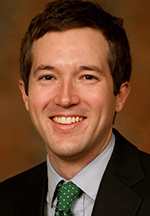
BarryHoward 130Barry Howard

While Peterson is known to many primarily for his popular Bible translation, The Message, his most significant contribution to my world has been his writings about the pastorate.

Years ago, I read three of Peterson’s books about pastoral ministry: Five Smooth Stones of Pastoral Work, The Contemplative Pastor and Under the Unpredictable Plant. In a church world that looks to the pastor to be the CEO, a chaplain-on-demand or an ecclesial entrepreneur, Peterson reminds ministers and churches a pastor is more like a spiritual director, a “soul friend” who walks alongside others, pointing out what God is doing in their life.

In a fast-paced world, where a competitive consumerist culture has invaded the church, pastors often are expected to be an idealistic combination of captivating motivational speaker, savvy executive/administrator and extraordinary counselor. But the call to be a pastor is unique. There is no other vocation like it.

Veteran pastor Hardy Clemons reminds us the church is to be “more family than corporation.” Clemons advises churches and pastors alike of the pastor’s peculiar mission: “Our goal is to minister. It is not to show a profit, amass a larger financial corpus or grow bigger for our own security. The ultimate goals are to accept God’s grace, share the good news, invite and equip disciples, and foster liberty and justice for all.”

For Peterson, the call to be a pastor is a call to spiritual discernment and caring within a unique local congregation and community. It is not a “one size fits all” occupation that functions uniformly in cookie-cutter churches.

The “pastoral intelligence” gleaned from ministry becomes a primary tool of the Spirit, which informs and inspires how pastors lead and preach to their people.

In Memoir, Peterson summarizes his understanding of the biblical role of a pastor: The pastor is “not someone who ‘gets things done’ but rather the person placed in the community to pay attention and call attention to ‘what is going on right now’ between men and women, with one another and with God—this kingdom of God that is primarily local, relentlessly personal and prayerful ‘without ceasing.’”

Each Christian is responsible to God for fulfilling calling. Forty-one years ago, I confirmed my calling to be a pastor, and I am still learning and growing and understanding more of what it means to provide spiritual direction to a congregation.

Being a pastor is more than what I do. It is who I am called to be.

Barry Howard serves as senior minister at First Baptist Church in Pensacola, Fla.


Johnson Amendment, public education, sanctuary campus, racism

Pastors, candidates & LBJ

When talking of the Johnson Amendment we should consider what was LBJ’s motive for introducing this amendment. And that was in a prior election cycle, a group that opposed his re-election apparently had support from some churches. So, what was the original intent of this law? To suppress free speech from the pulpit for personal vindictive purposes.

It was also an amendment to the IRS tax code that was not even debated on the floor of the Senate. How does that happen?

As you stated in an earlier editorial about the moral attributes of President Trump, the Christian electorate should bear responsibility for voting for a moral person, but the Johnson amendment prohibits such speech from the pulpit.

In conclusion, as I look back at the spiritual condition of our churches after the 178 years before this amendment and what it is now, your assertion that it would weaken the church I think is without merit.

Owen Whitsitt

Graham


I agree with your opinion and your points related to the repeal of the Johnson amendment. When President Trump began his campaign, he asked church leaders why they were not telling their congregations to vote for him. They explained the Johnson Amendment prohibited their ability to campaign for a candidate. https://baptiststandard.com/opinion/editorial/19965-editorial-johnson-amendment-repeal-would-destroy-church-unity
My fear is that our churches could be turned into the “German Lutheran Church” model developed by the Nazi party after Adolph Hitler became leader of Germany. 
Although my viewpoint may seem like an overly emotional opinion, let’s keep in mind the working of the devil is to confuse and attempt to destroy the church as a whole. Although the gates of hell will not prevail, it doesn't mean that persecution or travail are extinguished.
Prentiss Yeates

Lubbock


Sorry, but I don’t share the concerns you’ve outlined on the Johnson Amendment. The church in the United States did quite fine before the Johnson Amendment and would be fine if it were repealed.

By the way, this kind influence is happening today in corporate America. Political CEOs are pressuring their executive underlings to support their personal political interests, sometimes in the guise of supporting the corporate “business” interests. I don’t see anyone concerned about this issue. 

Your concern for church unity does a disservice to trivialize the unity Christians have in Christ. Christians understand we are free to make our own political choices, regardless what a pastor may support. 

Marshall Pickett 

Cypress


If pastors and other church leaders feel it is their right to endorse candidates in the church and under its auspices, they should be happy to pay their taxes in order to serve God in that way! The problem is, as you know, when they speak as the church, that implies they speak for all the members, which they certainly do not.

Of course, they are free to speak for political parties but only for themselves—maybe at a non-church function.

It almost borders on voter fraud when they speak as the church at political events.

Nelson Forsyth

Plano


Christians & public education

I have to mostly disagree with Charles Foster Johnson in defending public education, which is failing to educate using Christian principles.

Parents are overtaxed for this non-accomplishment. They should have a right to take their children to schools of their choice, or educate them at home, or in a private school using Christian concepts and more educational activities.

Case in point: My grandson in Colorado, where they have school choice, has just been accepted into a Christian high school that offers many more choices for education than the public school. Even though they have to drive every day a longer distance to take him there, to them it is worth it. My granddaughter of the same family still attends an elementary school where they both attended from the day they entered school. It was on the same property as their church at the time and a private Christian school.

Another thought has to do with the state and federal influences that control a lot of the thinking and curriculum of the public schools. Again, it is a parental right—without taxation’s loss of control—to educate their children as they see fit.

Before public schools in our national history, there was home schooling and private tutoring that produced a better-educated citizen. Universities were founded to prepare preachers and Christian businessmen. True, there were some that did not get an education, thus the desire for public education.

Principle restated: It is the duty and responsibility of the parents to see to education of their children; not the state or federal government.

Ed Stanley

Amarillo


Baylor as sanctuary

A petition at Baylor University urges the administration to make the biblical commandment for cities of sanctuary relevant in the modern context. The Bible would require that we make our cities of refuge places for murderers, not just the innocent refugees, immigrants and international students the petition requests we protect.

There are many who, when a conservative is in charge, shout out that we are to have nothing to do with government and that we must subject ourselves to whatever tyranny they suggest, since obviously God put them in charge. But this is completely forgetting the entire prophetic story of the Old Testament and the ministry of Christ.

Shadrach, Meshach, and Abednego were tossed into the fire because they refused to obey. Joshua survived assassination attempts from the political leaders. Elijah defied the new state religion and mocked their puny gods.

The influence of conservatism on Christianity has left our faith one full of Pharisees rather than prophets, who sell out our subversive faith of love for one of security.

Baylor becoming a sanctuary campus is not a matter of politics, except insofar as politics is taken to be an act of worship to God. For Baylor to become a sanctuary campus is the distinctly Christian option in this age.

Micah Furlong

Waco


Speaking of immigrants who are here illegally, I believe Baylor’s Christian faith and standards commit it to obey the laws of the land, not just the ones we like.

Joanna Berry

Corpus Christi


White folks’ burden

Ben Jealous, former NAACP president and CEO, hit the nail squarely on the head a few years ago when he said, “Ultimately, only men can end sexism, and only white people can end racism.” African-Americans have been willing to dialogue with whites on race for some time. America’s white community is the drawback keeping interracial talk from occurring.

The Republican Party is overwhelmingly made up of white people. Like it does with poverty and economic inequality, the GOP rarely, if ever, acknowledges racism still exists in our country. 

With the ball in their court now, Republicans have a golden opportunity to take the initiative to promote and begin to engage in long-overdue dialogue on race. The white church also has a big responsibility, morally and spiritually, of contributing to the dialogue process. America needs many white Martin Luther King Jrs. today.

I agree with a statement written over 50 years ago by author James Baldwin: “The Negro is the key figure in his country, and the American future is precisely as bright or as dark as his.” Dialoguing about race in America is white folks’ burden. Now is the time for us to begin the dialogue.

Paul L. Whiteley Sr.

Louisville, Ky.


Editorial: Will the Executive Board follow messengers’ votes and remove churches?

The Baptist General Convention of Texas’ Executive Board faces some serious decisions when it holds its winter meeting in Dallas next week. Will it follow the will of messengers to the 2016 BGCT annual meeting and remove churches not in “harmonious cooperation” with the convention?

knox newMarv Knox

Two votes at the annual meeting in Waco—both defining “harmonious cooperation”—provided the background for Texas Baptists’ biggest news story last year.

Most memorably, one vote drove a stake in the ground. It marked the convention’s position on one of the biggest cultural issues in the United States today—how to relate to lesbians, gays, bisexuals and transgendered people, particularly in the church.

Shortly before the annual meeting, BGCT leaders sent letters to First Baptist Church in Austin and Wilshire Baptist Church in Dallas, notifying them an affirming stance toward LGBT members would put them outside the bounds of cooperation with the state convention.

Two motions, one definition

At the annual meeting, two motions asked messengers to define what being in cooperation with the BGCT actually means.

Notably, one motion addressed First Austin, Wilshire and the LGBT issue head on. It stated, “because of the historical and biblical positions of the BGCT as stated in multiple resolutions, motions and actions, that any church which affirms any sexual relationship outside the bonds of a marriage between one man and one woman be considered out of harmonious cooperation with the Baptist General Convention of Texas.”

After numerous discussions of parliamentary procedure and a couple of attempts at voting, the motion passed. The BGCT’s legal position now states any church that “affirms any sexual relationship outside the bonds of a marriage between one man and one woman” is out of the convention.

Despite trends toward LGBT acceptance and affirmation in society and among many congregations, that is the state convention’s long-held position. Its passage—while disappointing to a little less than half the messengers—was not surprising, given the convention’s history.

Two issues to consider

However, the LGBT statement was only one of two motions about convention membership approved by messengers in Waco.

Messengers more strongly affirmed a motion that said, “the convention reserves to itself exclusively, through a two-thirds vote of its Executive Board, the authority to remove a congregation from harmonious cooperation.” That motion also defined “harmonious cooperation” as “comprised of three actions on the part of the churches—prayer, financial support of the convention and engagement in ministry of the convention.”

Consequently, the Executive Board convenes next Monday and Tuesday with two issues before it: What to do with churches whose actions affirm sexual relations outside of one man/one woman marriage. But also what to do with churches that do not pray for the convention, financially support the convention and engage in the ministry of the convention.

Will the Executive Board take the motion that defines “harmonious cooperation” according to prayer, financial support and engagement as seriously as it takes the motion about LGBT affirmation? The motion about prayer, contributions and engagement received more votes.

Tracking “harmonious cooperation”

Of course, prayer is hard to document. Can we actually know how many congregations conduct prayer on behalf of the convention? Probably not.

But money is easier to track. The numbers still are preliminary, but only about 3,200—about 60 percent—of the BGCT’s 5,300 affiliated congregations contributed to the Cooperative Program unified budget for Texas causes last year. Those figures are in line with recent years.

Engagement is harder to calculate, since opportunities for involvement with the convention are varied. But if participation at the annual meeting is any indicator, churches that don’t actually contribute to convention causes are unlikely to get points for engagement. In 2015, only 383 churches—7 percent of the total—sent messengers to the annual meeting. The year before that, 9 percent of churches were represented.

So, what will the Executive Board do?

Without question, LGBT-affirming congregations are out.

But what about non-involved, non-supporting congregations? Some are poor; many are non-Anglo. They elicit sympathy.

But through all the parliamentary hand-wringing in Waco, the messengers voted to require prayer, contributions and engagement in order to be called a harmoniously cooperative Texas Baptist church.

Perhaps the Executive Board can use the new ruling to urge churches to step up. But if not, will the new standards be applied?

Follow Marv on Twitter: @marvknoxbs


Voices: Exploring the new world in the 21st century

The late Jules Verne, author of 20 Thousand Leagues Under the Sea, called the sea the “Living Infinite.” Yet the vast waters that surround us don’t seem as infinite as they once did.

Garrett Vickrey 150Garrett Vickrey

The world is shrinking. And the increasing lack of headroom is ratcheting up anxieties. These anxieties drive support for President Trump’s “America First” mentality. A new world is emerging, and it remains to be seen how Christians will respond to the challenges ahead.

When Christopher Columbus began exploring the so-called “New World,” his discoveries caused great excitement throughout Europe. Columbus sought a western path to the far east. He found the Bahamas instead.

Similarly, John Cabot believed he had arrived in Asia when he landed in Canada, claiming land there for King Henry VII. Excitement over the possibilities of this new world began to spread throughout Europe. Expeditions were launched under the auspices of diverse flags, all wanting a piece of the new pie.

TBV stackedA whole new world

These early expeditions opened up trade in a whole new world. Ships were launched. Goods were exchanged. Poor swine-herders like Francisco Pizarro made a fortune. The business of exploration was promising enough for Columbus to leave behind his life as a weaver. But not all Europeans experienced the blessing of this new wealth. The very foundation of wealth was changing.

The medieval era was transitioning to something new. The foundation of wealth for medieval Europe was land. Kings had it; the poor worked it. The owners of land lived quite well by renting their lands out and requiring their renters to provide them with service and a share of their crops.

Suddenly, gold and silver, which had been in short supply, began flooding from the new world back into Europe, resulting in skyrocketing inflation. The economy was changing. Is there a place in the new world for old world people?

Many in today’s emerging world can sympathize. The exploration of trade routes to the East Indies has evolved over centuries into globalized world markets, remaking economies and nations worldwide. The conversation about the ramifications of globalization need to be worked out in dialogue. Right now, few of us get beyond sound bites about what this means for “workers” or “corporations.”

Some are trying to return the world to glorious eras where we know our roles. But like 16th century Europe, we know if we ignore the new world out there, it will pass us by.

Faithful engagement

How can we as faithful Christians engage this emerging world in faithful ways? Here are three elements of Christian faith that can help us in this new world.

First, recovery of the early Church’s understanding of Creatio Continua should underlay our image of God’s relationship to this world.

God is still creating. Creation is continually upheld and sustained by God’s Word through the Holy Spirit. God continually calls forth, dwells in and provides for creation. Whatever new world is emerging is still a world that reflects the image of the Creator.

Second, incarnational ministry demands that the spiritual practice of empathy be given significant space within the liturgy of the church.

Life in the digital age provides too much space for empathy to dwindle. There is a great chasm formed between what we see on screens and what we feel. We protect ourselves from the emotions of others.

Christ came to dwell with us. To feel what we feel. We must do the same. We must practice empathy. We must, as the hymn encourages us, “Let our hearts be broken for a world in need.”

Finally, we always must keep the vision of the New Jerusalem before the eyes of the world.

The failure of our imaginations keep us locked into imitations of previous failures. How can Christians in the 21st century help the world grasp images of God’s new creation?

Harmful outsourcing

Far too many churches have outsourced the work of social transformation to the political realm. Too many churches have hedged their bets that simply putting “the right kind of Christians” in powerful political roles will create a more sympathetic environment for people of faith. This cloaked identity politics needs a refresher in the much-maligned doctrine of original sin. G.K Chesterton once quipped that original sin is “the one Christian doctrine that is empirically verifiable and validated by 3,500 years of human history.”

People of faith know their frailty. Often, we fail to espouse our corporate infirmity. Yet even in our sickness, the health of God’s new creation is found. Here, there, every now and again, God’s kingdom bursts forth in beloved communities where the hungry are fed, the naked clothed and the stranger is welcomed.

Churches need not bless everything that comes with the dawn of a new era. There is a time for resistance when the dehumanization of certain people groups becomes normative through political talking points, when fear is lifted as a virtue and greed revered.

We find ourselves again in fleets of small vessels cast out upon the “Living Infinite,” crossing toward some great unknown. But like Jesus’ first disciples, we must never forget the One who is on the boat with us.

Garrett Vickrey is senior pastor of Woodland Baptist Church in San Antonio.


Voices: In these political times, protect your soul

Take a deep breath. This is my advice to Christians.

No matter what side you are on politically, we can all agree this has been a crazy last few weeks. Executive orders and protests have dominated the news, and every publication is filled with thinkZac Harrel 175Zac Harrel pieces and analysis of what is happening.

This ultimately is a good thing. As Christians, we need to be informed about what is going on, and we need to stand for truth in the public square. There needs to be wise and biblical analysis about what is going on. We must be involved.

But we should also be careful not to ignore our own spiritual lives. We must be careful that in seeking to gain the political world we don’t lose our souls in the process.

When we are consumed by political news and every breaking news story about the next order or the reaction to it, we run the risk of allowing politics to become our idol. The danger is to allow The New York Times or Fox News or talk radio—rather than God’s word and time spent in silence and prayer—to form our hearts.

TBV stackedHeavenly citizenship

In calling us to remember our heavenly citizenship, Russell Moore said, “We are Americans best when we are not Americans first.” The same idea should be applied to our daily intake of news and political information. We are informed best when we are not informed by the news first. Only out of the overflow of time spent in prayer and with the word of God should we come to the news of the day. Only out of a heart formed by time spent with our Father should we speak, write, tweet or comment.

God’s word reminds us all people are created in the image of God, calls us to compassion toward one another, and reminds us our hope is not in executive orders or in opposing these orders. Silence and prayer allow us to focus our hearts and minds on God and his will, to turn off the noise of the world and hear God’s voice.

Therefore, sometimes, we should step back from politics and the minute-to-minute nature of political coverage. The world will keep spinning if we miss a news cycle or if we don’t weigh in with our thoughts. Take a day off from reading the news. Spend the day in prayer and reading Scripture. Take a walk, see a movie, engage in conversation that has nothing to do with President Trump. Take a month off from social media and Internet click bait. Read a book, invest in your marriage or a new friendship, and find a place to make a tangible difference in your community.

Souls need a break

Our souls need a break from the perpetual outrage.

I am not calling for Christians to pull back completely, and I am not asking for you to be uninformed. We should watch the news. We must subscribe and support publications that are seeking to do good journalistic work. Christians should not separate from the wider culture, and we especially should be involved in politics locally, statewide and nationally as we seek the common good.

But politics must not run our lives. It must not dictate the way we think about and treat others, and it must not leave us in despair.

Take care of your soul first. Your greatest need is to know God, to be known by God. When politics gets in the way of seeking God through prayer, through Bible reading, through relationships with other people, it has become an idol. We are in grave danger of making this political moment an idol that will divide the church.

Jesus tells us, “Seek first the kingdom of God” and teaches us all of the commandments boil down to loving God and loving our neighbor. Do our current intake of news and our current conversations about politics help us love God and our neighbor well? Do they show we are pursuing the kingdom of God above all things?

Maybe we need to take a break. Maybe we need to step back. Maybe we don’t need another think piece about the Trump administration this exact moment. Maybe we need to turn off our phones, log off social media and seek the face of God first.

Zac Harrel is pastor of First Baptist Church in Gustine, Texas.


David Ritsema: ‘I am not ashamed of the gospel …’

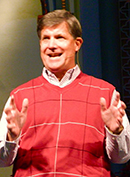
David Ritsema has been pastor of First Baptist Church in Waxahachie almost five years. He also is a resident fellow, professor in New Testament and governor of the B.H. Carroll Theological Institute and an adjunct faculty member in Dallas Baptist University’s Graduate School of Ministry.

From deep in the heart of one Texan, he shares his background and thoughts on church and ministry. To suggest a Baptist General Convention of Texas-affiliated minister to be featured in this column, or to be featured yourself, click here.

Background

Where else have you served in ministry, and what were your positions there?

Lead pastor, Woodlawn Baptist Church, Austin, 2007-12

Senior pastor, Oak Knoll Baptist Church, Fort Worth, 2003–07

Senior pastor, North Waco Baptist Church, Waco, 2002-03

Senior pastor, Mosheim Baptist Church, Mosheim, 2000-02

Children ministry associate, Green Acres Baptist Church, Tyler, 2000

Youth evangelism, 1999

Youth intern, Green Acres Baptist Church, 1998

Youth minister, First Baptist Church, Gresham, 1997

Where did you grow up?

The East Texas town of Big Sandy, near Tyler—under the shadow of Green Acres Baptist Church with pastors Paul Powell and David Dykes

How did you come to faith in Christ?

I made a profession of faith at 6 years old when attending Sunday school and was baptized. However, my parents subsequently dropped out of church, only rarely ever attending, thereafter. I did not start regularly going to a Baptist church until college.

Where were you educated, and what degrees did you receive?

Doctor of philosophy in New Testament, B. H. Carroll Theological Institute, dissertation thesis: The Divine Messiah: A Portrait of Jesus in the Johannine Literature, 2011

Post-grad, Regent’s Park College, University of Oxford, 2008

Master of divinity in theology, cum laude, George W. Truett Theological Seminary, 2002

Bachelor of arts in Christian ministry, magna cum laude, East Texas Baptist University, 2000

No degree, Tyler Junior College, Tyler, 1995-1998

Ministry/church

Why do you feel called into ministry?

My senior year of high school, I attended classes at Tyler Junior College, so I could graduate a semester early. After I finished, I kept taking classes, and the next semester, I met a girl in my physics lab who invited me to church, Green Acres Baptist in Tyler, and also to the Baptist Student Ministry. I got involve in both, and the next semester the BSM asked me to be the president.

I spent the summer interning at East Texas Medical School in the area of my major, computer science, and realized I did not want to do that. When school started again in the fall of 1997, I went with other students from the BSM to Focus, and while Dave Busby was preaching, I was praying with my Bible open to Romans 1:16. I closed my eyes, and I could see a dimly lit valley with hurting people in it and a cross in the distance. I heard God say to me, “Will you help me help those people?” I saw “the hand of God” waiting for me to respond, and I stood and went down to the front for the invitation and surrendered to the ministry.

What is your favorite aspect of ministry? Why?

At first, my favorite part of ministry was just being with people. The scary part was that I was responsible for teaching God’s word. The responsibility of that drove me toward education. However, today, one of my favorite parts of the ministry is to spend hours digging into God’s word and learning the background. Plus, there is nothing more exhilarating than standing before God’s people to deliver an impassioned and well-prepared presentation of the gospel.

What one aspect of congregational life gives you the greatest joy?

Seeing a person’s life transformed, and then watching over time as they grow into maturity in their faith.

What one aspect of congregational life would you like to change?

I’d like to see more of our people committed to deep discipleship. (Heck, it would be nice if they showed up on Wednesday night for Bible Study.)

How has your ministry or your perspective on ministry changed?

It changes all the time—sermons now have videos, images, handouts—but one thing that has remained the same is my commitment to making a big deal about the preaching and teaching of God’s word.

How do you expect congregational life to change in the next 10 to 20 years?

That depends a lot on what happens in our culture, from Hollywood to Washington, D.C. I expect some major cultural transforming event will happen that will jar society back to a need for God—or else farther from him. I would predict that within 20 years, we will see an influx of young people back to church/God. However, the world’s religious voice will increasingly come from Africa, South America and Asia.    

If you could launch any new ministry—individually, through your congregation or through another organization—what would it be? Why?

This is not novel, but I’d love to see a nice coffee shop in our church. Beyond that, I want to develop a ministry that connects young people with a relevant understanding of the Christian message—and how to articulate that within our world.

What qualities do you look for in a congregation?

Dynamic worship, preaching and teaching.

Name the three most significant challenges and/or influences facing your congregation.

Other churches that tend to monopolize demographics by catering to specific interests.

The long historical tradition of the church its members find pride in but outsiders see as an obstacle to assimilation.

And the natural tendency of church members toward inaction when it comes to evangelism.

What do you wish more laypeople knew about ministry or, specifically, your ministry?

I wish people “knew”—or better “appreciated”—the enormous financial sacrifices that ministry continually brings—not so much the idea that a pastor is not paid enough (I think most pastors are paid pretty well), and a lot of them have a nice car or a nice house. What the layperson does not understand (I know for me particularly) is that I am ready to give that up at any point (and probably will) for a gospel-centered cause. A pastor’s heart and treasure are with the Lord, not with that stuff.

For example, I don’t have a college fund for my kids (and, man, are they going to need one) because we are giving every extra dollar we make (including me working two side jobs, and my wife working another) to give to our church’s building campaign. I don’t think anybody else knows that, and I seriously doubt anyone is more financially and personally invested to the point of real sacrifice than we are.

Frankly, I have turned down great opportunities to go to much larger churches because I am so deeply invested in the success of the ministry here. I wish people would remember that when they decide to send a trivial email or quip about some unimportant issue.

About Baptists

What are the key issues facing Baptists—denominationally and/or congregationally?

The historical challenges of Baptists have never really changed much—polity, interpretation of the Bible, Calvinism versus Arminianism. Since Baptists never really defined themselves early on but developed their views over time—even believer’s baptism was not initially by immersion—coupled with the fact that Baptists developed a reputation for division, it is always going to be hard for Baptists to co-exist with each other.

Now, if we can figure out a mission project that we all agree on, we might have a truce for a few decades.

To me though, the simple answer to your question is the interpretation of the Bible. I think the single greatest Baptist theological question today is: Is the Bible’s ancient message still God’s word for today, or does modern man know better? For example, if the Apostle Paul prohibits porneia—the NIV translates it as “sexuality immorality” multiple times and includes all forms of sex outside of marriage between a man and a woman—does that prohibition stand for us today, or can the modern Baptist pastor say, “I know better than Paul!”

What would you change about the Baptist denomination—state, nation or local?

I would push the reset button and get Baptists back together. I would, frankly, scrap the name “Baptist” for any denominational identity and move to include churches that do not define themselves as “Baptist” but are in fact within the same theological stream of thought, especially many non-denominational churches. Baptists ought to remind themselves sometimes that the Bible never says we have to call ourselves “Baptists.” In fact, that might be label affixed upon us by our critics and no longer relevant to our worldm especially outside the United States in places like Russia and China, where I have talked to missionaries and leaders who constantly make this suggestion.

About David

Who were/are your mentors, and how did/do they influence you?

My first mentor was my Baptist Student Ministry director, Mark Jones. Several guys at Green Acres helped a lot, including a layman named Jeff Phelps and a youth minister named Bob Billups. Directly and indirectly—through his sermons, especially the ones on tape—the pastor at Green Acres, David Dykes, was and is the most continuous mentor in my life. His predecessor was a beloved mentor of mine, Paul Powell. Paul came to Truett when I was student there and became a dear friend, preaching for me several times at all my churches and doing revivals. He was my job reference and the source of almost every bad joke I ever told. I will cherish his memory and our friendship to the day I die.

Living in Austin, Ralph Smith, the longtime pastor of Hyde Park Baptist Church, became a mentor. The faculty at Truett Seminary and B. H. Carroll were also mentors, especially Bruce Corley.

I’ve had so many great mentors in my life—men who have poured into me their time, honesty, energy and passion for the Lord. I would not be who I am without them. I would encourage every young pastor to get a mentor—or two or three or more.

What did you learn on the job you wish you learned in seminary?

My first year of seminary was my first year pastoring. My much older pastor friend at First Baptist Church in Pineland wrote to me while I was pastoring. I told him how things were not going well—the chairman of deacons did not like me, the church had many conflicts, they had not baptized a person in many years, but someone they all knew better than I did. I told him I was surprised at how awful, ugly, mean, vicious and vulgar church people were. He wrote back to me and said, “David, sooner or later in your ministry, you are going to find out that people are really no d–n good!” (His words not mine, since I don’t use vulgarity). His honesty, however, is perhaps the truest statement I ever discovered in ministry.

My job—to work with people whose lives are all screwed up but who come to church in hopes of finding something that will help—is not an easy one. Paul Powell told me: “People have enough problems in their life. When they come to church, they don’t need any more.” I wish I learned earlier that I can’t fix everyone’s problems, but I can keep from making more of my own, and no matter how hard I try, people are still going to need fixing.

 What is the impact of ministry on your family?

I married up. It’s true. My wife loves the church; she loves ministry; she loves my preaching—really; she loves her family going to church. I suppose if she didn’t, I wouldn’t do it anymore. My kids don’t always want to leave their iPads and listen to a sermon, but they enjoy and appreciate what they get out of church.

In our family, church is fun, but it is also important. The impact of ministry on my kids is that they don’t always have dad at 100 percent, but they have a dad who gives 100 percent to them and to the Lord. I sincerely believe my kids will look back on their youth and say they loved their dad being a preacher.

Name some of your favorite books (other than the Bible) or authors, and explain why.

Early on, I always loved mysterious novels, history, autobiography and literature akin to J.R.R. Tolkien. I loved the world he created and the way in which he showed the evil of evil and showed the path to triumph through the power of weakness.

I love reading the biographies of preachers. Recently I have read or reread George W. Truett’s biography, B.H. Carroll’s and Jay Frank Norris’. Those stories are full of real life and real ministry. Also, I have also read the biography of the early Baptist pastors William Carey, Andrew Fuller, Charles Spurgeon. I have read the biography of almost every important Christian leader in history. I did most of that before I came to seminary. I keep adding on, though—a new biography of Dietrich Bonhoeffer; which, by the way, I like anything Eric Metaxas writes. I don’t read a lot of fiction but do sign up for reading retreats periodically and catch up on all the latest Pulitzer Prize-winnings pieces in all genres, but especially children’s fiction.

Most of my reading is the area of my Ph.D., which is in New Testament and biblical studies. I keep up on all the current material about “the Messiah” in the Dead Sea Scrolls, messianism, Judaism, and stay on top of Johannine studies. I read voraciously, especially in these areas—several books a week; sometimes more than one in a day. Recently, my review of an academic book was published in the Review of Biblical Literature. I have another one I am going to complete in the next few months. I don’t just read for fun, or to preach, or to teach, but I also read to publish and regularly present at academic guild meeting. Last year, I presented with N.T. Wright at St. Andrews University in Scotland.

• What is your favorite Bible verse or passage? Why?

Romans 1:16 is the most important verse in my life because it was the text that started me on this path into ministry—the haunting question in my mind was, “Am I ashamed of the Gospel?” I decided that for the rest of my life I would live the gospel out loud.

Before that, I would have said Philippians 3:10, which was the first verse that ever really haunted me. In my high school days, I found myself walking the aisle of a church one night, weeping and begging God that “I might know him and the power of the resurrection.” Since then, Paul’s mission statement in Acts 20:24 is important to me, especially when I have to decide on moving to another church or going into a dangerous mission.

Who is your favorite Bible character (other than Jesus)? Why?

Paul, duh! No, I would say the early disciples of Jesus stand out as most significant. Certainly, Peter ranks at the top. However, I am a big admirer of John’s Gospel and the hero of that story, besides Thomas, is Mary Magdalene. I feel sometimes like I am closer to her than I am to the others. I, too, want to hold on to Jesus—especially when I am close to a tomb.

Name something about you that would surprise your church.

I don’t like the taste of cigars or whiskey, but I love dark, red wine. In fact, my retirement dream is to own a vineyard. See John 15.

If you could get one “do over” in ministry, what would it be, and why?

I have only one moment I wish I could redo. I got a mad at a person who deserved it, but I should never have sunk to depths. A wise pastor told me, “A bulldog can whip a skunk, but it’s not worth the stink!” That’s a lesson I learned the hard way.

Where do you get your sermons from?

The first time I met one of my mentors—a man who pastored one of the largest churches in Texas—he said to me, “Where you do get your sermons from?” Whenever I meet a young pastor, that is my first question, too. I then tell that story, and it starts a conversation. One of the odd things happening nowadays in the preaching world are people who accuse preachers of stealing sermons from others, which I suppose there is some of that, but I think there is greater problem—a dearth of good sermons worth stealing!


2nd Opinion: Politicize our churches? No, thanks

America’s charities, including houses of worship, receive special tax treatment, given their unique and historical role in our society to serve the public interest.

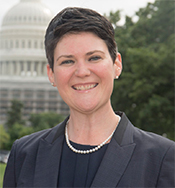
Amanda Tyler 175Amanda Tyler

In return for that most-favored tax status, all 501(c)(3) organizations must follow certain rules. Among them, nonprofits are prohibited from engaging in partisan campaigns. President Trump’s pledge to “get rid of and totally destroy” this rule attacks the integrity of both our charitable groups and campaign finance system, with potential for great harm for houses of worship.

Changing the law is not about protecting free speech.

Preachers can and do speak out, including from the pulpit, on any issue, and houses of worship may advocate for moral and ethical positions. Pastors and other church leaders, as individuals, can participate in the electoral process as much as they wish, as long as tax-exempt church resources are not used and it is clear the pastor is acting in an individual capacity. And if a church really wants to wade into the political morass by intervening in an election, it can give up its charitable tax designation.

Prophetic witness hindered

But beware, for as soon as the church joins at the hip with a particular candidate or party, its prophetic witness—its ability to speak truth to power and not risk being co-opted by the government—is hindered. The credibility and integrity of congregations would suffer with bad decisions of candidates they endorsed.

There has been no outcry from the grassroots for a change in the law. To the contrary, overwhelming majorities of Americans are opposed to pastors endorsing or opposing candidates from pulpits. In a survey released by the evangelical LifeWay Research last year, eight in 10 people said it is inappropriate for pastors to endorse a candidate in church. Clergy members as a group are even more against the idea, with nearly nine in 10 opposed when LifeWay Research asked previously.

Why is this idea so unpopular? Inviting churches to intervene in campaigns with tax-deductible offerings would fundamentally change our houses of worship. There is no incentive for a pastor to alienate parishioners with candidate endorsements. For people in the pews, their reasons for going to church most likely do not include the need to hear another political campaign ad.

Churches not immune

Churches are not immune to the well-documented trend of self-sorting over political views, but turning churches into arms of a political party—having a “First Democratic Baptist Church” and a “First Republican Baptist Church”—would have a detrimental impact on our houses of worship and civil discourse.

It is not yet clear how President Trump plans to eviscerate this protection in the law. Presumably, he will need to rely on Congress.

One bill recently introduced would not “totally destroy” the statute but change it in troubling ways, permitting charitable organizations to campaign in the ordinary course of activities and in furtherance of their purpose if incurring minimal costs. For those concerned with government regulation, these standards should raise red flags—they invite IRS scrutiny to determine whether the speech is in line with a group’s purpose and to examine financial accounts to calculate a percentage of funds spent on politics.

The church has proved itself to be an agent of change without acting like a PAC. During debate in the House of Representatives on this issue nearly 15 years ago, Rep. John Lewis of Georgia—who stood alongside Martin Luther King Jr. during the civil rights movement—gave a powerful testimony.

“The church was the heart and soul of our efforts because ministers had the moral authority and respect to stand against immoral and indefensible laws,” he said. “At no time did we envision or even contemplate the need for our houses of worship to become partisan pulpits.”

Politicizing churches is not a solution to a problem. It is a problem in search of a problem. Churches are not political committees, nor should they be.

Amanda Tyler is executive director of the Baptist Joint Committee for Religious Liberty. Religion News Service distributed this column.


Guest editorial: Being the church

Not long ago, a friend asked the question: “When is a time you felt lonely, confused, hurt or angry, and it was the church that saved or helped you?” As I considered my answer, several memories came to mind:

• The day we had a miscarriage, and our pastor and spouse came to our house and held our hands and cried with us. They didn’t try to say the right thing. They hugged us, cried with us, told us how sorry they were and how sad it was. Then they bought dinner and brought it back to the house for us.

• The day my brother died. I was living 2,000 miles away, and my husband was traveling home from out of the country and was unreachable. A good friend just happened to call me minutes after I got the call about my brother. When I told her what had just happened, she stayed on the phone with me for over an hour, and she and her husband helped me make the travel arrangements to get us across the continent, including arranging for a car for us once our flight landed. 

• When going through a particularly difficult time with a child, a friend texted with dates for us to choose when she would stay with our kids and give us a night away.

• When our preschooler broke his arm, we arrived home from the hospital to a couple from our church waiting on us with dinner for our family.

• Upon learning that we had just received devastating news, our pastor drove until he found us walking in a nearby park. We looked up to find him walking toward us with ice cream for each of us in his hands. We walked and cried and ate together, talking some but mostly just being together in the grief. 

“Church” = individuals

Each of these times, the “church” was individuals. And their help was just that—real help and caring presence. It wasn’t Scriptures or prayers or theological interpretations of our circumstances. It was love in action. Practical help. Showing up. Being God’s hands and feet for us at some of our most difficult times. Doing and being more than talking.

And the only actual words that mattered on those days were the ones we heard from these divine visitors: “I love you,” “God loves you,” and “I’m so sorry.”

If the church is called to anything, isn’t it primarily to this? To be the ones who show up, who step up, who put love into action? 

There is a time for sermons, for teaching and even for programs—but the church is called to presence, to service, to prophetic action. Being the church means being the church. Caring for practical needs, being present with those whose hearts are broken, and showing up for those who don’t even know how to ask for what they need. We do that for each other. Sometimes quite well.

What about others?

But what about those outside our walls? What about those outside our borders?

“Then the king will say to those at his right hand, ‘Come, you that are blessed by my Father, inherit the kingdom prepared for you from the foundation of the world; for I was hungry and you gave me food, I was thirsty and you gave me something to drink, I was a stranger and you welcomed me, I was naked and you gave me clothing, I was sick and you took care of me, I was in prison and you visited me.’ Then the righteous will answer him, ‘Lord, when was it that we saw you hungry and gave you food, or thirsty and gave you something to drink? And when was it that we saw you a stranger and welcomed you, or naked and gave you clothing? And when was it that we saw you sick or in prison and visited you?’ And the king will answer them, ‘Truly I tell you, just as you did it to one of the least of these who are members of my family, you did it to me’” (Matthew 25:34–40).

It’s not hard to know these days what the implications of this passage are for the church. God calls us to be the physical presence of Christ in the world by literally caring for the hungry, thirsty, naked, imprisoned and the stranger. How could we possibly think this means only our sisters and brothers in our church and not the refugee, the immigrant, the homeless and the prisoner?

God, help us

God, help us to be your church to the world—not just to each other. May we pray—yes, Lord, may we fervently pray for our nation, for our world, for the refugees seeking safety, shelter and peace. But may we also put our prayers into action by showing up practically for the immigrants and refugees already in our midst and by using our voices and citizenship to “show up” for those still seeking refuge. 

God, help us to work out our own salvation by being part of theirs. For Christ’s sake and in his name.

Amen.

Amy Derrick is a consultant with the Center for Healthy Churches.


Commentary: Christ, not America, first

Jesus never ran for office.

Jesus never endorsed a political candidate.

Jesus never voted.

Jesus never pledged allegiance to a flag, country or ruler.

Through his entire life and ministry, Jesus was notably absent from involving himself in the political systems of his day. Why? …

Read the entire article at Sojourners.


Voices: What is truth? From ‘spin’ down to ‘alternative facts’

Jesus said, “Everyone on the side of truth listens to me,” to which Pilate retorted, “What is truth?”

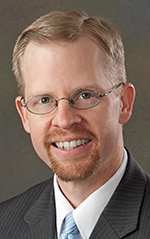
eric black150Eric Black

Indeed, what is truth these days?

What used to be called “spin” has now become “post-truth” and “alternative facts.” Some might say the change in terminology reflects transparency, the willingness of purveyors of spin to be more honest now—although not entirely honest—about what they actually are doing. Let’s humor this idea for a moment.

Three terms

Consider my definitions:

“Spin” puts the best face, the most positive light, on the facts at hand.

“Post-truth” suggests the truth is no longer necessary in reporting the facts at hand.

“Alternative facts” are ideas offered as a substitute for the facts at hand.

TBV stacked“Spin” is the most playful and positive of the three and requires a real craftsman—an “alternative fact” term for “liar”—such as Deputy Mayor Mike Flaherty in the sitcom Spin City. “Spin” used to be good for a laugh.

“Post-truth” is the most nihilistic of the three. “Post-truth” is a bald admission that although truth exists, we don’t care about it anymore. We are more interested in what is true for us, in what works for us, in what we want people to think or know. There is nothing funny about post-truth.

“Alternative facts,” well, that phrase is simply an oxymoron, which actually makes me laugh quite a bit. Similar to “post-truth” in acknowledging the existence of facts—facts being those objective things on which most reasonable people can and will agree—the phrase “alternative facts” and those who use it suggest reasonable people are in fact stupid and don’t know the difference between “actual” and “alternative.”

Be warned

Notice: All three are responses to the facts at hand. All three are used only when one set of facts puts the powers-that-be in a negative light. They never are used when the actual facts—notice the redundancy—bode well for the powers-that-be.

Here’s the truth: I don’t offer the preceding thought experiment merely as an experiment. I offer it as a caution.

Another caution: Don’t let the attractiveness of power, wielded by whomever, seduce you into becoming a purveyor of “spin,” “post-truth” or “alternative facts.”

Believe me, power is seductive, and the tactics of the powerful are very attractive. Lord knows, I’ve been enticed.

Jesus said, “Everyone on the side of truth listens to me.”

Lord, help me listen to you.

Eric Black is pastor of First Baptist Church in Covington, Texas, and a member of the Baptist Standard Publishing board of directors.


Editorial: Johnson Amendment repeal would ‘destroy’ church unity

If you think America’s churches have a tough row to hoe now, just wait until President Donald Trump “destroys” the Johnson Amendment.

knox newMarv KnoxThe 1954 law—named for then-Senator Lyndon Johnson—is part of the federal tax code. It prohibits tax-exempt nonprofit organizations—including churches, synagogues and mosques—from endorsing political candidates and “directly or indirectly” participating in their campaigns.

The Johnson Amendment has been the target of politicians and preachers who want to politicize pulpits. They may not own up to that fact, but the truth is they want to leverage the voting mass of congregations to turn elections in their favor. They lust for two particular powers—the ability of the clergy to direct the political clout of the faithful by telling them how to vote, and more insidiously, the ability of kingmakers to funnel cash to political campaigns through church coffers.

On the surface, repealing the Johnson Amendment might sound reasonable. Shouldn’t pastors and other clergy be free to speak their consciences? Shouldn’t they possess the right to preach prophetically on politics?

President Trump played on that theme at the recent National Prayer Breakfast. “I will get rid of and totally destroy the Johnson Amendment and allow our representatives of faith to speak freely and without fear of retribution,” he said. “Freedom of religion is a sacred right, but it is under serious threat.”

The president played to his base, but the overall approach is problematic, for several reasons.

Inaccurate description

First, it’s just not an accurate description of the situation.

Freedom of religion is not threatened by the Johnson Amendment. Churches are free to worship however they please, and preachers are free to pound their pulpits on behalf of whatever politicians they choose.

But legally—and the law rarely is enforced—they just can’t claim tax-exempt status if they decide they’d prefer to be political. This is part of a longstanding social contract between our society at every level of government and nonprofit organizations, including congregations.

Nonprofits don’t have to pay taxes, but the fire department shows up when their buildings blaze, and police come to provide protection when they need it. In return for government services for which they do not pay—and the rest of society picks up the tab—they have agreed not to engage in politics.

Your preacher can politicize the pulpit as long as you’re willing to forego tax deductions for your tithes and offerings.

Disastrous results

Second, and more importantly, the change would be disastrous for church unity and Christian solidarity.

If the law were to change, and pastoral political endorsements became the norm, churches would become political battlegrounds. Although denizens of the extremes always seem surprised to learn this, most congregations are home to participants in both political parties. They stay together through love, focus on ministry and, usually, careful avoidance of inflammatory political speech.

But what if pastors started telling parishioners how they should vote? Churches would split asunder. Prospective members would start asking about party affiliation. We’d have Republican churches and Democratic churches, and denominations would be fractured further.

Ripped to smithereens

Third, the reputation of American religion—tattered already—would be ripped to smithereens.

This would accelerate when churches started funding political campaigns. Because of laws separating church reporting requirements from other political operations, churches would become the ultimate and preferred mechanism for channeling “dark money”—unaccounted sources of revenue—to political campaigns. And when—not if—the government comes in to clean up the mess, houses of worship would be scrutinized as never before.

All that activity would further confuse the relationship between politics and faith. And it would cause dubious outsiders—the very people believers should be trying to reach with the gospel—to question the sincerity of Christians and to chalk church activity, particularly fund-raising, up to greed, power and hypocrisy.

Unintended consequences

Fourth, destruction of the Johnson Amendment probably wouldn’t result in the intended effect desired by its detractors.

That’s because politics cuts multiple ways. Most of the energy for repealing the amendment comes from conservative evangelical Republicans. But many African-American churches and Jewish synagogues and Muslim mosques can play that game, too. And they tend to vote Democratic.

So much for a conservative financial juggernaut.

Bad for everybody

Fifth, repeal of the Johnson Amendment would be bad for everybody—not just congregations, but the nation as a whole.

“Religion has flourished in the United States as nowhere else in the world precisely because the government has—for the most part, at least—stayed out of the religion business, and vice versa,” Randall Balmer, chairman of the religion department at Dartmouth College, wrote in the Los Angeles Times.

“Despite the religious right’s persistent attempts to circumvent it, the First Amendment is the best friend that religion ever had,” Balmer stressed. “It ensures that there is no established church, no state religion, and that religious groups can compete for adherents on an equal footing. Evangelicals, by the way, have historically fared very well in that free marketplace.”

So, if you think the president’s plan to “destroy” the Johnson Amendment sounds good and big-time preachers’ cries for “religious freedom” sound reasonable, think again. Religious liberty demands thoughtful separation of church and state, not a quickie marriage of politics and pulpits.

Editor’s note: For responses to President Trump’s proposal from the Baptist Joint Committee on Religious Liberty and the Texas Baptist Christian Life Commission, click here.

Follow Marv on Twitter: @marvknox


Voices: Lessons I learned from my grandparents about religious liberty

My grandparents were extraordinary people. I wish you could have known them—my maternal grandparents in particular.

James Hassell 150James Hassell

Grandad Hanna was born and raised near Canadian, Texas, and Grandma was reared on a cotton farm outside of Gould, Okla. They were hard workers and had the scars to prove it. Grandad basically was kicked out of the house after high school graduation and wound his way to the Santa Fe Railway yard in Amarillo. There he found Grandma working at the phone company.

The rest is history. They never left Amarillo until they went to heaven and were faithful at Buchanan Street Baptist Church and then First Baptist Church.

I learned a lot about practical theology from the Hannas. I played at their house every Thursday afternoon before kindergarten interrupted the routine. Weekly visits continued, however, until I left for Hardin-Simmons University. Grandad taught me how to fish, tinker with things in the garage, keep a nice yard, play baseball, develop a love for country music, grill a mean hamburger and pull pranks. It was Grandma’s and Grandad’s course in theology that stuck the most.

TBV stackedMemorable theology

Here are a few of the more memorable teachings:

Treat people fairly by taking turns.

Don’t hit, but stand up to a bully.

Be nice to enemies, and if they don’t want to be friends, still be nice.

You don’t have to yell and pitch a fit to prove a point.

Be committed to the church, and get yourself to Sunday school and worship unless you’re sick.

Give food to the hungry by volunteering your time to do so.

Be a good citizen by voting and committing to education.

Give away most of your saved-up money, and take care of your family with the rest. The money is God’s anyway.

Laugh at yourself whenever possible.

Greet people with a smile and a handshake, never speaking of yourself.

Enjoy the outdoors, because God created it all.

And hard times will pass.

Religion and politics

These teachings are just the tip of the iceberg. I could go on a while, but perhaps one of the most important lessons had to do with religion and politics. Yes, we talked about these two things at their house. They weren’t bashful. In fact, I think they would be appalled and outspoken about some of the political problems in our nation today, as well as how those problems have spilled over into some of our churches.

Specifically, they would have balked at both the state trying to increase its control over people and the church attempting to co-opt the freedom of conscience for anyone in our country who is not a Christian. Religious liberty is not liberty when someone has no freedom to worship according to the dictates or his/her conscience.

Keep in mind my grandparents were some of the most patriotic people I ever met. Grandad grieved until his death that he could not go overseas in World War II because a blood disorder kept him from the armed forces. His war service, however, was to drive trains.

Defending freedom

They knew it was patriotic for them to defend the freedom of others who were different than they were. Patriotism did not include wrapping a cross in our churches up in a flag. Both biblical and historical evidence show that when we lessen the tension between church and state, every citizen loses, especially those in the minority. When the tension is pulled too tightly, we snap.

Therefore, let’s take a lesson from the Hannas in Amarillo.

Don’t hit, but stand up to the bully who wants either to keep the church out of the state or to make the state into the church. Stop all the yelling in order to prove your point. Get back into a church that wants to make disciples of the kingdom of God, not the kingdom of America. Give, vote, educate yourself and our kids, greet, laugh, enjoy our land. And remember, these hard times will pass.

James Hassell is senior pastor of First Baptist Church in San Angelo.