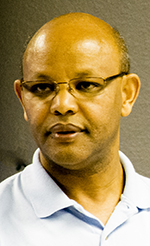
Bob Roberts: The church must engage the world

Editor’s Note: The Baptist Standard is pleased to launch a new ongoing column, “Deep in the Hearts of Texans.” It’s a place where Texas Baptists can get acquainted with pastors from across the state and across the spectrum of age, race and ethnicity, church size, ministry style, gender and pastoral focus. Enjoy and be enlightened …

Bob Roberts is the senior pastor of Northwood Church, which he planted in Keller, a now-booming community just north of Fort Worth, 31 years ago.

Northwood focuses on being a “glocal”—global + local—congregation. “We feel it is important for our members to take their faith outside our church walls and to make an impact for Jesus Christ in our community and around the world,” the church’s website proclaims. “We serve others using our jobs, our skills and our passions.”

Roberts provided the first set of answers for the Baptist Standard’s “Deep in the Hearts of Texans” column:

Personal

Where else have you served in ministry, and what were your positions there?

I was a youth evangelist and pastor of a church while going to seminary.

Where did you grow up?

East Texas

How did you come to faith in Christ?

My dad was a pastor, and at the age of 13, I did so hearing him preach.

Where were you educated, and what degrees did you receive?

Bachelor of Arts, Baylor University

Master of Divinity, Southwestern Baptist Theological Seminary

Doctor of Ministry, Fuller Theological Seminary.

Why do you feel called into ministry?

I believe I was created to bring hope to people, and there’s not a better way you can do that than by being a pastor.

What is your favorite aspect of ministry? Why?

Leading someone to faith in Jesus—because it changes their eternity and their present.

Ministry/church

What one aspect of congregational life gives you the greatest joy?

More than anything, I like leading the church to effectively engage its city and the world.

What one aspect of congregational life would you like to change?

Church has become a Sunday event instead of something that people live out daily.

How has your ministry or your perspective on ministry changed?

It is always changing. I remember when I started, it was only about getting people “saved” and then “discipled.” And then I discovered the concept of the kingdom of God, and that changed everything for me. Then I discovered the world and how to connect the church and the world.

How do you expect congregational life to change in the next 10 to 20 years?

Churches will be smaller, more focused, more relational. Evangelicalism as we know it today will not exist. That’s not bad; it’s actually good.

If you could launch any new ministry—individually, through your congregation or through another organization—what would it be? Why?

I would take what we’ve done at Northwood and teach churches to engage their cities, multiply churches and relate in the public square.

What qualities do you look for in a congregation?

The ones that I’m teaching!

Name the most significant challenges and/or influences facing your congregation.

Not allowing political rhetoric to shape our theology or response to others. Money.

What do you wish more laypeople knew about ministry or, specifically, your ministry?

How to engage the world.

About Baptists

What are the key issues facing Baptists—denominationally and/or congregationally?

The single biggest issue is knowing how to combine the concepts of the kingdom of God on the earth with humanity. Our theology in terms of missions and the priesthood of believers is good—our practice not so much.

What would you change about the Baptist denomination—state, nation or local?

Turn every church into the missions agency and help every church multiply churches.

About Bob

Who were/are your mentors, and how did/do they influence you?

Doug Coe, National Prayer Breakfast—focus only on Jesus

Jim Hylton, a pastor—be open to the Spirit and the kingdom

Leighton Ford, a Presbyterian pastor—be a healthy person

Bobb Biehl, executive mentor—management

Bob Buford, entrepreneur/author—dream big

What did you learn on the job you wish you learned in seminary?

What the world is like, how mean Christians can be and how a few people can stop everything.

What has been the impact of ministry on your family?

Our family did good in the ministry. I grew up in a preacher’s home, and I think that prepared me.

Name some of your favorite books (other than the Bible) or authors, and explain why.

Leo Tolstoy, Dallas Willard, Dietrich Bonhoeffer and Stanley Jones: All their books on the kingdom of God

Fareed Zacharias: World 2.0. He helped me understand the world.

What is your favorite Bible verse or passage?

Colossians 1:15-20

Who is your favorite Bible character (other than Jesus)? Why?

Jeremiah—he heard God

Name something about you that would surprise your church.

Dang, I’ve been here 31 years; not sure. I go to crazy places in the world—and sometimes I really do get afraid and have to remind myself God is in control.

If you could get one “do over” in ministry, what would it be, and why?

Have an executive pastor like I have today with me since I began!



In Touch: Bryan, San Antonio, survey, Bryant, children, boomers, Waco

Hello, Texas Baptists! I had a wonderful time preaching at Calvary Baptist Church in Bryan recently and at First Baptist Church of Universal City in San Antonio.

david hardage 130David HardageI also attended the grand opening ceremony of Baptist University of Américas’ new campus in San Antonio. These are indeed exciting days for the school and the students. Join me in praying for them as they make this transition. 

Pastors, we need your help. The Baptist General Convention of Texas has been asked to apply for a grant from the Lilly Endowment Inc. to help pastors and the economic challenges they face. Money from the grant can go to grants for pastors and to help educate churches and pastors. We are gathering statistics for the application. Pastor, would you take a five-question anonymous survey to help in the application process? You will help hundreds of pastors with your participation.

texas baptist voices right120Join me in welcoming Jason Bryant to our staff as the new western heritage consultant and church starter. Jason has served as pastor of Triple S Cowboy Church in Palestine since 2011, when he planted the church. He also was a church planter with 3C Cowboy Fellowship in Salado.  Additionally, he has served as a clinician and director at Cowboy camps, as well as a coach for fellow pastors. Read more about Jason.  
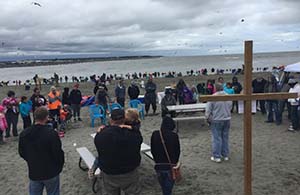
We are excited to announce Texas Baptist Children’s Missions Day at the Baylor vs. SMU game Sept. 10   It’s not too early to get discounted tickets for your group. This event is sponsored by Texas Baptists’childhood ministry, Texas Baptist Men Royal Ambassadors and Woman’s Missionary Union of Texas.

Don’t miss our one-day Boomer Life Rallies coming soon. Baby boomers started turning 65 in 2011, and for the next 15 years, will continue doing so at the rate of 10,000 per day. Join experienced practitioners and meet other leaders at one of three one-day Boomer Life Rallies, Oct. 24, 25 and 26 for inspiration, encouragement, ideas, tools, tips and more for reaching and ministering to baby boomers and senior adults.  More information can be found on our website. 

 The online registration site is up and running for the 2016 BGCT annual meeting.  You can register on our website by clicking here. The 2016 annual meeting is Nov. 13-15 at the Waco Convention Center. The theme will be “Celebrating Service.”

We have some great speakers, such as Cleophus LaRue, and informative workshops on truth and culture by Jim Denison, apologetics by Mike Licona and Duane Brooks, New Testament studies by Todd Still and creative teaching methods by Tommy Sanders—just to name a few.  Check our website for more information.

David Hardage is executive director of the Baptist General Convention of Texas Executive Board.


Alaska: Salmon frenzy

After setting up our equipment early Sunday morning, we served hot dogs for a few hours before shutting down for an informal church service in front of our tent. We put up a cross and gathered in front of it. Throughout the weekend, we had been inviting people and had a fair number of people show up.

Up until this point, fishing had not been good for the whole beach. Standing out there with their huge dip-nets in the near-freezing water and bone-chilling wind, most people did not have a whole lot to show for all their time and energy. Some people had been there as long as nine days and not caught anything.

As a team, we had been intentional about praying for the fish to be plentiful and letting people know we were asking the Lord to bring them their catches. Things had been pretty slow up to this point in the morning, but as soon as our worship leader started and we all joined in singing praises to God, a frenzy started—not on the whole beach, but just in the section in front of where we were set up.

Cross 300Our tent is about 50 yards from the shore, and only the area directly in front of our worship was catching fish. In the 25 minutes we were singing, someone estimated about 200 fish were caught where none had been before. The locals were calling to their friends and family up and down the beach to come and stand with them. Most people only catch one fish at a time in their nets, but some were catching five. It was so incredible to witness the Lord’s faithfulness. 
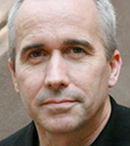
As the day progressed, we told people who came by for hot dogs how we had been praying and how God answered our prayers. Several locals had even asked before if we were praying for the fish, and when they came back, we told them what happened. Some of them were standing in that area and caught their legal limit of fish in that one rush.

I loved seeing how God used something as simple as salmon to let the people around us know that he cares for them, including meeting their physical needs. 

Meredith Fick is a campus missionary intern at the University of Houston Baptist Student Ministry, serving in Alaska with Go Now Missions.


Analysis: Republicans, Democrats and their inverted culture war

Since the late 1970s, the political battle lines in the culture war have been drawn clearly and easily understood.

David Gibson 130David Gibson (RNS photo)On one side, Republicans claimed a seemingly unassailable moral high ground built on appeals to faith, patriotism, family values, personal character and biblical standards of sexuality.

Democrats, on the other side, largely avoided engaging the GOP on its home turf, shunning anything that smacked of moralism and sticking to general principles about tolerance and respect for personal choices. They reserved their bully pulpit for wonky arguments that Democrats were better at economic policies and running the government, and patriotism was often equated with militarism.

But by the time the closing gavel came down on the 2016 Democratic National Convention, the entire battlefield in the culture wars had shifted—dramatically.

In Cleveland, at the RNC …

A week earlier in Cleveland, the Republican convention nominated Donald Trump, a brash New York real estate magnate and reality TV personality who has been married three times and has spoken derisively of women, immigrants and Muslims. He once publicly ridiculed a journalist’s physical disability, and he routinely delivers personal taunts on Twitter.

In Trump’s speech accepting the nomination, which he had wrested from the establishment by riding a wave of economic anxiety and stoking populist resentment, he painted a dark, almost apocalyptic vision of America. “Any politician who does not grasp this danger is not fit to lead our country,” he warned, adding, “I alone can fix it.”

That sense of doom and gloom pervaded the GOP convention. It represented a stark contrast to the “morning-in-America” theme Ronald Reagan, to name the most famous example, would strike even as he was warning against grave external and internal threats.

God also went unmentioned and virtually unrecognized in Trump’s speech, which made a passing reference to evangelicals who supported him in the primaries. Throughout the campaign, Trump has struggled to speak convincingly or with any fluency about faith and his own beliefs, and he made no attempt to elevate his God-talk game in Cleveland.

Missing: traditional topics

Nor was Trump, or any of the other RNC speakers much interested in traditional culture war topics.

Abortion never was cited in Trump’s 75-minute speech, the first time since 1980 a nominee had passed over the topic. And few other Republican speakers raised what is a premier issue for Christian conservatives, a fact widely noted by anti-abortion groups.

Religious freedom, also a prominent agenda item for the religious right, received short shrift, and Trump went out of his way to vow to protect “our LGBT citizens.” Silicon Valley tech mogul Peter Thiel even delivered a prime-time speech in which he said he was “proud to be gay” and declared, “Fake culture wars only distract us from our economic decline.”

“Where are the values at the Republican National Convention?” a Catholic News Agency headline asked. The GOP “barely tried to pretend that its candidate cares about abortion, sexuality or God,” as the Christian writer Ruth Graham put it in a Slate essay.

Trump’s convention speech “was almost entirely secular,” said Washington Post columnist Michael Gerson, an evangelical and former speechwriter for President George W. Bush. “Faith-based supporters were only mentioned as another interest group at the long trough of his promises. Larger religious themes that often inform American public rhetoric—human dignity, social justice, the possibility of redemption—were absent.”

In Philly, at the DNC …

Then came the Democratic convention, meeting in the birthplace of the American Revolution to crown Hillary Clinton as the first woman heading a presidential ticket.

Clinton and the DNC initially were concerned with appeasing the unruly fringes of the progressive movement launched by onetime rival Bernie Sanders.

But after the first day of restiveness, the convention’s speakers increasingly spoke with the vocabulary of faith and moral righteousness and in the oratorical register of a tent revival.

After President Obama gave a rousing red-white-and-blue speech declaring Trump was neither very Republican nor especially conservative, many conservatives cast an envious eye at the Democrats’ approach.

“Take about five paragraphs out of that Obama speech, and it could have been a Reagan speech,” tweeted New York Post columnist John Podhoretz. “American exceptionalism and greatness, shining city on hill, founding documents, etc. — they’re trying to take all our stuff,” complained National Review editor Rich Lowry.

By the time Thursday rolled around, the Democrats were in full family values, American-as-apple-pie mode, and they were selling it to a liberal crowd—and a huge television audience—as the party’s natural stance.

Recast in biblical terms

Promoting the common good, defending the weak, providing good jobs and working for equal rights for all were recast in biblical terms in a crescendo of faith-speak that scrambled the usual left-right categories and peaked with a fiery address by William Barber, an African-American pastor from North Carolina known for a series of “Moral Mondays” protests for social justice.

“I know it may sound strange,” Barber intoned to a chorus of cheers, “but I’m a conservative because I worked to conserve a divine tradition that teaches us to do justice, love mercy and walk humbly with our God.”

African-American pastors and speakers often provided much of the convention’s spiritual uplift, as Slate’s Jamelle Bouie noted, along with the contributions of other minority religious groups—and that was yet another statement that diversity was a sacred thing, a source of inspiration rather than fear.

After that came a retired four-star general, John Allen, flanked by other military leaders, who gave a full-throated defense of the U.S. military and an endorsement of Clinton as commander-in-chief that sounded like red-meat Republican rhetoric:

“The free peoples of the world look to America as the last best hope for peace and for liberty for all humanity, for we are the greatest country on this planet!” he shouted at one point.

And he was accompanied by regular chants of “USA! USA!” from the raucous crowd.

Occupying surrendered terrain

When Clinton herself took the stage, she hit all those themes and made sure to mention God, her Methodist faith, her love of country, and praise for the military and law enforcement.

As many commentators noted, the Democrats clearly were trying to occupy some of the political terrain surrendered by Republicans. “The last four days has been a journey from the left-most edge of the Democratic coalition to the right-most edge,” said MSNBC’s Christopher Hayes.

But more than political positioning or taking an advantage the GOP handed them, Democratic leaders were also redefining the terms of the battle—or perhaps recapturing a lost language of faith as a vehicle for progressive causes.

This effort went beyond the old idea of creating a “religious left” to counter the old “religious right.”

New-old vision

In this new-old vision, gay families are to be valued as much as any other family, helping single and working mothers is a holy duty, and defending one’s nation in the armed forces is an honorable calling—and for women, gays and minorities, as much as anyone.

In perhaps the most controversial reworking, abortion got far more play in Philadelphia than in Cleveland, although as a culture war motif of the left in which the right to abortion is almost sacred. Unlike past conventions, abortion opponents were effectively shut out.

“Democrats are learning to present conservative cultural arguments for positions that used to be perceived as subversive,” wrote Slate’s William Saletan. “Liberals aren’t always comfortable with this kind of talk. They’re skittish about religion, lifestyle norms or anything that smacks of judgment. But judgment, like sex, is something we all do, even if we don’t admit it. We might as well do it right.”

All this could change by the next election cycle, of course. Politics is about winning, and if Trump wins in November, the Democrats could well be headed back to the war room to reconfigure their strategy.

“This cannot last. The territory is just too broad, and some of it will have to be abandoned,” wrote The New Yorker’s Benjamin Wallace-Wells.

But if this new formulation carries Clinton to the White House, the GOP will have to figure out what remains of the culture war terrain to claim as their own.

David Gibson is a national reporter for Religion News Service, which distributed this column. He has written several books. His latest is on biblical artifacts, Finding Jesus: Faith. Fact. Forgery. It was the basis of a popular CNN series.


Commentary: ‘Created equal’ and hope for girls

I sat on my couch with my husband and my two daughters as we watched the first woman accept the nomination of a major political party to become president of the United States.

MeredithStone 130Meredith StoneWe, at least my husband and I, watched both the Republican and Democratic conventions very carefully.

But when Chelsea Clinton introduced her mother, tears began welling up in my eyes. I was trying to hide this emotion from the tiny human sitting next to me, so I didn’t sniffle or wipe my face.

Then, with a perceptive sense that all conversation on the couch had paused, my youngest asked, “Is everyone OK?”

Important moment

For the next several minutes, I tried to explain to her women had not always had the same opportunities as men. I told her this was a very important moment in history for a woman to be nominated to be the president.

Then, in 8-year-old innocence, she asked, “So, no woman has ever been president?”

She didn’t know about glass ceilings.

About 30 minutes later, she was sleeping on my lap as Hillary Clinton said: “When any barrier falls, it clears the way for everyone. When there are no ceilings, the sky is the limit.”

I looked down at my daughter as she dreamed, and I began to dream about what barriers had just fallen for her. I hoped the sky was truly her limit.

Whoever we will vote for come November, Secretary Clinton’s nomination is an important moment, not just for women and girls, but for our nation.

Not all equal

When we say we live in a country where “all men are created equal,” I’m not sure it has meant all people are created equal.

The variations in human bodies, created in the image of God, have been cited as reasons for limiting the opportunities certain people might be afforded in the United States.

But with the nomination of a woman for president, perhaps hope for a new standard of “created equal” can continue to grow to include women fully.

Unfortunately, to say the least, in the same way electing a black president has not meant an end to systemic racism, we cannot expect this moment will mean the end to limited opportunities for women.

New conversations

In the same way we need to keep finding personal and communal ways to work diligently toward chipping away at generations of racial oppression, we also need to keep working toward gender equality.

So, whoever we vote for in a few months, I hope tonight can be a beginning for new kinds of conversations with 8-year-old girls.

I hope one day those conversations might result in ceiling-less dreams for my daughters.

And I hope my daughters someday will live in a world where all people are created equal.

Meredith Stone is director of ministry guidance and instructor of Christian ministry and Scripture at Hardin-Simmons University’s Logsdon School of Theology. She is a member of the Baptist Standard  board of directors.


Editorial: Regents must open up for Baylor to thrive once again

Two months ago, when Baylor University’s sexual assault scandal blew wide open, the Baptist Standard editorial’s headline read: “Baylor places values ahead of victories.

knox newMarv KnoxThe university’s regents deserved praise for making hard decisions to remove President Kenneth Starr and to secure the departure of Coach Art Briles and Athletic Director Ian McCaw. During their tenures, Baylor enjoyed tremendous success, most notably the exploits of the Bears’ football team. Calling for their heads required courage, as well as commitment to Baylor’s ideals.

The regents also deserved praise for selecting David Garland, professor of Christian Scriptures and former dean at Baylor’s Truett Theological Seminary, as interim president. Garland’s long and impressive career, faithfulness among Texas Baptist churches and abiding integrity leave no doubt he will lead the university to implement the corrections recommended by the Pepper Hamilton law firm, which investigated the scandal. Even more significantly, Garland will help Baylor repair its spiritual failings, which enabled the scandal.

Predisposition toward secrecy

But now the regents’ longstanding and lamentable flaw—their predisposition toward secrecy—threatens to undermine the sunny optimism of that headline. The regents’ impenetrable shroud of secrecy will prolong Baylor’s agony.

For years, the regents have functioned so covertly, the National Security Council could take lessons. They hold closed meetings. They share only the information they want others to know, framed in the way they want others to know it. And they hold each other to a level of zip-lipped secrecy that induces fear and compliance in any regent who might think others have a right to know what’s going on.

To be fair, the regents must maintain a level of confidentiality—particularly in regard to some legal and personnel matters, as well as the safety and security of students. But the regents’ default mode is to ramp secrecy far beyond the range of reason.

Sometimes, perhaps often, their secrecy undermines Baylor and the regents themselves.

Notorious example

The university’s sexual assault scandal is the most obvious, notorious and painful example. The regents steadfastly refuse to disclose the “report” provided by Pepper Hamilton at the end of its exhaustive investigation into sexual assault at Baylor.

In fact, the regents say they cannot release a report, because Pepper Hamilton provided only an oral recitation, not a printed document. This is a dodge, of course. Pepper’s attorneys are capable of typing. They prepared their verbal report, and lawyers being lawyers, you can bet they read from an extensive manuscript. They could produce a written report as quickly as one person can press a “shift” and a “send” key.

More ominously, the regents say the Family Educational Rights and Privacy Act—FERPA—forbids them from presenting a report. They also say, justifiably and believably, they do not want to identify the sexual assault victims, neither purposefully nor inadvertently. But these are straw men. They could redact a report sufficiently to pass FERPA muster and also protect victims. No reasonable person wants to violate the victims or put them through agony. But reasonable people have a right to know specifically how Baylor failed those victims.

Collectively short-sighted

Give the regents the benefit of the doubt; they believe they are upholding their fiduciary duty by declining to be transparent about sexual abuse. For a group of people who obviously are smart and successful, they can be collectively short-sighted.

They would have benefited by including a public relations professional among their ranks. A conscientious PR person doesn’t succeed by “spinning” information, but rather by helping the public know all they need to know to make informed decisions. A wise PR person realizes the public imagination is far worse than the truth about 99 percent of the time. And a Christian PR person working in a faith-based context (a) recognizes the responsibility to tell the truth and (b) affirms the obligation to respect the rights of the constituency by providing them with the truth.

Unfortunately, the regents are not receiving—or listening to—wise public relations counsel. Consequently, the distrust created by years of secrecy has welled up to levels not seen recently. Ironically, the nation’s sportswriters are the champions of institutional ethics, providing the steadiest drumbeat for reporting and transparency. Baylor won’t get past its suspicious constituents (who love the university) or dubious sports fans (who may only be out for blood) by issuing denials and effectively saying: “Trust us. We know best.”

Issue a redacted report

The Baylor regents would serve their university best by instructing Pepper Hamilton to issue a report and to make it public. Pepper could work with the Department of Education to ensure the report passes FERPA muster and thoroughly protects the victims.

The report should address several questions, among others:

Who in the athletics department—football coaches and other staff—knew about sexual violence and failed to report it according to Title IX regulations?

The university can’t expect others to believe simultaneously that it places “values ahead of victories” and that only Briles and two football staff—and no coaches—knew about the sexual violence.

Who along Baylor’s Title IX chain of command and elsewhere in university administration failed to follow up on reports and complaints of sexual assault?

Even if the regents believe, for purposes of legal liability, they cannot name names, they still should be more forthcoming. They should at the very least report the numbers of staff—both in athletics and elsewhere in the university—who failed the victims. And if some of them are coaches, they should be fired now. As Garland told the Waco Tribune-Herald: “If you have sexual assaults, it’s unacceptable. I don’t care if we go 0-12, we cannot have sexual assaults.” A major key this football season is coaches, and a coach who failed to report sexual assaults doesn’t deserve to stay on this season in order to preserve wins.

What did Pepper Hamilton learn about the regents and/or the regents’ structure that needs to be changed?

Pepper’s recommendations state Baylor needs to “resolve current governance issues at the executive council and board levels.” The recommendations also address “actual or perceived conflicts of interest … and due diligence standards in the selection of board members.”

“A plea for Baylor”

These requests come from someone who loves Baylor University and who, even though not an alumnus (except “by choice” from Truett Seminary), long has felt part of the “Baylor family.” Without a doubt, my number is legion—both among actual alumni and among Texas Baptists and others who admire Baylor and want only the best for the university.

To be sure, the sexual assault scandal does not define Baylor. Yes, football got too big for its britches And university leaders failed to take sexual assault seriously, perhaps naively wishing “it couldn’t happen here.” But reasonable observers know Baylor’s core identity far transcends this awful sin, which we dare not deny. Baylor doesn’t always meet its Baptist/Christian ideals, but we know it tries mightily.

And so demanding transparency and accountability from the regents is not a sign of disloyalty or disaffection. It’s a plea for Baylor to respond with integrity, humility and openness to this dark moment so that it can pursue its highest aspirations.

Follow Marv on Twitter: @marvknoxbs

For a compilation of the Baptist Standard’s coverage of Baylor University’s handling of campus sexual violence, click here.


Discipleship, then/now

Discipleship is widely discussed in the Christian community. It generates a large variety of response, both from Christians and non-Christians. Even among the members of the Christian community, it is a misunderstood subject, and yet it is the central component of the Great Commission. It is as important as it was during the earthly ministry of our Lord and the era of the early church. It is imperative for today’s church to define what Christian discipleship means and determine its application in the lives of its members.

Beilu Yirga 150Bedilu YirgaIn the Gospels, we find a variety of disciples—disciples of Moses (John 9:28), disciples of John the Baptist (John 1: 35), disciples of the Pharisees (Mark 2:18) and disciples of Jesus (Matthew 5:1-2). All these groups have some commonality and a wide range of strong differences in theory and practice. The right understanding of the nature of Christian discipleship and its application in the local church can be obtained by examining Jesus’ relation to his disciples and his teaching about the subject.

“Disciple” defined

The meaning of a disciple takes different shapes and implications depending on one’s perspective. The general meaning is a learner, pupil or apprentice. The teacher teaches, and the student learns. Some describe the student as an adherent to someone or some idea. The student may go beyond learning the information and align himself with his teacher.

texas baptist voices right120A Christian disciple is a student, a learner, a follower of Jesus Christ who aligns himself with the Lord. The Christian disciple is someone who is called by Jesus. The disciple is committed to Jesus alone and obeys his teachings. The New Testament refers to those who had heard the teachings of Jesus, adopted them as their own and determined to follow him. In Growing True Disciples, George Barna notes: “The apostles are great examples of this relationship between a student and master. They followed Jesus, the master teacher and model of the Christian faith, striving to learn from his words and deeds, growing through the practical, hands-on training that he facilitated.”

Discipleship is a natural process by which a disciple becomes an obedient and consistent follower of Jesus. It is a lifelong experience of spiritual growth or formation of one’s character to become like Jesus. Discipleship takes place after one decides to follow Jesus. It is a post-conversion experience. Understanding what the discipleship process requires, implies and entails is very important for the success of the process.

Lifelong process

It is not a program or a training time, as most conceive of discipleship. It is a lifelong process that will bring the student—the believer—to be like the Master through their relationship. According to Barna: “The strength and influence of the church is wholly dependent upon its commitment to true discipleship. Producing transformed lives, and seeing those lives reproduced in others, is a core challenge to believers and to the local church.” Since the term “disciple” is applied to various groups and personalities, a disciple of Jesus must then be distinctively marked.

There are marks that attest the authenticity of the life of the Christian disciple according the Scripture. The Gospel of John cites four basic characteristics of a Christian disciple: A disciple needs to remain in Christ, obey the Master’s teaching, bear spiritual fruit and glorify God, the ultimate goal (John 15:1-7). John 15 records the teaching of our Lord in his upper room discourse, in which Jesus presents himself as the vine and his disciples—believers—as the branch that needs to remain in the vine and bear fruit. He also commanded his disciples to glorify God by conforming to all his commandments.

The church’s role

The church or the fellowship of saints has a part in accomplishing God’s plan in multiplying disciples of Christ. The purpose of the church as stated in Matthew 28:19-20 is to go and make disciples to glorify God. It is only as we work together in this way that it is possible to accomplish God’s plan. This is why fellowship is indispensable to the process of discipleship.

Every believer needs a community of saints for his or her spiritual formation—discipleship. Every Christian needs a fellowship of like faith and practice, a local body and a place to belong. When functioning properly, the true fellowship is designed to serve as one’s extended family for believers. Such fellowship is very important for a continued process of spiritual formation—discipleship. Due to the reciprocal nature of the corporate body of Christ, fellowship is a necessity for spiritual growth of a disciple. In the fellowship, every member receives the ministry of the Spirit more than in individual or private settings and efforts.

Texas Baptists have invested a lot to make disciples in Texas and beyond. There are so many resources, tools and trainings ready to be used by our Texas Baptist family. I encourage all of us to explore what we have already and use it to do well on his business—discipling believers to disciple others.

Bedilu Yirga is first vice president of the Baptist General Convention of Texas and pastor of Ethiopian Evangelical Baptist Church in Dallas.


Church, stand amazed

I stand amazed at our world today as I wonder what direction we are headed and how long it will take us to get there. I stand amazed at the wonder of others in how we treat each other. I stand amazed at ourselves for not standing up for our Lord and Savior, Jesus Christ, and his word.

richard ray130Richard RayTitus 3:3-5 says: “At one time, we, too, were foolish, disobedient, deceived and enslaved by all kinds of passions and pleasures. We lived in malice and envy, being hated and hating one another. But when the kindness and love of God our Savior appeared, he saved us, not because of righteous things we had done, but because of his mercy.”

These verses should remind us even when the world is acting foolishly and is disobedient and being deceived while serving the flesh and living in malice, envy and hate, God’s lovingkindness still appears. It seems we cannot see God’s lovingkindness because of the smoke of sin that clouds our world today. But rest assured, our Savior is standing ready to shower us with his mercy.

texas baptist voices right120Titus 3:8 adds: “This is a trustworthy saying. And I want you to stress these things, so that those who have trusted in God may be careful to devote themselves to doing what is good. These things are excellent and profitable for everyone.”

I stand amazed by God’s grace and mercy. Mercy means not receiving what we deserve, while grace means receiving what we could never deserve. Therefore, I stand amazed at those who have accepted the grace and mercy of Christ’s salvation, yet they are careful not to let the world know.

If we desire to see the smoke of sin removed and hope restored in our world, we who have trusted God must devote ourselves to doing what is good. When God’s people do good, then those good deeds, those good words and those good actions will become excellent and profitable for everyone. Hope is restored and renewed when God’s people devote themselves to doing good.

Our Savior stands ready to shower this world with his lovingkindness through those who have trusted in Christ as Savior and Lord. Let the church stand amazed in the presence of Jesus Christ and proclaim just how marvelous, how wonderful our Savior’s love is. Let us stand amazed in Christ for the entire world to see, for these things are excellent and profitable for everyone.

Remember, the Lord has called you to serve, but he has not called you to serve alone. Visit our website for more information on how the Bivocational/Small Church Association can minister and serve you. For more information, contact me at tririversdom@gmail.com.

Richard Ray is executive director of the Bivocational/Small Church Association and director of missions for Tri-Rivers Baptist Area.


2nd Opinion: Why white ministers must insist, ‘Black Lives Matter’

Less than 24 hours after a sniper murdered five police officers here in Dallas—on the heels of two more fatal police shootings of black men in other cities—a group of black and white Christians from throughout the area got together to pray. Nothing unusual about that. Every time a crisis hits, every time racial conflict emerges, every time a mass shooting rips across the headlines, people get together to pray.

Wingfield 130Mark WingfieldThe Friday night prayer service, held July 8 at a prominent black megachurch in South Dallas, was led by black, white and Hispanic clergy and drew an ethnically mixed congregation—folks like me who were perhaps overly eager to greet people of another skin color to demonstrate that we, unlike others, are not full of hate.

Read the full column at Faith & Leadership.

Mark Wingfield is associate pastor of Wilshire Baptist Church in Dallas.


Opinion: Overcoming a pastor’s moral failure

I’ll never forget that awful Sunday morning when my pastor’s adulterous affairs were made public to the congregation. That pastor also was my grandfather. It was a double blow that devastated my family and led to the end of my church.

Elizabeth Esther 130Elizabeth EstherIn nearly 14 years since that terrible day, I’ve watched other churches fall apart in the wake of a pastor’s moral failing. This summer, Perry Noble, pastor of NewSpring Church, one of South Carolina’s largest, was forced to step down after admitting to an alcohol problem.

While it’s discouraging to see this happen, things don’t always have to end badly. Churches can take steps to provide support, ensure accountability and facilitate healing.

Perhaps a helpful starting point can be found in adopting the Hippocratic Oath: First, do no harm. As the faculty editor for Harvard Health Publications, Robert H. Shmerling, a physician, writes, the dictum to “first, do no harm” is a “reminder that doctors should neither overestimate their capacity to heal nor underestimate their capacity to cause harm.”

The same principle can be applied to spiritual healing. While many Christians often are eager to jump-start the healing process, that very eagerness can become a potential pitfall.

Rushing toward forgiveness, reconciliation and restoration actually may cause more damage and re-traumatize already-wounded people. It is wise to proceed slowly, gently and with much tenderness. To paraphrase Shmerling, churches should neither overestimate their capacity to heal nor underestimate their capacity to cause harm. 

With that in mind, here are ideas for congregation care in the wake of a traumatic spiritual event:

1. Protect the innocent.

Protect them first, last and always. Welcome their truth-telling. Protect their physical safety and personal identity. If the involved people are consenting adults, protect their identity and never subject them to public scrutiny by the congregation. If the pastor has committed a crime, notify the proper civil authorities immediately.

Do not wait until the next prayer meeting to decide whether God wants you to report the crime. Do not wait until the next deacons/church council meeting to decide whether you should report the crime. Do not wait for a congregational vote to decide whether you should report the crime. If a crime was committed, nobody needs approval before calling the police.

Never handle things privately or “in house.” Even if the victim does not want the police to know what happened, please remember the best way to protect the victim—and potential future victims—is by involving the proper authorities.

It’s also important to note that sometimes the congregation as a whole can become collateral damage in a pastor’s fall, and so the church itself must be protected from the pastor.

2. Be rigorously honest.

A great deal of pain can be avoided if church leadership operates openly and transparently from the moment the pastor’s actions are made public. The congregation deserves a full, honest accounting of what happened, what is happening and what will happen. There is no easy way to break bad news, but pretending everything is fine will only make things worse.

Honesty is best served by plainspoken delivery. Provide complete information without minimizing the pastor’s behavior. Remember, this is not a PR campaign. This is repentance. Honor the congregation’s dignity by providing a space for members to ask questions and get answers. Fuzzy answers will only add to the congregation’s sense of betrayal, grief and anger, so strive to be rigorously honest.

3. Practice true humility.

The pastor should be allowed to repent before his congregation, but—and this is important—only according to the leadership’s direction. True humility does not make a big show of repentance. It is important for everyone to remember the pastor is no longer in charge. He has been disqualified and no longer gets to run the show—not even the show that’s about his own repentance. This protects the innocent and the church itself.

When a pastor is allowed to run his or her own repentance show, the tendency is to comfort and “forgive” the pastor without requiring accountability or consequences for his behavior. This places unfair pressure on those who have been hurt by his behavior.

Forgiveness and “moving on” don’t happen overnight. A pastor who demonstrates true humility by accepting responsibility and resigning leadership will pave the way for healing and prevent further damage to the church.

But a pastor who denies responsibility, stonewalls, refuses to accept discipline, goes on the attack and/or refuses to step down will cause potentially fatal injury to the church. This is why a pastor should be placed on mandatory, immediate paid leave while a plan is developed for moving forward.

Side note: I do not believe in cutting a pastor off financially, especially if the pastor has a spouse and children. The pastor’s family should not have to pay for the pastor’s mistakes. The family already will be suffering enough without having to figure out where the next meal is coming from. Continue to pay the pastor’s family until a severance package is decided upon.

It’s never easy to deal with the moral failures of our spiritual leaders. But it doesn’t have to be excruciating.

Asking for outside help, speaking honestly and proceeding humbly will go a long way toward binding up the brokenhearted. And even if everything falls apart—like what happened in my church—healing still is possible.

The end is never the end. God is always doing a new thing. It’s OK to let things fall apart. Tomorrow, we begin again.

Elizabeth Esther is the author of Girl at the End of the World and Spiritual Sobriety. Find her online at elizabethesther.com. Religion News Service distributed this column.


Guest editorial: A faith community persecuted in 100 countries

It was Day 5 of sitting in a sweltering mud house in the middle of an Eritrean refugee camp in Ethiopia. There was no running water, barely any electricity, and we conducted interviews while sitting on furniture fashioned out of hardened dirt.

elijah brown130Elijah BrownFor five days, I listened to heartbreaking stories of violence committed by the Eritrean government against its citizens. This included meetings with a child soldier, people whose homes government representatives had looted and a young lady who was caught reading the Bible while serving in the military. For her punishment, they tied her hands behind her back and forced her to stand under the blazing sun for three hours while pouring milk on her head so flies would bite her face.

“… there were threats”

This also included the testimony of Abrehem, who recounted in his own words:

I am a Sunni Muslim. I served as a muezzin and would call the faithful to prayer five times a day. I eventually became a leader in the mosque who led in the daily prayers.

During that time, I had two government officials from the secretary’s office assigned to me. They constantly stood beside me, one on my right side and the other on my left side. This was to ensure that I never said anything critical about the government during prayers.

In addition, each morning and evening, I was forced to sign a paper at the secretary’s office clarifying that I wasn’t going to escape. …

We were instructed to only teach certain parts of our faith while leaving out those parts which the government disapproved. If we disagreed and wanted to teach the whole truth about our faith, there were threats, including potentially even being shot.

After learning from a family member he was about to be arrested and sent to prison, Abrehem fled to Ethiopia. Even as he shared, he remained visibly nervous that his government would still find him and hurt him or his family. Abrehem is far from alone.

Muslims in danger

Muslims in Nigeria who refuse to adhere to violent ideology have been targeted and killed by Boko Haram. Rohingya Muslims are some of the most persecuted people in the world, as the Burmese government engages in ethnic cleansing. Uyghur Muslims are severely repressed by the Chinese government. Millions of Muslims from across Syria and Iraq have suffered at the genocidal hands of the Islamic State. Innumerable Muslim refugees have witnessed firsthand the brutal undersides of human history.

While there certainly are people of minority faiths in Muslim-majority countries who face severe oppression and persecution, it does not negate the fact Muslims remain one of the most persecuted faith communities around the world. According to a report published last month by the Pew Research Center, Muslims experience harassment or intimidation in 100 countries.

Religious freedom for all

For religious freedom to thrive today, it must be extended to all people in all places of all religions. This includes the rights of Muslims around the world, as well as religious minorities living within Muslim-majority countries.

Our commitment to religious freedom must move beyond allegiance only to those who adhere to our particular faith or political persuasion. With the exception of terrorist activity, our commitment must be to safeguard the rights of all people to follow the dictates of their consciences in pursuit of those questions most foundational to the human experience.

Take action

Read the latest Pew Research Center publication, Trends in Global Restrictions on Religion.

Lead a Love Your Neighbor Dinner as modeled by Peace Catalyst International.

Watch the highly acclaimed 2011 film Of Gods and Men, which is based on the true story of eight French Trappist monks living in Algeria in the early to mid-1990s.

Elijah Brown is executive vice president of the 21st Century Wilberforce Initiative.


Letters: Hate, police, religious liberty

Speak out against hate

In March 1968, Americans experienced one of the most devastating terrorist attacks in modern history. It happened in a little village in Vietnam called My Lai and was carried out by American soldiers, who killed about 500 civilians.

A young warrant officer pilot and his two crewmen risked their lives to stop the slaughter and reported it. Instead of the guilty being punished, the pilot was persecuted for months, and the matter was covered up, all the way to top levels of the Pentagon, Congress and the White House. The coverup had a devastating effect on the war and the eventual fall of South Vietnam.

The massacre was carried out by a weak-minded lieutenant who shouldn’t have been commissioned. It was condoned and encouraged by higher-ranking officers who never were punished.

Similarly, we are seeing a few law enforcement officers carrying out vicious attacks on civilians and dishonoring their badge and uniform. Some people don’t have the maturity and judgment to be police. Instead of justifying their actions, the multitude of good law enforcement officers and their associations should condemn these despicable acts.

Dallas law enforcement officers and their chief, David Brown, deserve the thanks of the nation for handling the recent tragedy in their city. I especially was impressed that none of the 20 or so weak-minded individuals carrying guns in the protest march were shot by police.

Let’s speak out against those who try to profit by spreading hate, fear and bigotry that lead to these tragedies.

Carl L. Hess

Ozark, Ala.


Stop whining; follow Jesus

Thanks for “Evangelicals, quit complaining and follow Jesus’ lead.” For some, the response would be, “Ouch!” But you are exactly correct, and I appreciate your willingness to write what many of us feel and have thought for some time. 

I’ve said—more than once—in sermons that the spread of the gospel is sort of like Johnson grass, or even Bermuda grass. The harder you try to get rid of it, the faster it grows!

We’ve failed our nation because we have failed to do what Jesus told us to—”make disciples”—but instead, we’ve worked the system to make laws that suit our preferences.

Thanks for exposing our shallowness. Hopefully, enough of us will take seriously our kingdom citizenship over our American citizenship!

Glenn L. Ward

Granbury

Thank you for this editorial. It is so appropriate to these times.

Jesus would not be guarding bathrooms, but addressing social needs as he articulated in the verses you referenced.

Nelson Forsyth

Plano


Keep church & state separate

Jerry Falwell Jr. wants to see the repeal of a law that bans churches and nonprofit corporations from expressing political speech.

As a supporter of the separation of church and state, I don’t think ministers and priests should be allowed to support political parties and candidates from the pulpit.

What politician would Jesus support? Would he support Caesar or Pharaoh? 

Chuck Mann

Greensboro, N.C.