In Touch: At the Legacy Award ceremony

Hello, Texas Baptists. On June 7, Kathleen and I had a great day at Independence Baptist Church near Brenham for the annual Legacy Award ceremony.

hardage david130David HardageThe Baptist General Convention of Texas honors and recognizes individuals who have played a significant role among Texas Baptists across all aspects of our work and ministry. It is important to our organization to celebrate those who make us who we are and who are working to leave a legacy that points to the work of Christ in this state through Baptist life. Honorees this year were Jim Culp and Bernie Spooner. Congratulations to both of these dedicated Baptist Christian leaders.

Bounce Student Disaster Recovery began its first summer mission in Dallas. Bounce is a pre-packaged mission experience that provides student ministries the opportunity to impact affected areas by being the hands and feet of Christ. Students from all over Texas and New Mexico have been serving.  Six more mission opportunities are scheduled this summer.  It’s not too late to register.

Mark your calendar for Conclave, Oct. 12-14 at the Arlington Convention Center. The keynote lineup is online. 

texas baptist voices right120Make your plans to attend the 2015 Texas Baptist Annual Meeting, Nov. 8-10 at Dr Pepper Arena in Frisco. Our theme this year is “Deep Roots; Living Legacy.”

I want to make you aware of an important new Affordable Care Act law  that goes into effect July 1. This new law may seriously impact your church. Visit the link to learn how to be in compliance. If you have questions, contact our director of human resources, Rollie Richmond at rollie.richmond@texasbaptists.org.

David Hardage is executive director of the Baptist General Convention of Texas Executive Board.


Thailand: Sharing the Good News with a smile

Recently, we traveled to Khao Yai for an English camp. The point of the weekend was to help the Thais practice their English, all while building relationships. I was fortunate enough to meet so many Thai girls and build awesome relationships with a few of them over the course of the weekend. 

hayley godwin130Haley GodwinSusie decided to sit with me on the way home, because we had a four-hour bus ride, and she wanted to practice her English. She ended up asking me how long I had been a Christian. I knew God was putting an opportunity right in front of my face, and I took full advantage of it. I was able to share the gospel with her, using the illustration of how Jesus provides the bridge between sinful man and a holy God. 

The following Monday, Susie came to the Baptist Student Center at 4:30 p.m. before her English class at 7 p.m., because she wanted to practice more English. We ended up reading and studying a Bible story. It was an opportunity for me to a story about Jesus, and it gave her a chance to practice English pronunciation and learn new vocabulary. We had a great discussion about the commandment to “love your neighbor.”

“When you talk about Jesus, you are so happy and smiling,” Susie told me after I shared the gospel with her. That just made me smile more, because I pray that whether or not I am able to share the gospel with everyone I meet, I make it a point to have a servant’s heart with a smile every step of the way.

I love the relationships I am building with the Thai people. God has given these people a sense of urgency to learn more about English, American culture and the Bible. They are so friendly and incredibly courageous. They truly inspire me in many ways.

Hayley Godwin, a student at the University of Texas at Tyler, is serving with university students in Thailand through Go Now Missions.


Haiti: Praying before dawn

The streets are dark. Angry and frightened dogs bark at us as we file down the humid, trash-filled streets. We walk in silence. The only sound we hear is sweet Matilde with her megaphone, shouting in Creole for the neighborhood to wake up and join us. Our group of Americans and Canadians keeps putting one foot in front of the other. We don’t know how far we will walk, but we continue on in the darkness of 4 a.m.

morgan martin130Morgan MartinEvery day, these men and women meet at 4:30 a.m. to pray. Gran Goave, the village Chandler and I are visiting, used to be one of the largest hubs of Voodoo in Haiti. Years ago, when Voodoo was still largely dominant, these individuals woke up to pray against the influence of Voodoo. Many Voodoo rituals occur at the early hours of the night.

To counter their influence, Christians of Gran Goave decided to go to battle for their village, waking at 4 a.m. daily to pray for their village and their people. Now Gran Goave houses a large Christian population with only a few still practicing Voodoo.

Part of our schedule for the week allowed us to participate in their daily 4 a.m. prayer meeting. As we continued to walk, I couldn’t help but believe we were part of something special and important. Others in the community joined us in our walk through the streets. Our numbers grew as we walked, and I could feel my anticipation growing.

Finally, we arrived at the designated location for today’s prayer meeting. Filing into the small patio, we crammed into seats and benches. Only a small kerosene lamp spilled light into the room. We sang together, prayed for the needs of the people of Gran Goave, heard testimonies of faith, read Scripture, and prayed some more.

As the time ended for our meeting, I looked out at all who had come to pray. So many filled the patio, some even crouching outside the doorway. These people know faith like I’ve never known it before. Their commitment to prayer and their belief in the power and necessity of prayer humble me beyond words. I am so grateful I could be part of what God is doing in Gran Goave, because he is moving mightily.

As we walked back to the mission, while it was still dark outside, I reflected on the morning. Not only did I feel like I was part of something special and important walking the streets with these fellow believers, but I felt like I was part of something so much larger than myself. I will never forget the image of us walking together in unison, all for the same purpose. The body of Christ is created to be a strong force, going to battle daily for the kingdom of God. How wimpy is my own perspective of the body of Christ back home. Now I know what it can look like, and it fills me with great hope.

Morgan Martin, a student at the University of Texas at Austin, is serving with Go Now Missions in Haiti.


Tribute: Remembering Phil Lineberger

Phil Lineberger loved to laugh. He had an infectious laugh, and you couldn’t help but join him in laughter. Growing up, I always knew when my dad was on the phone with his brother Phil, because he laughed the whole time. The kind of laugh that causes your eyes to tear up and your face and stomach muscles to hurt. It wasn’t hard to locate Phil in a crowded room; you just had to follow the laughter.

jon lineberger130Jon LinebergerPhil loved life, and he loved people. He was magnetic, and after meeting him, you loved him, and he loved you. 

Being around Phil was refreshing, because he wasn’t arrogant or a self-promoter. Phil was just a down-to-earth guy. He took a sincere and genuine interest in all he met, and you became one of his 10,000 closest friends. Phil got energy from being around and helping others.

As far back as I can remember, not a week has gone by that I haven’t been asked by someone, “Are you related to Phil?” When I confirm it, a smile appears on their face, and they begin to laugh and tell me stories about Phil—either a joke he had played (the kind of joke that only Phil could get away with) or how he had helped them; many times it was both. 

To Phil, your status didn’t matter. He was comfortable talking with the poor or the rich and powerful. On the walls of his office were pictures of Phil with President Carter, President Clinton, President George W. Bush and even evangelist Billy Graham. But underneath the glass on his desk were pictures of the people he held closest to him—his wife, kids, grandkids, siblings, friends and people he’d met and helped on mission trips. 

Phil loved his family deeply. He was a great son, brother, husband, father, uncle and grandfather. He especially loved being Papa and telling his grandchildren “Little Papa” stories.

High priority on relationships

Phil placed a high priority on relationships. He valued people over possessions. If someone had a need, whatever it was, Phil wanted to help. Phil was a giver. I know of several instances when Phil used his own money to help people get into a home, buy a car, or get food or clothing. Growing up poor and living in project housing made Phil sensitive to the needs of others.

Phil had a way of bringing people together. Phil taught me you don’t always have to agree with people, but you do have to love them. That’s one of the many reasons why he was chosen to lead the Baptist General Convention of Texas as president and then later as executive director, a position he turned down. I asked Phil why he declined such a coveted position. He responded that he didn’t need it. Phil was humble. He added he didn’t want to put his family through the politics, and he said he loved his church in Sugar Land.

Phil loved Jesus and God’s word. In grade school, he won a contest with a classmate to see who could read through the Bible first. Phil spent a lot of time reading, as many as six books at once. He was brilliant, gifted and highly intelligent. I don’t know of anyone else who has served as a regent or trustee for three universities.

Phil followed his convictions

Phil was brave, courageous and free in God’s grace. He was afraid of no one and often stood up to bullies. Phil didn’t care about being popular. He followed his convictions. His bold confidence came from his strong sense of security in his relationship with Jesus and his knowledge of God’s word.

Unfortunately, earlier this year, Phil experienced heart complications and began taking medication, which caused him to spiral into a deep depression. Prior to this, Phil never suffered from depression. Although he fought hard with the help of his family and doctors, the depression worsened and killed him. 

While we know with assurance Phil is in heaven, losing Phil on earth hurts. It hurts bad. Please continue to pray for his family.

College fund

Phil’s death might have hit you hard, and you want do something to honor Phil and to thank him. A college fund has been established for Phil’s 11 grandchildren. If Phil made a positive impact in your life, please consider making a donation to this fund. Checks should be made payable to: “Lineberger College Fund” and sent to Sugar Land Baptist Church, 16755 Southwest Freeway, Sugar Land 77479.

Jon Lineberger is director of development/major gifts for Prestonwood Christian Academy in Plano. He is the proud nephew of Phil Lineberger. 


Guest Editorial: Farewell & look outward

This is my farewell column for Religion News Service. After nearly 20 years of writing commentary for this extraordinary news service, it is time for a change.

First, the practical. Second, the meat.

tom ehrich130Tom EhrichAs a writer, I am shifting my focus to my new Fresh Day online magazine and to two book projects. One book is an on-the-road theology growing out of a month-long pilgrimage I took across the country. The second is a Bible study guide for Advent/Christmas/Epiphany using the Revised Common Lectionary

I continue to write my daily “On a Journey” meditations and weekly essay, as well as a weekly Church Wellness Report and a thrice-weekly blog. These writings are available at www.morningwalkmedia.com.

Now, the meat.

Better days ahead

Christian congregations have inflicted pain on themselves. But I sense better days lie ahead for Christians who can think beyond inherited institutions and “go to the edge of your church property and look outward.”

When this column began, my charge was to write commentary on faith and ethics. That has meant looking at politics, the economy, cultural shifts and the complex contexts that greet Christianity in North America.

Those issues are more important than ever. The Christian right has worked hard to identify a single “Christian” perspective on life, centered in a moral agenda having to do with sex. There is far more to be said. Injustice and gross inequalities matter more to the nation and to God. Jesus, after all, taught mostly about wealth and power, with hardly a word about sex.

Turn outward and forward

I feel optimistic about the future of Christianity in America. After all, God wants the Christian enterprise to succeed, and so it will. I am optimistic many congregations will turn outward and forward and work resolutely for a fresh day.

I see a new generation of younger clergy who haven’t spent their careers dealing with 50 years of decline. They are fresh, they have good ideas, and congregations need to hire them and listen to them.

Veterans of the Great Decline need to let go of control and turn their attention to healing and freshening. We suffered mightily during five decades of decline. We have never known the sunny days of the 1950s. We just knew we were getting hammered for not replicating them.

Start fresh conversations

As congregations and denominations move on without our leadership, we need to start fresh conversations. Name our wounds, admit our mistakes, rediscover our hopes, and not allow our unresolved issues and control needs to continue dragging down the enterprise.

Hence, my personal focus on Fresh Day. Time to discover fresh ideas, fresh words, fresh alliances and a fresh faith.

Tom Ehrich is the president of Morning Walk Media and publisher of Fresh Day online magazine. His website is www.morningwalkmedia.com. Follow Tom on Twitter @tomehrich.


2nd Opinion: Learning to pray, again—6 ‘prayer-full’ lessons

“Abba Macarius was asked, ‘How should one pray?’ The old man said, ‘There is no need at all to make long discourses; it is enough to stretch out one’s hands and say, ‘Lord, as you will, and as you know, have mercy.’ And if the conflict grows fierce, say, ‘Lord, help!’”

Roberta Bondi includes that story in her wonderful book, To Pray and to Love, and comments: “For most of us who have grown up without a tradition of private prayer that goes beyond reciting, ‘Now I lay me …’ and the Lord’s Prayer, or praying for a specific need in a particular situation, the whole subject of prayer can be baffling and painful.”
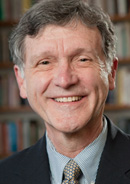
bill leonard130Bill LeonardI’m trying to learn to pray, again. Yes, I’m one of those people who learned to pray, “Now I lay me down to sleep” and “Our Father who art in heaven” at home and in church before I learned to read. I can’t remember when I didn’t know them. Over the years, I’ve kept praying, confessing that engaging in and being engaged by prayer can indeed be “baffling and painful.” 

I’m still learning to pray. What follows are random reflections born of “prayer-full” lessons along the way:

First, learning to pray compels us to ask something about the nature of God: Is there a One, and does that One hear our prayers? 

Can God find all 9 billion of us?

In For the Time Being, Annie Dillard quotes Nelly Sachs’ inquiry, part prayer, part accusation: “Who is like You, O Lord, among the silent, remaining silent through the suffering of his children?” Even a most familiar hymn slips in a little wedge of irony amid grand affirmation of Divine sovereignty: “Holy, holy, holy, though the darkness hide thee ….” Can God find all 9 billion of us? And care? Didn’t the earliest disciples ask similarly: “Lord, teach us to pray,” seeking Jesus’ own sure-fire formula for ensuring God hears and actually responds? 

Second, when it comes to prayer, words usually get in the way. 

The Apostle Paul wrote: “We do not know how to pray as we ought, so the Spirit makes intercession for us with groanings that cannot be uttered.” I love that King James Version word, “groanings.” Been there; done that! Perhaps none of us really knows how to pray “as we ought.” Our words are frighteningly sexist, racist, insensitive, manipulative, limited, conditioned, broken and generally inadequate in some form or another. Groanings in the Spirit may be our only real hope.

Getting hold of God

Third, in most religious communities, perhaps all of them, there are some people who, in the words of the old preachers, “know how to get hold of God.” 

They reflect a depth of prayer and spirituality so clear that when the rest of us need to be sure we can “get through,” we go looking for them. In my church, such individuals often are identified as “mothers of the church,” women whose exemplary faith and strength of character undergird the grace of their praying. In the early Christian eras, “widows” apparently held something of the same distinction—people of “peculiar piety” whose prayers were highly valued by the church. They were and remain people who stick their spiritual necks out, gamble—by faith—that God hears, and cultivate the presence and discipline of prayer.

Fourth, at its best, the church—the communion of saints—prays with us and for us, especially when we cannot pray ourselves. 

On some Sundays, I can’t even utter the Lord’s Prayer, but the gathered church does it for me.

Sometimes, life is so terrible prayer won’t come, and we must hold on to the prayers others still can offer. On some Sundays, I can’t even utter the Lord’s Prayer, but the gathered church does it for me. Sometimes, that’s all I’ve got, and it is enough. Kathleen Norris says: “Good liturgy can act like an icon, a window into a world in which our concepts of space, time and even stone are pleasurably bent out of shape. Good liturgy is a living poem, and ceremony is the key. … Good ceremony makes room for all the dimensions of human experience in the hope that, together, we will discover something that transforms us. … Ceremony requires that we work with others in the humbling give-and-take of communal existence.”

Fifth, that said, I’m still struck by the fact some Christians demand to pray out loud “in Jesus’ name” at government-related ceremonies.

Since I’ve been praying “in Jesus’ name” over 60 years, and since my prayers are offered to God and not the U.S. government, if Jesus still doesn’t know I’m praying in his name, then I’m in real trouble.

Learning to change

Finally, continuing to learn to pray may help us continue to learn to change. 

Bondi cites Moses, “the great black Abba from the Sudan,” who admonished: “If a (person’s) deeds are not in harmony with his (or her) prayer, (that person) labors in vain. The brother said, ‘What is this harmony between practice and prayer?’ The old man said, ‘We should no longer do those things against which we pray.’” 

Amen. 

Bill Leonard is the James and Marilyn Dunn Professor of Church History and Baptist Studies at Wake Forest University’s School of Divinity. His column is distributed by Baptist News Global.


Letters: Do everything ‘as to the Lord’

In view of your editorial regarding how best to present a loving witness in the cultural arena, I might add that, perhaps many of us just don’t have the skill set to go against every issue that is hitting our beliefs as Christians. 

Perhaps, for some, it’s not our job to be on that wall. Partly because we have our families to raise, marriages to work, our job, etc. And there’s a good chance that when we’ve entered the arena of ideas, we come across as pugnacious. 

For folks who don’t have the skill set to be a “cultural warrior,” then I say do everything else, as too the Lord. Do your best to honor God, be a blessing to your spouse, be godly and loving  toward your children, your family, friends, your boss and coworkers. I mean, for some, that’s a handful. 

Allow God to develop you as a saint and see where that goes. That,  and not watching as much  television and sitting on the back porch with your family, might do wonders.

Prentiss Yeates

Lubbock


Editorial: Juneteenth—celebration & metaphor

Texans will mark a vital—although historically embarrassing—milestone this week. We’ll celebrate the 150th anniversary of the freedom of Texas slaves. 

knox newEditor Marv KnoxIf you remember Civil War history, you probably recall President Abraham Lincoln signed the Emancipation Proclamation Sept. 22, 1862, which freed all the slaves in the Confederate States of America still in rebellion against the United States, effective Jan. 1, 1863. Texans didn’t find out about it until June 19, 1865, which explains the historical embarrassment.

The juneteenth.com website offers theories to explain why news of emancipation required more than two and a half years to reach the Lone Star State: A messenger was murdered on his way to Texas. Slaveholders deliberately withheld the information to keep slaves on the plantations. Federal troops waited for slave owners to take in one last harvest with slave labor. Texans questioned President Lincoln’s authority over the rebellious states, which was the whole point of the war.

‘All slaves are free’

Whatever the reason for the delay, freedom arrived in Texas on June 19, when Maj. Gen. Gordon Granger, backed by 2,000 U.S. troops, stood on the balcony of Ashton Villa in Galveston and read General Order No. 3:

“The people of Texas are informed that in accordance with a proclamation from the executive of the United States, all slaves are free. This involves an absolute equality of rights and rights of property between former masters and slaves, and the connection heretofore existing between them becomes that between employer and free laborer.”

In an instant, slaves became free. Immediately, they became employees of the people who once owned them.

Across the years, Juneteenth—a mashup of “June” and “nineteenth”—became a day for celebrating African-American freedom and culture. As freed Texas slaves migrated, they took their celebration with them, initially in neighboring states and eventually far beyond. On June 13, 1979, Texas became the first state to proclaim June 19 as Emancipation Day, an official holiday.

Sadly and ironically, Juneteenth represents a powerful metaphor.

Just as Texas slaves waited 33 months from signing and 30 months from implementation for the Emancipation Proclamation to free them, Americans of color—African-Americans prominently among them—still wait for equal justice and opportunity in their homeland.

Reflections on McKinney incident

As if we needed proof, the recent heinous treatment of black McKinney teenagers by a white police officer erased all doubt. And if anyone were still hard-headed enough to continue to doubt, the response of white North Texans to the incident reveals how racism pervades our society.

In a column for Baptist News Global, Mark Wingfield cited comments about the African-American teens posted to Dallas Morning News articles:

• “They should break out the bleach and clean the pool from all the black filth.”

• “These are the same kids wondering why nobody will hire them even though they were the affirmative action darling of their college.”

• “Too bad they weren’t raised to be decent human beings. Simple as that.”

• “This trash will never learn. … Why don’t they do what they are told? They knew they did not belong there, they refused to leave or obey legit orders. They got what they deserved.”

Of course, not every white person thinks that way. But Wingfield factors in the odds: “Given the demographic makeup of this region, it seems likely that many of those making these blatantly racist comments are church-goers or would identify themselves as Christians. This thought makes me sick to my stomach.”

Sick indeed. We must change our culture.

Christian values

As much as Christians value evangelism, going on mission trips, and operating food pantries, we must value equal status for all people, whatever their skin color, native tongue or worldview.

Privileged middle-class Anglo Baptists must stand in the gap between the afflicted and the haters. We must not tolerate racism—in action by police and others, in comments by neighbors and website posters, in policies by businesses, in statutes penned by lawmakers.

If we persist, maybe someday reality will reach the ideal. Maybe we will celebrate equality, not simply emancipation, on Juneteenth.


STCHM: Spiritual lesson learned on a gym floor

Since my arrival at the South Texas Children’s Home Ministries, I have been praying God will bless my efforts this summer and use me, even though I may or may not reap the harvest or see my impact just yet. I am trying to be faithful and keep in mind that when you work with kids, sometimes you can’t see the harvest for years to come. 

katie burkhead130Katie BurkheadWhile leading open gym with my fellow summer workers, the Holy Spirit clearly tapped me on the shoulder and gave me a visual picture to remind me God is always working. After a game of dodge ball, my partners for the summer and I were leading a game of line tag in the gym. Two people are “it,” and they have to chase the other kids all over the gym, while staying within the basketball court lines on the gym floor. 

Samuel, a good-hearted and really respectable young man, was it and was chasing and tagging just like he was supposed to. He was following all of the rules and was doing a really good job carrying out his role in the game. Two younger girls, Julie and Raven, were running along the lines of the basketball court, giggling and having a good time together, just like they were supposed to.

Both parties were successfully carrying out their roles within the game, when Samuel went to go and tag Julie, who had turned her head to make sure she wasn’t being followed from behind. While he was performing his job and Julie was performing hers, Julie was not prepared to be tagged by Samuel, and they both crashed to the ground. 

As one of the adults in the room, I saw the big picture. Samuel had no intention of hurting Julie when he tagged her. He was just trying to do his job. Julie was not trying to get tagged, she was checking behind her to make sure no one was chasing her. 

It was like the Holy Spirit opened my eyes and God was saying: “See, my child. You are the one playing line tag. Only I can see the big picture and know how your efforts will affect these kids in the long run. Trust in me, do as you are called, and but don’t forget to take a look around and see where others are. Don’t get locked in your own little world.” It was definitely an “Aha!” moment.

With this newfound wisdom fresh in my head, I ran over and explained what had happened to the kids, since neither could see or understand the other’s motives. With a brief explanation and some apologies, within a minute they were back to playing line tag and chasing and running. This was a vivid picture of an answer to my prayers. 

Wherever you find yourself in life, be faithful in all areas—big and small, insignificant and significant. Remember, only God can see the big picture. He is in control, writing a beautiful story, and he will be faithful.

Katie Burkhead, a student at the University of Texas at Austin is serving with Go Now Missions as a summer mentor at South Texas Children’s Home Ministries.


New York: Diverse people, diverse opportunities to witness

Coming from South Texas, I must say New York is the city that has everything—beaches, malls, churches, parks, concerts, food of any kind, you name it.

It is surrounded by famous boroughs. There is the glamorous and rich city of Manhattan, the zoo and entertainment at the Bronx, artsy Brooklyn, the beach and working class housing for many in Long Island, and the most diverse borough (and my favorite), Queens. About 138 languages are spoken in Queens. 

alexandra granda130Alexandra GrandaI will be honest. I viewed Queens skeptically until I got off at one of the terminals of train No. 7. It happened to be the Hispanic part of town. As soon as got out of the train, the smell of my local food was there. I heard Hispanic people yelling in Spanish, trying to sell their products in the streets. It felt like home.

I had the opportunity to start my ministry with Boto Joseph, a missionary at Jackson Heights. He is a devoted follower of Christ, and I saw prayer in action. A team from Alabama is staying and working with us, and we were boldly filled with the Holy Spirit guiding us through the streets of a Bangladeshi area. We have been covering the streets with prayer in the name of Jesus.

As soon as I stepped into that street, it was like being in Asia. The people, the shop stores, the market, the clothing the language—but there was a difference. We had several encounters with people from Muslim and Hindu background whom we prayed over in the name of Jesus. When would we have the opportunity to do this in a closed country? It blew my mind.

nyc interns425Alexandra Granda (top right) with her fellow interns at Multiply NYC.I feel blessed to be here in Jackson Heights where I have the opportunity to share my faith openly. It was a joy to meet a Bangladeshi woman who said was a follower of Christ. It is extremely encouraging to bump into these people and know that the gospel can reach this place and this people group. 

We also were able to do street evangelism at a community park. We got to share Bible stories and play games with kids from parts of Asia and South America. Parents from different religions were able to engage with their kids, and many of them stayed with us to hear the stories. 

I had the opportunity to meet Sandra. She is from Colombia and has been living in the United States six months. She considers her life sad. She feels broken and lonely in this country. Her kid is going to the hospital because her boyfriend has been mistreating the child. She broke down in tears, and I was able to share with her the hope Jesus gives us. Please pray for her. Pray she contacts me or contacts someone who will guide her toward Christ. 

This city is truly covered by darkness. It has every kind of need there is out there. Everywhere I go, I see poverty, need and unhappiness. In one day, three people jumped towards a train and one of them died. There is a huge need in this place. Please take five minutes every day and pray for the people of New York. 

Alexandra Granda, a campus missionary from the University of Texas Pan-American, is serving with Go Now Missions in New York City.


Germany: Be intentional, build relationships and share Christ

I can tell I’m in Germany, because the other day, the smell of sausage and sauerkraut came drifting through the window.

The first week here in Wiesbaden was crazy, exciting, different, tiring, surprising and fun. We primarily have been getting oriented—learning about the church, the people, the language and the transportation. While adjusting to jet lag, we have explored the city and had a chance to meet people. It has been great to learn about what will be our home for the next several weeks. 

kasey chinn81Kasey ChinnI am incredibly thankful for the people I get to work alongside this summer. My teammate is delightful and fun, our host family is generous and kind, our supervisor is awesome and helpful, and our church family is friendly and welcoming. I’m not sure how it is possible that they are all kind, funny and desire to serve Jesus, but they are a blessing. They build up the body of Christ, and I am grateful to do ministry with them. God is good to me. 

The goals here are the same as they are anywhere—be intentional, build relationships, and share Christ with people. For the follower of Jesus, knowing God and making him known are the things we are called to, regardless where we are. Here in Germany, about 0.1 percent of the population is estimated to have a relationship with Jesus.

It is staggering to think so many people do not know the hope and joy that is a product of knowing Christ. Everyone we meet is in need of a Savior to be righteous before God. Everyone we meet is loved and cared for by Jesus. 

germany street425More specifically, our goal here is to meet students at the University of Mainz, make friends, have conversations and point students toward Christ. We take buses and trains to be at the university several times a week. By trying different means of meeting people, we hope to connect them with Immanuel Baptist Church, where they will be shepherded and cared for after our team leaves here. 

We also are here to serve the church as its interns. We pray the church will become even more missionally minded, intentionally living in a way that will allow members to share Jesus with those around them. We have met lots of the members of the congregation and are excited for those friendships. 

So far, we have met several people on the university campus. We met several students in a jazz band who invited us to a party. We met Patricia, a waitress in the cafe on campus. We met Carolin, a Christian who goes to the university. We have met more students and been able to share the gospel with them.

germany another street425These connections, among others, are ones we hope to continue for the weeks to come. We have organized events like a movie night and a pizza party to gather students and build friendships. 

Please pray that these outreach events are successful and well-attended. We hope that by making friends, we can have meaningful conversations and share the gospel. Pray for us to make connections at the university. Sometimes it is difficult to go out on campus and start up conversations, so pray that God would lead us and give us wisdom and boldness. 

Pray for Immanuel Baptist Church. As our supervisor has only been the pastor since January 2015, pray that the congregation will continue to grow in their unity and knowledge of God. And pray for the three members who were baptized on a recent Sunday, that they would continue to grow in Christ.

Pray for opportunities to share the gospel. Whether we are sowing seeds, watering or reaping a harvest, we want to be faithful and obedient to what God will call us to do.

Kasey Chinn, a student at the University of Texas at Dallas, is serving in Wiesbaden, Germany, this summer through Go Now Missions. 


Alone in Meridian, but God is in control

Having been here in Meridian a little more than a week, one thing has become clearer as the days pass. Being the only summer intern here is going to be hard. Already, I have experienced doubts and loneliness. It has been hard finding the answer to the question, “Why am I here?” 

daniel harris130Daniel HarrisI spent last summer at Mission Centers of Houston with 18 other summer missionaries. That environment was completely different, because I was not the only person who didn’t seem like he knew what he was doing. I could talk with people nearby who knew what I was going through, because they were experiencing the same thing. 

In Meridian, it’s a completely different story. Instead of constantly being around people and working with people directly, I am on my own, with no one where I am emotionally, working indirectly with missionaries. I realize now, since I feel called to long-term missions, I would face the same doubts and feelings of loneliness if I were serving somewhere I didn’t know the culture well, didn’t know the language well and had to build relationships with complete strangers who didn’t understand me. 

Recently, I was reading in 1 Samuel 2:1-10 and Luke 1:46-55. These passages are the prayers of Mary and Hannah. I had never thought to compare the two before, but now I see a lot of striking similarities. I noticed in their time of prayer, both women were vulnerable. In their vulnerability, they both came to recognize the power of God. 

Ultimately, God is in control. It wasn’t in my plan to be the only intern here, and I know it wasn’t my supervisor’s plan either, but I know God wants me here. As far as the question to why I am here, the answer for now is because God wants me here. I just have to be vulnerable like Hannah and Mary were and recognize that God is in control. 

Daniel Harris, a student at Howard Payne University, is serving this summer in Meridian with Go Now Missions.