Letters: Support what works

Support what works

Change is an inevitable part of life. Where people flounder, is when they attempt to hold on to the past and keep things as they have been.  What was good enough for our fathers may not necessarily be good enough for today.  

The most logical and potentially world-changing plan is to reorganize the Cooperative Program to focus on what works in today’s world, rather than continuing to fund ministries operating out of old and no-longer-effective paradigms. 

Key to all of this is to actively seek God’s guidance and to move only in the directions he says to move. God knows what will work to reach people far more than any human ever will.  

And if we seek his wisdom, he has promised to give it.

Marsha Barrett

Longview

Pray for peace, friendship between Ukraine & Russia

Thank you for publishing “Singing Men of Texas praise God, deliver hope to western Ukraine.”   

As a Christian, I recognize the importance of bringing hope to all people, including by introducing them to Christianity.

We Christians must write and talk about the desperate need for peace in Ukraine, rather than make political statements such as “Russia seized Crimea last year” and “Russian occupation of Crimea.”  

The crisis and war in Ukraine are far more complicated than simply blaming Russia—or the United States and European Union.

The “Russia seized” and “Russia occupied” statements do not serve any meaningful purpose other than to wrongfully politicize the wonderful work of the Singing Men of Texas.

I have worked and lived in St. Petersburg, Russia, 25 years. My husband is Russian, of Ukrainian and Belarussian descent.  My girlfriend is Russian, of Ukrainian descent, and her family lives in Ukraine. 

The Donetsk/Lugansk regions—where fighting is—and Crimea are settled significantly by Ukrainians who consider themselves ethnic Russians.  In addition, there are many very deep family, cultural, social, economic, political and religious ties among Russia, Ukraine and Belarus.  Ukraine and Russia need the United States and European Union to support peace and these deep ties, since otherwise any “peace” will be short-lived.

I ask the Baptist Standard to stop politicizing the difficult situation in Ukraine and the work of the Singing Men of Texas there.  Rather, please join me in praying for peace in Ukraine and continued friendship between Ukraine and Russia.

Cheryl Ann Sigsbee

St. Petersburg, Russia


Thailand: Crippling comparisons

I once heard it said that comparison is the thief of joy. I know that’s true, because I have experienced it myself. I also know many of the individuals I work with experience it, as well.

stacie aguilar101Stacie AguilarWhen I first arrived here, I learned pretty quickly about the ideals of beauty in Thai culture and Asian culture in general. I also learned about the lengths that some Thais would go to achieve these ideals of beauty—particularly ladyboys.  Working with ladyboys is not easy. Outreach with ladyboys is not much easier, either. In essence, they are men wanting to be women, many who are in the process of transitioning, and most of what they are is artificial. We sit in the bars surrounded by walls made of mirrors and try to talk to them, and sometimes all they can do is stare at themselves. 

It astounds me how absolutely absorbed they become looking at their reflection. And honestly, who can blame them? Most of them have smoother, straighter, longer hair than I could ever dream to have. Their waists and arms are thinner, their lips and curves fuller than mine. They probably know more about makeup and fashion than I could ever know. I go into the bars sometimes and cannot help but feel slightly self-conscious. I think about how I could never look like that, but then I remember, no one looks like that. At least, not naturally.

thailand princess425The Thai people love their royal family. This display contains a picture of the Thai princess.I can’t help but feel compassion for these ladyboys. Their life revolves around how beautiful and feminine others think they are, and opinions are always changing. Compared to females, they have to try so much harder.  I may not look like any of these ladyboys, but I have never had to prove that I am a woman. I just am. It’s a difficult life for them, because no matter how much beautiful they may become, the beauty never lasts.

I think about how they compare themselves and how hard that is to never be satisfied with who they are. I realize that I do the same thing in my own way. I compare myself to the other missionaries here in Bangkok and wonder if I am doing as much as them. I wonder if my passion is enough, if my work is enough, if I am enough. 

The truth is I am not. Thankfully my God is. I am reminded of 2 Corinthians 12:9 when the Lord says, “My grace is sufficient for you, for my power is made perfect in weakness.” I may not be perfect, but it is through those imperfections that God is able to shine so brightly.

Ephesians 2:8-9 also says “For it is by grace you have been saved, through faith—and this is not from yourselves, it is the gift of God—not by works, so that no one can boast.” To be given grace is to be given what you do not deserve, something you did not earn. I did not deserve to be loved by God. I just am. We just are. 

Joy comes from understanding God’s grace. It comes from realizing we do not have to earn our place with the Father; we just have to accept that Jesus already did what was necessary for us to come to God. We do not have to try. Yet, sometimes our pride gets in the way of that. We want our work to mean something, and to think that it doesn’t matter can sometimes be difficult. The truth is, our actions still matter, but they do not determine our worth. God loves us regardless whether we are a pastor or a prostitute. When we understand and accept God’s grace, there is no room for comparison. God is working in you and God is working in me and truth be told, it looks different for all of us.

I keep on wanting to compare myself, not just to the people around me, but even to who I was back home. Being here has truly reminded me that we are all the body of Christ and that we all have different functions. I may not have the same gifts and abilities as those around me, but I have my own, and together we can do what God has called us to do and be who God has asked us to be here. It’s been a tough lesson to learn, but I’m thankful I have been able to learn it.

Moving to another subject, this past month, my co-worker Rebekah and I had the special privilege of helping in a transition house for trafficked woman. We spent our time with a 27-year-old Ugandan woman who was trafficked to Thailand a couple years ago. She has two children, two sons who are 6 and 8 years old. She was a hairdresser back in Uganda and was tricked by people saying they had a job for her in Thailand. She was brought here illegally, which made it hard for her to leave after realizing that she would not work as a hairdresser. We just learned last week that she finally will be able to return home May 20 to see her family again. It will be sad to say goodbye to her, but we are so thrilled to see this beautiful woman be rescued.

Stacie Aguilar, a recent graduate of the University of Texas at El Paso, is serving with an anti-trafficking ministry in Thailand through Go Now Missions.


UTD: End-of-year reflections

It’s time say goodbye to the Baptist Student Ministry at the University of Texas at Dallas, as I complete my time as campus ministry intern. After a whirlwind year, work slowed to a stop with the last few weeks of finals and end-of-the-year activities. And there is much I’ll take away from my experience.

kinsey cline130Kinsey ClinePrimarily, I am so grateful the Lord blessed the ministry of the BSM at UTD so immensely this year. This was my fifth year to be involved—first as a student and then as a staff member—with the BSM, and the spiritual growth of the group is incredible. Our student leadership team is now larger than the entire membership, or weekly free lunch attendance, when I first arrived at UTD. But it is much more than numbers.

The passion the students have for sharing the gospel, serving their fellow students and walking in Christ’s light has grown. Weekly, I heard stories of students reading Scripture with friends and sharing the gospel with strangers, and nothing could have revealed their spiritual growth more. 

Along with the students, I feel like this year has allowed me to grow spiritually. It was so vital for me to be disciplined in spending time with the Lord, in the Bible, praying, memorizing Scripture and serving at church, in order to lead well. It was so important that I be filled with the Spirit each morning before I poured out into the ministry. And I was given the opportunity to help prepare our Wednesday night Bible studies, lead a small group, and occasionally speak in front of the group, which stretched me to dig deep into Scripture. I am very grateful for these opportunities, as they have equipped me for ministry—whether vocational or not—for the rest of my life.

I am excited about what God has planned for the next season of my life, but excited, too, that I will be able to stay connected to my BSM family, praying for them as they go on mission trips this summer and prepare for a new school year. 

Kinsey Cline, a graduate of the University of Texas at Dallas, served with Go Now Missions as a campus missionary intern at her alma mater’s Baptist Student Ministry.


Kathy Hillman: ‘You can do it!’

The graduates glowed with nervous anticipation in their royal blue caps and gowns. Friends and family gathered in the chapel. At last, the music began, and 11 women marched down the aisle. As I looked into their faces, I knew this would be no ordinary ceremony. It wasn’t. The service blended laughter, tears, gratitude and hope. The event marked new beginnings for the graduates whose ages spanned nearly 40 years and whose backgrounds ranged from poverty to plenty.

kathy hillman130Kathy HillmanRather than inviting one “valedictorian” to speak, Waco’s Christian Women’s Job Corps Executive Director Pam Mohundro asks all to make brief presentations. Each understands the fear-producing assignment and the required Bible study when she enrolls in the course.

Mary, Isabel, Patricia, Joni, Maria, Cynthia, Sheryl, Elva, LaJuan, Lidya and Melinda stepped to the microphone in turn. When one of the women had difficulty speaking, her classmates softly encouraged her. “You can do it!” they said. And she did. My eyes filled with tears, and my husband John’s misted as Elva called the course a “gift from God” and Melinda “gained more than my heart can hold and my arms can carry.”

Computer skills drew most to the program. Isabel said all she knew about computers was that “things disappear easily.” Several told of being years behind after leaving the workforce to raise children. Another talked about losing her long-time job. In addition to employment skills, all explained they learned much about God and themselves.  

cwjc processional425Christian Women’s Job Corps graduates enter in processional. (Photo: Kathy Hillman)With personal public speaking hurdles finished, the women received diplomas. John and I joined the graduates to celebrate. We had met some earlier when four generations of our family prepared lunch for the daytime track. One introduced us to her grinning younger brother who babysat while she attended class. Another exuberantly talked about her new job. Each shared a grateful heart and a changed future.

Christian Women’s Job Corps and Christian Men’s Job Corps equip participants for life and employment in a Christian context. Every ministry site is customized, but every class member receives a caring mentor and the opportunity to know Jesus. Through the years, the programs have helped thousands achieve self-sufficiency.

joni waco350Joni gives her presentation. (Photo: Kathy Hillman) Woman’s Missionary Union began CWJC under the direction of Dellanna O’Brien, a native Texan and Hardin-Simmons University graduate. After seeing the urgency of women in poverty in urban Chicago and hunger in rural Appalachia, O’Brien asked, “Isn’t there something we can do?” She organized a meeting that birthed the concept. Five pilots launched in 1996, including one in San Antonio. The first CMJC site became operational in 2004 in San Angelo. 

Today, 174 sites offer the program. Texas hosts 70 of them, including 57 CWJC, eight CMJC and five joint sites. Additionally, Texas facilitated training for Venezuelan and Mexican women, resulting in four international sites. The director of Texas’ newest site in Pecos is herself a CWJC product. In the eight years since her release from prison, April has obtained associate, bachelor’s and master’s degrees. Most of all, she dedicated herself to Christ and opening the door to hope like she found at CWJC Tyler.

danny adams amarillo230Danny (Photo courtesy of Christian Men’s Job Corps of Amarillo)In 2013, Texas programs served more than 3,000 individuals. By the end of that year, some 60 percent were employed, and more than 200 made professions of faith. Among those is Danny. A long history of alcohol abuse and DWIs led to jail. He was accepted into the pre-release education program and later Amarillo’s CMJC. Today, he is a completely different person in Christ. He taught relapse prevention classes and got a job repairing RVs. A 10-foot fall onto concrete left him with a serious head injury and multiple broken bones. After lengthy recovery, he’s back at work. He gives God credit for CMJC, a good job and saving his life spiritually and physically.

After high school, Ray pursued paychecks rather than a profession. Later, the 26-year-old stayed home with their three daughters while his wife worked. ray boerne350Ray (Photo courtesy of Christian Men’s Job Corps of Boerne)At CMJC Boerne, he discovered his aptitude for serving others, quickly absorbed job skills, and thrived in the men’s Bible study. At the celebration supper, Ray described how he grew up without a dad and the volunteer instructors became role models and father figures. He has taken the first steps toward a nursing career by enrolling in certified nurse assistant training and has a job waiting.

God changes lives through Christian Women’s Job Corps and Christian Men’s Job Corps. Yes, they can do it, and Texas Baptists can help with encouragement, service, support, and prayers.

texas baptist voices right120For more information about CWJC/CMJC in Texas, visit http://wmu.texasbaptists.org/get-involved/cwjccmjc/ or contact Texas WMU CWJC/CMJC Consultant Becky Ellison at (254) 716-0319.

Kathy Hillman is president of the Baptist General Convention of Texas. She also is director of Baptist collections, library advancement and the Keston Center for Religion, Politics and Society at Baylor University.


In Touch: Congratulations to Bible Drill winners and competitors

Hello, Texas Baptists! I was happy to be at your Baptist Building Saturday, May 2, for the finals of the State Bible Drill Competition and Speakers Tournament. Those students worked diligently to make it so far and really are remarkable. 

hardage david130David HardageTwo weeks ago, I worshipped at First Baptist Church of Lolita. Thank you, Pastor Dennis Phariss for the invitation. I spent Mother’s Day with First Baptist Church of Georgetown. It was a joyful morning celebrating the mothers and motherly role models we have in our lives. 

The 2015 Childhood and Family Ministry Summit will be held Aug. 7-8 at First Baptist Church of Arlington. The summit provides an opportunity for professional growth in the areas of family, preschool, children and weekday ministry. Go to the “Events” section of www.texasbaptists.org/childhood for more information.

May is the month when Baptist Student Ministry thoughts turn to all those who will be graduating from high school and entering colleges and universities across the state this fall. Knowing this can be a difficult transition for students and their families, we want to remind you that we have a website to assist churches in connecting students with a BSM at their prospective schools. Go to www.texasfreshmen.org to begin searching.

Howard Payne University’s Guy D. Newman Honors Academy: texas baptist voices right120The Program for Civic Leadership and Public Policy recently celebrated the 50th anniversary of its first graduating class. The school hosted Jim Angle, former chief national correspondent for FOX News Channel, as their guest speaker. Texas Baptists are proud of HPU and the quality education they provide.

The University of Mary Hardin-Baylor announced the formation of its Center for Innovation. With this center, UMHB intends to keep the school at the forefront of Christian higher education by incubating new ideas and programs. I look forward to seeing the exciting things to come out of this initiative by UMHB.

It is a joy to serve you. 

David Hardage is executive director of the Baptist General Convention of Texas Executive Board.


Haiti: No limits on God’s ability

Each Tuesday and Thursday, we offer our beginner English-as-a-Second- Language course. By 4 p.m., students start to pour inside. We have made provisions with an extra table in the spare room and extra chairs around our kitchen-turned-classroom. We exchange familiar hellos with our students, always so jovial and friendly as they arrive.

morgan martin130Morgan MartinIt’s hard to believe some of our students walk two hours to come to our one-hour class. It amazes me that they are this devoted to learning English. 

This particular class, we are giving an assessment to our students that Chandler and I created together, quizzing them on material we have taught the past two months. As we hand out the assessment and pencils, more and more people arrive. Chandler and I rush around, trying to provide a chair for everyone and making sure each student has a pencil and paper. 

Honestly, I am getting a bit frustrated. It takes us close to 30 minutes to settle everyone, so we can begin the listening portion of our assessment. Part of my heart is angry that it has taken this long. Yet, God reminds me that it is not about me. He will use whatever we provide. 

After the listening portion is complete, our students work on their own to complete the assessment. Chandler and I walk around to provide help and see how they are doing. I become so overwhelmed with all that they have learned. My heart is so full as I see them answer questions and craft sentences that they weren’t able to do only two months ago. 

I step back and count the students we have today—close to 60. Wow! Again, I am reminded of the faithfulness of God. We have simply said yes to a somewhat overwhelming task, and the Lord is faithful to bring it to completion. I stand back and watch for a minute the students chatting and working—most of them working so hard that they whine when we tell them class is over. 

It has been so amazing to watch what God can do. There really is no limit to his ability to accomplish his will. I am so thankful I get to be part of it.

Morgan Martin, a student at the University of Texas at Austin, is serving with Go Now Missions in Haiti.


Editorial: The BGCT’s divide—not what you think

The Baptist General Convention of Texas’ Executive Board meets this week in Dallas. On behalf of the BGCT, the board supports a range of ministries and missions ventures; prepares and disseminates the convention’s unified budget, called the Cooperative Program; and plans and conducts the convention’s annual meeting.

knox newEditor Marv KnoxServing on and working for that board always has been challenging. It’s getting harder year-by-year.

Financial resources provide a leading indicator of the magnitude of that challenge. This year, the Cooperative Program budget goal is $35 million, a 5.8 percent reduction from last year’s goal, slightly more than $37.1 million. Ten years ago, the Texas Baptist Cooperative Program totaled almost $40.1 million. That’s a drop of more than 12.6 percent in a decade.

Myriad reasons account for the BGCT’s perpetual budget challenge. Two come to mind readily: (1) fallout from the controversy that divided the Southern Baptist Convention in the 1980s and ’90s and ultimately split the state convention in 1998; (2) overall cultural decline in denominationalism in the United States.

Both factors play into, but do not fully account for, the specific issue precipitating the convention’s ongoing decline … 

Two kinds of churches

The BGCT is composed of two groups of churches drifting further and further apart. Sure, exceptions exist. But overall, one group has no vested interest in turning toward the other; the second group is not able to turn and reach the other.

This division spans all the variables that typically describe or define churches affiliated with the convention—race and ethnicity; language; geography; location in city, town or country; even theology.

Group 1

One group is composed of strong congregations—large and/or wealthy churches—that no longer need the BGCT. Or at least they do not perceive they need the state convention.

Many of these churches began drifting away from the BGCT—actually all spheres of the Baptist denomination—during the years of Baptist conflict. They either felt ostracized from the fundamentalists who won control of the SBC or from the moderates who maintained control of the BGCT. Or they pronounced a pox on both houses for fighting so much. 

These churches also thrive on vision and creativity. They’ve found those commodities in short supply in the “official” Baptist world, but in abundance elsewhere.

Along the way, they continued to follow the Baptist impulse to cooperate. But they realized they didn’t need a convention to fulfill that urge. Pastors collaborated with friends and seminary buddies. Churches lined up with like-minded churches and creative faith-based ministries. 

With the ubiquity of digital communication and ease of travel, they realized they could participate directly not only in local ministries, but also in regional and global missions. With customization offered by nimble faith-based organizations, they realized they could design all kinds of effective Christian ministry, scalable to their interests and giftedness. 

They also studied their programs and services. They realized a vast panorama of publishers, consultants and even mega-churches offered great resources. And because local churches developed so many of those resources, they felt tailor-made for the new customers.

Of course, all this costs money. But churches looked at their budgets and saw a nice pile of cash—8 percent, 10 percent, maybe even more—already sitting there. It’s the money they historically gave to the Cooperative Program. At first, churches moved just a percent or two from CP. But when they saw great results in ministry or discovered they loved the new resources, they didn’t have trouble moving more from their CP line item to other places in the budget.

Most of these churches still have “Baptist” in their name. The vast majority still think of themselves as part of the BGCT and contribute a token amount to the Cooperative Program. Some of their pastors and lay leaders serve on the convention’s institutional boards. But their hearts have moved on. Their identity is broader than the BGCT, and they’re happy about it.

Group 2

The second group is composed of churches that are not so well-resourced. They’re small, or they’re poor, or they’re both. The churches from this group that remain engaged in the convention know they need it.

For generations, the Baptist denomination has provided services on what amounts to the honor system. To be sure, churches paid cash for some published resources. But for the price of whatever they put in the Cooperative Program—large gifts or small—they received the benefits of affiliation. They sent workers to training seminars, usually without cost. They received free visits from consultants. Even goods and services they purchased were discounted well below market cost. They took pride in their involvement with Baptist missions programs, educational institutions and various benevolence ministries.

The Cooperative Program made all this possible.

But now, manychurches that can afford to subsidize the CP—and historically led the convention in contributions—are investing their dollars elsewhere. This leaves churches that cannot afford to pay all that freight dependent upon a shrinking and increasingly cash-strapped system.

Many Baptists would enjoy playing the blame game. Who’s at fault? Why? That’s not the point.

The pressing issue is straightforward: Can the convention rebound? Should it rebound? What happens if it doesn’t rebound?

Three futures for the BGCT …

• Launch an all-out offensive to recruit churches to increase their Cooperative Program giving. This endeavor particularly would need to focus on the large/wealthy/strong congregations, because they’re the ones with enough cash to make a difference.

This approach, taken alone at least, won’t work. The churches that reinvested their CP money elsewhere believe it’s doing more good now. They take their stewardship of resources seriously. They’re going to keep on spending where they see the greatest results for God’s kingdom. They won’t be motivated by oughtness or guilt.

• Radically reorganize Cooperative Program spending. Allocate increased shares to the institutions and ministries that get the best results. Strengthen those few institutions and ministries to become state-of-the-art. De-fund and discontinue everything else.

Then appeal to the churches to invest their funds in world-changing causes; invite them to participate in world-class institutions and ministries. Convince them the very best investment of their tithes and offerings is in these landmark ventures.

Set aside a modest amount to help convention-dependent churches find the discontinued resources elsewhere.

• Maintain the status quo. At current rates of decline, the convention will cease to exist by the time today’s seminary students reach the midpoint of their ministry careers.

So, the BGCT stands at a crossroads. Can it muster the courage and creativity to engineer radical, vibrant change? Or will the convention play it safe and slide into obsolescence?


2nd Opinion: Sawdust and musings from the wood shop

It is a long distance between good enough and excellent. It is in little things—little things that take time and effort and skill to accomplish. I like being in the time and place between good enough and excellent, especially in the wood shop.

ernie rice130Ernie RiceScripture tells us to do things “as unto the Lord” (Colossians 3:23), and I do. Or at least I try to. I view excellence as the step and the measure of doing it unto the Lord. But it is more than that. For me, it is more personal. Let me give an example.

We are working on a Beds for Orphans project at We Care Haiti. Most orphanages we help and support have crude steel-framed beds with cement reinforcing bar in a grid to support the mattress. They are uncomfortable—like little torture racks—and unsightly but very sturdy and durable. Almost all the orphanages do not have enough of these beds and are thrilled when they can get more of them.

We have started Beds for Orphans because we can produce out of wood a fine and comfortable bed using lumber we can buy in Haiti. The project uses a local craftsman to work—and to draw a wage—as a teacher and overseer in the wood shop as the beds are built.

haiti orphans300Orphans aided by We Care Haiti. (Photo: We Care Haiti)Students, either local people wanting to learn or people attending a trade school that want hands-on experience to back up classroom theory, work as interns under the teacher’s direction. So the project not only produces high quality beds for orphans, but also provides a wage for a Haitian craftsman/teacher and helps to teach another generation woodcraft skills.

It is in that setting I was asked the question: “Why spend so much time on the details? You have made a very comfortable bed with a sturdy design and comfortable support for the mattress. And the wood is so much more appealing and warm. Why spend time on softening the corners or sanding it so smooth or the dozens of other little things that you do? The children may never notice it. Why do you do so much when you don’t have to do it?”

In Matthew 25:40, Jesus says, “When you did it to the least of these my brothers and sisters, you were doing it to me.” So, in my mind, it is more than doing “as unto the Lord.” It is doing to the Lord. The little voice in my mind presents me with the question: “How do you build a bed for Jesus?” This is a thrilling prospect! Whatever kind of bed I make when I build for these orphans, it is built for Jesus. 

So in that space and time between good enough and excellent lives the opportunity for me to give to Jesus. What kind of bed should I build for the King of Kings, the Lord of Lords, the greatest carpenter in all of the world and the craftsman who is building me a home in heaven?

Well, you know the answer.

Ernie Rice is construction coordinator for We Care Haiti.


HPU: The final countdown

As the end of the semester approaches and I talk to students, the main concern is how many finals are left and when they leave for summer. The students are all reaching the final countdown, where all they see ahead is the end. 

kim lilley garner130Kim GarnerI’m wrapping up my time as a campus ministry intern, and I’m on the final countdown, too. As I sit in the office, watching students moving heavy bags and shoving everything into their cars, I have to sit and reflect on the year and the lessons I have learned. It is hard to sum up all that I have learned about myself and about ministries through my campus internship, but there are some things I will never forget.

I learned that just because you love something doesn’t mean it will always be easy and fun. When I entered my first semester as campus intern, I thought that because I loved Baptist Student Ministry and loved people, the job would be all sunshine and flowers. That’s not the way it works. Lesson No. 1: Ministry isn’t always fun. I know that seems like a given, but I thought that I would love every single day of my job.

The need to push through

When I was tired and frustrated the first semester, there were days when I didn’t love it, and that was disappointing. But I learned it’s OK, even in ministry. I am still human, and there are days I still don’t want to get up or deal with people. The challenge comes in accepting that and dealing with the day anyway. God pushed me to get over it and deal with people and things that came up, even though I wasn’t in the mood. 

Second life lesson was that even though I’m called to push through days, there are times when a break is absolutely necessary for my well-being and to keep sane. I learned this the hard way. I thought that because I was in ministry, I had to be at everything and available for anything that anyone might ever need, any time of the day. “No” is a small word that becomes extremely difficult to say at times, and it caused me some hard times by refusing to use it. I have never understood the need for a Sabbath more than this year, and sadly, I never really took advantage of it.

The need for a break

There are times and circumstances when people need you right then, but there are also times when things can wait. We all need a day to do things that are relaxing or sometimes do absolutely nothing at all. I could really begin to tell when I was overworking and pushing myself over the edge, and sadly, I just kept going. So in the future, I plan to say “no” sometimes and take time to recover from the chaos that is our lives. 

So, my career with Baptist Student Ministry ends, at least for now, and the completion of graduate school awaits. If it’s God’s plan, maybe I will be back on a college campus later, hanging out with students. But I know that the lessons I learned this year go farther than the campus I am on and into my everyday life—no matter what the job. As I look back, I wouldn’t change anything about this year. Sure, there are things I wish I had learned faster or done differently, but the overall experience has been amazing. 

Kim Garner served Go Now Missions as a campus ministry intern at Howard Payne University.


Right or Wrong? Emotional affairs

I keep hearing about people who commit “emotional affairs.” What does this mean? And what does the Bible say about it?

An “emotional affair” refers to a situation when people develop an extra-marital friendship that begins to provide the kind of support a marriage relationship should. Emotional affairs do not include sexual relations and thus often enable married parties to excuse themselves of any guilt. 

But the difficulties of these kinds of affairs ensue when parties begin complaining about spouses to each other, lying to their spouses about the time they spend together or sharing thoughts, feelings and problems a person normally would share with a spouse. These kinds of actions betray the marriage relationship as the one in which both parties should find primary emotional support and trust, and they can lead to further unfaithfulness.

Friendship possible?

Because of the dangers of emotional affairs in compromising marital relationships, I often have heard the caution given, especially to men, to not even become friends with someone of the opposite sex for fear of a connection that might lead to something more. But while it is true for both men and women that friendship can be an avenue that leads to a deeper relationship, when we forbid ourselves from being friends with someone simply because of their gender, we are eliminating our ability to learn and grow with half of God’s created beings.

Community among humanity is a part of God’s design for creation. 

In Genesis 1:26-27, God says, “Let us make humankind in our image … in the image of God he created them; male and female he created them.” Without considering to whom the “divine we” is referring—a question debated by scholars and theologians for years—we can see there is a plurality in God’s work of creating people. God didn’t create just one person; God creates people. 

Additionally, God’s first command to the new humans was, “Be fruitful and multiply” (Genesis 1:28). From the beginning, there was a divine intention for numerous people to exist and for them to live together. 

Connections and community

And part of living life with other people means we make connections—we make friends. Ecclesiastes 4:9-10 reads: “Two people are better off than one, for they can help each other succeed. If one person falls, the other can reach out and help. But someone who falls alone is in real trouble.”

Friendship and community are important to living life. We need other people to help us find our way. And the role of friendship can be fulfilled for all of us through men and women. Both males and females, as the reflected image of God, can enrich our lives and give us insight into relating to the Originator of that image.

So, while there is no doubt we should be careful in all of our friendships outside of marriage in order to be sure the marriage relationship is honored, as a part of God’s created community, we should not deprive ourselves of meaningful relationships with people—both male and female.

Meredith Stone
Director of Ministry Guidance and Instructor of Christian Ministry & Scripture
Logsdon School of Theology, Hardin-Simmons University
Abilene, Texas

If you have a comment about this column, contact Bill Tillman, consulting ethicist for “Right or Wrong?” at btillman150@gmail.com.


Kathy Hillman: Shaky times—golf, marathons & recovery

Golf isn’t my best sport. My only experience came at age 13, when I signed up for classes at summer camp. Mother thought I should. She played regularly, and the Eldorado Success even chronicled her hole-in-one. The weekly paper could have chronicled my failure. kathy hillman130Kathy HillmanSo, when asked to participate in the Texas Baptist Golf Classic, I hesitated. Then I remembered my promise to do anything to support disaster recovery. Fortunately, participation didn’t equal golfing. Executive Director David Hardage and I each took a golf course and personally thanked the 260-plus players with a sleeve of personalized golf balls.

The event began with prayer for the victims of the earthquake in Nepal two days earlier and for those recovering from disasters long past. As Chris Liebrum introduced the foursome of first responders, my thoughts turned to the reason I eagerly traveled to San Antonio for the golf tournament—Texas Baptists’ ministry in West.

Our daughter, Holly, married into a West family. Her husband, Kevin, grew up there. They bought their first home there. Eighteen months after they moved in and a week before their fifth anniversary, their world exploded. That night, Holly taught Girls in Action in Waco. hillman kevin house350Kathy Hillman’s son-in-law Kevin was at home when the ammonium nitrate explosion in West destroyed the house. (Kathy Hillman photo)Running late, she saw the massive blast from Interstate 35. Kevin was home but by God’s grace survived the impact from the fertilizer plant less than 100 yards away. Happy, their dog who endured the Bastrop fire that destroyed my sister’s house, ran. Several days later, veterinary students found him. He was traumatized, suffered hearing loss and reinjured a paw, but his happy tail still wagged.

Holly and Kevin lost their home and most of their possessions. But things are not the most important things. People are. As an emergency medical technician/paramedic/registered nurse, Kevin had worked with 13 of the first responders who died. Had he been on call with the West Ambulance Service that evening, he would have been one of them. 

hillman cornerstone350The cornerstone at Holly and Kevin’s rebuilt home in West. (Kathy Hillman photo)Baptist General Convention of Texas chaplains were available in the aftermath. Kevin and our family are thankful for one special chaplain. Texas Baptists not only immediately responded with food and other aid, but also continued through Shalom Builders, Bounce student recovery teams and other help long after TV cameras departed.

Texas Baptists focus on recovery because surviving disaster isn’t a sprint. As we’ve learned, it’s a marathon. The ministry’s heart and passion is for the long-term needs and restoration of individuals, families and communities. Volunteers become the presence of Christ, sharing faith through deeds and words. 

We can assist in disaster recovery by praying, giving and going. Opportunities include:

Shalom Builders

hillman shalom builders350Shalom Builders sends trained construction crews to disaster areas to help residents rebuild. (Shalom Builders photo)Trained construction teams rebuild until God’s shalom or God’s wholeness returns to the affected area. Needs continue in Smiley, here in Texas, as well as in Moore and Oklahoma City in Oklahoma, following deadly tornadoes and in other locations as homeowners recover from tragedy.

First Baptist Church in Galveston and Galveston Urban Ministries Partnership (July 26-31)

Through projects such as Vacation Bible School activities, home repair and beautification, adults and children will join together for the convention’s first-ever family mission trip. 

Iglesia Bautista Peniel and Mission: Border Hope of Eagle Pass Partnership (June 1-20)

hillman nepal425Texas Baptist Disaster Recovery is working through International Nepal Fellowship to provide relief to survivors of the devastating April 25 earthquake. (INF Photo)Volunteers will reconnect, rebuild and restore Eagle Pass, where flooding destroyed hundreds of homes in 2013. Most victims were working poor who lack resources to rebuild their homes.

We Care Haiti Partnership

Teams continue to construct orphanages, build bunk beds, teach children, provide medical care and feed hungry people.

Aid for West Africa, Sierra Leone Ebola Crisis and Meals4Multitudes

Church or associational groups prepackage 10,000 meals in about two hours with 50 to 80 volunteers for $3,000. The ministry offers a meaningful-yet-fun experience for all ages.

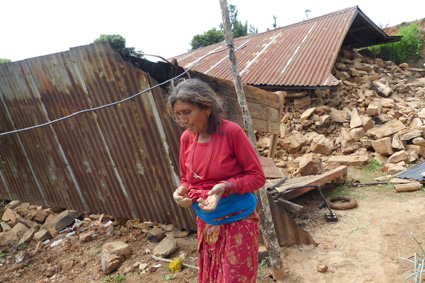
hillman meals4mult350Food items distributed by Meals4Multitudes, one of the organizations supported by Texas Baptist Disaster Recovery. (Texas Baptists Disaster Recovery photo)In cases of massive devastation like Nepal, Texas Baptists cannot help all 8 million people still living outdoors. However, we can impact a specific area or small group. Currently, disaster recovery leaders are collecting prayer requests, funds and names of individuals willing to travel to Nepal. The Lord always leads the efforts and clearly reveals his path, whether in Nepal, Haiti, Oklahoma or Texas.

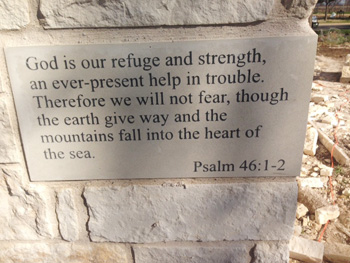
My husband, John, and I offered to give Holly and Kevin a cornerstone for their rebuilt home. We weren’t surprised when they chose Psalm 46:1-2: “God is our refuge and strength, an ever-present help in trouble. texas baptist voices right120Therefore, we will not fear, though the earth give way and the mountains fall into the heart of the sea.” Sometimes, the Heavenly Father sends that “ever-present help in trouble” through Texas Baptists, and I am grateful. 

Click here or call (214) 828-5382 or (214) 537-7358 for more information about these opportunities or about Texas Baptist Disaster Recovery. 

Kathy Hillman is president of the Baptist General Convention of Texas. She also is director of Baptist collections, library advancement and the Keston Center for Religion, Politics and Society at Baylor University


2nd Opinion: When your dreams go up in smoke

Jesus looked for all the world like the guy who would change everything. He said the right things—mostly. He did the right things … well, the miracles. He sure knew the Bible, and he didn’t mind standing up to the authorities. Surely, he would usher in paradise.

eric black130Eric BlackThen he was arrested like a common criminal. He was dragged into a kangaroo court and condemned to death. He was beaten within an inch of his life. He was marched up a hill and hanged on a couple of pieces of timber. And he died.

It was ugly. It was disappointing. It was disillusioning. It was disheartening.

Well, so much for that. So much for Jesus fulfilling our wildest dreams.

So, they buried him, and that was that—until the women burst into the room, shouting something the men couldn’t understand. The men tried their best to calm the women down, but it was pretty hard. The women kept saying something about Jesus being alive. Crazy women!

Then Jesus appeared to the men, and the men glanced sideways at the women whose hands were on their hips, and the women looked back at the men with their eyes saying, “We’re crazy, huh?”

He was always saying strange things

It was just unbelievable—and so good. Jesus stayed with his followers for about a month. Then, one day while they were hanging out and Jesus was teaching them, he said something about them being baptized by the Holy Spirit. He was always saying strange things like that when he was alive—the first time.

So, they asked the only thing they knew to ask: “Lord, are you about to restore Israel? Are you going to make Israel great again?”

Their dreams were dashed once already. Now that Jesus was alive again, well, surely this meant their dreams of greatness would come true—this time. Surely. But they were still cautious. “So, is now the time? Please?”

Consider what Jesus told his disciples in Acts 1:7-8: “It is not for you to know the times or dates the Father has set by his own authority. But you will receive power when the Holy Spirit comes on you; and you will be my witnesses in Jerusalem, and in all Judea and Samaria, and to the ends of the earth.”

Jesus disappears

The verses that follow tell us: “After he said this, he was taken up before their very eyes, and a cloud hid him from their sight. They were looking intently up into the sky as he was going.”

Can you imagine? Jesus didn’t let them down once. He did it twice! They planned on heaven opening up and swallowing the Romans and Israel being a great nation again. A few strange words about the Holy Spirit and Jesus disappearing in the clouds is not what they were looking for.

Just imagine, standing there watching the fulfillment of all your hopes and dreams disappearing in the clouds.

Can you relate? Can you relate to having all your hopes and dreams go up in smoke?

Willie Williams works in maintenance at our local school. Last year, Willie’s house burned down. He and his wife had just paid it off. Then it burned down. It was a total loss. And they didn’t have insurance.

What do you do when you lose everything? What do you do when your biggest dreams burn up in front of you, when all you’re left with is the ashes?

After all the fundraisers and outpourings for Willie and his family, he and I met at the school, and he told me he’s better off now than he was before. I thought, “Really? How?” 

“Materially, I’m not,” he said. “But I thank God for the fire, because I have so much more now. I have new friends. I’ve seen the good in people. I’ve been so blessed. So, yeah, I have much more now than I did before the fire.”

Can you imagine?

Willie won me over

I couldn’t at first, but Willie won me over. He was seeing through the smoke. That smoke was thick, but it didn’t block Willie’s view of heaven.

Willie’s right, but it takes some faith to see it.

Heaven is on the other side of the smoke of burned up dreams, or in Jesus’ case, heaven is on the other side of the clouds. But it takes some faith to see it.

While the disciples stood looking up where they saw Jesus ascend, a couple of men in white appeared and asked: “Men of Galilee, why do you stand here looking into the sky? This same Jesus, who has been taken from you into heaven, will come back in the same way you have seen him go into heaven.”

Because heaven is on the other side of those clouds, because heaven is on the other side of the smoke of burned up dreams, we can trust we won’t be left with just the ashes. Because heaven is on the other side and our Lord is there, we can trust our Lord will be back to make all things right.

In the meantime:

• We’re going to need some faith to see the other side.

• We may have to adjust our hopes and dreams.

• We may have to go through another fire.

• The clouds between us and the promise may grow darker.

But no lack of faith; no letting go of one dream for another; no fire, no matter how hot; no clouds, no matter how dark; will change the fact that heaven is on the other side.

The gift of the Spirit

None of that will touch our Lord, who resides in heaven until he returns, and he will return. Oh, but in the meantime, while he is away, he gives us his Spirit—while we rely on faith, while we adjust our sights, while the fires burn and while the storm clouds roll.

Yes, in the meantime, we rest in his Spirit:

• Who gives us faith for the meantime

• Who transforms our hopes and dreams in the meantime

• Who walks with us through the fires of the meantime

• Who shelters us in the storms of the meantime.

So that in the meantime, we can go about the lives God gives us, confident in heaven on the other side.

Eric Black is pastor of First Baptist Church in Covington.